Meniscus Tear Surgeon in Lucknow – Expert Diagnosis and Treatment by Dr. Divyanshu Dutt Dwivedi
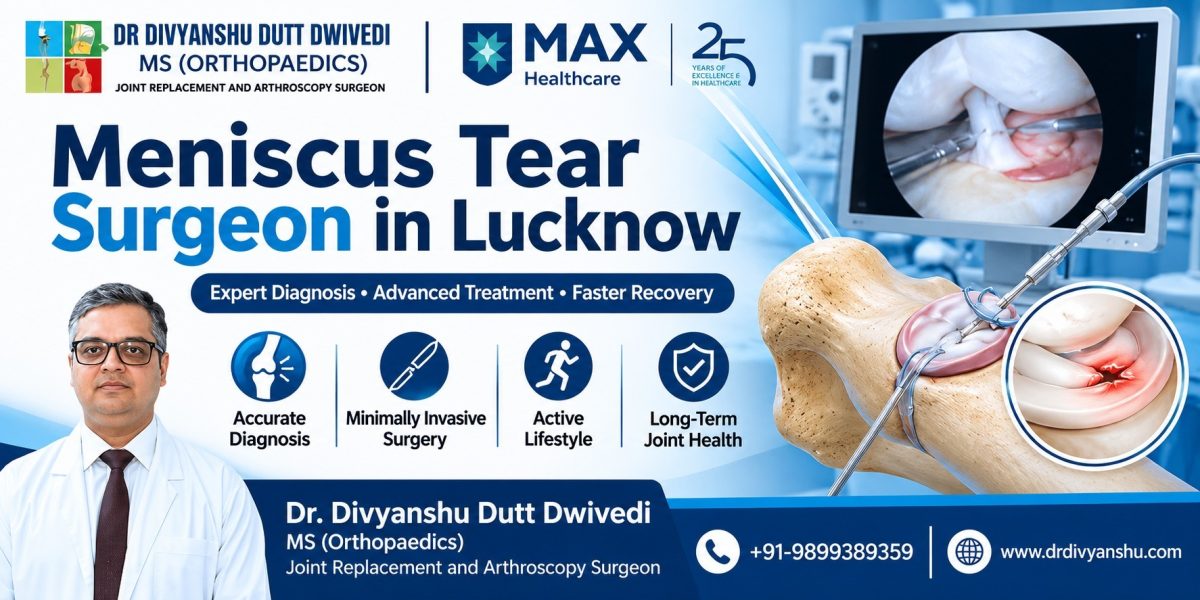
Meniscus tear surgeon in Lucknow is a commonly searched term by people experiencing knee pain, swelling, stiffness, or difficulty walking. A meniscus tear is an injury to the cartilage that cushions the knee joint. It can occur due to sudden twisting movements, sports injuries, or age-related degeneration. Common symptoms include knee pain, swelling, clicking, and difficulty bending or straightening the leg.
Choosing the right meniscus tear treatment in Lucknow depends on the tear’s location, severity, and the patient’s activity level. An orthopedic specialist can evaluate the injury through physical examination and MRI when required. Treatment options may include medication, physiotherapy, rehabilitation, or arthroscopic meniscus repair surgery, depending on individual clinical needs.
What Is a Meniscus Tear?
A meniscus tear is an injury to the C-shaped cartilage inside the knee joint, located between the thighbone (femur) and shinbone (tibia). Each knee has two menisci: the medial meniscus on the inner side and the lateral meniscus on the outer side. These structures act as natural shock absorbers, distribute body weight, reduce pressure between the bones, and support knee stability during daily activities.
A torn meniscus occurs when this cartilage becomes damaged due to sudden twisting movements, sports injuries, or age-related degeneration. Common symptoms include knee pain, swelling, stiffness, clicking, and difficulty bending the leg. Depending on rehabilitation, action, and severity, meniscus tear treatment may include activity modification, medication, physiotherapy, rehabilitation, or arthroscopic meniscus repair surgery after proper medical evaluation.
What Causes a Meniscus Tear?
A meniscus tear can develop due to sudden knee injuries or gradual cartilage degeneration. It commonly occurs during activities that involve twisting, jumping, or sudden changes in direction. Sports such as football, cricket, and badminton can increase the risk. Other causes include accidental falls, direct knee injuries, deep squatting, and excessive pressure on the knee joint.
Age-related degeneration is another common cause, as the meniscus gradually becomes weaker and less flexible over time. Some people develop a torn meniscus during routine activities without experiencing a specific injury. Meniscus tears may also occur alongside ligament injuries, particularly an ACL tear. Identifying the underlying cause helps an orthopedic specialist determine the appropriate treatment and rehabilitation approach.
Common Symptoms of a Meniscus Tear
The symptoms of a meniscus tear depend on the injury’s location, size, and severity. Some patients experience sudden knee pain after an injury, while others develop symptoms gradually. Recognizing early signs such as swelling, stiffness, clicking, and restricted movement can help identify a torn meniscus and guide appropriate treatment.
1. Knee Pain
Knee pain is one of the most common symptoms of a meniscus tear. It usually develops along the inner or outer side of the knee joint. Pain may increase while walking, bending, twisting, kneeling, or squatting. Persistent discomfort during everyday activities may require an orthopedic evaluation.
2. Swelling Around the Knee
Knee swelling may develop within a few hours or days after a meniscus injury. The affected knee may feel tight, tender, or uncomfortable during movement. Swelling can also restrict knee bending and straightening. Persistent swelling after an injury should be assessed by an orthopedic specialist.
3. Clicking or Popping Sensation
A meniscus tear may cause clicking, catching, or popping sensations during knee movement. These symptoms can occur when the damaged cartilage interferes with normal joint movement. Although clicking does not always indicate a meniscus injury, repeated clicking accompanied by pain or swelling requires medical evaluation.
4. Knee Locking
Knee locking is a possible symptom of a displaced meniscus tear. Patients may feel that their knee becomes stuck in one position or cannot straighten completely. This can interfere with walking, standing, and bending. Mechanical locking requires prompt assessment by an orthopedic specialist to identify the underlying cause.
5. Difficulty Bending or Straightening the Knee
A torn meniscus can restrict normal knee movement, making it difficult to bend or straighten the leg completely. Patients may experience discomfort while climbing stairs, sitting on the floor, squatting, or getting up from a chair. Persistent movement restrictions may indicate an injury requiring medical assessment.
6. Feeling of Knee Instability
Some patients with a meniscus tear experience a sensation that their knee is giving way while walking, standing, or changing direction. This instability may also be associated with an ACL or other ligament injury. A proper knee examination helps identify the affected structures and determine suitable treatment.
Different Types of Meniscus Tears
A meniscus tear can affect different parts of the knee cartilage, with the type of injury depending on how the tear occurs. Common types include medial meniscus tears, lateral meniscus tears, bucket handle tears, radial tears, horizontal tears, degenerative tears, and meniscus root tears. Each type has a distinct pattern and location.
A meniscus tear surgeon in Lucknow assesses the tear’s location, pattern, and severity to understand the extent of the injury. This evaluation helps identify the most suitable meniscus tear treatment, which may involve physiotherapy, rehabilitation, or arthroscopic surgery, depending on the patient’s condition and healing potential.
Medial Meniscus Tear
A medial meniscus tear affects the cartilage located on the inner side of the knee joint. It commonly develops due to sudden twisting movements, sports injuries, or age-related degeneration. Patients may experience inner knee pain, swelling, and discomfort while squatting, bending, or rotating the affected leg.
Lateral Meniscus Tear
A lateral meniscus tear occurs in the cartilage on the outer side of the knee joint. It may develop following sports injuries, sudden twisting, or other traumatic movements. Common symptoms include outer knee pain, swelling, clicking, and discomfort during activities involving knee bending or rotation.
Bucket Handle Meniscus Tear
A bucket handle meniscus tear is a displaced injury in which a long section of torn cartilage moves towards the center of the knee joint. It may cause significant pain, catching, and mechanical locking. Some patients cannot fully straighten their knees and require timely specialist evaluation.
Radial Meniscus Tear
A radial meniscus tear develops across the cartilage fibers, extending from the inner edge towards the outer portion. Depending on its depth and location, it can affect the meniscus’s ability to distribute pressure within the knee joint, potentially increasing stress on the surrounding cartilage.
Horizontal Meniscus Tear
A horizontal meniscus tear divides the cartilage into upper and lower layers. It commonly develops due to age-related degeneration but may also occur following an injury. Symptoms can include knee pain, swelling, and discomfort during movement. Treatment depends on the tear’s severity and the patient’s symptoms.
Degenerative Meniscus Tear
A degenerative meniscus tear develops gradually as the knee cartilage becomes weaker with age and repeated stress. It may occur during everyday activities without a major injury. Patients commonly experience knee pain, stiffness, and swelling, particularly while walking, climbing stairs, or performing deep squats.
Meniscus Root Tear
A meniscus root tear occurs when the attachment connecting the meniscus to the shinbone becomes damaged. This can affect the cartilage’s ability to distribute pressure across the knee joint. Patients may experience pain and difficulty walking. Early evaluation helps determine whether non-surgical care or surgery is appropriate.
How Does a Meniscus Tear Surgeon in Lucknow Diagnose a Knee Injury?
An accurate meniscus tear diagnosis helps determine the most suitable treatment. A meniscus tear surgeon in Lucknow evaluates the patient’s medical history, knee pain, swelling, and movement limitations through a physical examination. Clinical tests, such as the McMurray test, may help identify signs of meniscus damage and assess knee joint function.
An MRI scan is commonly recommended to examine the meniscus and identify the tear’s location, pattern, and severity. X-rays may also help rule out other bone-related conditions. The findings allow an orthopedic rehabilitation team to assess associated ACL or ligament injuries and recommend appropriate meniscus tear treatment, which may include medication, physiotherapy, rehabilitation, or arthroscopic surgery, depending on the patient’s condition.
Medical History and Physical Examination
A meniscus tear surgeon in Lucknow may begin diagnosis by reviewing the patient’s injury history, symptoms, and previous knee problems. During physical examination, the specialist checks joint-line tenderness, swelling, knee movement, and stability. Clinical tests, such as the McMurray and Thessaly tests, may help identify signs of meniscus damage.
MRI Scan
An MRI scan for a meniscus tear provides detailed images of the knee’s soft tissues, including the medial meniscus, lateral meniscus, ligaments, and cartilage. It helps identify the tear’s location, pattern, and severity. MRI findings also assist an orthopedic specialist in planning appropriate meniscus tear treatment.
X-Ray
An X-ray does not directly show a meniscus tear because the meniscus consists of soft cartilage. However, it helps assess bone alignment, fractures, and signs of knee osteoarthritis. These findings can help identify other causes of knee pain and support the overall diagnosis and treatment planning.
Meniscus Tear Treatment in Lucknow
Meniscus Tear Treatment in Lucknow focuses on relieving knee pain, reducing swelling, and restoring joint movement. A meniscus tear surgeon in Lucknow evaluates factors such as the patient’s age, symptoms, tear location, severity, and activity level. A detailed clinical examination, supported by MRI when required, helps identify the injury and guide an appropriate treatment plan.
Depending on the type and severity of the injury, meniscus tear treatment may include medication, activity modification, physiotherapy, or rehabilitation. Some tears may require arthroscopic meniscus surgery or meniscus repair to address persistent symptoms. The treatment goal is to improve knee function, support joint stability, and preserve healthy cartilage whenever possible. Each treatment plan is based on individual clinical findings.
Non-Surgical Treatment for Meniscus Tears
Non-surgical meniscus tear treatment may be suitable for patients with manageable symptoms and certain types of knee injuries. Treatment aims to reduce pain, control swelling, and improve knee movement. Depending on the tear’s severity, an orthopedic specialist may recommend activity modification, medication, physiotherapy, and rehabilitation before considering surgery.
1. Activity Modification
Activity modification for a meniscus tear involves temporarily avoiding movements that increase knee pain or stress the injured cartilage. Activities such as deep squatting, running, jumping, and sudden twisting may need to be limited. Adjusting daily activities allows the knee to recover while reducing further irritation during movement.
2. Medication for Pain and Inflammation
Medication may be recommended to manage meniscus tear pain and knee swelling. Depending on the patient’s symptoms and medical history, a doctor may prescribe suitable pain-relieving or anti-inflammatory medicines. These medications help control discomfort but do not repair the torn cartilage. Avoid taking medicines without medical advice.
3. Physiotherapy
Physiotherapy for a meniscus tear helps improve knee movement, muscle strength, and joint stability. A supervised rehabilitation program may include gentle knee exercises, quadriceps and hamstring strengthening, hip muscle training, and balance exercises. The exercise plan should be adjusted according to the tear’s severity and the patient’s recovery progress.
4. Ice and Short-Term Support
Applying an ice pack wrapped in a towel may help reduce knee swelling and discomfort following a meniscus injury. A doctor may also recommend a knee brace or crutches in selected cases. These supports can improve comfort and walking safety, depending on the injury and weight-bearing requirements.
When Is Meniscus Tear Surgery Required?
A meniscus tear operation may be considered when symptoms continue despite appropriate non-surgical treatment or when the injury has features that may benefit from surgical intervention.
Surgery may be discussed in situations such as:
- A displaced tear causing mechanical locking.
- A repairable tear in a suitable location.
- Persistent pain and functional difficulty.
- An injury affecting normal knee movement.
- Certain meniscus root tears.
- Meniscus damage associated with other knee injuries.
The decision should not be based on the MRI report alone. The surgeon needs to consider the patient’s symptoms, examination findings, tear pattern, and overall knee health.
Meniscus Repair Surgery by a Meniscus Tear Surgeon in Lucknow
Meniscus repair surgery is an arthroscopic procedure used to secure torn meniscus tissue and support natural healing. A meniscus tear surgeon in Lucknow may recommend this procedure when the tear has suitable healing potential. The primary goal is to preserve healthy cartilage, maintain knee stability, and reduce stress on the joint.
During surgery, specialized instruments and sutures are used to bring the torn cartilage edges together. The technique depends on the tear’s location, pattern, severity, and tissue quality. Meniscus repair surgery may be considered for selected traumatic, bucket-handle, radial, and meniscus root tears, including certain injuries associated with ACL damage. Not every tear is repairable; treatment depends on individual clinical findings.
Knee Arthroscopy for Meniscus Tear by a Meniscus Tear Doctor in Lucknow
Knee arthroscopy for meniscus tear is a minimally invasive procedure used to examine and treat damage inside the knee joint. A meniscus tear doctor in Lucknow may recommend this procedure when surgical treatment is appropriate. It involves inserting a small camera, called an arthroscope, through a tiny incision to view the joint.
During arthroscopic meniscus surgery, the surgeon uses specialized instruments to assess the damaged cartilage and perform the required treatment. Depending on the tear’s location, severity, and tissue condition, the procedure may involve repairing the torn meniscus or removing only the damaged portion that cannot be preserved. The primary aim is to improve knee function while preserving healthy cartilage whenever possible.
Meniscus Repair vs Partial Meniscectomy
Both procedures are used to treat selected meniscus injuries, but they have different objectives.
| Meniscus Repair | Partial Meniscectomy |
| Torn tissue is secured to support healing. | The unstable or damaged portion is removed. |
| Aims to preserve meniscus tissue. | Removes a limited part of the meniscus. |
| Requires healing of the repaired tissue. | Recovery is generally faster. |
| May require longer rehabilitation. | Rehabilitation focuses on restoring movement and strength. |
| Suitable for selected repairable tears. | May be considered for selected irreparable tears causing symptoms. |
Preserving healthy meniscus tissue is an important goal of meniscus tear treatment, as the meniscus helps absorb shock, distribute pressure, and maintain knee joint stability. A meniscus tear surgeon in Lucknow considers the tear’s location, pattern, tissue quality, patient’s age, activity level, and associated knee injuries before recommending meniscus repair or partial meniscectomy.
Meniscus Surgery Recovery Time
The meniscus surgery recovery time depends on the tear’s severity, surgical procedure, healing capacity, and rehabilitation progress. A meniscus tear surgeon in Lucknow evaluates these factors to guide patients through recovery. Patients undergoing partial meniscectomy generally recover faster than those having meniscus repair surgery, as repaired cartilage needs additional time to heal.
After partial meniscectomy, patients may resume walking and routine activities relatively early, depending on medical advice. However, meniscus repair surgery recovery usually takes several months. Rehabilitation focuses on reducing swelling, restoring knee movement, rebuilding muscle strength, and improving stability. Following the surgeon’s instructions and physiotherapy plan helps support healing and a safe return to daily activities.
Meet Dr. Divyanshu Dutt Dwivedi—Trusted Meniscus Tear Surgeon in Lucknow
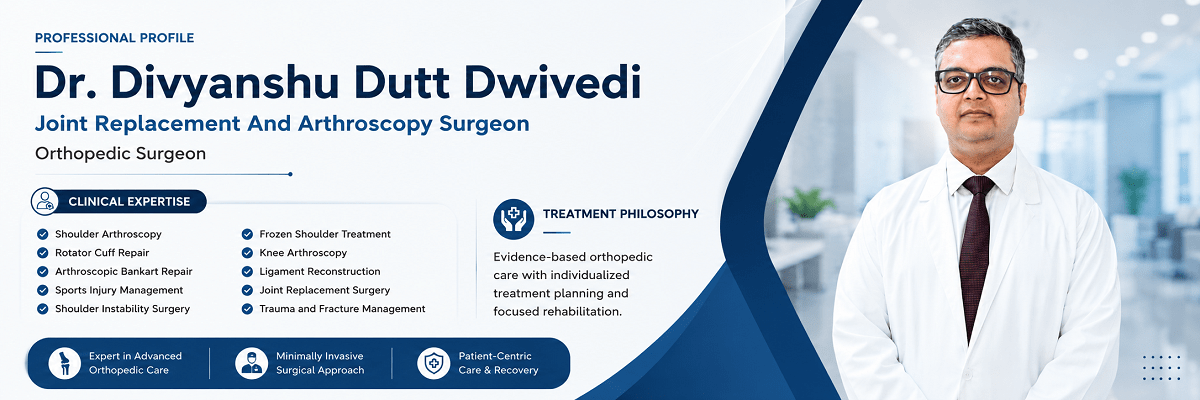
Dr. Divyanshu Dutt Dwivedi is an orthopedic specialist in Lucknow with clinical interests in knee injuries, arthroscopy, and joint-related conditions. Patients seeking a meniscus tear surgeon in Lucknow can consult him for evaluation and guidance on suitable treatment options based on their knee condition.
Clinical Expertise Includes:
- Meniscus tear diagnosis and treatment planning.
- Knee arthroscopy and sports injury management.
- ACL and PCL ligament injury evaluation.
- Meniscus repair and cartilage preservation considerations.
- Post-surgical rehabilitation and recovery guidance.
His approach focuses on understanding each patient’s condition and recommending appropriate care, whether non-surgical management or surgical evaluation is required. For consultation inquiries, call +91-9899389359.
Why Consult Dr. Divyanshu Dutt Dwivedi for Meniscus Tear Treatment in Lucknow?
Dr. Divyanshu Dutt Dwivedi is an orthopedic specialist associated with the evaluation and management of knee injuries, including meniscus-related conditions. His clinical findings include knee arthroscopy, ligament injuries, and joint-related problems. Patients seeking a meniscus tear specialist in Lucknow can consult him to understand their symptoms, examination findings, and available treatment options. Treatment planning considers the nature of the injury, functional requirements, and overall knee health. Whether conservative management, rehabilitation, or surgical evaluation is appropriate, the objective is to help patients make informed decisions about their care. To inquire about a consultation, call +919899389359.
Conclusion
A meniscus tear can affect knee movement, stability and everyday activities if not assessed properly. Choosing an experienced meniscus tear surgeon in Lucknow can help you understand your injury and explore suitable treatment options. Depending on the tear’s location, severity and healing potential, treatment may include medication, physiotherapy, rehabilitation or arthroscopic meniscus repair surgery. Dr. Divyanshu Dutt Dwivedi provides orthopaedic consultation for patients experiencing meniscus-related knee problems. If you have persistent knee pain, swelling, locking or difficulty walking, seek professional medical advice. Early evaluation can help guide appropriate treatment and support better knee function and recovery.
FAQs About Meniscus Tear Surgeons in Lucknow
Who is the right doctor for a meniscus tear in Lucknow?
An orthopedic surgeon experienced in knee injuries and arthroscopy can diagnose meniscus tears and recommend suitable treatment based on clinical examination and MRI findings.
Can a meniscus tear heal without surgery?
Yes, some meniscus tears improve without surgery through activity modification, medication, and physiotherapy, depending on their location, severity, and healing potential.
Is surgery necessary for every meniscus tear?
No, every meniscus tear requires surgery. Many injuries improve with non-surgical treatment, while displaced or persistent symptomatic tears may need surgical evaluation.
How long does meniscus surgery take to recover?
Recovery varies by procedure. Partial meniscectomy generally heals faster, while meniscus repair may require several months of rehabilitation and gradual activity progression.
Can I walk with a torn meniscus?
Yes, many patients can walk with a torn meniscus, but pain, swelling, or locking may limit movement. Persistent symptoms require medical evaluation.
What is the difference between meniscus repair and meniscectomy?
Meniscus repair secures torn cartilage to support healing, whereas partial meniscectomy removes only the damaged portion that cannot be suitably repaired.
Is an MRI necessary for diagnosing a meniscus tear?
MRI is commonly recommended to identify meniscus damage, tear location, and associated ligament injuries. Diagnosis also considers symptoms and physical examination findings.
What is the cost of meniscus surgery in Lucknow?
Meniscus surgery costs in Lucknow depend on the procedure, hospital facilities, surgical materials, and rehabilitation requirements. A consultation helps determine an individual estimate.
Can a meniscus tear occur with an ACL injury?
Yes, meniscus tears can occur alongside ACL injuries, particularly after sports-related twisting movements. Both injuries require assessment to plan appropriate treatment.
When should I consult a meniscus tear specialist?
Consult a meniscus tear specialist in Lucknow for persistent knee pain, swelling, locking, catching, or restricted movement, especially after a sports injury.
