
Total Hip Replacement Surgeon in Lucknow | Consult Our Surgeon
Struggling with hip pain, stiffness, or difficulty walking? Consult a total hip replacement surgeon in Lucknow to understand your condition and explore suitable treatment options and personalized care.
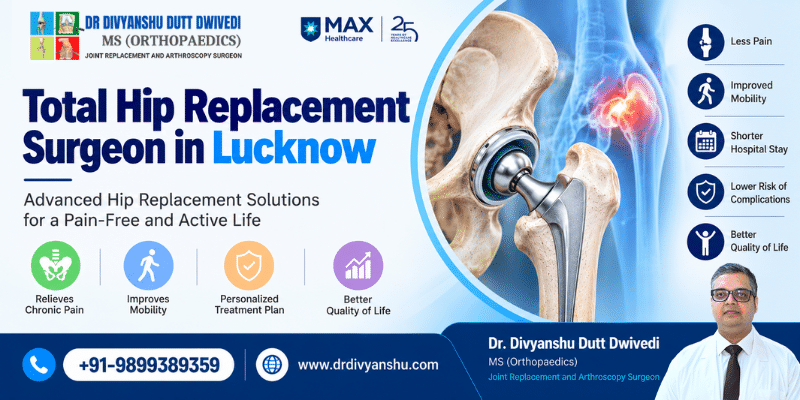
Total Hip Replacement Surgeon in Lucknow – Dr. Divyanshu Dutt Dwivedi
Persistent hip pain can affect walking, sleeping, climbing stairs, and other everyday activities. When the joint becomes severely damaged and nonsurgical treatments no longer provide enough relief, total hip replacement may be an option. Consulting a total hip replacement surgeon in Lucknow can help you understand the cause of your symptoms, the available treatments, and whether surgery is suitable for your condition.
Dr. Divyanshu Dutt Dwivedi, an orthopedic and joint replacement surgeon associated with Max Super Speciality Hospital, Lucknow, has training in primary and revision joint replacement. A consultation allows patients to discuss their symptoms, previous treatments, and investigation reports before deciding on the next step.
The right treatment depends on the extent of joint damage, general health, mobility, and personal needs. Surgery is recommended only after an appropriate clinical assessment.
What Is Total Hip Replacement Surgery?
Total hip replacement, medically known as total hip arthroplasty (THA), is an operation that replaces the damaged surfaces of the hip joint with artificial components.
The hip is a ball-and-socket joint. The ball, called the femoral head, sits inside the acetabulum, which is the socket in the pelvis. Healthy cartilage allows these surfaces to move smoothly. Arthritis, injury, and certain bone conditions can damage the joint, causing pain and restricted movement.
During the operation, the surgeon replaces the damaged femoral head and prepares the socket for an artificial component. The implant is designed to support joint movement and reduce pain caused by the damaged surfaces.
The main goal is to improve comfort and function. The amount of improvement varies with the patient’s condition, surgical findings, and rehabilitation. Although many patients benefit from the procedure, a replacement cannot guarantee completely pain-free movement.
When Is Total Hip Replacement Recommended?
A surgeon may consider total hip replacement when damage to the joint causes significant pain or disability and appropriate nonsurgical treatment has not provided sufficient relief.
Common reasons for considering surgery include:
- Persistent pain that affects walking, standing, or daily activities.
- Stiffness that limits hip movement.
- Difficulty completing routine tasks such as dressing or climbing stairs.
- Pain that disturbs sleep or reduces quality of life.
- Advanced joint damage confirmed through clinical assessment and imaging.
The decision is not based on age alone. A surgeon considers the patient’s symptoms, medical history, bone condition, general health, and expected benefits.
Some patients improve with physiotherapy, activity modification, medication, or other treatments. Others may need further investigation before a treatment plan can be established.
Conditions That May Require Hip Replacement
Hip osteoarthritis
Osteoarthritis gradually damages the cartilage covering the joint surfaces. As the condition progresses, patients may develop pain, stiffness, and reduced mobility. Surgery may be considered when the damage is severe and other suitable treatments no longer provide adequate relief.
Avascular necrosis of the hip
Avascular necrosis (AVN) occurs when reduced blood supply damages bone tissue, particularly the femoral head. In advanced cases, the bone may collapse and damage the joint surface. Depending on the stage, treatment may involve joint-preserving procedures or replacement.
Rheumatoid arthritis
Rheumatoid arthritis can cause inflammation and damage to the hip joint. In selected patients with severe joint destruction, replacement may help reduce pain and improve function.
Post-traumatic arthritis
A previous fracture or serious hip injury can damage the joint and lead to arthritis. Replacement may be considered if the resulting pain and functional limitations are substantial.
The most appropriate treatment depends on the diagnosis and the extent of damage. An assessment is necessary before deciding whether joint replacement is appropriate.
How Is Total Hip Arthroplasty Performed?
The surgical plan varies according to the patient’s anatomy, the condition being treated, and the surgeon’s assessment. The process generally includes the following stages.
Preoperative assessment: The medical team reviews the patient’s history, symptoms, imaging, and general health. Blood tests and other investigations may be needed before surgery.
Anesthesia and preparation: The anesthesia team assesses the patient and plans appropriate anesthesia. The surgical team prepares the operating area and follows established infection-prevention measures.
Joint replacement: The damaged femoral head is removed, the thigh bone is prepared for the stem and artificial ball, and the socket is prepared for its replacement component.
Joint assessment: The surgeon checks the position, movement, and stability of the reconstructed joint before completing the procedure.
Early rehabilitation: Once medically appropriate, the patient begins moving with assistance and follows instructions for safe walking and exercises.
The duration of surgery and hospital stay varies. Your treating team can explain the likely plan based on your clinical circumstances.
Understanding Hip Replacement Implants
An artificial hip generally consists of several components that work together to form a functional joint.
| Component | Function |
|---|---|
| Acetabular cup or shell | Fits into the prepared socket of the pelvis. |
| Bearing liner | Provides the surface that articulates with the artificial ball. |
| Femoral stem | Sits inside the prepared thigh bone and supports the replacement. |
| Femoral head | Replaces the natural ball at the top of the thigh bone. |
Implants may use combinations of metal, ceramic, and medical-grade plastic. Depending on the implant design and patient’s bone condition, components may be fixed with bone cement or a press-fit technique.
There is no single implant that suits every patient. Selection depends on anatomy, bone quality, activity level, medical history, and the surgeon’s judgement. Patients should ask which implant is proposed, why it is suitable, and what follow-up it requires.
Preparing for Surgery
Preparation helps patients understand the procedure and plan for recovery. Before surgery, discuss your medical history, regular medicines, allergies, and previous operations with the treating team.
Preparation may include:
- Completing the recommended medical tests and consultations.
- Reviewing medicines, including blood thinners and diabetes treatments.
- Arranging help with daily activities at home.
- Preparing a safe space for walking and resting.
- Understanding the prescribed exercises and rehabilitation plan.
- Discussing nutrition, smoking cessation, and management of existing health conditions.
Do not stop medicines or begin a new exercise program without appropriate medical advice. Patients with heart disease, diabetes, or other health concerns may require additional assessment.
Bring previous X-rays, investigation reports, and a current medication list to your consultation. These details can help the surgeon assess the condition and plan treatment.
Benefits and Possible Risks
For appropriately selected patients, total hip replacement can reduce pain and improve mobility when severe joint damage is responsible for their symptoms. It may help with walking, sleep, and routine activities, although the extent of improvement varies.
Like any major operation, it carries risks. These may include:
- Infection around the wound or artificial joint.
- Blood clots in the legs or lungs.
- Dislocation of the artificial hip.
- Differences in leg length.
- Injury to nearby nerves or blood vessels.
- Implant loosening or wear over time.
- Persistent pain or the need for further surgery.
The medical team assesses individual risk factors and explains measures to reduce complications. Following instructions about medicines, wound care, and movement and rehabilitation is important.
Contact the treating team promptly if you develop a fever, increasing wound redness, discharge, or worsening pain. Chest pain or sudden difficulty breathing requires emergency medical attention.
Recovery After Total Hip Replacement
Recovery depends on general health, mobility before surgery, surgical findings, and progress with rehabilitation. There is no single timeline that applies to everyone.
Early recovery
When medically appropriate, patients begin standing and walking with assistance. The medical team explains pain management, wound care, safe movement, and the exercises recommended for early recovery.
Hospital discharge depends on medical stability, mobility, and the availability of appropriate support at home.
Recovery at home
Patients should follow instructions about medicines, wound care, walking aids, and daily activities. Assistance from family members or a caregiver may be useful during the initial recovery period.
Physiotherapy and long-term progress
Physiotherapy supports strength, balance, movement, and walking ability. Exercises should follow the plan prescribed by the treating team rather than a generic online routine.
Many patients continue to improve over several months. Driving, returning to work, and resuming exercise depend on individual progress and medical advice. Follow-up visits allow the surgeon to assess healing and address concerns.
What Affects the Cost of Total Hip Replacement in Lucknow?
The total hip replacement cost in Lucknow depends on the procedure, implant, hospital facilities, and individual medical requirements. A current estimate should be obtained from the treating hospital.
The total may include surgeon and anesthesia charges, implant costs, preoperative investigations, hospital accommodation, medicines, and rehabilitation. The complexity of surgery, length of stay, and treatment of other medical conditions can also affect the final amount.
Before proceeding, ask for an itemized estimate and confirm which services are included. Patients using health insurance should check coverage, pre-authorisation requirements, exclusions, and any out-of-pocket expenses with the hospital and insurer.
Online prices may not reflect the amount payable in every case. The final estimate depends on the proposed treatment plan and current hospital charges.
Choosing a Joint Replacement Surgeon
Selecting a surgeon involves more than comparing prices or online reviews. Patients should consider relevant qualifications, experience with the proposed procedure, communication, and the support available throughout treatment.
Before making a decision, ask about:
- The surgeon’s verified orthopedic qualifications and joint replacement training.
- Experience with the procedure recommended for your condition.
- The hospital’s surgical, nursing, and rehabilitation facilities.
- The potential benefits, risks, and available alternatives.
- Postoperative reviews and rehabilitation arrangements.
- The expected costs and what the estimate includes.
A second opinion may be useful when the diagnosis is uncertain or the proposed procedure is complex. A clear discussion helps patients make an informed decision based on their own needs.
Consult Dr. Divyanshu Dutt Dwivedi in Lucknow.
Patients experiencing persistent hip pain or difficulty with daily activities may benefit from an orthopedic assessment. Dr. Divyanshu Dutt Dwivedi, an orthopedic and joint replacement surgeon associated with Max Super Speciality Hospital, Lucknow, has training in primary and revision joint replacement.
During a consultation, patients can discuss their symptoms, investigation reports, available treatment options, possible risks, and recovery planning. Bring details of previous treatments and current medicines to help the medical team understand your condition.
Consultation location: Max Super Speciality Hospital, Gomti Nagar, Lucknow.
Appointment contact: +91 9899389359.
Call to inquire about current appointment availability and consultation arrangements. The recommended treatment will depend on your clinical assessment.
FAQs About Total Hip Replacement Surgeon in Lucknow
- What is total hip replacement surgery?
Total hip replacement replaces the damaged femoral head and hip socket surfaces with artificial components to reduce joint-related pain and improve function.
- Who may need total hip replacement surgery in Lucknow?
Patients with severe hip joint damage, persistent pain, and restricted movement may be considered after clinical assessment and review of suitable nonsurgical treatments.
- What is the difference between THR and THA?
THR means total hip replacement, while THA means total hip arthroplasty. Both terms generally describe the same procedure.
- How long does recovery take after total hip replacement?
Recovery varies by patient. Many people continue improving over several months with appropriate rehabilitation, follow-up, and adherence to medical advice.
- What affects the cost of total hip replacement?
Costs depend on the implant, surgical complexity, hospital facilities, length of stay, medicines, and rehabilitation. Request a current, itemized estimate from the hospital.
- What are the possible risks of total hip replacement?
Possible risks include infection, blood clots, dislocation, implant wear, and persistent pain. The treating team explains individual risks and preventive measures.
- How long can a hip replacement implant last?
Implant longevity varies according to implant design, patient factors, activity, and other clinical considerations. Regular follow-up helps monitor the joint over time.
- Can patients walk after total hip replacement?
Many patients begin walking with assistance when medically appropriate. The timing and level of support depend on the operation and individual recovery.
- How should I prepare for hip replacement surgery?
Preparation may involve medical tests, medication review, home safety arrangements, and rehabilitation planning. Follow the specific instructions provided by your treating team.
- How can I book a consultation in Lucknow?
To inquire about a consultation with Dr. Divyanshu Dutt Dwivedi at Max Super Speciality Hospital, Lucknow, call +91 9899389359 and confirm availability.
Looking for a Total Hip Replacement Surgeon in Lucknow?
Don’t let persistent hip pain limit your daily activities. Consult Dr. Divyanshu Dutt Dwivedi to discuss your symptoms, understand your treatment options, and plan the next steps for your hip health.

Dr. Divyanshu Dutt Dwivedi is a well-known orthopedic surgeon in Lucknow, recognized for his expertise in treating a variety of musculoskeletal conditions. He is known as one of the Best Orthopedic Doctors in Lucknow.