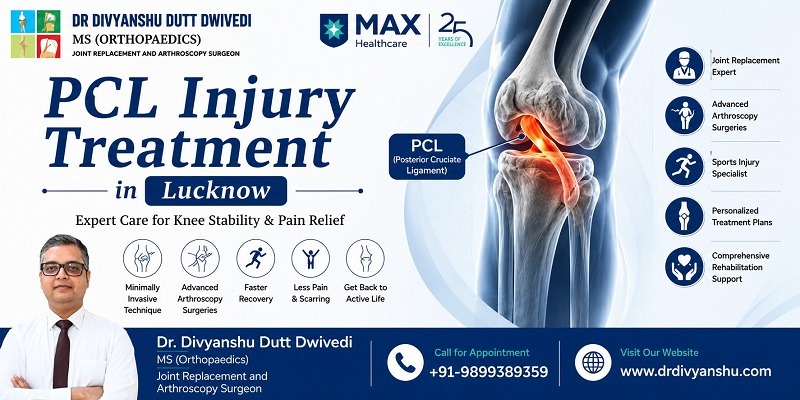
A Posterior Cruciate Ligament (PCL) injury can make everyday activities such as walking, climbing stairs, driving, or playing sports painful and unstable. The PCL is one of the strongest ligaments in the knee, but a sudden impact, road accident, sports injury, or fall can cause it to stretch or tear. Without timely treatment, a PCL injury may lead to chronic knee instability, cartilage damage, and early arthritis.
If you are looking for PCL Injury Treatment in Lucknow, Dr. Divyanshu Dutt Dwivedi provides comprehensive diagnosis, advanced non-surgical care, and minimally invasive arthroscopic reconstruction tailored to each patient’s condition. Recognized as one of the Best PCL Injury Specialists in Lucknow, he focuses on restoring knee stability, reducing pain, and helping patients safely return to their daily activities and sports with personalized rehabilitation and evidence-based orthopedic care.
Meet Dr. Divyanshu Dutt Dwivedi for PCL Injury Treatment in Lucknow
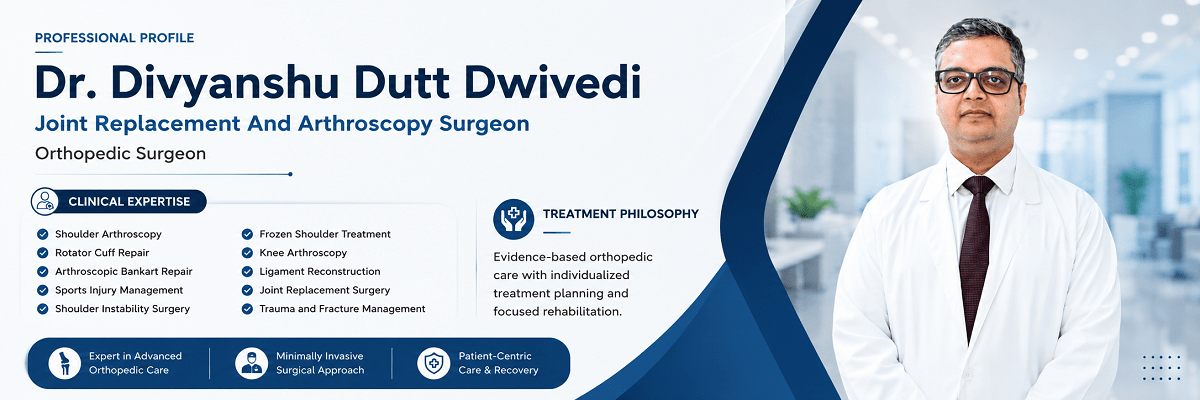
When it comes to PCL Injury Treatment in Lucknow, choosing an experienced orthopedic surgeon is essential for achieving the best possible recovery. Dr. Divyanshu Dutt Dwivedi is a highly skilled Orthopedic, Joint Replacement, Arthroscopy, and Sports Injury Specialist dedicated to providing advanced, evidence-based care for patients with knee ligament injuries. Whether you have a partial PCL tear, complete ligament rupture, or a complex multi-ligament knee injury, he offers personalized treatment plans tailored to your condition, lifestyle, and recovery goals.
From accurate diagnosis and non-surgical management to advanced arthroscopic PCL Reconstruction Surgery, every treatment is focused on restoring knee stability, relieving pain, and helping patients return to their daily activities and sports safely. His patient-centric approach, modern surgical techniques, and structured rehabilitation programs have made him a trusted choice for individuals seeking the Best PCL Injury Specialist in Lucknow.
Clinical Expertise
- Advanced PCL Injury Treatment and Ligament Reconstruction
- Arthroscopic Knee Ligament Surgery
- Sports Injury Management
- ACL, PCL & Multi-Ligament Reconstruction
- Knee Arthroscopy and Minimally Invasive Procedures
- Meniscus Injury Treatment
- Knee Pain and Instability Management
- Personalized Rehabilitation and Recovery Planning
- Complex Knee Trauma Management
- Comprehensive Orthopedic and Joint Care
Clinic Information
Doctor: Dr. Divyanshu Dutt Dwivedi
Specialization: Orthopedic Surgeon | Joint Replacement | Arthroscopy & Sports Injury Specialist
Address:
S9, 2nd floor, OPD wing, Max Superspeciality Hospital, Hahnemann Chauraha Rd, Viraj Khand – 1, Viraj Khand, Gomti Nagar, Lucknow, Uttar Pradesh 226010
Phone: +91-9899389359
Website: www.drdivyanshu.com
Book an Appointment: Consult Dr. Divyanshu Dutt Dwivedi today for expert PCL Injury Treatment in Lucknow and receive personalized orthopedic care using advanced diagnostic and arthroscopic treatment techniques.
What is a PCL Injury?
The Posterior Cruciate Ligament (PCL) is one of the four major ligaments that stabilize the knee joint. It connects the thigh bone (femur) to the shin bone (tibia) and prevents the tibia from moving excessively backward. A PCL injury occurs when this ligament is stretched, partially torn, or completely ruptured due to a high-impact force. Common causes include road traffic accidents, sports injuries, and direct blows to the front of the knee. Patients with a damaged PCL often experience pain, swelling, stiffness, and knee instability. Seeking early PCL Tear Treatment in Lucknow helps prevent long-term joint damage and improves recovery through accurate diagnosis and timely medical intervention.
Understanding the Role of the Posterior Cruciate Ligament (PCL)
The Posterior Cruciate Ligament plays a vital role in maintaining knee stability during walking, running, jumping, and sudden directional movements. Working together with the ACL, meniscus, cartilage, and surrounding muscles, the PCL keeps the knee joint properly aligned while supporting body weight. It is particularly important for athletes and physically active individuals who perform rapid movements or high-impact activities. When the PCL is injured, even simple tasks may become uncomfortable because the knee loses its natural stability. Proper evaluation by the Best PCL Injury Specialist in Lucknow helps determine the severity of the injury and allows treatment to begin before complications develop.
Symptoms of a PCL Injury
The symptoms of a PCL injury may vary depending on the severity of the ligament damage. Mild injuries often cause discomfort during movement, while complete tears can significantly affect knee function. Early recognition of these symptoms allows patients to receive appropriate PCL Injury Treatment in Lucknow before the condition worsens.
Common symptoms include:
- Pain behind or inside the knee
- Swelling after the injury
- Difficulty walking comfortably
- Feeling that the knee may give way
- Reduced range of knee movement
- Stiffness during bending or straightening
- Pain while climbing or descending stairs
- Instability during sports or physical activities
If these symptoms persist after an injury, an orthopedic consultation should not be delayed.
Common Causes of PCL Injuries
A PCL injury usually occurs when a strong force pushes the shin bone backward while the knee is bent. Although less common than ACL injuries, PCL tears are frequently associated with high-impact trauma and sports accidents. Identifying the exact cause helps the orthopedic specialist recommend the most suitable treatment plan.
| Cause | Description |
| Road Traffic Accident | Dashboard impact pushing the knee backward |
| Sports Injury | Football, cricket, kabaddi, basketball, and other contact sports |
| Fall | Landing on a bent knee with force |
| Direct Blow | Impact to the front of the knee during an accident |
| Workplace Trauma | Heavy objects striking the knee or accidental falls |
Prompt evaluation reduces the risk of long-term knee instability and additional ligament damage.
Who is at Risk of Developing a PCL Injury?
Although anyone can suffer a PCL injury, certain individuals have a higher risk because of their profession, lifestyle, or sports participation. High-impact activities place additional stress on the knee ligaments, increasing the possibility of injury. Understanding these risk factors encourages early preventive measures and timely treatment.
People at greater risk include:
- Professional and recreational athletes
- Football and cricket players
- Kabaddi and wrestling participants
- Gym enthusiasts performing heavy lifting
- Motorcyclists involved in road accidents
- Individuals working in physically demanding occupations
- People with previous ligament injuries
- Those participating in adventure sports
Early assessment by Dr. Divyanshu Dutt Dwivedi helps minimize complications and supports a faster, safer recovery.
Types and Grades of PCL Injuries
The severity of a PCL injury is classified into different grades based on the extent of ligament damage. This grading helps determine whether conservative treatment or surgical reconstruction is the most appropriate option. Accurate diagnosis is essential for selecting the right treatment strategy.
| Grade | Description | Recommended Treatment |
| Grade I | Mild stretching of the ligament | Rest, brace, physiotherapy |
| Grade II | Partial ligament tear | Conservative treatment with rehabilitation |
| Grade III | Complete ligament tear | May require PCL Reconstruction Surgery in Lucknow |
| Grade IV | Multiple ligament injuries with severe instability | Advanced arthroscopic ligament reconstruction |
Correct grading through clinical examination and imaging ensures better long-term knee stability and function.
ACL vs PCL Injury: Understanding the Difference
Although both the Anterior Cruciate Ligament (ACL) and Posterior Cruciate Ligament (PCL) are essential for knee stability, they differ in their function, injury mechanism, and treatment approach. Many patients confuse these two injuries because the symptoms may appear similar. However, an accurate diagnosis is necessary to select the right treatment plan. Consulting the Best PCL Injury Specialist in Lucknow helps identify the injured ligament through a detailed physical examination and imaging tests. Early diagnosis ensures timely management, prevents additional knee damage, and supports a quicker return to normal daily activities and sports.
| Feature | ACL Injury | PCL Injury |
| Ligament Function | Prevents the tibia from moving forward | Prevents the tibia from moving backward |
| Common Cause | Sudden twisting, pivoting, or landing | Dashboard injury, direct impact, fall on a bent knee |
| Frequency | More common | Less common |
| Symptoms | Instability, popping sensation, swelling | Knee pain, swelling, backward instability |
| Treatment | Physiotherapy or ACL reconstruction | Conservative care or PCL Reconstruction Surgery depending on severity |
When Should You Consult a PCL Injury Specialist?
Ignoring knee pain after an accident or sports injury can lead to long-term complications. While some mild ligament injuries improve with conservative care, persistent symptoms should never be overlooked. If your knee feels unstable or painful even after a few days, it is advisable to consult an orthopedic specialist. Early diagnosis allows timely treatment, reduces recovery time, and lowers the risk of permanent joint damage. Seeking PCL Injury Treatment in Lucknow from an experienced orthopedic surgeon ensures a personalized treatment plan based on your injury grade, activity level, age, and overall health.
You should consult a specialist if you experience:
- Persistent knee pain after trauma
- Swelling that does not improve
- Difficulty walking or climbing stairs
- Feeling that the knee is unstable
- Reduced knee movement
- Recurrent knee injuries during sports
- Pain lasting more than a few days despite rest
How is a PCL Injury Diagnosed?
Accurate diagnosis is the foundation of successful PCL Tear Treatment in Lucknow. An orthopedic specialist begins by reviewing your medical history, understanding how the injury occurred, and evaluating your symptoms. This is followed by a detailed physical examination to assess knee stability, swelling, tenderness, and range of motion. Specialized ligament stability tests help determine whether the PCL has been stretched or torn. If additional injuries to the ACL, meniscus, cartilage, or surrounding ligaments are suspected, advanced imaging studies are recommended. A comprehensive diagnosis allows Dr. Divyanshu Dutt Dwivedi to recommend the most effective treatment strategy while minimizing the risk of future complications.
Diagnostic Tests for PCL Injuries
Modern diagnostic imaging plays a crucial role in confirming the severity of a PCL injury and identifying associated damage within the knee joint. These investigations help create a customized treatment plan for every patient. Combining clinical assessment with imaging ensures a highly accurate diagnosis and better surgical planning whenever reconstruction is required.
Common diagnostic tests include:
- Physical examination and ligament stability tests
- Posterior Drawer Test
- Sag Sign Test
- MRI Scan to evaluate ligament tears
- X-ray to detect fractures or bone injuries
- CT Scan in selected complex trauma cases
These investigations provide valuable information before deciding between conservative management and PCL Reconstruction Surgery in Lucknow.
Non-Surgical PCL Injury Treatment
Not every PCL injury requires surgery. Patients with Grade I or Grade II injuries often recover successfully through a structured rehabilitation program. Conservative treatment focuses on reducing pain, controlling swelling, restoring knee stability, and strengthening the muscles supporting the joint. Following the rehabilitation plan carefully is essential for achieving the best outcomes and preventing recurrent instability. Under the supervision of Dr. Divyanshu Dutt Dwivedi, every patient receives a personalized recovery program based on the severity of the ligament injury and individual functional goals.
Non-surgical treatment options include:
- Rest and activity modification
- Ice application for pain and swelling
- Compression and elevation
- Knee brace for stability
- Anti-inflammatory medications
- Physiotherapy and muscle strengthening
- Balance and coordination exercises
- Gradual return to daily activities
Many patients regain excellent knee function without surgery when treatment begins early.
When is PCL Reconstruction Surgery Required?
Surgery is generally recommended for patients with complete ligament tears, severe knee instability, multiple ligament injuries, or those who wish to return to high-level sports. If conservative treatment fails to relieve symptoms, surgical reconstruction provides a reliable solution for restoring knee stability. PCL Reconstruction Surgery in Lucknow is performed using advanced arthroscopic techniques that require only small incisions, resulting in less pain, minimal blood loss, and faster rehabilitation. The primary objective is to reconstruct the damaged ligament using a suitable graft and restore the knee’s natural biomechanics for long-term function.
Surgery may be recommended if:
- Complete Grade III or Grade IV PCL tear
- Combined ACL and PCL injuries
- Multiple ligament injuries
- Persistent knee instability
- Failure of physiotherapy
- Active athletes returning to competitive sports
- Chronic PCL injuries causing functional limitations
Advanced Arthroscopic PCL Reconstruction Procedure
Arthroscopic surgery has become the preferred technique for treating severe PCL injuries because it is minimally invasive and allows precise ligament reconstruction. During the procedure, a small camera called an arthroscope is inserted into the knee joint, enabling the surgeon to visualize damaged structures with exceptional clarity. The torn ligament is reconstructed using an appropriate graft, which is carefully fixed to restore knee stability. This advanced approach reduces surgical trauma, minimizes infection risk, shortens hospital stay, and supports faster rehabilitation. Under the expertise of Dr. Divyanshu Dutt Dwivedi, patients receive individualized surgical care aimed at achieving long-term knee function, improved mobility, and a safe return to active living.
Benefits of Arthroscopic PCL Reconstruction
Modern arthroscopic techniques have significantly improved the outcomes of PCL Injury Treatment in Lucknow. Compared to traditional open surgery, arthroscopy offers greater precision, quicker recovery, and fewer postoperative complications. Most patients experience better knee stability and can gradually return to normal activities with guided rehabilitation. Choosing an experienced arthroscopy specialist further enhances surgical success and long-term functional recovery.
Key benefits include:
- Minimally invasive procedure
- Smaller surgical incisions
- Reduced postoperative pain
- Lower risk of infection
- Less blood loss
- Faster rehabilitation
- Improved knee stability
- Better cosmetic results
- Early return to routine activities
- High long-term success rate with proper rehabilitation
Recovery Timeline After PCL Injury Treatment
Recovery after a PCL injury depends on several factors, including the severity of the ligament tear, the chosen treatment approach, the patient’s age, and commitment to rehabilitation. Patients undergoing conservative treatment often recover faster than those requiring ligament reconstruction, although every case is unique. Following your orthopedic surgeon’s advice and physiotherapy schedule is essential for restoring strength, flexibility, and knee stability. During your recovery, regular follow-up appointments help monitor healing and ensure a safe progression toward normal activities. Dr. Divyanshu Dutt Dwivedi creates personalized rehabilitation plans to help patients achieve the best possible long-term outcomes.
| Recovery Stage | Expected Progress |
| Week 1–2 | Pain and swelling management, protected weight-bearing |
| Week 3–6 | Improved knee movement and muscle strengthening |
| Week 6–12 | Functional exercises and balance training |
| Month 3–6 | Advanced strengthening and sports-specific rehabilitation |
| Month 6–9 | Return to sports and high-impact activities (if medically advised) |
Physiotherapy and Rehabilitation After PCL Injury
Physiotherapy plays a vital role in successful PCL Injury Treatment in Lucknow, whether the injury is managed conservatively or surgically. A structured rehabilitation program helps restore muscle strength, improve knee stability, increase flexibility, and reduce the risk of reinjury. Rehabilitation progresses gradually under professional supervision to ensure safe healing of the reconstructed or injured ligament. Patients who actively participate in physiotherapy usually regain better knee function and confidence during daily activities. At every stage of recovery, Dr. Divyanshu Dutt Dwivedi closely monitors progress and modifies rehabilitation goals according to the patient’s healing response and activity requirements.
A rehabilitation program may include:
- Range-of-motion exercises
- Quadriceps strengthening
- Hamstring flexibility exercises
- Balance and coordination training
- Gait correction
- Functional strengthening
- Sports-specific rehabilitation
- Gradual return-to-activity program
What Happens if a PCL Injury is Left Untreated?
Ignoring a Posterior Cruciate Ligament (PCL) injury can lead to progressive knee problems that affect mobility and overall quality of life. Although some mild injuries may heal with conservative care, untreated moderate or severe ligament tears can cause chronic instability and excessive stress on the knee joint. Over time, this may damage the meniscus, cartilage, and surrounding ligaments, increasing the risk of early osteoarthritis. Timely consultation with the Best PCL Injury Specialist in Lucknow helps prevent these long-term complications through appropriate diagnosis and treatment before permanent joint damage occurs.
Possible complications include:
- Chronic knee instability
- Recurrent ligament injuries
- Meniscus tears
- Cartilage damage
- Early knee arthritis
- Persistent pain and swelling
- Reduced athletic performance
- Difficulty performing daily activities
How Can You Prevent a PCL Injury?
While not every ligament injury can be prevented, adopting healthy habits and proper training techniques can significantly reduce the risk of a PCL tear. Athletes, fitness enthusiasts, and individuals involved in physically demanding occupations should focus on strengthening the muscles that support the knee joint. Wearing appropriate protective equipment, maintaining proper exercise techniques, and avoiding unnecessary trauma are equally important. Preventive strategies not only reduce the likelihood of injury but also improve overall knee function and long-term joint health.
Helpful prevention tips include:
- Warm up before physical activities
- Strengthen the thigh and core muscles
- Practice proper sports techniques
- Wear protective sports equipment
- Maintain a healthy body weight
- Avoid sudden twisting movements
- Increase training intensity gradually
- Seek medical advice after any significant knee injury
Why Choose Dr. Divyanshu Dutt Dwivedi for PCL Injury Treatment in Lucknow?
Choosing the right orthopedic surgeon is one of the most important decisions for achieving a successful recovery from a ligament injury. Dr. Divyanshu Dutt Dwivedi is dedicated to providing evidence-based orthopedic care with a patient-first approach. Every patient undergoes a comprehensive clinical assessment followed by an individualized treatment plan based on the severity of the injury, activity level, and recovery goals. Whether conservative management or advanced arthroscopic reconstruction is required, the focus remains on restoring knee stability, reducing pain, and helping patients return to an active lifestyle safely. Patients seeking the Best PCL Injury Specialist in Lucknow benefit from modern treatment techniques, transparent communication, and continuous rehabilitation support throughout their recovery journey.
Why Patients Trust Dr. Divyanshu Dutt Dwivedi
Patients choose Dr. Divyanshu Dutt Dwivedi because of his commitment to personalized orthopedic care, advanced surgical expertise, and compassionate patient management. Every treatment plan is designed to deliver long-term relief while preserving natural knee function. From initial consultation to rehabilitation, patients receive comprehensive support aimed at restoring mobility and improving quality of life.
Key reasons to choose our orthopedic care:
- Comprehensive evaluation of every knee injury
- Expertise in sports injury and ligament treatment
- Advanced arthroscopic surgical techniques
- Personalized rehabilitation programs
- Patient-focused treatment planning
- Evidence-based orthopedic care
- Modern diagnostic approach
- Long-term follow-up and recovery guidance
Conclusion
A Posterior Cruciate Ligament (PCL) injury should never be ignored, as delayed treatment can result in chronic knee instability, cartilage damage, and long-term joint problems. Whether your injury requires conservative management or advanced arthroscopic reconstruction, receiving timely care from an experienced orthopedic specialist greatly improves recovery and long-term knee function. If you are experiencing persistent knee pain, swelling, or instability after an accident or sports injury, consult Dr. Divyanshu Dutt Dwivedi for a detailed evaluation and individualized treatment plan. Early diagnosis, evidence-based care, and structured rehabilitation can help you regain confidence, restore mobility, and return safely to your daily routine and sporting activities.
Book Your Appointment Today
If you are searching for PCL Injury Treatment in Lucknow, PCL Tear Treatment in Lucknow, or the Best PCL Injury Specialist in Lucknow, schedule your consultation with Dr. Divyanshu Dutt Dwivedi. Every patient receives a comprehensive assessment, accurate diagnosis, and a personalized treatment plan using the latest orthopedic techniques. Whether your condition can be managed conservatively or requires arthroscopic ligament reconstruction, our goal is to restore knee stability, relieve pain, and help you return to an active and healthy lifestyle.
Call Now: +91-9899389359
Frequently Asked Questions (FAQs)
- What is a PCL injury?
A PCL injury occurs when the Posterior Cruciate Ligament is stretched or torn due to trauma, sports injuries, or road accidents, resulting in knee pain and instability.
- Can a PCL tear heal without surgery?
Yes. Mild and partial PCL tears often recover successfully with physiotherapy, bracing, and activity modification. Severe tears may require surgical reconstruction.
- When is PCL surgery necessary?
Surgery is usually recommended for complete ligament tears, persistent knee instability, multiple ligament injuries, or when conservative treatment fails.
- Is MRI necessary for diagnosing a PCL injury?
MRI is considered the most reliable imaging method for confirming the extent of ligament damage and identifying associated injuries.
- How long does recovery take after PCL reconstruction?
Most patients recover gradually over six to nine months, depending on rehabilitation, overall health, and adherence to physiotherapy.
- Can I walk with a torn PCL?
Many patients can still walk, but they may experience pain, instability, or discomfort, especially during weight-bearing activities.
- Is arthroscopic surgery safe?
Yes. Arthroscopic ligament reconstruction is a well-established minimally invasive procedure with excellent outcomes when performed by an experienced orthopedic surgeon.
- What sports commonly cause PCL injuries?
Football, cricket, kabaddi, basketball, wrestling, skiing, and other contact sports commonly contribute to PCL injuries.
- Can a PCL injury lead to arthritis?
Yes. Untreated ligament injuries may increase stress on the knee joint, contributing to cartilage damage and early osteoarthritis.
- Who is the Best PCL Injury Specialist in Lucknow?
Dr. Divyanshu Dutt Dwivedi provides comprehensive evaluation, advanced PCL Injury Treatment in Lucknow, and personalized rehabilitation for patients with sports injuries and ligament disorders.