
Top 10 Common Myths About Hip Arthroscopy: Facts Every Patient Should Know
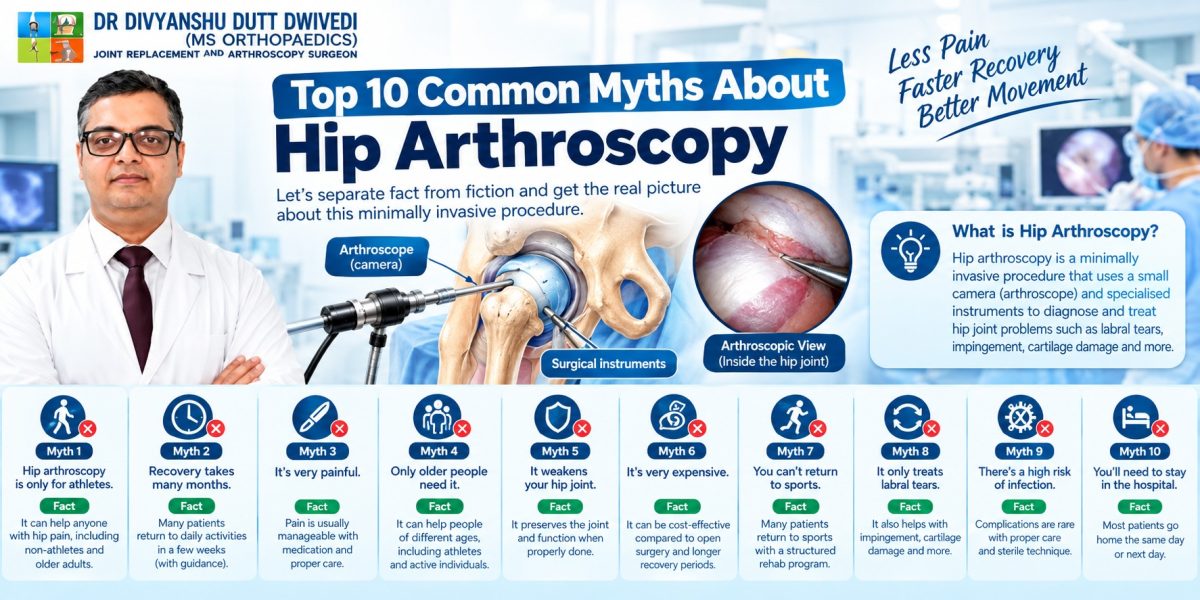
Hip arthroscopy is often surrounded by questions, assumptions, and conflicting information. The Top 10 Common Myths About Hip Arthroscopy can create confusion for patients considering treatment. Some believe hip arthroscopy is only suitable for athletes, while others think it can treat every type of hip pain or prevent hip replacement. Understanding these misconceptions can help patients develop realistic expectations about the procedure.
In reality, hip arthroscopic surgery is a minimally invasive procedure used for selected conditions, including hip labral tears, femoroacetabular impingement, and certain problems inside the joint. Treatment depends on symptoms, examination findings, imaging results, cartilage condition, and previous treatment. This guide explains the facts behind common hip arthroscopy myths and what patients should know before considering surgery.
Common Hip Arthroscopy Myths vs Facts
| Common Myth | The Fact | What Patients Should Know |
| Hip arthroscopy is only for athletes | It can also help selected non-athletes with certain hip conditions. | Candidacy depends on the diagnosis, symptoms, imaging and overall joint health. |
| Hip arthroscopy is major open surgery | It is a minimally invasive procedure performed through small portals. | Less invasive does not mean there is no recovery period. |
| Every hip labral tear needs surgery | Not every labral tear requires an operation. | Symptoms and response to non-surgical treatment are important. |
| Hip arthroscopy can cure hip arthritis | It does not reverse advanced cartilage loss or established arthritis. | Advanced arthritis may require a different treatment approach. |
| Recovery is always quick | Recovery varies according to the procedure and individual patient. | Rehabilitation may take several weeks or months. |
| You can walk normally immediately | Some patients initially need crutches or limited weight bearing. | Weight-bearing instructions depend on what was treated. |
| Physical therapy is optional | Rehabilitation is an important part of recovery for many patients. | Strength, mobility and function need to be gradually restored. |
| Hip arthroscopy has no risks | Like other surgery, it carries potential complications. | Patients should discuss procedure-specific risks with their surgeon. |
| Hip arthroscopy guarantees pain relief | Results vary between patients. | Diagnosis, cartilage condition and patient selection influence outcomes. |
| It can treat every type of hip pain | Arthroscopy is appropriate only for selected conditions. | The underlying cause of hip pain must be identified first. |
What Is Hip Arthroscopy?
Hip arthroscopy is a minimally invasive procedure in which an orthopedic surgeon uses an arthroscope, a small instrument, to examine the inside of the hip joint. Small surgical openings allow specialized instruments to enter the joint when treatment is needed. Depending on the diagnosis, the surgeon may repair a labral tear, address hip impingement, remove loose tissue, or reshape abnormal bone. It is generally performed as an outpatient procedure, although the exact treatment and recovery vary between patients. Importantly, hip arthroscopy is not a treatment for every source of hip pain. A proper assessment helps determine whether the symptoms are coming from a problem that can actually be treated arthroscopically.
Why Do Patients Hear So Many Myths About Hip Arthroscopy?
Many hip arthroscopy misconceptions come from comparing the procedure with hip replacement or from assuming that a minimally invasive operation must have an easy recovery. Others develop because patients hear different experiences from friends, athletes, or online forums. The truth is more individual. A person with a small symptomatic labral tear may have a very different treatment plan from someone with significant cartilage loss or benefits, osteoarthritis. Similarly, recovery depends on what was treated during surgery, not simply on the word “arthroscopy.” Understanding these differences is important when evaluating hip arthroscopy facts. A consultation should focus on the actual diagnosis, available alternatives, expected benefits, and possible limitations.
Top 10 Common Myths About Hip Arthroscopy
Myth 1: Hip Arthroscopy Is Only for Athletes
Fact: Athletes commonly develop conditions such as femoroacetabular impingement and hip labral tears, but hip arthroscopy for athletes is not its only application. Non-athletes can also develop labral injuries, hip impingement, loose bodies, cartilage problems, or other conditions affecting the joint. Symptoms may include groin pain, stiffness, clicking, catching, or restricted movement. Therefore, athletic participation does not determine whether someone needs surgery.
The decision depends on the underlying diagnosis, symptom severity, examination findings, imaging, joint health, and response to non-surgical treatment. In suitable patients, hip arthroscopy may address specific structural problems and support improved hip function. Age, occupation, or sporting level alone should not determine candidacy for treatment.
Myth 2: Hip Arthroscopy Is it the same as major open hip surgery?
Fact: Hip arthroscopy is different from traditional open hip surgery. It is a minimally invasive procedure performed through small portals, using an arthroscope and specialized instruments to examine and treat selected problems inside the joint. The approach generally involves less disruption to surrounding tissues than a large open incision.
However, minimally invasive does not mean effortless or risk-free. Patients may still experience pain, swelling, temporary movement restrictions, and a period of rehabilitation. Depending on the diagnosis, hip scope surgery may involve labral repair, removal of damaged tissue, or bone reshaping for femoroacetabular impingement. The surgical technique is selected according to the condition, joint health, and treatment goals.
Myth 3: Every Hip Labral Tear Needs Surgery
Fact: A hip labral tear does not automatically mean that surgery is required. Some labral tears may cause minimal symptoms or may be discovered incidentally during imaging. When symptoms are manageable, treatment may initially involve activity modification, appropriate medication, physical therapy, and other non-surgical measures.
Surgery may be considered when persistent symptoms significantly affect daily activities, exercise, or sports despite appropriate conservative treatment. The underlying cause also matters because impingement, trauma, repetitive stress, or structural abnormalities can contribute to labral damage. Therefore, an MRI finding alone should not determine treatment. A complete assessment of symptoms, physical examination, imaging, joint condition, and functional limitations helps determine whether hip arthroscopic surgery is appropriate.
Myth 4: Hip Arthroscopy Can Cure Hip Arthritis
Fact: Hip arthroscopy for arthritis requires careful patient selection because arthroscopy cannot reverse advanced cartilage loss or established osteoarthritis. It may have a role in selected patients with specific structural problems, such as femoroacetabular impingement or labral pathology, but it should not be considered a universal treatment for hip arthritis.
This distinction is important because hip arthroscopy and hip replacement address different clinical situations. Patients with significant arthritis may require other treatment options depending on the extent of cartilage damage, symptoms, mobility, and overall joint health. A detailed clinical assessment and appropriate imaging can help determine the most suitable approach. Patients should therefore avoid assuming that arthroscopy can restore severely damaged cartilage or eliminate the need for future joint replacement.
Myth 5: Everyone Recovers Quickly After Hip Arthroscopy
Fact: Recovery after hip arthroscopy is not the same for every patient. The procedure performed, severity of the condition, tissues treated, general health, and rehabilitation progress can all influence recovery. A straightforward procedure may have a different timeline from labral repair combined with treatment for femoroacetabular impingement.
Some patients may need crutches, temporary activity restrictions, and structured physical therapy before returning to normal activities. Recovery can take several weeks or months rather than only a few days. Patients should therefore avoid comparing their progress with another person’s experience. Following the surgeon’s rehabilitation plan and gradually improving mobility, strength, and function is more important than expecting a fixed recovery period.
Myth 6: You Can Walk Normally Immediately After Hip Arthroscopy
Fact: Some patients can begin walking soon after hip arthroscopy, but this does not necessarily mean they can walk normally without support. Walking after hip arthroscopy depends on the procedure performed and the surgeon’s postoperative instructions. Crutches may be recommended to reduce weight on the operated hip while specific tissues heal.
Weight-bearing restrictions can vary after procedures such as labral repair or bone reshaping. Patients should not stop using crutches simply because their pain has improved. Gradual weight-bearing helps protect healing tissues and allows mobility to progress safely. The treating surgeon and rehabilitation team should determine when support can be reduced. Following these instructions can help patients progress from protected walking toward normal movement and daily activities.
Myth 7: Physical Therapy Is Optional After Hip Arthroscopy
Fact: Physical therapy after hip arthroscopy is an important part of recovery for many patients. While surgery addresses a structural problem, rehabilitation helps restore hip mobility, muscle strength, coordination, balance, and functional movement. A physiotherapist can develop exercises according to the procedure performed and the patient’s individual recovery stage.
Rehabilitation should not be rushed because different procedures have different healing requirements. Patients may gradually work on range of motion, strengthening, walking mechanics, and functional activities before returning to higher-demand exercise or sports. Skipping prescribed therapy or progressing too quickly may affect recovery. Therefore, postoperative rehabilitation should be viewed as part of the overall treatment plan rather than an optional addition to hip arthroscopic surgery.
Myth 8: Hip Arthroscopy Has No Risks Because It Is Minimally Invasive
Fact: Minimally invasive surgery does not mean completely risk-free. Like other surgical procedures, hip arthroscopy risks can include infection, bleeding, nerve or blood-vessel injury, anesthesia-related complications, persistent symptoms, or problems related to healing. The level of risk can vary according to the patient’s health, diagnosis, procedure, and surgical circumstances.
Hip arthroscopy also uses traction to create working space inside the joint, which can sometimes contribute to temporary numbness or soft-tissue discomfort. Patients should discuss the potential benefits and complications with their surgeon before treatment. Understanding possible risks does not mean complications are expected. Instead, it allows patients to make an informed decision and understand what warning signs or postoperative concerns may require medical attention.
Myth 9: Hip Arthroscopy Guarantees Complete Pain Relief
Fact: Hip arthroscopy cannot guarantee complete or permanent pain relief for every patient. Treatment outcomes depend on factors such as the underlying diagnosis, cartilage condition, severity of joint damage, patient selection, procedure performed, and rehabilitation. A patient with a clearly treatable intra-articular problem may have a different outlook from someone with advanced arthritis or another source of pain.
Accurate diagnosis is therefore essential before surgery. Hip pain can sometimes originate from the lower back, tendons, bursae, muscles, or other surrounding structures rather than the joint itself. The goal of treatment should be realistic improvement in pain, movement, and function based on the individual diagnosis. Patients should discuss expected outcomes with their surgeon rather than relying on promises of complete pain relief.
Myth 10: Hip Arthroscopy Can Treat Every Type of Hip Pain
Fact: Hip arthroscopy is designed for selected conditions affecting structures inside the hip joint, not every possible cause of hip pain. Symptoms may result from labral tears, femoroacetabular impingement, cartilage damage, arthritis, tendon problems, bursitis, the lower back, or other surrounding structures.
This makes an accurate diagnosis essential before considering surgery. A specialist may review symptoms, perform a physical examination, and recommend imaging such as X-rays or MRI. In some cases, physical therapy, activity modification, medication, or other non-surgical care may be more appropriate. Arthroscopy may be considered when the diagnosis supports it and conservative treatment has not provided adequate relief. The key question is not simply whether the patient has hip pain, but whether the underlying cause can benefit from hip arthroscopic surgery.
What Conditions Can Hip Arthroscopy Treat?
Hip arthroscopy can be used to diagnose and treat selected problems affecting the hip joint. Common conditions include femoroacetabular impingement, hip labral tears, loose cartilage fragments, inflamed joint tissue, and certain structural abnormalities. Depending on the diagnosis, a surgeon may repair a damaged labrum, remove problematic tissue, or reshape bone that causes abnormal contact within the joint. However, hip arthroscopy is not a treatment for every type of hip pain. Its suitability depends on the underlying condition, symptoms, imaging findings, cartilage health, previous treatment, and individual goals. Understanding the specific diagnosis is therefore important before considering hip arthroscopic surgery.
Can Physical Therapy Help Avoid Hip Arthroscopy?
Physical therapy can help some patients manage hip symptoms and may reduce the need for hip arthroscopy. Treatment may include exercises to improve hip and core strength, flexibility, movement control, and overall joint function. Activity modification can also reduce movements that aggravate symptoms. However, physical therapy does not repair every structural problem, such as a significant labral tear or severe bone abnormality. The goal of conservative treatment is often to control symptoms and improve function without surgery. If pain, stiffness, or movement limitations continue despite appropriate non-surgical care, a specialist may discuss arthroscopy or other treatment options based on the patient’s diagnosis and individual needs.
What Is Recovery Like After Hip Arthroscopy?
Hip arthroscopy recovery usually progresses gradually and depends on the procedure performed and the patient’s individual healing. Some patients may initially require crutches, temporary weight-bearing restrictions, and activity modifications. Physical therapy can then help restore hip mobility, muscle strength, coordination, and functional movement. Recovery may take several weeks or months, particularly when procedures such as labral repair or bone reshaping are performed. Patients should not compare their progress with someone else’s timeline because recovery varies between individuals. Following the surgeon’s rehabilitation instructions is important for safe progression. Increasing pain, unusual symptoms, or concerns during recovery should be discussed with the treating medical team promptly.
How Do Doctors Decide Who Is a Candidate for Hip Arthroscopy?
A hip arthroscopy candidate is assessed through more than symptoms alone. Doctors consider the patient’s medical history, physical examination, imaging results, diagnosis, cartilage condition, previous treatment, activity level, and treatment goals. Conditions such as symptomatic femoroacetabular impingement or a labral problem may be considered when clinical findings match the patient’s symptoms. Advanced osteoarthritis may make arthroscopy less appropriate because the procedure cannot restore severely damaged cartilage. The purpose of assessment is to determine whether surgery can reasonably address the source of symptoms. Patients should not make decisions based only on an MRI report. A personalized evaluation helps determine whether hip arthroscopic surgery is suitable.
What Questions Should You Ask Before Hip Arthroscopy?
Before deciding on hip arthroscopy, patients should understand both the reason for surgery and the expected recovery. Useful questions include:
- What is causing my hip pain?
- Do I have a hip labral tear or femoroacetabular impingement?
- What did my X-ray or MRI show?
- Can physical therapy or activity modification help first?
- What exactly will be treated during surgery?
- Will I need crutches?
- How long could rehabilitation take?
- When can I return to work, exercise, or sport?
- What complications are relevant to my case?
- What outcome should I realistically expect?
These questions help patients compare treatment choices based on their own diagnosis instead of relying on general claims about hip arthroscopy facts found online.
When Should You Consult a Hip Arthroscopy Specialist?
Persistent hip or groin pain should be evaluated when symptoms continue, repeatedly return, or begin affecting daily activities, exercise, or sports. Symptoms such as clicking, catching, stiffness, restricted movement, or pain during physical activity may also require assessment. A hip arthroscopy specialist can investigate whether symptoms are related to a labral tear, femoroacetabular impingement, cartilage damage, arthritis, or another condition. The first step is identifying the cause rather than automatically choosing surgery. Depending on the diagnosis, treatment may include physical therapy, activity modification, medication, injections, or surgery. If arthroscopy is considered, patients should discuss its potential benefits, alternatives, risks, recovery, and expected outcomes before making a treatment decision.
Hip Arthroscopy Myths and Facts: What Should Patients Remember?
The Top 10 Common Myths About Hip Arthroscopy shows why patients should look beyond simple claims about the procedure. Hip arthroscopy is neither a solution for every hip problem nor a treatment that should automatically be avoided. It can benefit selected patients with conditions such as labral tears and femoroacetabular misalignment, but it also has limitations, risks, and a rehabilitation period. Not every labral tear requires surgery, and advanced arthritis may not be suitable for arthroscopic treatment. Recovery also varies between patients. Understanding hip arthroscopy myths and facts requires considering the diagnosis, symptoms, imaging, treatment alternatives, joint health, and individual goals with a qualified orthopedic specialist.
Meet Dr. Divyanshu Dutt Dwivedi—Trusted Hip Arthroscopy Specialist in Lucknow

Dr. Divyanshu Dutt Dwivedi is an internationally fellowship-trained orthopedic, joint replacement, and sports injury surgeon providing specialist care for selected hip conditions. As a hip arthroscopy specialist in Lucknow, he focuses on accurate diagnosis, personalized treatment planning, and evidence-based surgical care. His approach considers symptoms, imaging, joint health, activity requirements, and previous treatment before recommending hip arthroscopy.
Clinical expertise includes:
- Hip arthroscopy and minimally invasive hip procedures
- Hip labral tear evaluation and treatment
- Femoroacetabular impingement assessment and management
- Sports-related hip injuries and joint problems
- Arthroscopic and joint-preservation procedures
- Complex orthopedic and joint-related conditions
Patients can discuss their symptoms, treatment options, expected recovery, and suitability for surgery during a personalized consultation with Dr. Divyanshu in Lucknow.
Conclusion
Understanding the difference between hip arthroscopy myths and facts can help patients make better-informed decisions about hip pain and treatment. Hip arthroscopy is neither a universal solution nor a procedure that should be feared simply because it involves surgery. It can be valuable for carefully selected conditions such as symptomatic labral tears and femoroacetabular impingement, while advanced arthritis and other causes of hip pain may require different approaches. The most important step is to identify the actual source of symptoms and discuss all reasonable treatment options. If persistent hip pain is affecting your work, exercise, walking, or quality of life, an orthopedic evaluation can help determine the next appropriate step.
Frequently Asked Questions About Hip Arthroscopy
Is hip arthroscopy safe?
Hip arthroscopy is generally considered a safe procedure when appropriately indicated, but it still carries surgical risks such as infection, nerve or blood-vessel injury, anesthesia-related problems, and persistent symptoms.
Is hip arthroscopy painful?
Some pain and discomfort are expected after hip arthroscopic surgery, particularly during the early recovery period. Pain usually improves progressively with appropriate medication, rehabilitation, and postoperative care.
Does every hip labral tear need surgery?
No. Some hip labral tears cause minimal symptoms and can be managed without surgery. Surgery may be considered when symptoms remain significant despite appropriate conservative treatment.
Can hip arthroscopy treat arthritis?
Hip arthroscopy for arthritis has limited indications and generally does not treat advanced osteoarthritis or restore severely damaged cartilage. Treatment depends on the severity and cause of joint degeneration.
How long does hip arthroscopy recovery take?
Recovery varies according to the procedure and patient. Some people resume basic activities relatively early, while full recovery and return to pain-free activity can take several months.
Can physical therapy replace hip arthroscopy?
In selected cases, physical therapy and activity modification can control symptoms sufficiently to avoid surgery. However, therapy does not physically repair every structural abnormality, so treatment depends on the diagnosis.
Can you walk after hip arthroscopy?
Many patients can begin walking with appropriate support after surgery, but walking after hip arthroscopy may initially require crutches or limited weight bearing depending on the procedure and surgeon’s protocol.
When can you return to sports after hip arthroscopy?
Return to sports after hip arthroscopy varies by injury, procedure, strength, and rehabilitation progress. Competitive athletes may require several months before safely returning to full sporting activity.
Who is a candidate for hip arthroscopy?
A suitable hip arthroscopy candidate generally has a condition that can be treated arthroscopically, symptoms that match the clinical findings, and a reasonable expectation of benefit after assessment of imaging and joint health.
What are the main hip arthroscopy risks?
Potential hip arthroscopy complications include infection, nerve or blood-vessel injury, soft-tissue discomfort, anesthesia-related problems, and failure to achieve the desired symptom improvement. Individual risk varies.
