How Is Shoulder Arthroscopy Used to Treat Sports Injuries in Lucknow?
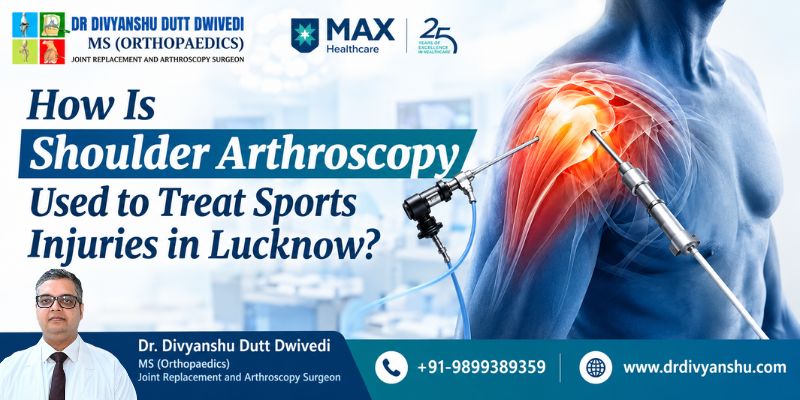
Sports activities such as cricket, badminton, swimming, tennis, volleyball, and gym training can place repeated stress on the shoulder. Sudden falls, collisions, overhead movements, or excessive training may cause rotator cuff tears, labral injuries, shoulder instability, or dislocation. Shoulder arthroscopy for sports injuries in Lucknow is a minimally invasive treatment approach that allows an orthopaedic surgeon to examine and treat selected shoulder problems through small incisions.
The treatment is not required for every sports injury. A detailed evaluation considers symptoms, injury severity, physical examination, imaging findings, previous treatment, and the athlete’s activity level. When appropriate, arthroscopy may help address damaged shoulder structures and support functional recovery. Proper rehabilitation and gradual return to sports are also essential for achieving a safe and effective recovery.
What Sports Injuries Can Affect the Shoulder?
The shoulder allows a wide range of movement, making it essential for sports but also prone to injury. Athletes may develop sports-related shoulder injuries due to falls, collisions, repetitive overhead movements, poor technique, or excessive training. Common conditions include rotator cuff tears, shoulder instability, dislocation, labral tears, SLAP injuries, and selected tendon or cartilage problems. Different sports and activities, such as cricket, badminton, tennis, swimming, volleyball, and gym workouts, can exert varying stresses on the shoulder. Some injuries respond well to rest, activity modification, and physiotherapy, while structural damage may require further assessment. Identifying the exact problem helps determine whether shoulder arthroscopy for sports injuries in Lucknow or non-surgical treatment is appropriate.
When Is Shoulder Arthroscopy Considered for a Sports Injury?
Shoulder arthroscopy treatment for sports injuries is considered when a structural problem is identified and symptoms continue to affect movement, strength, sport, work, or daily activities. A surgeon may discuss arthroscopy after an appropriate examination and imaging assessment when problems such as a significant rotator cuff tear, recurrent instability, dislocation-related labral injury, or selected labral tears are present. The decision is individual rather than based only on an MRI report. Some patients benefit from physiotherapy, medication, activity modification, or other non-surgical treatment first. In an athlete, the sporting demands also matter because treatment goals may include restoring stability, strength, controlled movement, and a safe return to sport.
How Are Sports-Related Shoulder Injuries Diagnosed?
Diagnosis usually begins with a detailed history and physical examination. The surgeon may ask how the injury occurred, whether the shoulder has dislocated, which movements cause pain, and whether weakness or instability affects sporting performance. X-rays can help assess bones and joint alignment, while MRI may provide information about the rotator cuff, labrum, tendons, and other soft tissues. In selected cases, an MR arthrogram or CT scan may provide additional information. The need for each test depends on the suspected injury. A useful sports injury shoulder assessment combines symptoms, examination findings, imaging, and functional demands rather than treating an imaging report as the diagnosis by itself.
How Does Shoulder Arthroscopy Work for Sports Injuries in Lucknow?
During shoulder arthroscopy, an arthroscope, a small camera, is inserted through a tiny opening near the shoulder joint. It provides a clear, magnified view of the internal structures on a monitor, helping the surgeon identify damage caused by a sports injury. Additional small openings allow specialised instruments to access the affected area. Based on the diagnosis, the surgeon may repair a rotator cuff tear, reattach a damaged labrum, stabilise an unstable shoulder, or treat other joint problems.
For selected patients, shoulder arthroscopy for sports injuries in Lucknow can treat structural damage through small surgical openings, limiting disruption to surrounding tissues. However, minimally invasive surgery still requires proper healing, rehabilitation, physiotherapy, and a gradual return to sports.
How Is Rotator Cuff Arthroscopy Used for Sports Injuries?
The rotator cuff consists of tendons that support shoulder movement and stability. Repetitive overhead activities in cricket, tennis, swimming, badminton, and throwing sports can place considerable stress on these tendons. When a significant tear causes persistent pain, weakness, or functional limitations, arthroscopic rotator cuff repair may be considered after clinical and imaging assessment. The procedure allows the surgeon to examine the tendon and repair it using specialised instruments and sutures or anchors.
Not every rotator cuff injury requires surgery. Treatment depends on the tear, symptoms, age, activity level, functional needs, and response to non-surgical care. For athletes, structured rehabilitation after repair is essential to protect healing tissue, restore strength, and support a gradual return to sporting activities.
How Is Shoulder Instability Treated Arthroscopically?
Shoulder instability can occur when an injury damages the labrum, capsule, or other structures responsible for keeping the shoulder joint stable. Athletes involved in contact or overhead sports may experience repeated slipping, partial dislocation, or complete dislocation. When recurrent instability is linked to suitable soft-tissue damage, arthroscopic shoulder stabilisation may be considered.
During stabilisation, the surgeon can repair and secure damaged labral or capsular tissue, often using suture anchors. The appropriate technique depends on the injury pattern and the condition of the shoulder. Previous dislocations, bone loss, associated injuries, and sporting requirements are also considered. Significant bone loss may require another stabilisation procedure. Therefore, a detailed assessment is important before choosing arthroscopy for sports-related shoulder instability.
What Is Arthroscopic Bankart Repair?
A Bankart injury commonly involves damage to the labrum and supporting tissues at the front of the shoulder socket following an anterior dislocation. In athletes experiencing recurrent instability, arthroscopic Bankart repair may be considered when the injury and shoulder anatomy are suitable for this approach. The procedure uses small portals to access the joint and specialised instruments to reattach the damaged labrum to the socket.
The aim of Bankart repair is to improve shoulder stability and reduce recurrent dislocation in appropriately selected patients. However, it is not suitable for every unstable shoulder. The number of previous dislocations, bone loss, age, sporting activity, associated injuries, and previous surgery can influence treatment planning. A thorough examination and appropriate imaging help determine whether arthroscopic stabilisation is appropriate.
Can Shoulder Arthroscopy Treat Labral and SLAP Injuries?
The labrum contributes to shoulder stability by helping deepen the socket. Sports involving repeated overhead movements or throwing can place stress on this structure. Trauma, dislocation, or repetitive loading may contribute to a labral injury. A SLAP tear affects the upper portion of the labrum and can cause pain, clicking, catching, or reduced sporting performance in some athletes. Arthroscopic labral repair may be considered when symptoms and clinical findings correspond with a treatable structural injury.
Treatment is not identical for every labral or SLAP tear. Age, sport, tear location, biceps involvement, shoulder stability, previous treatment, and functional requirements can influence the recommended approach. A detailed diagnosis is important because similar symptoms can result from several different shoulder conditions.
Which Athletes May Develop Shoulder Sports Injuries?
Different sports place different demands on the shoulder. Cricket bowlers and throwing athletes repeatedly generate high-speed shoulder movements, while tennis and badminton players perform frequent overhead strokes. Swimmers place repetitive loads on the shoulder, and volleyball players repeatedly serve and spike. Gym training can also produce symptoms when training volume, technique, or resistance exceeds the shoulder’s ability to adapt. Contact sports may increase the risk of instability following falls or collisions. These activities do not automatically cause structural damage. Shoulder sports injury treatment should begin by identifying the source of symptoms and considering the athlete’s training history, workload, technique, previous injuries, and functional goals.
Is Surgery Always Needed for a Sports-Related Shoulder Injury?
Surgery is not automatically required for every sports-related shoulder problem. Depending on the diagnosis, treatment may initially include activity modification, physiotherapy, medication, strengthening exercises, or other non-surgical measures. Some tendon and overuse injuries can improve with appropriately supervised rehabilitation. If pain, weakness, instability, or functional limitations continue despite suitable conservative treatment, surgery may become an option. Significant structural damage or recurrent instability can also influence the discussion. The choice should be based on the specific injury rather than the athlete’s desire to return quickly. A patient-specific approach helps determine whether shoulder arthroscopy for sports injuries in Lucknow or non-surgical treatment is more appropriate.
What Happens Before Shoulder Arthroscopy for a Sports Injury?
Before shoulder arthroscopy surgery, the surgeon reviews the patient’s symptoms, injury mechanism, medical history, previous treatment, medications, sporting activity, and functional limitations. A physical examination helps assess movement, strength, stability, and areas of tenderness. Imaging such as X-rays or MRI may be used when clinically appropriate to understand the condition of the bones and soft tissues.
The treatment plan is then discussed according to the confirmed or suspected diagnosis. Patients should understand the purpose of the proposed procedure, possible alternatives, expected rehabilitation, potential risks, and recovery requirements. A rotator cuff repair, Bankart repair, and labral procedure do not follow identical recovery pathways. Proper preoperative planning helps patients understand what to expect before undergoing arthroscopic treatment for shoulder injuries.
What Happens During Shoulder Arthroscopy?
Shoulder arthroscopy recovery depends on the procedure performed and the tissues that need to heal. Rehabilitation commonly progresses through carefully planned stages rather than immediately returning to normal sporting activity. Early treatment may focus on protecting the repair and maintaining appropriate movement. Later stages can introduce controlled strengthening, endurance exercises, coordination, and sport-specific activities according to the patient’s progress.
Returning to training simply because pain has reduced can place excessive stress on healing tissues. The rehabilitation programme may therefore be adjusted according to movement, strength, stability, symptoms, and functional progress. Athletes recovering from rotator cuff repair, Bankart repair, or labral surgery may follow different protocols. Consistent physiotherapy and follow-up are important parts of sports injury shoulder rehabilitation and can help prepare the athlete for a controlled return to activity.
When Can an Athlete Return to Sports?
There is no single recovery period that applies to every athlete following shoulder arthroscopy for athletes. Return to sport depends on the procedure, tissue healing, pain, range of motion, strength, shoulder stability, rehabilitation progress, and demands of the particular sport. A diagnostic procedure may have a different recovery pathway from a rotator cuff or Bankart repair.
Overhead and contact athletes may need additional strengthening and sport-specific progression before returning to competition. Instead of relying only on a fixed number of weeks, the rehabilitation team may consider functional performance and shoulder control. Throwing, serving, swimming, lifting, or contact activities can then be reintroduced gradually. Following the recommended progression helps avoid placing excessive demands on the recovering shoulder before it is adequately prepared.
How Is Return-to-Sport Rehabilitation Planned?
A return-to-sport programme after shoulder arthroscopy generally progresses from basic movement to controlled strengthening and then sport-specific activity. Early exercises may focus on restoring appropriate range of motion. Strengthening can later target the rotator cuff and muscles around the shoulder blade. Athletes may then perform controlled movements that resemble their sport, such as throwing, serving, swimming strokes, or racket movements. Training intensity is increased progressively when the shoulder responds well. The exact progression depends on the surgery and individual recovery. For competitive athletes, the rehabilitation plan may also consider training volume, playing position, dominant-arm demands, previous injuries, and the physical requirements of competition.
Why Choose an Experienced Orthopaedic Evaluation in Lucknow?
For athletes searching for shoulder injury treatment in Lucknow, the important step is not simply finding a surgical procedure. It is obtaining an accurate diagnosis and a treatment plan suited to the injury and sporting goals. Dr. Divyanshu Dutt Dwivedi provides orthopaedic care involving shoulder conditions, arthroscopy, sports injuries, and related joint problems. During consultation, patients can discuss symptoms, imaging findings, treatment options, rehabilitation expectations, and whether surgery is appropriate. The focus should remain on selecting the right treatment for the individual rather than assuming that arthroscopy is required. Patients can contact Dr Divyanshu Dutt Dwivedi at +91-9899389359 to discuss an appropriate shoulder evaluation in Lucknow.
Shoulder Arthroscopy for Sports Injuries in Lucknow: What Should You Ask?
Before choosing treatment, patients should ask what shoulder structure is injured, whether imaging confirms the diagnosis, and whether physiotherapy or activity modification could help. If surgery is recommended, ask which arthroscopic procedure is planned, what injury it will address, and what rehabilitation may involve. Athletes should also discuss expected recovery, when training can resume, and which functional criteria are considered before returning to competition. Ask about non-surgical alternatives, potential risks, and factors that may affect recovery. A detailed consultation with an orthopaedic specialist in Lucknow helps patients understand their diagnosis and choose an appropriate treatment approach for their sporting needs.
| Question | Why It Matters |
| What is the exact injury? | Clarifies the structure causing symptoms |
| Is surgery necessary? | Helps understand non-surgical alternatives |
| Which procedure is planned? | Explains the purpose of arthroscopy |
| How long is rehabilitation? | Helps plan work and sports activities |
| When can I return to sport? | Sets realistic recovery expectations |
Meet Dr Divyanshu Dutt Dwivedi – Trusted Shoulder Arthroscopy for Sports Injuries in Lucknow
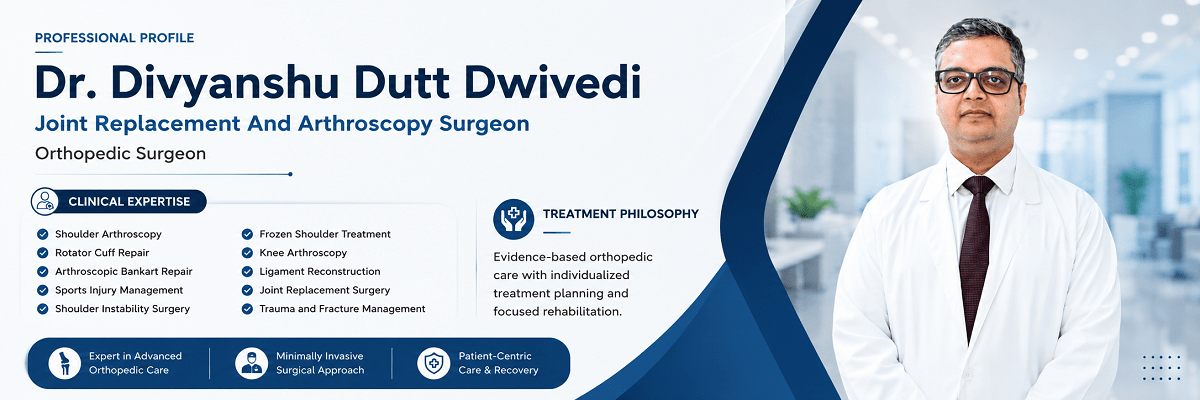
Dr. Divyanshu Dutt Dwivedi is an internationally fellowship-trained orthopaedic and sports injury surgeon with expertise in arthroscopic and joint-related procedures. His approach to shoulder arthroscopy for sports injuries in Lucknow focuses on accurate diagnosis, appropriate treatment selection, and structured rehabilitation based on each athlete’s condition and sporting requirements.
Clinical expertise includes:
- Shoulder arthroscopy for selected sports-related injuries
- Rotator cuff tear evaluation and arthroscopic repair
- Shoulder instability and arthroscopic stabilisation
- Bankart and labral injury treatment
- Sports injury assessment and rehabilitation planning
- Shoulder and elbow surgical care
- Return-to-sport guidance following appropriate treatment
Patients can discuss their symptoms, imaging findings, treatment options, rehabilitation needs, and sporting goals during a personalised consultation.
Why Dr Divyanshu Dutt Dwivedi for Shoulder Sports Injury Consultation?
Choosing treatment for a shoulder sports injury should begin with the diagnosis rather than a preference for a particular procedure. Dr. Divyanshu Dutt Dwivedi is an orthopaedic, joint replacement, and sports injury surgeon whose clinical focus includes arthroscopic management of shoulder and other joint conditions. Patients can discuss problems such as shoulder instability, rotator cuff injuries, labral problems, and sports-related shoulder pain during consultation. Treatment recommendations should be based on examination, imaging, activity requirements, previous treatment, and overall health. If you are looking for a shoulder arthroscopy surgeon in Lucknow, you can contact Dr Divyanshu Dutt Dwivedi at +91-9899389359 for further consultation.
Conclusion
Shoulder arthroscopy for sports injuries in Lucknow can provide a minimally invasive way to diagnose and treat selected problems involving the rotator cuff, labrum, shoulder stability, and other joint structures. However, surgery is only one part of the treatment pathway. A proper diagnosis, consideration of non-surgical options, procedure-specific rehabilitation, and a gradual return to sport are equally important. Athletes should not choose treatment based only on the name of a procedure or a scan report. A detailed orthopaedic assessment can help determine the most appropriate approach for the injury and the individual’s sporting goals. For consultation with Dr Divyanshu Dutt Dwivedi, call +919899389359.
Frequently Asked Questions About Shoulder Arthroscopy for Sports Injuries in Lucknow
Can shoulder arthroscopy treat sports injuries?
Yes. Shoulder arthroscopy for sports injuries can treat selected rotator cuff tears, labral injuries, and instability. Suitability depends on diagnosis, symptoms, injury severity, and non-surgical treatment response.
Is shoulder arthroscopy suitable for athletes?
Shoulder arthroscopy can be suitable for athletes with certain structural injuries. Treatment decisions depend on examination, imaging, sporting demands, injury severity, rehabilitation requirements, and expected recovery.
Can shoulder arthroscopy treat a rotator cuff tear?
Selected rotator cuff tears can be repaired arthroscopically. Treatment depends on tear characteristics, symptoms, weakness, activity level, previous treatment, and response to appropriate non-surgical management.
Can arthroscopy treat recurrent shoulder dislocation?
Yes, arthroscopic shoulder stabilisation can treat recurrent dislocation caused by suitable soft-tissue damage. Significant bone loss or associated structural problems may require a different surgical approach.
How long does recovery take after shoulder arthroscopy?
Recovery varies according to the procedure and individual healing. Rotator cuff, labral, and instability repairs may require several months of rehabilitation before demanding sporting activities resume.
When can an athlete return to sports after shoulder arthroscopy?
Return to sport depends on healing, movement, strength, stability, and sport-specific function. Athletes usually progress gradually through rehabilitation before resuming overhead, contact, or competitive activities.
Is physiotherapy required after shoulder arthroscopy?
Physiotherapy is commonly an important part of recovery after shoulder arthroscopy. Rehabilitation may progress from protected movement to strengthening and sport-specific exercises according to the procedure.
Where can I consult for a sports-related shoulder injury in Lucknow?
Patients can seek orthopaedic evaluation in Lucknow for shoulder pain, instability, dislocation, rotator cuff, or labral injuries. Dr Divyanshu Dutt Dwivedi can be contacted at +91-9899389359.
