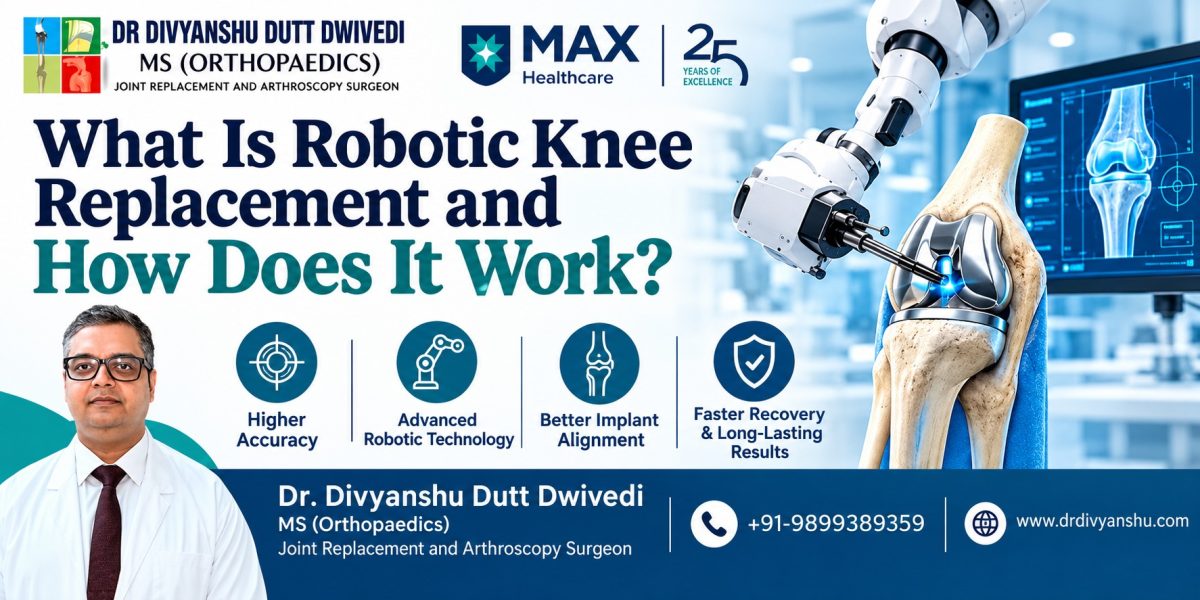
What-Is-Robotic-Knee-Replacement-and-How-Does-It-Work-1200x600.jpg

Knee pain can affect walking, climbing stairs, rising from a chair, and sleeping. When arthritis severely damages the joint and medicines, physiotherapy, lifestyle changes, injections, or other treatments no longer provide relief, knee replacement surgery may be considered. Robotic knee replacement is an advanced option for selected patients, combining an orthopedic surgeon’s expertise with computer-assisted planning and robotic technology.

Robotic knee replacement is a surgeon-controlled procedure that supports accurate measurements, bone preparation, implant positioning, and alignment. The robot does not perform the surgery independently. Instead, the orthopedic surgeon controls every important step, makes clinical decisions, and uses the technology to follow a personalized surgical plan. This approach may improve precision and help support effective knee replacement outcomes.

What Is Robotic Knee Replacement?

Robotic knee replacement is an advanced form of technology-assisted knee replacement surgery. It helps the orthopedic surgeon plan and perform the procedure according to the patient’s unique knee anatomy. During surgery, damaged cartilage and a small amount of bone are removed from the femur and tibia, and artificial components are positioned to restore joint function.

Robotic systems use preoperative scans or real-time information collected during surgery to create a digital map of the knee. This helps the surgeon evaluate alignment, implant size, bone preparation, and ligament balance before and during the procedure. The robot does not replace the surgeon; it supports greater control, precision, and consistency. Depending on the system used, robotic knee replacement may involve CT-based planning or imageless, intraoperative mapping techniques.

How Does Robotic Knee Replacement Work?

Robotic knee replacement follows a structured, surgeon-led process. Although techniques vary between robotic platforms, the main steps are similar: evaluating the knee, creating a digital surgical plan, preparing damaged bone, positioning the implant, balancing the joint, and verifying alignment. The technology supports precision and planning, while the orthopedic surgeon remains responsible for every major surgical decision.

1. Detailed Knee Evaluation

The process begins with a comprehensive orthopedic evaluation. Your surgeon reviews symptoms, medical history, walking pattern, knee movement, deformity, previous treatments, and imaging results. X-rays or other investigations may help assess arthritis and joint damage. This evaluation determines whether knee replacement is appropriate. Some patients with knee pain do not need surgery, and robotic assistance is unnecessary for some knee replacements.

2. Creating a Digital Map of the Knee

Many robotic-assisted knee replacement systems use digital mapping to understand the patient’s anatomy. Depending on the platform, this may involve a preoperative CT scan or information collected during surgery. Some systems create a three-dimensional model, while others use intraoperative mapping without CT imaging. Therefore, robotic knee replacement does not always require a CT scan; requirements vary by system and technique.

3. Creating a Personalized Surgical Plan

After mapping the knee, the surgeon develops a personalized surgical plan. This may include implant size and position, bone preparation, alignment, joint orientation, ligament balance, range of motion, and femoral and tibial component placement. The plan is adapted to the patient’s anatomy and condition. This personalized workflow distinguishes robotic-assisted surgery from simply using a robotic device during the operation.

4. Assessing the Knee and Soft Tissues

Successful knee replacement involves more than accurate implant placement. The artificial joint must also move smoothly and remain stable. During surgery, the surgeon evaluates the knee, ligaments, alignment, and soft-tissue balance. Robotic navigation may provide real-time information to support these assessments. If necessary, the surgeon can adjust the surgical plan before placing the final implant components.

5. Robotic-Assisted Bone Preparation

The term “robotic” does not mean that a machine performs surgery independently. Instead, the surgeon controls the robotic system as a precise surgical tool. It helps guide planned bone preparation and may provide boundaries or feedback based on the surgical plan. This approach supports controlled removal of damaged bone and cartilage while maintaining the intended alignment and orientation.

6. Implant Positioning and Alignment

After preparing the damaged areas, the surgeon may place trial components to assess the knee. Movement, stability, alignment, ligament balance, and overall function are carefully checked. Adjustments can be made when needed. Once the surgeon is satisfied with the fit and performance, the final artificial knee components are implanted. The goal is a stable, functional joint suited to the patient’s anatomy.

7. Final Verification

Before completing the operation, the surgeon reviews the implant’s position, alignment, stability, and overall function. Robotic systems may provide additional information to confirm whether the planned surgical objectives have been achieved. This final verification can support accurate implant placement and balanced knee movement. However, the entire procedure remains surgeon-led, with technology serving as an aid rather than an independent operator.

Does a Robot Actually Perform Knee Replacement Surgery?

No. A robot does not independently perform knee replacement surgery. The orthopedic surgeon remains fully in control throughout the procedure. Robotic technology acts as an advanced surgical assistance tool, helping with preoperative planning, three-dimensional imaging, bone measurements, implant positioning, alignment, and precise execution of the surgical plan.

The surgeon makes all clinical decisions and performs the essential steps, including removing damaged cartilage and bone, preparing the joint surfaces, placing the implants, and responding to findings during surgery. Therefore, “robotic knee replacement” does not mean a machine operates on the patient. It means the surgeon uses robotic assistance to improve planning and precision while applying professional judgment, experience, and surgical skill.

What Are the Benefits of Robotic Knee Replacement?

Robotic-assisted knee replacement may offer benefits related to surgical planning, implant positioning, alignment, precision, and consistency. Using detailed anatomical data, the surgeon can create a personalized plan and make controlled adjustments during surgery. However, robotic technology supports the surgeon’s expertise; it does not replace clinical judgment or guarantee superior outcomes.

More Detailed Surgical Planning

Robotic systems create a digital model of the knee using imaging and intraoperative information. This helps the surgeon plan bone cuts, implant size, positioning, and alignment according to the patient’s anatomy. Detailed planning may improve surgical preparation and allow potential issues to be identified before the procedure begins.

Improved Alignment Accuracy

Research suggests robotic-assisted total knee replacement may reduce alignment errors compared with conventional surgery. A 2025 systematic review and meta-analysis of 21 randomized controlled trials involving 2,692 patients found significantly fewer mechanical alignment outliers with robotic-assisted surgery. Accurate alignment may support implant positioning and long-term knee function.

Personalized Implant Positioning

Robotic knee replacement allows the surgeon to use detailed anatomical information when planning implant placement. Rather than relying only on standard measurements, the surgical plan can be adjusted to the patient’s bone structure, deformity, ligament balance, and movement pattern. This approach supports more individualized surgical decision-making.

Real-Time Information

During surgery, some robotic systems provide real-time information about knee position, bone anatomy, alignment, and ligament balance. This feedback helps the surgeon evaluate the knee throughout the procedure and make informed adjustments when necessary. Real-time guidance may improve control during important stages of implant positioning and balancing.

Controlled Bone Preparation

Robotic assistance can help the surgeon follow the planned orientation, depth, and boundaries during bone preparation. The system may provide visual or physical guidance to help avoid unnecessary bone removal. This controlled approach can support accurate implant placement while allowing the surgeon to remain responsible for every surgical decision.

Potential for More Consistent Execution

Robotic technology may help reduce some variability associated with manual surgical techniques. By combining preoperative planning, intraoperative measurements, and guided bone preparation, the system can support more consistent execution of the surgical plan. Results still depend on the surgeon’s experience, patient anatomy, implant choice, and rehabilitation.

However, greater technical precision does not automatically mean every patient will experience a better clinical outcome. Current evidence supports improved alignment accuracy, but studies have not consistently demonstrated major differences in patient-reported function across all comparisons. Patients should discuss potential benefits, limitations, risks, and expected recovery with their orthopedic surgeon.

How Accurate Is Robotic Knee Replacement?

Robotic knee replacement can improve the accuracy and consistency of implant positioning, alignment, and bone preparation in selected patients. Robotic systems help surgeons follow a personalized preoperative plan and may reduce alignment errors compared with conventional knee replacement. Research from randomized controlled trials has reported fewer mechanical alignment outliers and less deviation from the neutral mechanical axis with robotic-assisted surgery.

However, greater technical accuracy does not guarantee faster recovery, zero pain, or a perfect outcome. Studies have not consistently shown significant differences in WOMAC or Oxford Knee Scores at every follow-up stage. Recovery and long-term results also depend on the patient’s condition, implant choice, surgical technique, rehabilitation, general health, and surgeon’s experience. A detailed evaluation is essential to determine whether robotic knee replacement is appropriate.

Robotic Knee Replacement vs. Traditional Knee Replacement

Both robotic-assisted and conventional total knee replacement are established approaches to treating advanced knee joint damage.

The main difference is the technology used to assist the surgeon.

Feature Robotic Knee Replacement Traditional Knee Replacement
Surgical planning Computer-assisted planning Conventional surgical planning
Anatomical mapping Digital/intraoperative mapping depending on system Conventional measurements
Bone preparation Robotic guidance may be used Conventional instruments
Implant positioning Technology-assisted Surgeon-guided
Surgeon control Surgeon remains in control Surgeon remains in control
Technology requirement Robotic platform Standard surgical instruments
Cost May be higher Usually lower
Clinical results Evidence supports alignment benefits Established and effective

The decision should not depend solely on robotic technology. An experienced orthopedic surgeon determines whether robotic assistance suits the patient’s anatomy, diagnosis, surgical needs, and treatment goals. 

Who Is a Good Candidate for Robotic Knee Replacement?

A patient may be considered for robotic knee replacement when advanced knee disease causes persistent pain, stiffness, reduced mobility, or difficulty performing daily activities, and non-surgical treatments no longer provide adequate relief.

Common indications include:

  • Advanced knee osteoarthritis
  • Severe cartilage damage
  • Persistent pain or swelling
  • Difficulty walking, climbing stairs, or standing
  • Knee stiffness or deformity
  • Abnormal leg alignment
  • Limited daily activities
  • Failure of medicines, physiotherapy, injections, or lifestyle changes

A thorough evaluation, including medical history, physical examination, and imaging, is essential before surgery. Most patients suitable for primary knee replacement may also qualify for robotic-assisted surgery, but suitability depends on individual health, bone condition, alignment, and the surgeon’s assessment.

Does Robotic Knee Replacement Require a CT Scan?

Not always. The need for a CT scan depends on the robotic system used by the orthopedic surgeon. Some robotic platforms require a preoperative CT scan to create a detailed, three-dimensional model of the patient’s knee. This model helps the surgical team plan implant positioning and alignment before the procedure.

Other robotic systems use information collected during surgery and may not require a preoperative CT scan. Patients should ask which robotic technology is being used and what imaging is necessary. It is also important to remember that all robotic knee replacement procedures are not the same. Different systems use different planning, navigation, and alignment methods, so the word “robotic” alone does not provide enough information for comparison.

What Robotic Knee Replacement Systems Are Used?

Several robotic platforms are used in knee replacement surgery, including

  • Mako™ by Stryker
  • ROSA® by Zimmer Biomet
  • CORI™ by Smith+Nephew
  • VELYS™ by DePuy Synthes

These robotic-assisted knee replacement systems may differ in:

  • Imaging requirements and preoperative planning
  • Bone-tracking and positioning methods
  • Intraoperative surgical guidance and workflow
  • Implant alignment, ligament balancing, and bone preparation techniques

The best system depends on the patient’s condition, knee anatomy, implant plan, and surgeon’s approach. Patients should focus less on the brand name and more on whether robotic assistance is suitable for their surgery and whether the surgeon has the training and experience to use the technology safely and effectively.

What Happens During Robotic Knee Replacement Surgery?

The exact surgical workflow varies, but a typical robotic knee replacement procedure may follow this sequence:

Preoperative evaluation: The surgeon confirms the diagnosis, assesses symptoms, reviews medical history, and determines whether robotic knee replacement is appropriate.

Imaging and planning: X-rays, CT scans, or intraoperative mapping help create a detailed surgical plan based on the patient’s knee anatomy.

Surgical registration: The patient’s anatomy is registered with the computer system, allowing the robotic technology to track the knee accurately during surgery.

Planning: The surgeon selects implant size, alignment, positioning, and bone preparation details to support proper knee function and stability.

Bone preparation: Robotic assistance guides the surgeon during bone preparation and planned bone cuts while preserving healthy tissue whenever possible.

Trial components: Temporary implants may be placed to evaluate knee stability, alignment, movement, and overall balance before final implantation.

Final implants: After confirming fit, alignment, and function, the surgeon inserts and secures the permanent implant components.

Recovery: Postoperative care includes monitoring, pain management, early movement, physical therapy, and rehabilitation based on the surgical team’s protocol.

Robotic Knee Replacement Recovery

Recovery after robotic knee replacement surgery varies from patient to patient and depends on factors such as age, overall health, muscle strength, arthritis severity, preoperative mobility, surgical complexity, pain control, and commitment to rehabilitation. Early recovery usually focuses on managing pain and swelling, walking safely with support, restoring knee movement, beginning physiotherapy, strengthening the muscles, preventing complications, and gradually returning to daily activities.

Robotic assistance may help the surgeon achieve accurate implant positioning, but it does not guarantee instant recovery or eliminate the need for rehabilitation. Patients should follow their surgeon’s instructions regarding weight-bearing, prescribed exercises, wound care, medications, follow-up appointments, and activity progression. Consistent physiotherapy, a balanced diet, adequate rest, and timely communication with the medical team can support a steady and safe recovery.

What Are the Risks and Limitations of Robotic Knee Replacement?

Robotic knee replacement carries the same general surgical risks as conventional knee replacement. Possible complications include infection, blood clots, bleeding, stiffness, persistent pain, implant-related problems, nerve or blood vessel injury, instability, and, in some cases, revision surgery. Although robotic assistance supports detailed planning and controlled bone preparation, it cannot eliminate these risks or guarantee a perfect outcome. Recovery may also vary depending on age, overall health, bone quality, muscle strength, and commitment to rehabilitation.

Robotic systems may also involve technology-specific challenges, such as registration or tracking issues. Surgical teams are trained to manage these situations and can use conventional instruments when required. Current evidence suggests that robotic assistance may improve technical alignment, but the clinical benefit differs between patients. Surgeon experience, appropriate patient selection, implant choice, surgical execution, rehabilitation, and long-term follow-up remain essential to achieving a successful result.

How Long Does a Robotic Knee Replacement Last?

Many patients want to know whether a robotic knee replacement lasts longer than a conventional knee replacement. At present, there is no guarantee that robotic assistance alone will increase implant lifespan. Robotic technology may help the surgeon plan alignment and position the implant accurately, which are important factors in joint replacement. However, implant durability depends on several additional considerations, including implant design, surgical technique, bone quality, body weight, activity level, general health, and adherence to follow-up care.

Research is continuing to assess the long-term benefits of robotic-assisted knee replacement. Patients should therefore avoid assuming that robotic surgery automatically determines how long an implant will last. A more reliable approach is to focus on an accurate diagnosis, experienced surgical care, suitable implant selection, precise positioning, appropriate activity modification, and structured rehabilitation. These combined factors play an important role in supporting long-term knee function and implant performance.

Is Robotic Knee Replacement Better Than Traditional Surgery?

Whether robotic knee replacement is better than traditional surgery depends on the patient’s condition, anatomy, treatment goals, and the surgeon’s assessment. Robotic systems provide tools for three-dimensional planning, anatomical mapping, alignment assessment, implant positioning, and controlled bone preparation. These features may be particularly useful in complex cases or when detailed planning is important. However, robotic assistance does not automatically make every knee replacement superior, and conventional surgery remains an effective treatment for many suitable patients.

The most appropriate procedure is the one that safely addresses the underlying knee problem and supports a stable, functional joint. A successful outcome depends on more than technology. Accurate diagnosis, appropriate patient selection, implant choice, surgical experience, rehabilitation, and follow-up care all matter. Patients should discuss the expected benefits, limitations, alternatives, and suitability of robotic-assisted surgery with an experienced orthopedic joint replacement surgeon before making a decision.

How Much Does Robotic Knee Replacement Cost in Lucknow?

The robotic knee replacement cost in Lucknow varies according to the patient’s medical needs, hospital facilities, implant selection, and treatment plan. Factors that may affect the total expense include the hospital and room category, robotic technology, implant type, surgeon’s fees, anesthesia, diagnostic tests, medicines, medical consumables, hospital stay, rehabilitation, and physiotherapy. The cost may also differ when one or both knees require surgery or when the condition is medically complex.

Because these factors vary, patients should not rely on a general online estimate as a final price. During a consultation, the orthopedic surgeon can assess the severity of arthritis, review imaging, determine whether knee replacement is necessary, and decide whether robotic assistance is appropriate. The hospital team can then provide a more relevant estimate based on the recommended procedure, implant, expected stay, and recovery requirements. Patients should also ask about inclusions, exclusions, follow-up visits, and rehabilitation costs.

Robotic Knee Replacement in Lucknow

Patients searching for robotic knee replacement in Lucknow should evaluate more than the availability of robotic equipment. Important considerations include the surgeon’s experience in joint replacement, training with robotic systems, approach to patient selection, surgical planning process, implant knowledge, rehabilitation support, and ability to explain the procedure clearly. Patients should also understand the expected benefits, possible limitations, alternatives, recovery timeline, and follow-up requirements before choosing treatment.

A specialist consultation can help patients with persistent knee pain, advanced arthritis, stiffness, deformity, or reduced mobility understand whether knee replacement is necessary. The surgeon can review symptoms, physical findings, X-rays, medical history, and lifestyle goals before recommending conventional or robotic-assisted surgery. Robotic technology should support a carefully planned treatment strategy, not replace sound clinical judgment. The right diagnosis, experienced surgical care, and structured rehabilitation remain central to achieving a safe and functional outcome.

When Should You Consult a Knee Replacement Specialist?

Consult a knee replacement specialist if persistent or worsening knee pain affects walking, climbing stairs, sleeping, working, or daily activities. An orthopedic evaluation is especially important when pain continues despite medication, physiotherapy, injections, or other non-surgical treatments.

You should also seek specialist advice if your knee has become severely stiff, swollen, unstable, or visibly deformed, or if X-rays show advanced arthritis. Consulting a specialist does not automatically mean surgery is necessary. Your doctor will identify the cause, assess joint damage, review treatment options, and determine whether robotic knee replacement or another approach is suitable for your condition. For patients considering robotic knee replacement in Lucknow, an individualized assessment is the best starting point.

Meet Dr. Divyanshu Dutt Dwivedi—Robotic Knee Replacement Surgeon in Lucknow

Robotic Knee replacement Surgeon in Lucknow
Dr. Divyanshu Dutt Dwivedi

Dr. Divyanshu Dutt Dwivedi is an experienced orthopedic and joint replacement specialist associated with Max Super Speciality Hospital, Lucknow. With over 20 years of experience, he specializes in robotic knee replacement, knee and hip replacement, arthroscopy, sports injuries, and complex joint replacement procedures. His patient-focused approach includes detailed diagnosis, personalized surgical planning, and structured rehabilitation. If you are searching for a robotic knee replacement surgeon in Lucknow, Dr. Divyanshu can evaluate your knee condition and recommend suitable treatment options. To discuss persistent knee pain, arthritis, or knee replacement surgery, call 9899389359 for an appointment and expert consultation. 

Conclusion

What Is Robotic Knee Replacement? It is an advanced knee replacement technique where robotic technology assists the surgeon with planning, bone preparation, alignment, and precise implant positioning. While robotic assistance can improve surgical accuracy and consistency, successful treatment also depends on the surgeon’s experience, patient’s health, knee condition, implant choice, and rehabilitation. If you are considering robotic knee replacement in Lucknow, an evaluation by an experienced orthopedic and joint replacement surgeon can help determine whether this approach is right for you. Understanding the procedure, benefits, risks, recovery, and expected outcomes can help you make a confident and informed treatment decision.

Frequently Asked Questions About Robotic Knee Replacement

  1. What is robotic knee replacement?

Robotic knee replacement is knee replacement surgery in which computer-assisted robotic technology helps the surgeon plan, align, and perform precise bone preparation and implant positioning.

  1. How does robotic knee replacement work?

The surgeon creates a digital plan of the knee, uses robotic guidance during bone preparation, checks alignment and balance, and then positions the artificial knee implant accordingly.

  1. Does a robot perform the knee replacement surgery?

No. The orthopedic surgeon performs and controls the operation. The robotic system assists with planning, navigation, measurements, bone preparation, and implant positioning during surgery.

  1. Is robotic knee replacement better than traditional knee replacement?

Robotic assistance can improve technical accuracy and implant alignment, but current evidence does not prove it provides better clinical outcomes for every patient compared with conventional knee replacement.

  1. Is robotic knee replacement more accurate?

Yes, robotic systems can improve the accuracy and consistency of implant positioning and limb alignment. However, surgical accuracy alone does not guarantee better long-term results.

  1. Does robotic knee replacement require a CT scan?

Not always. Some robotic systems use preoperative CT-based three-dimensional planning, while others use image-free or intraoperative mapping. The requirement depends on the system used.

  1. Who is a good candidate for robotic knee replacement?

Patients with advanced knee arthritis, persistent pain, stiffness, deformity, and difficulty performing daily activities may be candidates after evaluation by an experienced orthopedic surgeon.

  1. Is robotic knee replacement safe?

Robotic knee replacement has risks similar to conventional knee replacement, including infection, blood clots, stiffness, bleeding, and implant-related complications. Individual risks vary by patient.

  1. Does robotic knee replacement reduce recovery time?

Recovery varies between patients. Robotic assistance may improve surgical precision, but recovery also depends on health, knee condition, rehabilitation, pain management, and adherence to physiotherapy.

  1. How long does robotic knee replacement surgery take?

The surgical time is generally comparable to conventional knee replacement, although robotic systems may require additional setup and registration before or during the procedure.

  1. Can robotic knee replacement be performed in Lucknow?

Yes. Robotic knee replacement in Lucknow is available, and patients should choose treatment after evaluating the surgeon’s experience, technology, diagnosis, surgical plan, and suitability for robotic assistance.

  1. How much does robotic knee replacement cost in Lucknow?

The robotic knee replacement cost in Lucknow varies according to the hospital, implant, robotic system, surgeon, procedure complexity, investigations, hospital stay, and rehabilitation requirements.
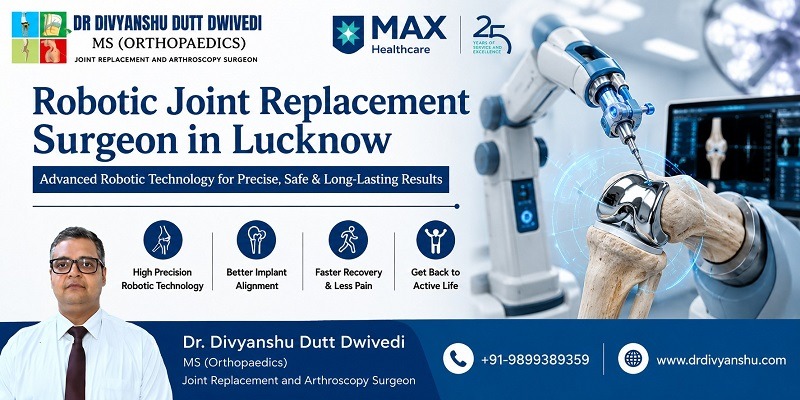
Robotic-Joint-Replacement-Surgeon-in-Lucknow.jpg

Living with severe knee or hip pain can make simple daily activities difficult. If medicines, injections, and physiotherapy no longer provide lasting relief, robotic joint replacement may be the right solution. This advanced surgical technology improves precision, implant positioning, and joint alignment, helping patients achieve better mobility and long-term results.

If you are looking for a trusted Robotic Joint Replacement Surgeon in Lucknow, Dr. Divyanshu Dutt Dwivedi offers advanced treatment using modern robotic-assisted techniques for knee and hip replacement surgery. Every treatment plan is carefully designed according to the patient’s age, lifestyle, bone condition, and severity of arthritis to deliver the best possible outcome.

Whether you need a Robotic Joint Replacement Doctor in Lucknow, an experienced Robotic Joint Replacement Specialist in Lucknow, or an expert for complex joint replacement surgery, you can expect comprehensive care from diagnosis to rehabilitation under one roof.

Meet Dr. Divyanshu Dutt Dwivedi – Expert Robotic Joint Replacement Surgeon in Lucknow

Dr. Divyanshu Dutt Dwivedi Banner
Dr. Divyanshu Dutt Dwivedi

If you are looking for an experienced Robotic Joint Replacement Surgeon in Lucknow, Robotic Joint Replacement Surgeon in Lucknow, Robotic Joint Replacement in Lucknow, Robotic Joint Replacement Doctor in Lucknow, Robotic Joint Replacement Specialist in Lucknow,
Best Robotic Joint Replacement Surgeon in Lucknow, Robotic Joint Replacement Expert in Lucknow, Robotic Knee Replacement Surgeon in Lucknow, Robotic Hip Replacement Surgeon in Lucknow
 offers advanced orthopedic care with a focus on Robotic Joint Replacement, Robotic Knee Replacement, and Robotic Hip Replacement. With over 20 years of experience, national and international training, and a patient-first approach, he combines robotic-assisted technology with evidence-based treatment to help patients achieve better mobility, pain relief, and long-term joint health.

Professional Highlights

  • Experience: 20+ Years in Orthopaedics & Joint Replacement
  • Current Position: Associate Director & Unit Head – Orthopaedics & Joint Replacement, Max Super Speciality Hospital, Lucknow
  • Qualifications: MBBS, MS (Orthopaedics)
  • Medical Training: Kasturba Medical College, Manipal; UCMS & GTB Hospital, Delhi; Maulana Azad Medical College, New Delhi
  • International Fellowships: Germany, South Korea, and India
  • Core Expertise: Robotic Joint Replacement, Knee Replacement, Hip Replacement, Arthroscopy, Sports Injury Management & Revision Joint Replacement
  • Special Interest: Complex Knee & Hip Arthritis, Computer-Assisted and Robotic Joint Replacement
  • Treatment Approach: Personalized care, advanced surgical planning, minimally invasive techniques, and comprehensive rehabilitation
  • Consultation: +91-9899389359

Why Patients Choose Dr. Divyanshu Dutt Dwivedi

  • Advanced robotic-assisted surgical techniques
  • Personalized treatment plans
  • Evidence-based orthopedic care
  • Focus on faster recovery and improved mobility
  • Comprehensive care from consultation to rehabilitation
  • Trusted by patients across Lucknow and nearby regions

Why Choose Dr. Divyanshu Dutt Dwivedi for Robotic Joint Replacement in Lucknow?

Choosing the right surgeon plays a major role in the success of joint replacement surgery. Dr. Divyanshu Dutt Dwivedi combines clinical expertise with advanced robotic-assisted technology to deliver precise, personalized, and safe treatment for every patient.

Highlights of Our Care

  • Experienced Robotic Joint Replacement Surgeon in Lucknow
  • Advanced robotic-assisted knee and hip replacement procedures
  • Personalized treatment plans for every patient
  • Precise implant positioning with robotic technology
  • Smaller incisions and minimal tissue damage
  • Faster recovery and early mobility
  • Comprehensive pre-operative evaluation
  • Structured rehabilitation and follow-up care
  • Patient-focused consultation and transparent guidance
  • Easy appointment booking at +91-9899389359

What is Robotic Joint Replacement?

Robotic Joint Replacement is an advanced form of joint replacement surgery that uses robotic-assisted technology to improve the accuracy of bone preparation and implant placement. Contrary to common belief, the robot does not perform the surgery independently. Every step is controlled by the surgeon, while the robotic system provides real-time guidance and precise measurements.

This technology helps create a personalized surgical plan based on the patient’s anatomy, allowing better implant alignment, improved joint function, and reduced damage to surrounding healthy tissues.

Today, Robotic Joint Replacement in Lucknow is widely preferred by patients seeking greater surgical precision, enhanced safety, and quicker recovery compared to conventional joint replacement techniques.

Benefits of Robotic Joint Replacement Surgery

Modern robotic technology offers several advantages over traditional joint replacement surgery. The improved precision helps enhance both short-term recovery and long-term implant performance.

Key Benefits

  • Better implant alignment and positioning
  • High surgical precision
  • Smaller surgical incision
  • Reduced blood loss during surgery
  • Less pain after the procedure
  • Minimal damage to surrounding tissues
  • Faster recovery and rehabilitation
  • Improved joint movement and flexibility
  • Lower risk of implant misalignment
  • Better long-term implant durability
  • Early return to daily activities
  • Greater patient satisfaction

These benefits make Robotic Joint Replacement Surgery an excellent option for eligible patients with advanced knee or hip arthritis.

Conditions Treated with Robotic Joint Replacement

A Robotic Joint Replacement Specialist in Lucknow can effectively treat various joint disorders that cause chronic pain, stiffness, and limited mobility.

Common conditions include:

  • Severe Osteoarthritis
  • Rheumatoid Arthritis
  • Post-traumatic Arthritis
  • Advanced Knee Arthritis
  • Advanced Hip Arthritis
  • Joint Deformity
  • Cartilage Damage
  • Bone-on-Bone Arthritis
  • Failed Conservative Treatment
  • Joint Wear Due to Age

After a detailed clinical evaluation and imaging studies, Dr. Divyanshu Dutt Dwivedi recommends the most suitable treatment approach based on your individual condition.

Why Patients Prefer Robotic Joint Replacement in Lucknow

Patients increasingly choose Robotic Joint Replacement in Lucknow because it combines advanced technology with personalized surgical planning. Robotic assistance enables greater precision during surgery, helping improve implant positioning and joint function while supporting a smoother recovery. Many patients experience better confidence in movement and an earlier return to their normal routine.

With expert surgical care from Dr. Divyanshu Dutt Dwivedi, patients receive comprehensive treatment, from diagnosis and surgery to rehabilitation and long-term follow-up, ensuring the best possible outcome for their joint health.

Robotic Knee Replacement Surgery in Lucknow

Robotic Knee Replacement is an advanced procedure designed for patients with severe knee arthritis, chronic pain, or joint damage that limits daily activities. Using robotic-assisted technology, the surgeon creates a personalized surgical plan and places the implant with exceptional accuracy.

As an experienced Robotic Joint Replacement Surgeon in Lucknow, Dr. Divyanshu Dutt Dwivedi focuses on restoring knee function, reducing pain, and improving long-term mobility. Robotic assistance helps preserve healthy bone and soft tissues, resulting in better joint balance and natural movement after surgery.

Robotic Knee Replacement is Recommended For:

  • Severe knee osteoarthritis
  • Rheumatoid arthritis
  • Bone-on-bone knee damage
  • Chronic knee pain affecting daily life
  • Knee deformity
  • Stiffness and reduced range of motion
  • Failed non-surgical treatments
  • Previous unsuccessful knee surgery

With proper rehabilitation, many patients can resume their daily activities with greater comfort and confidence.

Robotic Hip Replacement Surgery in Lucknow

Persistent hip pain can make walking, climbing stairs, or even sitting uncomfortable. Robotic Hip Replacement offers a modern solution by combining the surgeon’s expertise with robotic precision to achieve accurate implant placement and improved joint alignment.

If you are looking for a trusted Robotic Joint Replacement Doctor in Lucknow, Dr. Divyanshu Dutt Dwivedi provides personalized robotic-assisted hip replacement surgery based on each patient’s anatomy and lifestyle requirements.

Conditions Treated with Robotic Hip Replacement

  • Advanced hip osteoarthritis
  • Rheumatoid arthritis
  • Hip joint degeneration
  • Hip deformity
  • Avascular necrosis (AVN)
  • Hip fractures requiring replacement
  • Persistent hip pain with limited mobility

This procedure aims to relieve pain, restore movement, and help patients return to an active lifestyle.

Who Needs Robotic Joint Replacement Surgery?

Not every patient with joint pain requires surgery. However, when symptoms become severe and conservative treatments no longer provide relief, Robotic Joint Replacement Surgery may be the most effective option.

You may be a suitable candidate if you have:

  • Severe knee or hip pain
  • Difficulty walking or climbing stairs
  • Joint stiffness throughout the day
  • Swelling and inflammation
  • Bone-on-bone arthritis
  • Poor response to medicines or physiotherapy
  • Difficulty performing routine activities
  • Sleep disturbed due to joint pain

A detailed consultation with Dr. Divyanshu Dutt Dwivedi, an experienced Robotic Joint Replacement Specialist in Lucknow, helps determine whether robotic surgery is the right choice for you.

Signs You Should Consult a Robotic Joint Replacement Expert in Lucknow

Ignoring advanced joint problems can reduce mobility and affect your quality of life. Seeking timely medical advice can prevent further joint deterioration.

Consult a Specialist If You Experience:

  • Knee or hip pain lasting several months
  • Pain while walking short distances
  • Joint stiffness after resting
  • Difficulty standing from a chair
  • Cracking or grinding sensation in the joint
  • Bow legs or joint deformity
  • Frequent swelling around the joint
  • Reduced flexibility
  • Dependence on painkillers
  • Limited participation in daily activities

Early evaluation allows for timely treatment and better long-term outcomes.

How Does Robotic Joint Replacement Surgery Work?

Robotic Joint Replacement combines advanced technology with the expertise of the surgeon. The robotic system assists with planning and precision, while every surgical decision remains under the surgeon’s complete control.

Step 1: Comprehensive Evaluation

The process begins with a detailed consultation, physical examination, and imaging tests such as X-rays or CT scans. These help assess joint damage and create a customized treatment plan.

Step 2: Personalized Surgical Planning

Specialized software develops a three-dimensional model of the affected joint. This allows Dr. Divyanshu Dutt Dwivedi to plan the ideal implant size, alignment, and positioning before surgery.

Step 3: Robotic-Assisted Surgery

During the procedure, the robotic system provides real-time guidance, enabling highly accurate bone preparation and implant placement while protecting healthy tissues.

Step 4: Recovery and Rehabilitation

After surgery, a structured rehabilitation program helps improve strength, flexibility, and mobility. Most patients begin walking with assistance soon after surgery, depending on their overall health and recovery progress.

Why Robotic Technology Improves Joint Replacement Outcomes

Robotic-assisted surgery enhances surgical accuracy by providing detailed planning and real-time guidance throughout the procedure. This precision supports better implant positioning, balanced joint movement, and consistent surgical outcomes.

When performed by an experienced Robotic Joint Replacement Expert in Lucknow like Dr. Divyanshu Dutt Dwivedi, robotic technology helps patients achieve improved function, greater confidence in movement, and long-term relief from chronic joint pain.

Recovery After Robotic Joint Replacement Surgery

Recovery after Robotic Joint Replacement Surgery is generally smoother because the procedure focuses on accurate implant placement and minimal damage to surrounding tissues. Every patient’s recovery time depends on age, overall health, and commitment to rehabilitation.

Most patients begin standing or walking with support within a day after surgery. A structured physiotherapy program helps restore strength, flexibility, and joint function. Following your surgeon’s advice and rehabilitation plan plays an important role in achieving the best long-term results.

Recovery Tips

  • Follow your physiotherapy schedule regularly.
  • Walk as advised by your surgeon.
  • Perform prescribed strengthening exercises.
  • Eat a balanced, protein-rich diet.
  • Take medications as directed.
  • Avoid high-impact activities during recovery.
  • Attend all follow-up appointments.

With proper care, many patients return to their normal routine within a few weeks, while complete recovery continues over the following months.

Is Robotic Joint Replacement Surgery Safe?

Yes, Robotic Joint Replacement Surgery is considered a safe and advanced procedure when performed by an experienced Robotic Joint Replacement Surgeon in Lucknow. Robotic technology assists the surgeon with detailed planning and precise implant positioning, but every step of the surgery remains under the surgeon’s complete control.

Like any surgical procedure, there are potential risks, including infection, blood clots, stiffness, or implant-related complications. However, careful patient evaluation, advanced surgical techniques, and proper post-operative care significantly reduce these risks. Choosing an experienced surgeon and following recovery instructions are essential for a successful outcome.

Why Choose Dr. Divyanshu Dutt Dwivedi for Robotic Joint Replacement in Lucknow?

Selecting the right surgeon is one of the most important decisions for a successful joint replacement. Dr. Divyanshu Dutt Dwivedi is committed to providing patient-focused orthopedic care with advanced robotic-assisted technology and evidence-based treatment.

Why Patients Trust Us

  • Experienced Robotic Joint Replacement Surgeon in Lucknow
  • Personalized treatment for every patient
  • Advanced robotic-assisted surgical techniques
  • Comprehensive evaluation before surgery
  • Precise implant planning and placement
  • Modern operation theatre facilities
  • Dedicated rehabilitation guidance
  • Transparent communication and patient education
  • Compassionate care from consultation to recovery
  • Focus on long-term joint function and mobility

Every treatment plan is designed to help patients regain comfort, confidence, and an active lifestyle.

Cost of Robotic Joint Replacement in Lucknow

The cost of Robotic Joint Replacement in Lucknow depends on several medical and hospital-related factors. Since every patient has unique requirements, the final cost is determined after a detailed clinical evaluation.

Factors That Affect the Cost

  • Type of joint replacement (knee or hip)
  • Severity of joint damage
  • Implant selection
  • Robotic technology used
  • Hospital facilities
  • Medical investigations
  • Length of hospital stay
  • Overall health condition
  • Rehabilitation requirements

For an accurate treatment plan and cost estimate, schedule a consultation with Dr. Divyanshu Dutt Dwivedi.

Book an Appointment with the Robotic Joint Replacement Surgeon in Lucknow

Take the first step toward a pain-free and active life with Dr. Divyanshu Dutt Dwivedi, a trusted Robotic Joint Replacement Surgeon in Lucknow. If persistent knee or hip pain is limiting your daily activities, schedule a consultation for a comprehensive evaluation and a personalized treatment plan. Whether you need a Robotic Joint Replacement Doctor in Lucknow, Robotic Joint Replacement Specialist in Lucknow, or Robotic Joint Replacement Expert in Lucknow, you’ll receive advanced robotic-assisted care focused on precision, safety, and faster recovery. Call +91-9899389359 today to book your appointment and regain comfortable movement with confidence.

FAQs About Robotic Joint Replacement

  1. What is Robotic Joint Replacement?

Robotic Joint Replacement is an advanced orthopaedic surgical procedure in which the surgeon uses a computer-assisted robotic system to precisely remove damaged bone and cartilage and accurately position the artificial joint (implant). The robotic system enhances precision, while the surgeon remains in complete control throughout the procedure.

  1. What are the advantages of Robotic Joint Replacement compared to conventional surgery?

Robotic Joint Replacement offers several advantages over conventional joint replacement surgery, including:

  • Sub-millimetre accuracy in implant positioning
  • Better implant fit and alignment
  • Minimal soft tissue release, resulting in less postoperative pain
  • Smaller surgical incision
  • Reduced blood loss
  • Faster recovery and rehabilitation
  • Real-time knee balancing, leading to improved function and better long-term patient outcomes
  1. Is Robotic Joint Replacement surgery performed entirely by a robot?

No. The surgery is not performed independently by a robot. The robotic system assists the surgeon by creating a personalized surgical plan, guiding bone preparation, and providing real-time information about implant positioning and soft tissue balance. The surgeon performs and controls every step of the operation.

  1. Are there different types of robotic systems used for Joint Replacement?

Yes. Robotic systems are broadly classified based on the instrument used to prepare the bone for implant placement:

  • Burr-based robotic systems
  • Saw-based robotic systems

Each system is designed to improve surgical precision and implant placement.

  1. When can a patient walk after Robotic Knee Joint Replacement surgery?

Most patients are able to stand and walk with assistance on the same day (evening) of surgery or by the next day, depending on their overall health and recovery.

  1. Is Robotic Joint Replacement covered by insurance?

Yes. Robotic Joint Replacement is covered by many health insurance companies. However, coverage may vary depending on your insurance policy. It is advisable to confirm the details with your insurance provider before surgery.

  1. Which robotic system does Dr. Divyanshu use?

Dr. Divyanshu performs Robotic Joint Replacement using the VELYS™ Robotic-Assisted Solution by Johnson & Johnson. This advanced robotic platform is designed to enhance surgical precision, optimize implant positioning, and provide real-time intraoperative feedback, helping achieve excellent clinical outcomes.


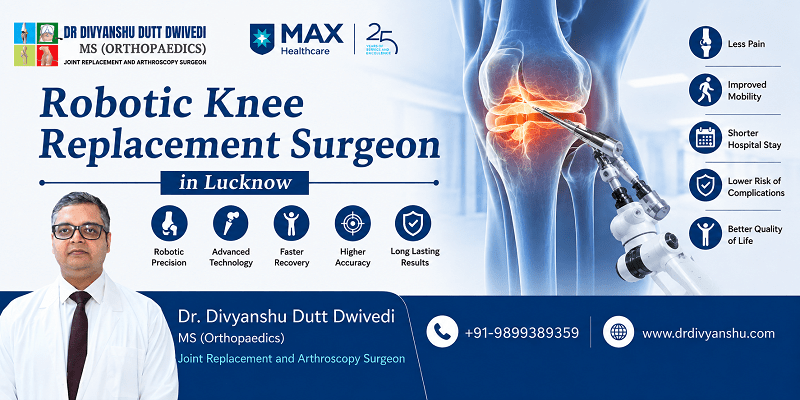
Robotic-Knee-Replacement-Surgeon-in-Lucknow.png

Chronic knee pain can quietly take over daily life, turning simple things like climbing stairs or sitting cross-legged into a struggle. If medicines, injections, and physiotherapy are no longer helping, it may be time to speak with a qualified robotic knee replacement surgeon in Lucknow. Robotic-assisted surgery brings a new level of accuracy to implant placement, helping patients get back to a more active, pain-free life.

Dr. Divyanshu Dutt Dwivedi is a trusted robotic knee replacement surgeon in Lucknow, known for combining surgical experience with advanced robotic technology. As a leading robotic knee replacement doctor in Lucknow, he creates a personalized treatment plan for every patient based on age, bone quality, and the severity of arthritis so recovery feels smoother and results last longer.

What Is Robotic Knee Replacement Surgery?

Robotic knee replacement surgery uses a computer-guided robotic arm to help the surgeon plan and perform the operation with greater precision. It does not mean a machine operates on its own—the robotic knee replacement surgeon in Lucknow remains fully in control throughout the procedure. Before surgery, imaging scans create a 3D model of your knee, allowing exact measurements for implant size and position.

This planning helps preserve healthy bone and soft tissue around the joint. As a result, patients often notice better joint alignment and a more natural feel after healing. Many patients now search for the best robotic knee replacement surgeon in Lucknow specifically because this technology reduces guesswork during surgery, improving overall surgical confidence and outcomes.

How Does Robotic Knee Replacement Work?

A robotic knee replacement specialist in Lucknow follows a structured, technology-guided process to ensure accuracy at every stage of the surgery.

Stage What Happens
Evaluation  X-rays, CT scans, and physical examination assess joint damage 
3D Planning  Software builds a personalised model of your knee anatomy 
Robotic Guidance  Robotic arm assists precise bone cuts and implant placement 
Surgeon Control  The Robotic Knee Replacement Doctor in Lucknow guides every movement 
Rehabilitation  Structured physiotherapy begins soon after surgery 


This blend of technology and surgical skill is what makes Robotic Knee Replacement Surgery in Lucknow increasingly popular among patients who want predictable, well-planned outcomes rather than a purely manual approach.

Robotic vs Traditional Knee Replacement

Patients often ask how Robotic Knee Replacement Surgery compares with the conventional method. Here is a simple comparison to help you understand the difference before consulting a Robotic Knee Replacement Surgeon in Lucknow.


Factor Traditional Knee Replacement Robotic Knee Replacement
Planning  Manual measurement  3D computer-based planning 
Precision  Surgeon’s manual judgement  Robotic-arm assisted accuracy 
Tissue Handling  Slightly more soft tissue disturbance  More tissue-preserving 
Recovery  Standard recovery timeline  Often smoother, faster mobilisation 
Best For  Straightforward cases  Complex deformities, revision cases 


Clinical evidence shows robotic-assisted surgery consistently produces better anatomical and mechanical alignment, while overall functional outcomes remain broadly comparable to conventional surgery when performed by a skilled surgeon.

Signs You May Need a Robotic Knee Replacement Surgeon in Lucknow

Not every knee pain requires surgery, but certain symptoms suggest it is time to consult an experienced robotic knee replacement surgeon in Lucknow.

  • Persistent knee pain lasting several months
  • Pain that worsens while walking or climbing stairs
  • Visible swelling or joint deformity
  • Stiffness that limits bending or straightening the knee
  • Grinding or cracking sensation in the joint
  • Little to no relief from medicines or physiotherapy
  • Difficulty sleeping due to knee discomfort
  • Reduced ability to perform daily tasks independently

If these symptoms sound familiar, an early consultation with a robotic knee replacement doctor in Lucknow can help you understand your treatment options clearly.

Conditions Treated with Robotic Knee Replacement

A qualified robotic knee replacement specialist in Lucknow treats a wide range of knee conditions that affect mobility and comfort.

  • Severe osteoarthritis of the knee
  • Rheumatoid arthritis affecting joint surfaces
  • Bone-on-bone knee damage
  • Post-traumatic arthritis after old injuries
  • Knee deformities such as bow legs
  • Failed response to conservative treatment
  • Revision surgery after a previous knee implant
  • Age-related cartilage wear and joint degeneration

Each condition is evaluated individually, since not every patient with joint pain is automatically a candidate for surgery.

Benefits of Robotic Knee Replacement Surgery

Choosing the best robotic knee replacement surgeon in Lucknow offers several advantages over conventional surgical techniques for eligible patients.

  • More accurate implant alignment and positioning
  • Smaller incisions with reduced soft tissue damage
  • Lower blood loss during the procedure
  • Reduced post-operative pain in many cases
  • Faster mobilization after surgery
  • Improved joint balance and natural movement
  • Lower chances of implant misalignment
  • Shorter hospital stay for suitable patients
  • Better long-term implant performance
  • Higher patient satisfaction with surgical precision

These benefits explain why more patients across Lucknow now prefer robotic knee replacement surgery over the older manual approach for moderate to complex cases.

Why Robotic Technology Improves Surgical Outcomes

Robotic assistance gives the robotic knee replacement surgeon in Lucknow real-time data throughout the operation, something manual instruments cannot offer. The system continuously tracks bone position, helping maintain planned alignment even if the leg shifts slightly during surgery.

This live feedback reduces the margin of error in implant placement, which directly affects how naturally the knee moves after healing. For patients with complex deformities or previous fractures, this added precision often makes surgery technically safer and more predictable, supporting better long-term joint function and durability.

Robotic Technology Used for Knee Replacement in Lucknow

Modern robotic knee replacement surgery in Lucknow relies on advanced surgical systems that combine imaging, software planning, and a robotic arm for guided bone preparation. These systems create a digital map of your knee before the first incision is made, allowing the robotic knee replacement surgeon in Lucknow to plan implant size, angle, and position with millimeter-level accuracy.

During surgery, sensors track the exact position of your leg in real time, so the robotic arm only cuts bone within the pre-planned boundaries. This built-in safety margin protects healthy tissue and ligaments around the joint. For patients considering a robotic knee replacement specialist in Lucknow, understanding this technology can help build confidence before making a treatment decision, since the surgeon—not the machine—remains fully responsible for every step.

Meet Dr. Divyanshu Dutt Dwivedi—Trusted Robotic Knee Replacement Surgeon in Lucknow

Robotic Knee replacement Surgeon in Lucknow
Dr. Divyanshu Dutt Dwivedi

Dr. Divyanshu Dutt Dwivedi is a highly experienced robotic knee replacement surgeon in Lucknow with over 20 years in orthopedics and joint replacement. He currently serves as Associate Director & Unit Head—Robotic Joint Replacement and  Arthroscopy Surgeon at Max Super Specialty Hospital, Gomti Nagar, Lucknow. He holds MBBS and MS (Orthopaedics) degrees and trained at Kasturba Medical College Manipal, UCMS & GTB Hospital Delhi, and Maulana Azad Medical College, with international fellowships in Germany and South Korea, making him a well-qualified robotic knee replacement doctor in Lucknow.

Clinic & Surgical Expertise:

  • 20+ years of orthopedic and joint replacement experience
  • Specialized training in robotic and computer-assisted joint surgery
  • International fellowship exposure in Germany and South Korea
  • Focus on complex knee arthritis and revision knee surgery
  • Personalized, evidence-based treatment planning for every patient
  • Comprehensive care from diagnosis through post-surgery rehabilitation

Why Choose Dr. Divyanshu Dutt Dwivedi for Robotic Knee Replacement in Lucknow?

Selecting the right robotic knee replacement specialist in Lucknow matters as much as the technology itself. Dr. Divyanshu Dutt Dwivedi blends deep clinical experience with modern robotic-assisted tools to give every patient a treatment plan suited to their specific anatomy and lifestyle.

  • Recognized as the Best Robotic Knee Replacement Surgeon in Lucknow with a strong track record
  • Advanced robotic-assisted precision for accurate implant placement
  • Individualized surgical planning rather than a one-size-fits-all approach
  • Modern facilities at Max Super Specialty Hospital, Gomti Nagar
  • Transparent communication about risks, costs, and expected recovery
  • Dedicated physiotherapy support for faster, safer rehabilitation

Patients across Lucknow and nearby districts choose him for both the technical precision and the compassionate, patient-first approach he brings to every consultation.

Robotic Knee Replacement Surgery Cost in Lucknow

Robotic knee replacement surgery in Lucknow generally ranges from ₹2.8 lakh to ₹8.5 lakh. The total expense depends on factors such as whether one or both knees are operated on, the type of implant selected, hospital standards, surgeon experience, and the extent of post-surgery rehabilitation required. The exact cost differs for each patient based on their medical condition and treatment plan.

Cost Breakdown of Robotic Knee Replacement in Lucknow

Type of Surgery / Procedure Estimated Cost Range (INR)
Robotic Knee Replacement (Single Knee) ₹2,80,000 – ₹4,50,000
Robotic Knee Replacement (Both Knees) ₹5,50,000 – ₹8,50,000
Traditional Knee Replacement (Single Knee) ₹1,80,000 – ₹3,00,000
Advanced / Premium Knee Implant ₹4,00,000 – ₹5,50,000
Physiotherapy & Rehabilitation After Surgery ₹20,000 – ₹50,000

The total package usually covers implant cost, use of robotic technology, surgeon and anaesthesia fees, hospital admission charges, diagnostic tests, medications, and follow-up physiotherapy sessions.

Depending on the policy and hospital network, health insurance may cover a portion or the entire treatment cost. For an accurate estimate tailored to individual needs, it is advisable to consult a qualified Robotic Knee Replacement Surgeon in Lucknow.

Recovery and Rehabilitation After Robotic Knee Replacement

Recovery after surgery performed by a skilled robotic knee replacement surgeon in Lucknow is generally smoother due to reduced tissue trauma during the procedure. Most patients begin standing or walking with support within a day, guided by a structured physiotherapy plan.

Recovery Tips:

  • Follow your physiotherapy schedule without skipping sessions.
  • Walk gradually as advised by your surgical team.
  • Maintain a protein-rich, balanced diet for tissue healing
  • Take prescribed medications strictly as directed.
  • Avoid high-impact activities during early recovery
  • Attend every scheduled follow-up appointment

With consistent rehabilitation, many patients resume normal daily routines within a few weeks, while complete strength and flexibility continue improving over the following months.

Is Robotic Knee Replacement Surgery Safe?

Yes, robotic knee replacement surgery is considered a safe, well-established procedure when performed by an experienced robotic knee replacement surgeon in Lucknow. The robotic system only assists with planning and precision — the surgeon controls every surgical decision from start to finish.

As with any major surgery, potential risks such as infection, blood clots, or stiffness exist. However, thorough pre-surgical evaluation, sterile surgical protocols, and careful post-operative monitoring significantly lower these risks. Choosing an experienced robotic knee replacement doctor in Lucknow and following the recommended recovery plan are the two biggest factors influencing a safe, successful outcome.

Who Should Consult a Robotic Knee Replacement Surgeon in Lucknow?

You may benefit from consulting a robotic knee replacement specialist in Lucknow if conservative treatments have stopped providing lasting relief for your knee symptoms.

  • Severe knee pain affecting daily movement
  • Diagnosed bone-on-bone arthritis on X-ray
  • Knee deformity affecting walking pattern
  • Poor response to physiotherapy or medication
  • Previous knee surgery with ongoing discomfort
  • Difficulty performing routine household activities
  • Age-related joint degeneration limiting independence

A detailed clinical evaluation helps determine whether robotic surgery, another treatment path, or continued conservative care is the right next step for you.

Follow-Up Care After Robotic Knee Replacement

Long-term success after robotic knee replacement surgery depends heavily on consistent follow-up care, not just the operation itself. A robotic knee replacement doctor in Lucknow typically schedules review visits at regular intervals to monitor wound healing, implant positioning, and range of motion progress.

These visits allow early detection of any concerns, such as unexpected swelling or reduced flexibility, before they affect long-term outcomes. Patients are also guided on safe return to activities like driving, travel, and light exercise. Staying connected with your robotic knee replacement surgeon in Lucknow through this recovery window, rather than stopping care after discharge, plays a major role in achieving lasting pain relief and stable joint function for years to come.

Why Lucknow Patients Trust Robotic Knee Replacement

Lucknow has steadily become a preferred destination for advanced orthopedic care, with patients from nearby towns across Uttar Pradesh traveling here for treatment. Access to a qualified robotic knee replacement surgeon in Lucknow, combined with modern hospital infrastructure at centers like Max Super Specialty Hospital, means patients no longer need to travel to metro cities for advanced, technology-driven joint care.

This growing trust comes from consistent surgical outcomes, transparent cost discussions, and dedicated rehabilitation support—the same qualities patients look for when choosing the best robotic knee replacement surgeon in Lucknow for themselves or an aging family member.

Book Your Consultation Today

If persistent knee pain is affecting your daily life, don’t wait for it to worsen. Schedule a consultation with Dr. Divyanshu Dutt Dwivedi, a trusted robotic knee replacement surgeon in Lucknow, for a thorough evaluation and a personalized treatment plan built around your needs. Call +91-9899389359 today to book your appointment at Max Super Specialty Hospital, Gomti Nagar, Lucknow.

FAQs About Robotic Knee Replacement in Lucknow

  1. Who is the best robotic knee replacement surgeon in Lucknow?

Dr. Divyanshu Dutt Dwivedi, with 20+ years of orthopedic experience and robotic-assisted surgical training, is a trusted robotic knee replacement surgeon in Lucknow at Max Super Specialty Hospital.

  1. Is robotic knee replacement better than traditional knee replacement?

Robotic surgery offers more precise implant alignment and tissue preservation. Functional recovery is often similar to traditional surgery, but precision and consistency are generally higher.

  1. How much does robotic knee replacement cost in Lucknow?

Cost varies based on implant type, hospital stay, and robotic system used. Book a consultation for an accurate, personalized cost estimate suited to your condition.

  1. Is robotic knee replacement painful?

Most patients experience less post-operative pain than traditional surgery due to smaller incisions and reduced soft tissue damage during the robotic-assisted procedure.

  1. How long does recovery take after robotic knee replacement?

Many patients start walking with support within a day. Full recovery, including strength and flexibility, generally continues over several weeks to a few months.

  1. Is robotic knee replacement safe for elderly patients?

Yes, it can be safe for elderly patients after a thorough medical evaluation. Age alone does not disqualify a patient; overall health status matters more.

  1. What are the risks of robotic knee replacement surgery?

Risks include infection, blood clots, and stiffness, similar to traditional surgery. Careful evaluation and experienced surgical care significantly reduce these risks.

  1. How long does a robotic knee implant last?

Most robotic knee implants last 15 to 20 years or longer, depending on implant quality, patient activity level, and adherence to rehabilitation guidance.

  1. Can both knees be replaced robotically at the same time?

Yes, bilateral robotic knee replacement is possible for suitable candidates, but it depends on overall health, age, and your surgeon’s clinical assessment.

  1. What is the difference between partial and total robotic knee replacement?

Partial replacement treats only the damaged knee section, preserving healthy bone. Total replacement replaces the entire joint surface for widespread arthritis damage.

  1. How soon can I walk after robotic knee replacement surgery?

Most patients stand or take assisted steps within 24 hours of surgery, with independent walking improving steadily through structured physiotherapy sessions.

  1. Why choose robotic surgery over manual knee replacement?

Robotic surgery offers real-time precision, better implant alignment, and reduced tissue trauma, making it a preferred option for complex or deformity-related knee cases.


best-knee-replacement-surgeon-in-Lucknow.png

A knee replacement surgeon in Lucknow specializes in treating severe knee arthritis, joint degeneration, traumatic injuries, and advanced cartilage damage. These surgeons are trained to perform procedures that replace damaged joint surfaces with artificial implants designed to mimic natural knee movement.

The role of a knee replacement surgeon extends beyond surgery. It includes diagnosis, treatment planning, implant selection, surgical execution, pain management, and rehabilitation support. Modern surgeons utilize advanced imaging and evidence-based techniques to improve surgical precision and reduce recovery time. Selecting a qualified specialist ensures that patients receive personalized treatment tailored to their specific orthopedic condition.

Best Knee Replacement Doctor in Lucknow

Knee pain can affect every aspect of daily life, from walking and climbing stairs to working and enjoying time with family. When medicines, physiotherapy, and lifestyle changes no longer provide relief, knee replacement surgery may become the most effective treatment option. Finding the best knee replacement doctor in Lucknow is an important step toward restoring mobility, reducing pain, and improving quality of life.

Patients today look for experienced surgeons, advanced technology, personalized treatment plans, and proven surgical outcomes. Among the trusted names in orthopedic care, Dr. Divyanshu Dutt Dwivedi is recognized for his expertise in diagnosing and treating complex knee conditions. His patient-focused approach, advanced surgical techniques, and commitment to long-term recovery have made him a preferred choice for individuals seeking reliable knee replacement treatment in Lucknow.

This comprehensive guide explains knee replacement procedures, benefits, treatment options, recovery expectations, and how to choose the right specialist for your needs.

Best Knee Replacement Doctor in Lucknow: Why Expertise Matters

Choosing the best knee replacement doctor in Lucknow can significantly influence surgical outcomes and recovery. Knee replacement is a specialized orthopedic procedure that requires precise planning, surgical accuracy, and comprehensive post-operative care. An experienced surgeon evaluates the severity of joint damage, overall health condition, lifestyle requirements, and long-term mobility goals before recommending surgery.

Patients should look for qualifications, years of experience, surgical success rates, patient reviews, and access to modern treatment technologies. A skilled knee specialist not only performs surgery effectively but also guides patients throughout rehabilitation. This comprehensive approach helps achieve better mobility, reduced pain, and improved joint function for many years after surgery.

Best Knee Replacement Surgeon in Lucknow for Advanced Joint Care

The best knee replacement surgeon in Lucknow focuses on delivering comprehensive orthopedic care rather than simply performing a surgical procedure. Every patient has unique health concerns, age-related factors, activity levels, and expectations. Therefore, individualized treatment planning becomes essential.

Advanced knee surgeons carefully assess alignment issues, ligament stability, bone quality, and overall joint health before recommending surgery. They also educate patients about implant options, surgical techniques, expected outcomes, and recovery timelines. This transparent and patient-centered approach helps individuals make informed healthcare decisions while improving confidence throughout the treatment journey.

Knee Replacement Specialist in Lucknow: Conditions Commonly Treated

A qualified knee replacement specialist in Lucknow manages various knee disorders that can severely affect mobility and quality of life. These conditions often worsen over time and may eventually require surgical intervention.

Common conditions include:

  • Osteoarthritis of the knee
  • Rheumatoid arthritis
  • Post-traumatic arthritis
  • Severe cartilage degeneration
  • Knee deformities
  • Chronic knee pain
  • Joint stiffness
  • Failed previous knee surgeries
  • Sports-related joint damage

Early consultation with a specialist can help patients explore conservative treatments before surgery becomes necessary. Timely intervention often improves long-term outcomes and preserves joint function.

Knee Replacement Surgery in Lucknow: When Is It Needed?

Many patients wonder when knee replacement surgery in Lucknow becomes necessary. Surgery is generally considered when non-surgical treatments no longer provide adequate relief and daily activities become difficult.

Common signs include:

  • Persistent knee pain
  • Difficulty walking
  • Swelling and stiffness
  • Reduced range of motion
  • Pain during rest or sleep
  • Difficulty climbing stairs
  • Joint deformity

A thorough orthopedic evaluation helps determine whether knee replacement is the most suitable option. Advanced imaging studies and physical examinations assist surgeons in assessing the severity of joint damage and developing a personalized treatment plan.

Orthopedic Surgeon in Lucknow: Importance of Comprehensive Evaluation

An experienced orthopedic surgeon in Lucknow conducts a detailed assessment before recommending any surgical procedure. This evaluation includes medical history review, physical examination, diagnostic imaging, and discussion of lifestyle goals.

The purpose of this assessment is to identify the root cause of knee pain and determine the most effective treatment strategy. In some cases, physiotherapy, medications, injections, or minimally invasive procedures may delay or eliminate the need for surgery. Comprehensive evaluation ensures that patients receive the most appropriate and evidence-based orthopedic care.

Joint Replacement Surgeon in Lucknow: Types of Knee Replacement Procedures

A skilled joint replacement surgeon in Lucknow may recommend different types of knee replacement procedures depending on the extent of joint damage.

Total Knee Replacement

Total Knee Replacement replaces a severely damaged knee joint with artificial implants. Consult a Total Knee Replacement Surgeon in Lucknow for expert evaluation and long-lasting pain relief.

Partial Knee Replacement

Partial Knee Replacement replaces only the damaged portion of the knee, preserving healthy tissues. A Partial Knee Replacement Surgeon in Lucknow can determine your eligibility.

Revision Knee Replacement

Revision Knee Replacement corrects problems from a previous knee replacement, including implant failure or infection. Trust a Revision Knee Replacement Surgeon in Lucknow for specialized care.

Robotic Knee Replacement Surgeon in Lucknow: Modern Surgical Innovation

A robotic knee replacement surgeon in Lucknow utilizes advanced robotic-assisted technology to improve surgical precision and implant positioning. Robotic systems help surgeons create detailed surgical plans based on each patient’s unique anatomy.

Benefits of robotic-assisted knee replacement may include:

  • Greater surgical accuracy
  • Improved implant alignment
  • Reduced tissue damage
  • Smaller incisions
  • Faster recovery
  • Enhanced joint function
  • Better long-term implant performance

Although the surgeon remains in complete control during the procedure, robotic technology provides valuable support that helps optimize outcomes and improve patient satisfaction.

Total Knee Replacement Doctor in Lucknow: What to Expect During Surgery

A trusted total knee replacement doctor in Lucknow ensures that patients understand every stage of the surgical process. Most procedures involve removing damaged cartilage and bone surfaces before replacing them with specially designed prosthetic components.

The surgery typically takes one to three hours depending on complexity. Patients are encouraged to begin early movement and rehabilitation shortly after surgery. Comprehensive pain management strategies and physiotherapy programs support recovery and help restore mobility more effectively.

Understanding the treatment process in advance can reduce anxiety and improve overall patient confidence.

Best Orthopedic Doctor in Lucknow for Long-Term Joint Health

The best orthopedic doctor in Lucknow focuses not only on surgical success but also on maintaining long-term joint health. Successful recovery requires collaboration between the surgeon, physiotherapist, and patient.

Important post-surgery recommendations include:

  • Following rehabilitation protocols
  • Maintaining a healthy weight
  • Staying physically active
  • Performing strengthening exercises
  • Attending follow-up appointments
  • Protecting the joint from excessive stress

These measures help maximize implant lifespan and support long-term mobility. Patients who actively participate in recovery often experience better functional outcomes and improved quality of life.

Why Patients Trust Dr. Divyanshu Dutt Dwivedi for Knee Replacement Treatment

When searching for the best knee replacement doctor in Lucknow, patients prioritize expertise, transparency, advanced treatment methods, and compassionate care. Dr. Divyanshu Dutt Dwivedi is known for providing patient-focused orthopedic solutions tailored to individual needs.

His approach emphasizes accurate diagnosis, detailed consultation, evidence-based treatment planning, and comprehensive post-operative care. By combining advanced orthopedic techniques with personalized rehabilitation strategies, he helps patients regain confidence, mobility, and independence.

Patients benefit from clear communication, ethical treatment recommendations, and dedicated support throughout their orthopedic journey.

Benefits of Knee Replacement Surgery

Modern knee replacement surgery has transformed the lives of millions of patients worldwide. When performed by an experienced surgeon, the procedure offers several advantages.

Key benefits include the following:

  • Significant pain relief
  • Improved mobility
  • Better joint function
  • Enhanced quality of life
  • Increased independence
  • Improved sleep quality
  • Ability to perform daily activities comfortably
  • Long-lasting results

Many patients return to active lifestyles and experience substantial improvements in physical and emotional well-being following successful surgery and rehabilitation.

Recovery After Knee Replacement Surgery

Recovery is a gradual process that requires commitment and consistency. Most patients begin walking with support shortly after surgery. Physiotherapy plays a crucial role in restoring strength, flexibility, and mobility.

General recovery milestones include:

  • Walking within days after surgery
  • Improved mobility within weeks
  • Resumption of daily activities within months
  • Continued strengthening for long-term success

Recovery timelines vary depending on age, health status, surgical technique, and adherence to rehabilitation programs. Regular follow-up visits ensure optimal progress and early identification of any concerns.

How to Choose the Right Knee Replacement Surgeon

Selecting the right orthopedic specialist can significantly impact treatment outcomes. Patients should evaluate several important factors before making a decision.

Consider:

  • Surgical experience
  • Specialization in joint replacement
  • Patient reviews and testimonials
  • Hospital infrastructure
  • Availability of robotic technology
  • Rehabilitation support
  • Communication and patient education
  • Long-term follow-up care

An informed decision helps patients feel confident and supported throughout the treatment process.

Conclusion

Knee pain should not prevent individuals from enjoying an active and fulfilling life. Advances in orthopedic surgery, implant technology, and rehabilitation have made knee replacement a highly successful treatment option for many patients. Choosing the best knee replacement doctor in Lucknow ensures access to expert care, modern surgical techniques, and personalized recovery plans.

Whether you require consultation, diagnosis, robotic-assisted surgery, or long-term orthopedic support, seeking treatment from an experienced specialist can help restore mobility, reduce pain, and improve overall quality of life. With comprehensive care and patient-centered treatment, individuals can confidently take the first step toward better joint health and renewed independence.

Book an appointment with the best knee replacement doctor in Lucknow.

If chronic knee pain is affecting your daily activities, now is the right time to seek expert orthopedic care. Dr. Divyanshu Dutt Dwivedi offers advanced diagnosis, personalized treatment plans, and modern knee replacement solutions designed to improve mobility and long-term joint health. Whether you need a second opinion, robotic knee replacement consultation, or complete joint care guidance, professional support is available. Call +91 98993 89359 today to schedule your consultation and take the first step toward a pain-free and active life.

FAQs About Top Knee Replacement Surgeon in Lucknow

1. Who is considered the best knee replacement doctor in Lucknow?

The best knee replacement doctor in Lucknow is a specialist with extensive experience in joint replacement surgery, advanced treatment techniques, high patient satisfaction, and comprehensive rehabilitation support. Patients should consider qualifications, expertise, and personalized care when choosing a surgeon.

2. When should I consider knee replacement surgery?

Knee replacement surgery may be recommended when severe knee pain, stiffness, and mobility limitations continue despite medications, physiotherapy, injections, and lifestyle modifications. A detailed orthopedic evaluation helps determine whether surgery is the most suitable treatment option.

3. How successful is knee replacement surgery in Lucknow?

Knee replacement surgery generally has a high success rate when performed by an experienced orthopedic surgeon. Most patients experience significant pain relief, improved mobility, better joint function, and enhanced quality of life after completing rehabilitation.

4. What is the recovery time after knee replacement surgery?

Most patients begin walking within a few days after surgery. Basic daily activities usually improve within several weeks, while complete recovery and maximum strength gains may take several months depending on rehabilitation progress and overall health.

5. What is robotic knee replacement surgery?

Robotic knee replacement surgery uses advanced computer-guided technology to assist surgeons in planning and performing the procedure with greater precision. This may improve implant positioning, joint alignment, recovery outcomes, and long-term functionality for suitable candidates.

6. How long does a knee replacement implant last?

Modern knee replacement implants can last 15 to 25 years or longer depending on patient age, activity level, weight management, implant quality, and adherence to post-operative care recommendations provided by the orthopedic specialist.

7. Is knee replacement surgery painful?

Patients receive anesthesia during surgery and comprehensive pain management afterward. While temporary discomfort is expected during recovery, most individuals report substantial pain reduction compared to the chronic knee pain experienced before surgery.

8. Can both knees be replaced at the same time?

In selected cases, bilateral knee replacement may be performed during a single surgical session. The decision depends on overall health, fitness level, severity of joint damage, and the surgeon’s clinical assessment.

9. How do I choose the best orthopedic doctor in Lucknow?

Choose an orthopedic doctor based on specialization, experience, patient reviews, treatment outcomes, access to advanced technology, communication skills, and commitment to long-term rehabilitation and follow-up care after surgery.

10. Why should I consult Dr. Divyanshu Dutt Dwivedi for knee replacement treatment?

Dr. Divyanshu Dutt Dwivedi is known for patient-focused orthopedic care, thorough diagnosis, advanced surgical planning, modern knee replacement techniques, and comprehensive rehabilitation guidance aimed at delivering safe, effective, and long-lasting treatment outcomes.


Logo

Dr. Divyanshu Dutt Dwivedi is a well-known orthopedic surgeon in Lucknow, recognized for his expertise in treating a variety of musculoskeletal conditions. He is known as one of the Best Orthopedic Doctors in Lucknow.

© 2025 Dr. Divyanshu. All rights reserved.| Developed By Websofy Software