
Robotic-vs-Traditional-Knee-Replacement-What-Is-the-Difference.jpg

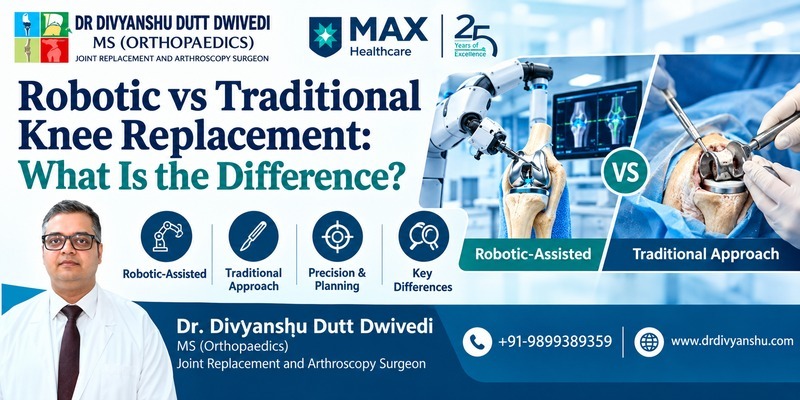
Robotic vs. traditional knee replacement is an important consideration for patients with advanced arthritis, persistent knee pain, stiffness, deformity, or difficulty walking. In Lucknow, both procedures remove damaged bone and cartilage and replace them with an artificial implant. Traditional knee replacement uses standard instruments and preoperative measurements, while robotic-assisted surgery uses computer planning and robotic guidance to support implant positioning and knee balancing. Robotic technology may improve planning and alignment in selected cases, but it does not replace the surgeon’s expertise. The best option depends on knee anatomy, deformity, ligament balance, medical history, budget, implant needs, and surgeon experience.

Robotic vs Traditional Knee Replacement: Quick Comparison


Feature Robotic Knee Replacement Traditional Knee Replacement
Surgical planning Computer-assisted and personalized Conventional imaging and measurements
Surgical guidance Robotic-assisted guidance Standard surgical instruments
Implant positioning Digitally planned and guided Surgeon-guided using alignment tools
Bone preparation Controlled with robotic assistance Performed with conventional instruments
Surgeon involvement Surgeon controls every major decision Surgeon controls every major decision
Technology Advanced navigation and robotic platform Established surgical technology
Cost Usually higher Generally more affordable
Availability in Lucknow Available at selected hospitals Widely available
Recovery Depends on individual factors Depends on individual factors
Suitability Useful for selected patients Suitable for many patients

This comparison provides general information only. Robotic surgery is not automatically better for every patient, and traditional knee replacement remains an effective treatment. The final decision should follow a detailed orthopedic assessment, including examination, X-rays, medical history, knee deformity, ligament condition, and treatment goals. Patients comparing knee replacement options in Lucknow should also ask about implant choices, rehabilitation, hospital facilities, total cost, possible risks, and the surgeon’s experience with both techniques.

What Is Traditional Knee Replacement?

Traditional knee replacement, also called conventional or manual total knee replacement, is an established procedure performed successfully for many decades. It is usually recommended when severe osteoarthritis or another joint condition causes ongoing pain, stiffness, deformity, and reduced mobility despite medicines, physiotherapy, injections, or lifestyle changes. During surgery, the orthopedic surgeon removes damaged portions of the femur and tibia and prepares the bone using conventional instruments and alignment guides. The artificial components are then positioned and secured. Traditional knee replacement is not an outdated or inferior procedure. It can provide excellent pain relief and functional improvement when appropriately planned and performed. In Lucknow, surgeon experience, implant selection, hospital care, and rehabilitation remain important factors in achieving a successful outcome.

What Is Robotic Knee Replacement?

Robotic knee replacement is a computer-assisted procedure in which technology helps the orthopedic surgeon plan and perform selected parts of knee replacement surgery. Depending on the system, imaging and digital measurements may create a detailed model of the patient’s knee. This information helps the surgeon develop a personalized plan for bone preparation, implant positioning, alignment, and soft-tissue balance. During surgery, the robotic platform provides guidance and feedback, while the surgeon controls the procedure and makes all important clinical decisions. The robot does not independently perform the operation. Robotic knee replacement in Lucknow may be considered for selected patients with advanced arthritis, deformity, unusual anatomy, or specific alignment requirements. Suitability must be confirmed during consultation.

Robotic vs. Traditional Knee Replacement: Key Differences

1. Surgical Planning

Surgical planning is one of the clearest differences between robotic and traditional knee replacement. Conventional surgery uses X-rays, physical examination, standard measurements, alignment guides, and the surgeon’s experience to plan implant positioning. Robotic-assisted surgery may use advanced imaging, computer software, and three-dimensional planning to create a more individualized surgical map. This can help the surgeon understand the patient’s bone shape, deformity, alignment, and joint space before surgery. During the operation, the plan can be reviewed and adjusted according to the actual knee condition. Robotic planning may be especially beneficial in complex anatomy, previous surgery, or significant deformity. However, the surgeon’s judgment remains essential, and technology does not eliminate the need for clinical decision-making.

2. Surgical Accuracy and Implant Alignment

Robotic knee replacement accuracy is a major reason patients in Lucknow ask about this procedure. Correct implant alignment can influence knee stability, movement, comfort, and long-term function. Robotic systems may help the surgeon perform controlled bone cuts and position implants according to a detailed preoperative plan. Research suggests that robotic-assisted surgery can reduce alignment variations compared with conventional techniques. However, improved technical accuracy does not guarantee better pain relief or satisfaction for every patient. Outcomes also depend on implant selection, ligament balance, muscle strength, rehabilitation, general health, and surgeon experience. Robotic surgery should therefore be considered a precision tool that supports the surgeon, not a guarantee of a perfect result.

3. Bone Preparation

Bone preparation involves removing damaged areas of the femur and tibia so the artificial knee components can be positioned correctly. In traditional knee replacement, the surgeon uses conventional cutting blocks, alignment rods, and surgical instruments. In robotic-assisted surgery, the robotic system can guide the surgeon according to the preoperative plan and provide real-time information about the planned bone cuts. This may help control the amount of bone removed and reduce unintended variation. The surgeon still performs the bone preparation and can modify the plan when necessary. The purpose of robotic assistance is not simply to add technology but to improve planning and control. The most suitable method depends on the patient’s anatomy and the surgeon’s assessment.

4. Implant Positioning

Correct knee implant alignment is an important part of successful knee replacement. The implant must be positioned to support comfortable movement, stability, and appropriate load distribution. Traditional surgery uses conventional alignment guides and the surgeon’s measurements to determine implant placement. Robotic-assisted surgery provides digital measurements and visual feedback that may help the surgeon position the implant according to the patient’s anatomy and planned alignment. This can be useful when the knee has a deformity or unusual bone structure. However, implant positioning is only one part of the operation. The artificial joint must also work properly with the ligaments, muscles, and surrounding soft tissues. Careful planning and experienced surgical judgment remain essential in Lucknow.

5. Soft-Tissue Balancing

Soft-tissue balancing is essential because the knee replacement must function smoothly with the surrounding ligaments and muscles. If the tissues are too tight or too loose, the patient may experience stiffness, instability, discomfort, or difficulty bending the knee. During traditional surgery, the surgeon assesses ligament tension and knee movement using clinical judgment and conventional instruments. Robotic systems may provide additional measurements while the knee is moved through different positions. This information can help the surgeon evaluate alignment and balance during the procedure. Robotic assistance does not replace the surgeon’s examination or decision-making. The final goal, whether surgery is robotic or traditional, is a stable, comfortable knee with appropriate movement and reliable implant function.

Is robotic knee replacement more precise than traditional surgery?

Current evidence suggests that robotic-assisted knee replacement can improve the accuracy and consistency of implant alignment compared with conventional techniques. Computer-based planning and robotic guidance may reduce alignment outliers and help the surgeon perform controlled bone preparation. This can be valuable in patients with significant deformity, unusual anatomy, or complex alignment requirements. However, technical accuracy does not always produce a major difference in pain relief, walking ability, or satisfaction. A successful outcome also depends on soft-tissue balancing, implant choice, surgical experience, rehabilitation, and the patient’s overall health. Patients considering robotic knee replacement in Lucknow should understand that the technology may improve precision, but it does not guarantee a perfect or superior result for everyone.

Does Robotic Knee Replacement Provide Faster Recovery?

Robotic knee replacement recovery varies from patient to patient. Some patients may benefit from accurate planning, controlled bone preparation, and appropriate soft-tissue balancing, which may support early rehabilitation. However, the robotic system alone does not determine recovery speed. Age, general health, muscle strength, body weight, arthritis severity, pain control, surgical technique, and participation in physiotherapy all influence progress. Most patients are encouraged to begin movement and assisted walking soon after surgery under medical supervision. Recovery usually continues gradually over several weeks and months. Patients in Lucknow should follow their surgeon’s exercise and wound-care instructions rather than comparing themselves with others. It is not medically accurate to promise that robotic surgery always provides faster recovery.

Is Robotic Knee Replacement Safer?

Robotic and traditional knee replacement are both major surgeries with potential risks, including infection, blood clots, bleeding, stiffness, persistent pain, nerve or blood-vessel injury, implant-related problems, and the possible need for revision surgery. Robotic technology does not eliminate these complications; its potential advantages mainly involve preoperative planning, implant alignment, and controlled surgical execution. Current studies generally show similar complication rates between robotic and conventional knee replacement for many patient groups.

Safety depends on a thorough medical evaluation, effective infection-prevention measures, blood-clot prevention, anesthesia assessment, experienced surgical care, appropriate hospital facilities, and careful postoperative monitoring. Patients considering robotic knee replacement in Lucknow should discuss their medical conditions, medications, allergies, previous surgeries, and individual risk factors with their orthopedic surgeon before selecting the most suitable surgical approach.

Does Robotic Knee Replacement Last Longer?

Modern knee implants are designed to provide long-term pain relief and mobility, and many patients use them successfully for many years. Robotic surgery may improve implant alignment in selected cases, which has led researchers to study whether it can improve long-term implant survival. However, current evidence does not justify promising that robotic knee replacement will always last longer than traditional surgery. Implant longevity depends on several factors, including implant design, positioning, bone quality, body weight, activity level, ligament balance, surgical technique, and rehabilitation. Patients in Lucknow should focus on appropriate implant selection, experienced surgery, healthy weight management, and follow-up care. Long-term results cannot be predicted by technology alone.

Robotic vs. Traditional Knee Replacement: Cost Difference

Robotic knee replacement is generally more expensive than traditional knee replacement because it may require advanced robotic equipment, computer-assisted planning, specialized staff, and additional hospital infrastructure. However, the total cost in Lucknow varies based on several factors, including the implant brand, surgical technique, hospital charges, surgeon’s fees, room category, diagnostic tests, medicines, physiotherapy, and length of hospital stay. Existing medical conditions may also increase the overall expense.

Before choosing a treatment, patients should request a detailed written estimate outlining all included services and any additional charges. Ask whether the package covers follow-up consultations, rehabilitation, medicines, investigations, and possible extended hospital stays. Online prices may not reflect the final treatment cost. An orthopedic consultation can provide a more accurate estimate after evaluating the patient’s knee condition, medical history, and overall health.

Is Robotic Knee Replacement Worth the Extra Cost?

Whether robotic knee replacement is worth the additional cost depends on the patient’s anatomy, expectations, medical needs, and financial priorities. Robotic assistance may offer detailed planning, controlled bone preparation, and improved alignment in selected cases. These advantages may be valuable for patients with complex deformity or unusual anatomy. However, the most expensive treatment is not automatically the best one. Traditional knee replacement can also provide excellent results when performed by an experienced surgeon using appropriate implants and rehabilitation. Patients in Lucknow should compare expected benefits, risks, recovery, hospital facilities, surgeon experience, and total cost. The most useful question is which approach offers the best balance of safety, function, value, and long-term suitability.

Who May Be a Good Candidate for Robotic Knee Replacement?

Robotic-assisted knee replacement may be considered for patients with advanced knee arthritis who have persistent pain, stiffness, deformity, and difficulty walking despite non-surgical treatment. Common indications include severe osteoarthritis, reduced daily activity, progressive knee deformity, and failure of medicines, injections, physiotherapy, or lifestyle changes. Robotic planning may be particularly useful when the patient has unusual anatomy, previous surgery, significant alignment problems, or specific implant-positioning requirements. However, not every patient needs robotic surgery. Suitability depends on X-rays, physical examination, ligament condition, bone quality, general health, activity level, and expectations. An orthopedic consultation in Lucknow is necessary to determine whether robotic or traditional knee replacement is appropriate.

Who May Not Need Robotic Knee Replacement?

Robotic surgery is not essential for every patient undergoing knee replacement. Traditional knee replacement remains a proven procedure and can provide excellent pain relief and mobility when performed with appropriate planning and technique. A patient may not need robotic assistance if conventional surgery is clinically suitable, the knee anatomy is straightforward, robotic technology is unavailable, or the additional cost is a concern. Some patients may also prefer a widely available treatment with an established surgical pathway. The decision should be based on medical suitability rather than advertising or the belief that newer technology is always better. Patients in Lucknow should discuss both options, including benefits, limitations, cost, recovery, and alternatives.

Does the Robot Perform the Knee Replacement?

No. The orthopedic surgeon performs the knee replacement operation. The robotic system assists with planning, measurements, navigation, and selected parts of bone preparation, depending on the technology being used. The surgeon remains responsible for evaluating the knee, selecting the implant, balancing the soft tissues, making surgical decisions, and managing unexpected findings. Robotic equipment works within the surgeon’s plan and does not independently replace the damaged joint. This distinction is important for patients considering robotic knee replacement in Lucknow. When choosing a hospital, patients should ask about the surgeon’s experience, the robotic platform available, the procedure’s expected benefits, and whether robotic assistance is genuinely appropriate for their individual knee condition.

Robotic vs. Traditional Knee Replacement: Pros and Cons

Robotic-assisted knee replacement may offer computer-based planning, detailed anatomical assessment, controlled bone preparation, and potentially improved implant alignment. Its limitations may include higher cost, limited availability, additional equipment, and the fact that technology does not guarantee better results for every patient. Traditional knee replacement offers an established technique, extensive clinical experience, wider availability, and generally lower technology-related costs. Its results depend on conventional planning, surgical instruments, implant selection, and surgeon expertise. Both procedures involve major surgery, rehabilitation, and possible complications. Patients in Lucknow should compare the advantages and limitations of each approach with their orthopedic surgeon instead of selecting a procedure solely because it is newer or more heavily advertised.

Robotic vs. Traditional Knee Replacement: Which Is Better?

Neither robotic nor traditional knee replacement is universally better. Robotic surgery may provide additional planning and alignment assistance, while traditional surgery remains effective and widely used. The best option depends on arthritis severity, knee deformity, bone quality, ligament condition, previous surgery, general health, activity level, surgeon experience, technology availability, rehabilitation support, and cost. Patients should ask whether robotic assistance is likely to provide a meaningful benefit in their specific case. They should also understand expected recovery, implant options, possible complications, and alternatives. For patients in Lucknow, an individualized consultation is more valuable than relying on general online comparisons. The right procedure is the one that safely meets the patient’s clinical needs and long-term goals.

Recovery After Knee Replacement: What Should You Expect?

Recovery after robotic or traditional knee replacement requires patience, regular exercises, and follow-up care. During the first few days, patients receive pain relief, wound care, assisted walking, and basic knee exercises. Over the following weeks, physiotherapy helps improve flexibility, muscle strength, balance, and walking ability. Many patients gradually return to daily activities, although recovery time varies based on age, overall health, muscle strength, pain control, and rehabilitation progress.

Swelling and stiffness may continue for several weeks. Patients in Lucknow should follow their surgeon’s instructions, attend physiotherapy sessions, use walking support as advised, and maintain a safe home environment. Contact the medical team promptly for fever, wound discharge, increasing redness, calf pain, or sudden breathlessness. Recovery should be judged by steady improvement rather than comparison with others.

Why Surgeon Experience Still Matters in Robotic Knee Replacement

Robotic technology is valuable, but it does not replace surgical experience. The orthopedic surgeon must interpret imaging, assess the knee, select the implant, plan alignment, balance the soft tissues, and respond to unexpected findings. An experienced joint replacement surgeon understands knee anatomy, deformity correction, implant design, surgical risks, infection prevention, and rehabilitation. These skills remain important whether the procedure is robotic or traditional. Patients considering robotic knee replacement in Lucknow should ask how frequently the surgeon performs knee replacements, whether they use robotic systems regularly, and how they manage complications. Hospital facilities, anesthesia support, nursing care, physiotherapy, and follow-up services should also be considered before making a decision.

Choosing Robotic Knee Replacement in Lucknow

Patients searching for robotic knee replacement in Lucknow should evaluate both the technology and the complete treatment team. Important questions include the surgeon’s experience with knee replacement, experience using the specific robotic system, implant options, expected benefits, possible risks, recovery plan, physiotherapy support, and total cost. Patients should also ask whether robotic surgery is medically appropriate for their knee or whether traditional replacement would provide a similar expected outcome. During consultation, the surgeon may review symptoms, physical examination findings, X-rays, deformity, ligament stability, bone quality, and general health. Choosing a hospital with experienced orthopedic, anesthesia, nursing, rehabilitation, and emergency-support teams can contribute to safer and more coordinated care.

Consult Dr. Divyanshu Dutt Dwivedi in Lucknow

Robotic Knee replacement Surgeon in Lucknow
Dr. Divyanshu Dutt Dwivedi

Dr. Divyanshu Dutt Dwivedi is an orthopedic and joint replacement specialist associated with Max Super Speciality Hospital, Lucknow. His clinical focus includes knee replacement, robotic-assisted knee replacement, hip replacement, arthroscopy, sports injuries, and complex joint replacement procedures. Patients comparing robotic and traditional knee replacement in Lucknow can discuss their symptoms, examination findings, X-rays, treatment alternatives, implant choices, expected recovery, risks, and costs during consultation. An individualized assessment can help determine whether robotic assistance is likely to provide a meaningful benefit or whether conventional knee replacement is more suitable. To schedule a consultation or learn more about available treatment options, contact Dr. Divyanshu Dutt Dwivedi at +919899389359

Conclusion

Robotic and traditional knee replacement can both provide effective pain relief and improved mobility for people with severe knee arthritis. The key difference is that robotic-assisted surgery uses advanced planning and technology to help improve bone preparation and implant positioning, while the surgeon remains responsible for the procedure. Robotic knee replacement may offer greater precision in selected patients, but it is not automatically better for everyone. The right choice depends on your knee condition, alignment, overall health, treatment goals, and your surgeon’s experience. If you are considering robotic vs. traditional knee replacement in Lucknow, discuss both options with an experienced orthopedic and joint replacement surgeon to choose the approach best suited to your needs.

FAQs About Robotic vs. Traditional Knee Replacement

1. What is the difference between robotic and traditional knee replacement?

Robotic knee replacement uses computer-assisted planning and robotic guidance, while traditional replacement uses conventional instruments. Both procedures replace damaged knee surfaces and are performed by an orthopedic surgeon.

2. Is robotic knee replacement better than traditional knee replacement?

Robotic surgery may improve implant alignment and surgical precision, but it does not guarantee better pain relief or recovery. The best approach depends on your knee condition and the surgeon’s assessment.

3. Is robotic knee replacement more accurate?

Yes, robotic-assisted knee replacement can improve the accuracy and consistency of implant alignment. However, outcomes also depend on surgical technique, implant selection, anatomy, rehabilitation, and surgeon experience.

4. Does robotic knee replacement provide faster recovery?

Recovery after robotic knee replacement varies between patients. Technology may support precise surgery, but rehabilitation depends on age, health, muscle strength, pain management, physiotherapy, and individual recovery.

5. Is robotic knee replacement safer than traditional surgery?

Robotic assistance does not eliminate surgical risks. Both procedures can cause complications such as infection, blood clots, stiffness, or persistent pain. Proper assessment and experienced surgical care remain important.

6. Does robotic knee replacement last longer than traditional replacement?

Robotic surgery may improve implant alignment, but current evidence does not prove that every robotic replacement lasts longer. Implant longevity also depends on implant design, activity, weight, and surgical technique.

7. Is robotic knee replacement more expensive than traditional surgery?

Usually, yes. Robotic knee replacement generally costs more because of advanced technology, specialized equipment, computer-assisted planning, and hospital infrastructure. Actual costs vary between hospitals and patients in Lucknow.

8. Is robotic knee replacement worth the extra cost?

Robotic surgery may be worthwhile when improved planning and alignment offer meaningful benefits for an individual patient. However, traditional replacement can also provide excellent results when appropriately performed.

9. Who is a good candidate for robotic knee replacement?

Patients with advanced knee arthritis, persistent pain, deformity, or limited mobility may be candidates. Robotic assistance can be considered after evaluating anatomy, alignment, health, expectations, and treatment options.

10. Does a robot perform the knee replacement surgery?

No. The orthopedic surgeon performs the operation. The robotic system assists with planning, measurements, navigation, and selected surgical steps while the surgeon controls clinical decisions throughout the procedure.

11. Which is better for knee arthritis: robotic or traditional replacement?

Neither approach is universally better. The appropriate choice depends on arthritis severity, knee anatomy, deformity, surgeon expertise, technology availability, rehabilitation support, expected outcomes, and the patient’s preferences.

12. How do I choose robotic knee replacement in Lucknow?

Compare the surgeon’s knee replacement experience, robotic expertise, hospital facilities, implant options, rehabilitation support, expected benefits, risks, and total cost before choosing robotic surgery in Lucknow.

Robotic-Knee-Replacement-Complete.jpg

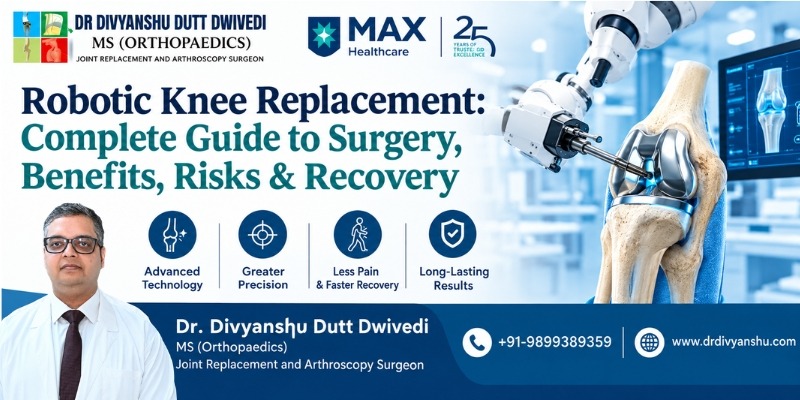
Knee pain can make walking, climbing stairs, exercising, and daily activities difficult. When advanced arthritis causes persistent pain and stiffness despite medicines, physiotherapy, and other treatments, knee replacement may be considered. For eligible patients, robotic knee replacement in Lucknow offers a technology-assisted approach that supports accurate planning and implant positioning under the supervision of an experienced orthopedic surgeon.

During robotic-assisted knee replacement, the surgeon uses detailed imaging, computer-based planning, and robotic guidance to perform the procedure with controlled precision. The robot does not operate independently; the surgeon makes all clinical decisions. This guide explains robotic knee replacement in Lucknow, including the procedure, benefits, risks, recovery, rehabilitation, cost factors, and comparison with conventional knee replacement.

What Is Robotic Knee Replacement?

Robotic knee replacement is an advanced form of knee replacement surgery in which robotic-assisted technology helps the surgeon plan and perform the procedure with greater precision. Using detailed imaging, computer software, and a three-dimensional model of the knee, the surgeon can evaluate the patient’s anatomy, identify damaged areas, prepare the bone, and position the implant accurately. This personalized approach may help improve implant alignment and support a more balanced knee joint.

During robotic-assisted knee replacement, the surgeon removes the worn or damaged parts of the knee and replaces them with artificial components. The technique may be used for partial or total knee replacement, depending on the extent of joint damage and the patient’s overall condition. Robotic technology does not perform the operation independently; it assists the surgeon with planning and execution. Outcomes can vary based on surgical expertise, implant quality, rehabilitation, activity level, and overall health.

.

How Does Robotic Knee Replacement Work?

The process begins with a comprehensive orthopedic evaluation, including your symptoms, physical examination, medical history, and imaging results. If robotic knee replacement is appropriate, advanced imaging may create a detailed 3D model of your knee. Using this information, the surgeon plans the procedure according to your bone anatomy, alignment, and joint condition.

During surgery, the robotic system provides real-time guidance and helps the surgeon follow the personalized plan. It may assist with precise bone preparation and implant positioning. However, the surgeon remains fully in control, continuously assessing the knee and making all final decisions throughout the procedure.

The general process includes:

  • Preoperative orthopedic assessment
  • Diagnostic imaging and surgical planning
  • Anesthesia
  • Preparation of the damaged joint surfaces
  • Robotic-assisted bone preparation
  • Implant positioning and joint balancing
  • Testing knee movement and stability
  • Closure of the surgical incision
  • Postoperative monitoring and rehabilitation

The exact workflow varies according to the robotic platform, implant system, surgical technique, and individual patient.

Who May Need Robotic Knee Replacement?

Not everyone with knee pain needs knee replacement, and robotic assistance is not required for every knee replacement procedure. The decision depends on the severity of joint damage, pain levels, mobility limitations, overall health, treatment response, and the orthopedic surgeon’s evaluation. Robotic knee replacement may be considered for selected patients with advanced arthritis or significant knee damage when symptoms interfere with daily activities and non-surgical treatments have not provided sufficient relief.

Common conditions and symptoms that may lead to consideration of knee replacement include:

  • Advanced osteoarthritis
  • Rheumatoid arthritis
  • Post-traumatic arthritis after a previous injury
  • Significant cartilage damage
  • Persistent knee pain and stiffness
  • Progressive difficulty walking or climbing stairs
  • Reduced mobility that affects daily activities
  • Knee deformity caused by advanced joint disease

Age alone does not determine whether a patient is suitable for robotic knee replacement. Overall health, activity level, joint condition, bone quality, treatment goals, and the ability to participate in rehabilitation are also important factors. Before recommending surgery, the orthopedic surgeon may review imaging scans, physical symptoms, and previous treatments to determine the most appropriate approach.

Patients should also discuss whether conventional knee replacement or other treatment options may provide similar benefits. Robotic-assisted knee replacement is a surgical option, not automatically the best choice for every patient. A personalized evaluation helps determine whether robotic surgery is appropriate and whether it can improve pain, mobility, and quality of life.

What Are the Benefits of Robotic Knee Replacement?

Robotic knee replacement uses advanced imaging, digital planning, and computer-assisted guidance to support the surgeon during surgery. Its potential benefits include more personalized planning, controlled bone preparation, and accurate implant positioning. However, outcomes also depend on the surgeon’s experience, implant choice, overall health, physiotherapy, and commitment to postoperative instructions.

Greater Surgical Planning and Precision

Before surgery, robotic systems help create a detailed digital plan based on the patient’s knee anatomy. This allows the surgeon to evaluate bone structure, alignment, and joint balance more carefully. The technology supports precision, but the surgeon remains responsible for making clinical decisions throughout the procedure.

Individualized Surgical Planning

Every knee has unique anatomy, alignment, and patterns of wear. Robotic planning allows the surgical team to customize the procedure instead of relying only on standard measurements. This personalized approach may help the surgeon plan bone cuts, implant size, and positioning according to the patient’s specific requirements.

Controlled Bone Preparation

During surgery, robotic assistance can help guide bone preparation within the planned boundaries. This may reduce unnecessary bone removal and support consistent surgical execution. The level of robotic control varies between systems, and the surgeon can adjust the plan when necessary based on findings during the operation.

Potentially Better Implant Alignment

Correct implant alignment is important for knee function, stability, and long-term performance. Research has reported improved radiographic alignment and positioning with some robotic-assisted techniques. However, better alignment on imaging does not always guarantee faster recovery or superior long-term results for every patient.

Technology-Assisted Decision Making

Robotic systems provide real-time digital information about alignment, bone preparation, and joint balance. This information can help the surgeon make more informed decisions during the operation. Robotic technology supports surgical judgment; it does not replace the surgeon’s experience, training, or responsibility for patient safety.

Important Factors Affecting Recovery

Robotic assistance is only one part of successful knee replacement treatment. Recovery also depends on general health, muscle strength, weight, implant selection, surgical technique, pain control, and physiotherapy. Following exercise recommendations, attending follow-up appointments and maintaining realistic expectations are equally important for achieving a good outcome.

Is Robotic Knee Replacement Better Than Traditional Knee Replacement?

Many patients ask whether robotic knee replacement is better than traditional surgery. Robotic-assisted knee replacement offers advanced planning, precise bone preparation, and accurate implant positioning, which may be especially helpful in complex cases or patients with significant deformity. However, improved alignment does not always guarantee better pain relief, mobility, or long-term satisfaction. Traditional knee replacement remains effective and reliable when performed by an experienced surgeon. The best option depends on your knee condition, anatomy, age, activity level, surgeon’s expertise, available technology, and treatment goals. Discuss both approaches with your orthopedic surgeon before making an informed decision. 


Factor Robotic Knee Replacement Traditional Knee Replacement
Surgical planning Computer-assisted planning Conventional planning
Implant positioning Robotic-assisted guidance Surgeon-guided
Patient anatomy Digital planning can account for individual anatomy Standard surgical measurements
Surgeon control Surgeon performs and controls the procedure Surgeon performs the procedure
Technology Requires robotic/navigation technology Does not require robotic technology
Cost May be higher depending on hospital and technology May be lower
Suitability Depends on individual patient and surgeon assessment Widely used for appropriate candidates


What Happens During Robotic Knee Replacement Surgery?

Before robotic knee replacement surgery, the orthopedic team performs a complete medical evaluation to confirm that the patient is fit for the procedure. Anesthesia is administered based on the patient’s health and the anesthesiologist’s recommendation. The surgeon then accesses the knee joint and removes damaged bone surfaces according to the personalized surgical plan.

The robotic system assists with precise bone preparation and implant positioning, while the surgeon remains in complete control. Artificial components are placed to restore knee function, followed by checks for alignment, stability, and movement. After surgery, pain management, early mobilization, physiotherapy, and regular follow-up support a safe and effective recovery.

Risks and Limitations of Robotic Knee Replacement

Like conventional knee replacement, robotic knee replacement surgery has potential risks and complications. Robotic assistance does not eliminate the normal risks associated with major orthopedic surgery.

Possible complications may include:

  • Infection
  • Blood clots
  • Bleeding
  • Stiffness
  • Persistent pain
  • Nerve or blood vessel injury
  • Implant-related complications
  • Anesthesia-related complications
  • Delayed rehabilitation
  • Need for additional treatment or revision surgery

There are also practical limitations. Robotic surgery may involve additional technology, planning, and equipment costs. Some procedures may take longer, and access to specific robotic systems varies between hospitals.

Recent research continues to evaluate whether the technical advantages of robotic surgery result in consistently superior clinical outcomes. A 2025 systematic review and a more recent network meta-analysis show that the evidence is evolving rather than supporting a universal claim that robotic surgery is superior in every outcome.


Robotic Knee Replacement Recovery: What to Expect


Recovery Stage What Patients May Expect
First few days Assisted walking, pain and swelling management
Week 1 Wound care, walking practice and prescribed exercises
Weeks 2–3 Gradual improvement in mobility and knee movement
Weeks 4–6 Increasing independence and daily activities
Around 3 months Continued improvement in strength and function
6 months+ Ongoing improvement depending on individual recovery


Robotic knee replacement recovery varies from person to person. Your age, physical condition, muscle strength, medical history, surgical complexity, and commitment to rehabilitation can influence the recovery process.

First Few Days

Patients generally begin moving the knee and walking with assistance as advised by the healthcare team. Pain and swelling are expected during the early recovery period and are managed with prescribed medication, ice, elevation, and other measures recommended by the surgical team.

First Few Weeks

Walking gradually becomes easier, although a walking aid may still be needed. Physiotherapy focuses on restoring knee movement, improving muscle strength, and increasing independence.

Around Four to Six Weeks

Many patients can perform more everyday activities by this stage, but recovery is not identical for everyone. Some people progress faster, while others need additional rehabilitation.

Three Months and Beyond

Strength, endurance, and knee function can continue improving for several months. Full recovery may take longer depending on the individual’s condition and rehabilitation progress.

The most important point is that robotic knee replacement recovery time is not determined by the robotic technology alone. Your overall health and rehabilitation plan have a major influence on the outcome.

Physiotherapy After Robotic Knee Replacement

Physiotherapy is essential after robotic-assisted knee replacement to support safe, steady recovery. A personalized rehabilitation program may include exercises that improve knee range of motion, quadriceps and leg strength, balance, flexibility, walking ability, and daily functional independence. Patients should follow the guidance provided by their orthopedic surgeon and physiotherapist, as recovery varies from person to person. Progressing too quickly may increase pain, swelling, or discomfort, while avoiding movement can lead to stiffness, weakness, and delayed recovery. The goal is gradual, consistent improvement through appropriate exercises, mobility training, and regular follow-up—not forcing the knee to heal faster than it safely can.

How Much Does Robotic Knee Replacement Cost in Lucknow?

The robotic knee replacement cost in Lucknow varies from patient to patient because it depends on the type of surgery, implant, hospital facilities, surgeon’s fees, robotic technology, anesthesia, diagnostic tests, room category, hospital stay, medicines, and rehabilitation. Insurance coverage also differs by policy and insurer, so patients should confirm inclusions, exclusions, and pre-authorization requirements before surgery. Rather than choosing a hospital only on the lowest estimate, consider the surgeon’s experience, hospital infrastructure, implant quality, rehabilitation support, and follow-up care. An orthopedic evaluation is essential for an accurate estimate because each patient’s treatment plan and medical requirements are different.

How Long Do Robotic Knee Implants Last?

Patients often ask, “How long does a robotic knee replacement last?” Implant longevity depends on several factors, including implant design, materials, surgical positioning, body weight, activity level, age, general health, and adherence to medical advice. Robotic assistance can support detailed planning and accurate implant positioning, but it cannot guarantee a specific implant lifespan. Maintaining a healthy weight, following recommended activity guidelines, attending follow-up appointments, and addressing symptoms early may help preserve knee function. Your orthopedic surgeon can provide more personalized guidance based on your implant, lifestyle, bone health, and overall clinical condition.

How to Prepare for Robotic Knee Replacement

Proper preparation can make robotic knee replacement surgery and recovery more manageable. Your surgeon may recommend blood tests, imaging, medical clearance, and a review of your current medicines. Conditions such as diabetes, heart disease, high blood pressure, or other health problems should be discussed because they may affect surgical planning and recovery. Prepare your home by removing trip hazards, arranging support, organizing essential items, and creating a comfortable resting area. If preoperative strengthening exercises are advised, complete them regularly. Always follow the specific instructions provided by your orthopedic surgeon, anesthetist, and physiotherapy team.

How to Choose a Robotic Knee Replacement Surgeon in Lucknow

Choosing the right surgeon is an important step when considering robotic knee replacement in Lucknow. Do not focus only on the availability of robotic technology; also evaluate the surgeon’s experience in knee replacement, training in robotic-assisted procedures, hospital infrastructure, implant options, infection-control standards, rehabilitation services, and follow-up care. Ask why robotic assistance is suitable for your specific knee condition and request a clear explanation of its potential benefits, limitations, and alternatives. A trustworthy orthopedic surgeon should communicate openly, discuss possible complications, and help you make an informed decision based on your medical needs.

Important questions include:

  • Am I a suitable candidate for knee replacement?
  • Why is robotic assistance recommended in my case?
  • Would conventional knee replacement also be appropriate?
  • Which robotic technology will be used?
  • What implant is being recommended?
  • What should I expect during recovery?
  • What is included in the estimated treatment cost?
  • How long will physiotherapy be required?

A detailed consultation allows you to make a decision based on your condition rather than marketing claims.

Robotic Knee Replacement in Lucknow: Making an Informed Decision

Robotic knee replacement in Lucknow uses advanced computer-assisted planning to help surgeons achieve accurate implant positioning and personalized treatment. However, successful results depend on the surgeon’s experience, proper patient selection, implant quality, hospital facilities, and dedicated rehabilitation. Patients should undergo a detailed orthopedic evaluation before choosing robotic-assisted surgery and discuss its benefits, risks, alternatives, expected recovery, and overall cost. If persistent knee pain, stiffness, or arthritis is affecting mobility and daily activities, consult a qualified orthopedic surgeon in Lucknow to determine whether medicines, physiotherapy, conventional knee replacement, or robotic knee replacement is most suitable for your condition. 

Consult Dr. Divyanshu Dutt Dwivedi for robotic knee replacement in Lucknow

Robotic Knee replacement Surgeon in Lucknow
Dr. Divyanshu Dutt Dwivedi

Dr. Divyanshu Dutt Dwivedi is an experienced orthopedic and joint replacement specialist offering advanced knee care in Lucknow. Patients considering robotic knee replacement can discuss persistent knee pain, arthritis, stiffness, mobility problems, imaging results, and treatment options during a personalized consultation. Robotic-assisted knee surgery may help support accurate implant positioning and individualized surgical planning when clinically appropriate. The right procedure depends on your knee condition, overall health, and treatment goals—not technology alone. If knee pain is affecting your daily activities, schedule an evaluation to understand whether robotic knee replacement is suitable for you. Contact Dr. Divyanshu Dutt Dwivedi at +919899389359 for consultation. 

Conclusion

Robotic knee replacement is an advanced approach to treating severe knee arthritis and other conditions when non-surgical treatments no longer provide adequate relief. By combining detailed surgical planning with robotic-assisted technology, the surgeon can achieve precise bone preparation and implant positioning. However, successful results depend on several factors, including the patient’s condition, surgeon’s experience, implant selection, overall health, and commitment to rehabilitation. Understanding the benefits, risks, procedure, recovery, and expected outcomes of robotic knee replacement can help patients make an informed decision. If you are considering robotic knee replacement in Lucknow, consult an experienced orthopedic and joint replacement surgeon for personalized guidance.

FAQs About Robotic Knee Replacement in Lucknow

1. What is robotic knee replacement?

Robotic knee replacement is a technology-assisted procedure where the surgeon uses computer planning and robotic guidance to improve bone preparation, alignment, and implant positioning.

2. Is robotic knee replacement better than traditional knee replacement?

Robotic surgery can provide more precise planning and implant alignment, but it is not automatically better for every patient. Suitability depends on anatomy, diagnosis, and surgeon expertise.

3. Is robotic knee replacement safe?

Robotic knee replacement is generally considered safe when appropriately performed, but risks such as infection, blood clots, stiffness, bleeding, and anesthesia complications can still occur.

4. Who is a candidate for robotic knee replacement?

Patients with advanced knee arthritis, persistent pain, stiffness, deformity, or reduced mobility despite non-surgical treatment may be candidates after detailed orthopedic evaluation.

5. How much does robotic knee replacement cost in Lucknow?

Robotic knee replacement costs in Lucknow vary according to the implant, hospital, surgeon, procedure complexity, technology, and rehabilitation requirements. A personalized estimate is recommended.

6. How long does robotic knee replacement surgery take?

Robotic knee replacement surgery commonly takes around one to two hours, although operating time varies depending on the patient’s condition, surgical complexity, and procedure performed.

7. When can I walk after robotic knee replacement?

Many patients begin standing and walking with assistance soon after surgery when medically appropriate. Exact timing depends on health, surgical findings, and the surgeon’s rehabilitation protocol.

8. How long does robotic knee replacement recovery take?

Initial recovery generally progresses over several weeks, while strength, flexibility, and knee function can continue improving for several months with appropriate physiotherapy and rehabilitation.

9. Does a robot perform the knee replacement surgery?

No. The orthopedic surgeon performs the surgery and makes all clinical decisions. Robotic technology assists with surgical planning, guidance, bone preparation, and implant positioning.

10. Does robotic knee replacement require a CT scan?

CT requirements depend on the robotic system being used. Some platforms use CT-based three-dimensional planning, while other systems use different imaging or registration methods.

11. Does insurance cover robotic knee replacement in Lucknow?

Insurance coverage depends on your policy, insurer, and hospital. Before surgery, confirm pre-authorization requirements, covered expenses, exclusions, and any expected out-of-pocket costs.

12. How do I choose a robotic knee replacement surgeon in Lucknow?

Consider the surgeon’s knee replacement experience, robotic surgery training, hospital infrastructure, implant options, rehabilitation support, complication management, and willingness to explain alternatives clearly.


Hidden-Causes-You-Shouldnt-Ignore-1200x800.jpg

Introduction

Most people believe that knee pain is a natural part of ageing. But the truth is, not all knee pain is caused by age. Many individuals ignore early symptoms, assuming it is normal, which often leads to serious complications later.

If you are experiencing persistent discomfort, swelling, or stiffness, it might be time to consult the best knee replacement doctor in Lucknow. Early diagnosis can help prevent severe joint damage and improve your quality of life.

In this blog, we will uncover the 7 hidden causes of knee pain that you should never ignore and when to seek expert help.

What is Knee Pain?

Knee pain refers to discomfort in or around the knee joint that can affect mobility and daily activities. It can occur due to injury, medical conditions, or underlying joint problems.

While ageing may contribute to joint wear and tear, it is not always the primary cause. Identifying the real reason behind the pain is essential for proper treatment.

7 Hidden Causes of Knee Pain You Shouldn’t Ignore

1. Early Osteoarthritis

Osteoarthritis is one of the most common yet overlooked causes of knee pain. It begins slowly and worsens over time due to cartilage breakdown.

Symptoms include:

  • Joint stiffness
  • Pain after activity
  • Reduced flexibility

Consulting a best knee replacement specialist in Lucknow at an early stage can help delay progression.

2. Ligament Injuries

Even minor ligament injuries can cause long-term knee instability if left untreated.

Common causes:

  • Sudden twisting movements
  • Sports injuries
  • Accidental falls

Proper diagnosis and rehabilitation are crucial for recovery.

3. Meniscus Tear

The meniscus acts as a cushion in your knee joint. A tear can occur due to sudden movement or degeneration.

Warning signs:

  • Locking sensation
  • Swelling
  • Difficulty bending the knee

4. Patellar Tracking Disorder

This condition occurs when the kneecap moves out of its normal alignment.

Symptoms:

  • Pain while climbing stairs
  • Clicking sound in the knee
  • Weakness

Ignoring this can lead to chronic knee issues.

5. Bursitis

Bursitis is inflammation of fluid-filled sacs in the knee joint.

Causes include:

  • Repetitive kneeling
  • Infection
  • Injury

It often causes swelling and tenderness.

6. Tendinitis

Tendinitis is inflammation of the tendons around the knee, commonly seen in athletes and active individuals.

Common symptoms:

  • Pain during movement
  • Swelling
  • Tenderness

7. Obesity and Lifestyle Factors

Excess weight puts additional stress on your knee joints, increasing the risk of damage.

Impact:

  • Faster cartilage wear
  • Increased pain
  • Reduced mobility

Maintaining a healthy lifestyle is key to preventing long-term issues.

Symptoms You Should Not Ignore

If you notice any of the following symptoms, consult a specialist immediately:

  • Persistent knee pain
  • Swelling or redness
  • Difficulty walking
  • Stiffness in the joint
  • Clicking or popping sounds

Early intervention by the best knee replacement doctor in Lucknow can prevent complications.

Best Treatment Options for Knee Pain

Non-Surgical Treatments

  • Physiotherapy
  • Medications
  • Lifestyle modifications
  • Weight management

These methods are effective in early stages.

Advanced Treatments

  • Arthroscopy
  • Ligament reconstruction
  • Partial or total knee replacement

If your condition is severe, consulting a best knee replacement specialist in Lucknow ensures advanced and effective care.

Why Choose the Best Knee Replacement Doctor in Lucknow

Choosing the right doctor plays a crucial role in successful treatment.

Key factors include:

  • Experience and expertise
  • Advanced surgical techniques
  • Patient-centered care
  • High success rate

Best Knee Replacement Treatment in Lucknow

Lucknow has become a hub for advanced orthopedic care, offering modern facilities and expert doctors.

Patients can benefit from:

  • Advanced surgical procedures
  • Minimally invasive techniques
  • Faster recovery

Tips to Prevent Knee Pain

  • Maintain a healthy weight
  • Exercise regularly
  • Avoid excessive strain
  • Use proper posture
  • Wear supportive footwear

Read More :Best Orthopedic Doctor in Lucknow: Treatments, Expertise, and Results

Conclusion

Knee pain is not always a sign of ageing. Ignoring early symptoms can lead to serious complications and long-term damage. Understanding the hidden causes helps in timely diagnosis and effective treatment.

If you are experiencing persistent discomfort, consulting the best knee replacement doctor in Lucknow can make a significant difference in your recovery journey. Early care leads to better results and a pain-free life.

Frequently Asked Questions

Q1. Is knee pain always due to ageing?

No, knee pain can occur due to injuries, lifestyle factors, or medical conditions like arthritis. Ageing is just one of many possible causes.

Q2. When should I see a knee specialist?

If your pain lasts more than a few days, worsens over time, or affects daily activities, consult a specialist immediately.

Q3. Can knee pain be treated without surgery?

Yes, early-stage knee problems can often be managed with physiotherapy, medications, and lifestyle changes.

Q4. Who is the best knee replacement doctor in Lucknow?

Choosing an experienced orthopedic surgeon with a strong track record ensures better treatment outcomes and recovery.

Q5. How long does recovery take after knee replacement?

Recovery usually takes a few weeks to months, depending on the patient’s condition and rehabilitation process.

About the Author

Dr. Divyanshu Dutt Dwivedi is the best orthopedic doctor in Lucknow and has many years of experience treating all types of bone and joint problems. He specialises in joint replacement, arthroscopy, sports injury, and complex trauma management.

He completed his MBBS and MS in Orthopedics from one of the top medical colleges in India. He has also completed multiple national and international fellowships in joint replacement and arthroscopy.

With over 16 years of experience and more than 5,000 successful surgeries, Dr. Divyanshu is a leading orthopedic surgeon known for delivering excellent patient outcomes.


Best-Orthopedic-Doctor-in-Lucknow--1200x800.jpg

Introduction

Joint pain can limit movement, reduce productivity, and affect overall quality of life. Whether the cause is injury, age-related wear, or a medical condition such as arthritis, choosing the right treatment is essential. Many patients struggle to decide between joint preservation and joint replacement. Both approaches have their benefits, and the right choice depends on the severity of the condition, age, activity level, and long-term goals. Consulting the Best Orthopedic Doctor in Lucknow can help you make an informed and confident decision.

Understanding Joint Problems

Joint problems can develop due to multiple reasons, including sports injuries, repetitive strain, obesity, or degenerative diseases like osteoarthritis. Early symptoms often include stiffness, mild pain, and reduced flexibility. If ignored, these symptoms may progress into severe pain and restricted mobility.

Timely consultation with the Best Sports injury doctor in Lucknow can help diagnose the issue early and prevent further damage. Early intervention often allows patients to consider joint preservation methods instead of going for major surgical procedures.

What is Joint Preservation

Joint preservation refers to treatments aimed at saving and maintaining the natural joint structure. It focuses on reducing pain, improving function, and delaying or avoiding the need for joint replacement surgery.

Common joint preservation methods include:

  • Physiotherapy and rehabilitation
  • Medications and injections
  • Lifestyle modifications such as weight management
  • Minimally invasive procedures

These treatments are most effective in the early to moderate stages of joint damage.

Arthroscopy Surgery Explained

Arthroscopy is one of the most advanced joint preservation techniques. Arthroscopy surgery in Lucknow involves inserting a small camera into the joint through tiny incisions. This allows the surgeon to diagnose and treat problems such as ligament tears, cartilage damage, or inflammation.

Choosing the Best Arthroscopy surgeon in Lucknow ensures precise treatment, minimal tissue damage, and faster recovery. Patients often return to their normal activities much sooner compared to traditional open surgeries.

What is Joint Replacement

Joint replacement is a surgical procedure where a damaged joint is replaced with an artificial implant. This option is usually considered when the joint is severely damaged and other treatments are no longer effective.

The goal of joint replacement is to relieve pain, restore mobility, and improve overall quality of life.

Knee Replacement

Knee replacement is recommended for patients suffering from severe arthritis or injury that has significantly damaged the knee joint. The Best knee replacement surgeon in Lucknow uses advanced techniques to ensure better alignment, durability, and long-term success.

Hip Replacement

Hip replacement surgery in Lucknow is commonly performed for patients with severe hip joint damage. It helps reduce pain and improves mobility, allowing patients to return to daily activities with ease.

Joint Preservation vs Joint Replacement

Understanding the difference between these two approaches is important before making a decision.

Joint preservation focuses on maintaining the natural joint and is usually less invasive. It involves shorter recovery time and fewer risks. However, it may not provide permanent relief if the damage is severe.

Joint replacement, on the other hand, offers a long-term solution for advanced joint damage. While it involves surgery and a longer recovery period, it can significantly improve quality of life when other treatments fail.

The choice between the two depends on several factors such as age, severity of damage, lifestyle, and overall health.

When Should You Choose Joint Preservation

Joint preservation is usually recommended in the following situations:

  • Early to moderate joint damage
  • Younger patients who want to delay joint replacement
  • Active individuals who want to maintain natural joint function
  • Patients who respond well to non-surgical treatments

This approach helps in slowing down the progression of joint damage and maintaining mobility for a longer time.

When is Joint Replacement the Better Option

Joint replacement becomes necessary when:

  • Joint damage is severe and irreversible
  • Pain is persistent and affects daily activities
  • Mobility is significantly reduced
  • Non-surgical treatments have failed

In such cases, joint replacement can provide long-lasting relief and improve overall quality of life.

Role of Advanced Techniques

Modern orthopedic care has evolved significantly with the introduction of advanced technologies.

Robotic Knee Replacement

Robotic Knee Replacement in Lucknow offers greater precision and improved outcomes. This technology allows surgeons to plan and perform the procedure with high accuracy, resulting in better alignment and faster recovery.

Consulting the Best Doctor for Robotic Knee Replacement in Lucknow ensures that patients benefit from the latest advancements in orthopedic surgery.

Expert Advice from an Orthopedic Specialist

Every patient is different, and there is no one-size-fits-all solution. A detailed evaluation by the Best Orthopedic Doctor in Lucknow includes physical examination, imaging tests, and assessment of lifestyle needs.

An experienced specialist will guide you on whether joint preservation techniques can still be effective or if joint replacement is the better option. Personalized treatment plans ensure better outcomes and long-term satisfaction.

Conclusion

Deciding between joint preservation and joint replacement is an important step in managing joint health. While joint preservation focuses on maintaining the natural joint and delaying surgery, joint replacement offers a permanent solution for severe damage.

The right choice depends on the stage of the condition, age, activity level, and overall health. Seeking timely medical advice can prevent complications and help you choose the most effective treatment.

If you are experiencing joint pain or mobility issues, consult an expert today. Early diagnosis and the right treatment approach can help you regain an active and pain-free life.


Frequently Asked Questions

1. What is the difference between joint preservation and joint replacement?

Joint preservation focuses on saving and maintaining the natural joint using non-surgical or minimally invasive treatments. Joint replacement involves surgically replacing the damaged joint with an artificial implant when the damage is severe.

2. When should I consider joint preservation treatments?

Joint preservation is recommended in the early to moderate stages of joint damage, especially for younger or active individuals who want to delay surgery and maintain natural joint function.

3. Is arthroscopy surgery effective for joint problems?

Yes, arthroscopy is a minimally invasive procedure that helps diagnose and treat joint issues such as ligament tears and cartilage damage. It offers faster recovery and less pain compared to traditional surgery.

4. How do I know if I need joint replacement surgery?

You may need joint replacement if you have severe pain, limited mobility, and your condition does not improve with medications, physiotherapy, or other treatments. A specialist evaluation is necessary for confirmation.

5. What are the benefits of robotic knee replacement?

Robotic knee replacement provides higher precision, better implant alignment, reduced pain, and faster recovery. It also improves long-term outcomes compared to traditional knee replacement methods.


Logo

Dr. Divyanshu Dutt Dwivedi is a well-known orthopedic surgeon in Lucknow, recognized for his expertise in treating a variety of musculoskeletal conditions. He is known as one of the Best Orthopedic Doctors in Lucknow.

© 2025 Dr. Divyanshu. All rights reserved.| Developed By Websofy Software