Persistent knee pain, stiffness and difficulty walking can make everyday activities challenging. When medicines, physiotherapy and other non-surgical treatments no longer provide sufficient relief, knee replacement surgery may be considered. If you are looking for a knee replacement surgeon in Lucknow, understanding the available procedures, potential benefits, risks and recovery process can help you make an informed decision. Dr. Divyanshu Dutt Dwivedi is an orthopaedic and joint replacement surgeon associated with Max Super Speciality Hospital, Lucknow. A consultation can help assess your knee condition and determine whether surgery or another treatment approach is suitable for your needs.
Who Is Dr Divyanshu Dutt Dwivedi?
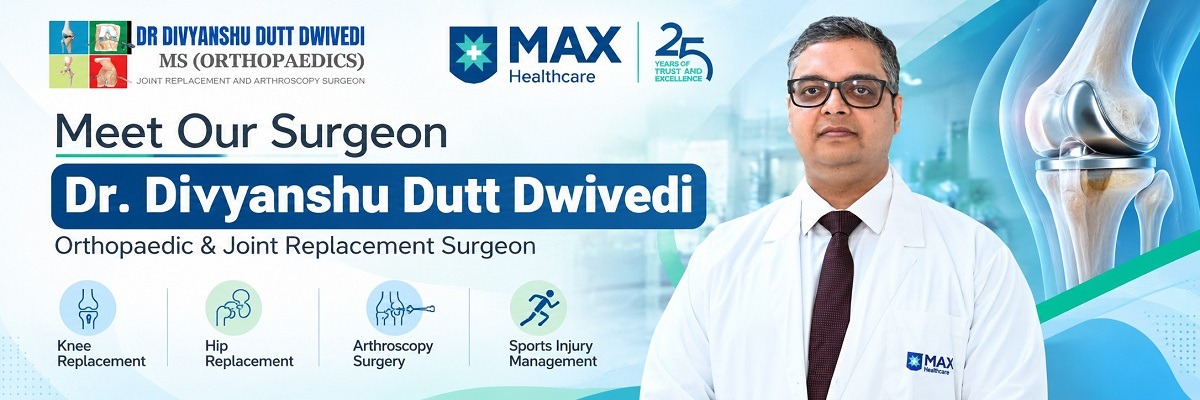
Dr. Divyanshu Dutt Dwivedi is an orthopaedic surgeon whose clinical interests include joint replacement, arthroscopy and sports injury management. His published professional profile lists an MBBS from Kasturba Medical College, Manipal, and an MS in Orthopaedics from the University College of Medical Sciences and GTB Hospital, Delhi.
His additional training includes fellowships in joint replacement, arthroscopy and sports injuries, shoulder and elbow surgery, and revision hip and knee arthroplasty. His profile also lists fellowship training at Helios Endoklinik in Hamburg, Germany, and Myongji Hospital in South Korea.
He is listed as Associate Director of Orthopaedics and Joint Replacement at Max Super Speciality Hospital, Lucknow. Patients considering surgery can discuss their symptoms, diagnostic findings, medical history and treatment options with him before deciding on a procedure.
When Should You Consider Knee Replacement Surgery?
The knee joint contains cartilage that helps the bones move smoothly against each other. Conditions such as osteoarthritis can gradually damage this cartilage, leading to pain, stiffness and restricted movement.
A knee replacement doctor in Lucknow may assess whether surgery is appropriate when knee problems significantly affect daily life and conservative treatments have not provided enough relief.
Common signs that warrant an orthopaedic assessment include:
- Persistent knee pain during walking, standing or resting.
- Stiffness that makes bending or straightening the knee difficult.
- Difficulty climbing stairs, getting up from a chair or walking longer distances.
- Swelling or changes in the shape of the knee joint.
- Reduced ability to perform routine activities despite treatment.
- Advanced joint damage identified through clinical examination and imaging.
These symptoms do not automatically mean you need surgery. Similar problems may occur with other knee conditions, and treatment depends on the underlying cause.
Doctors may initially recommend exercise, physiotherapy, weight management, medication or other suitable options. Knee replacement may be considered when the joint damage is substantial, symptoms remain troublesome and the likely benefits of surgery outweigh its risks.
How Is a Knee Replacement Recommended?
Choosing surgery involves more than looking at an X-ray. An orthopaedic surgeon considers how the knee feels, how well it functions and how symptoms affect your quality of life.
An assessment may include:
- Medical history: The doctor reviews your symptoms, previous injuries, earlier treatments, other medical conditions and current medicines.
- Physical examination: The knee is assessed for movement, swelling, tenderness, stability and alignment.
- Imaging: X-rays help identify joint-space narrowing, bone changes and the extent of arthritis. Additional investigations may be required in selected cases.
- Treatment discussion: Your surgeon explains appropriate non-surgical and surgical options, expected outcomes, potential complications and rehabilitation needs.
Age alone does not determine whether knee replacement is appropriate. Your overall health, activity level, severity of symptoms, joint condition and personal expectations also matter.
If surgery is being considered, ask why a particular procedure is recommended, what alternatives are available and what recovery may involve. A clear discussion helps you understand the decision rather than relying on a general recommendation.
Types of Knee Replacement Surgery
The appropriate procedure depends on how much of the knee joint is damaged, the condition of the surrounding ligaments and other individual factors. The main options include total, partial and revision knee replacement.
1. Total Knee Replacement in Lucknow
Total knee replacement is commonly considered when arthritis or another condition has significantly damaged multiple areas of the knee joint. During the procedure, the surgeon removes damaged joint surfaces and replaces them with artificial components designed to restore joint function.
The operation aims to reduce pain and improve mobility. The implant typically includes metal components and a durable plastic bearing surface. The exact design and method of fixation depend on the patient’s anatomy and surgical requirements.
A total knee replacement in Lucknow may be discussed when symptoms remain severe despite appropriate non-surgical treatment. Before recommending surgery, the surgeon considers the extent of damage, medical fitness and likely rehabilitation requirements.
Learn more about the procedure: https://www.drdivyanshu.com/total-knee-replacement-in-lucknow/
2. Partial Knee Replacement in Lucknow
A partial knee replacement replaces only the damaged compartment of the knee rather than resurfacing the entire joint. It may be suitable for selected patients whose arthritis is limited to one compartment and whose remaining cartilage, ligaments and joint structures meet the necessary criteria.
Because less of the joint is replaced, the procedure differs from total knee replacement in the amount of bone and cartilage treated. However, partial replacement is not suitable for everyone with knee arthritis.
Your surgeon will review your symptoms, examination findings, X-rays and ligament function to decide whether a partial procedure is appropriate. The potential benefits, limitations and possibility of further surgery should be discussed before making a decision.
Read more: https://www.drdivyanshu.com/partial-knee-replacement-surgeon-in-lucknow/
3. Revision Knee Replacement in Lucknow
Revision knee replacement involves replacing or reconstructing components from an earlier knee replacement. It may be needed if an implant becomes loose, wears out, develops an infection or causes persistent problems that require surgical assessment.
Revision surgery can be more complex than an initial replacement because the surgeon may need to manage bone loss, scar tissue, infection or changes in the surrounding structures. The treatment plan depends on the specific problem and the condition of the existing implant.
If you have pain, swelling, instability or reduced function after an earlier knee replacement, seek an orthopaedic review. These symptoms do not always mean revision surgery is necessary; the cause must first be identified.
Read more: https://www.drdivyanshu.com/revision-knee-replacement-surgeon-in-lucknow/
Robotic Knee Replacement in Lucknow
Robotic-assisted knee replacement uses digital planning and robotic technology to help the surgeon plan and perform selected parts of the operation. Depending on the system, the technology may support assessment of joint alignment, bone preparation and implant positioning.
It is important to understand that the robot does not independently perform the operation. The surgeon remains responsible for clinical decisions, surgical technique and patient care.
Potential advantages depend on the technology used, the patient’s anatomy and the surgeon’s approach. Robotic assistance should not be presented as a guarantee of less pain, faster recovery or a longer-lasting implant. Evidence of improved long-term patient outcomes remains an important consideration when comparing techniques.
During a consultation about robotic knee replacement in Lucknow, ask whether the technology is suitable for your condition, how it may affect your treatment plan and how its benefits compare with conventional surgery. The best approach is the one that is clinically appropriate for the individual patient.
Benefits and Risks of Knee Replacement Surgery
For appropriately selected patients, knee replacement can reduce arthritis-related pain and improve the ability to walk, stand and perform daily activities. Many patients experience better mobility after rehabilitation, although results vary from person to person.
Possible benefits include:
- Reduced pain caused by damaged joint surfaces.
- Improved ability to perform routine movements.
- Better participation in suitable physical activities.
- Improved quality of life when pain has significantly restricted daily living.
However, knee replacement is a major operation and has potential risks. These may include infection, blood clots, bleeding, stiffness, nerve or blood vessel injury, persistent pain and implant loosening or wear. Some patients may need further treatment or revision surgery.
The likelihood of complications depends on individual health factors and the details of the procedure. Conditions such as diabetes, smoking and other medical problems may influence surgical risk and recovery.
Before proceeding, discuss your medical history, current medicines, anaesthesia, blood-clot prevention, rehabilitation and expected outcomes with your healthcare team. Understanding both benefits and risks supports a more informed decision.
What Happens During Knee Replacement Surgery?
The exact surgical plan depends on the type of replacement, the patient’s health and the hospital’s clinical protocols. The procedure is performed by a surgical team using anaesthesia and appropriate monitoring.
In general, the surgeon accesses the knee joint, removes damaged joint surfaces and prepares the bone for the selected implant components. The components are positioned and checked for fit, movement and stability before the wound is closed.
The operation often takes around one to two hours, although the duration can vary with the procedure and individual circumstances. Additional time may be needed for preparation, anaesthesia and post-operative monitoring.
After surgery, the care team monitors pain, circulation, wound condition and general recovery. Many patients are encouraged to begin supervised movement and walking with assistance as soon as medically appropriate. Early mobilisation and an individualised rehabilitation plan are important parts of recovery.
Recovery After Knee Replacement Surgery
Recovery is gradual and varies according to the patient’s health, strength before surgery, procedure type and response to physiotherapy. Your surgeon and rehabilitation team will provide instructions tailored to your condition.
Early Recovery
During the initial period, the care team focuses on pain control, wound care, safe movement and reducing the risk of complications. You may use a walker or other walking aid while practising supervised movements and exercises.
The First Several Weeks
Physiotherapy helps improve knee movement, muscle strength, balance and walking ability. Swelling, stiffness and discomfort may continue during this stage. Progress should be guided by your clinical team rather than by a fixed timetable.
Longer-Term Recovery
Many patients continue to improve for several months, and some experience further progress for a year or longer. Returning to work, driving, exercise and other activities depends on individual recovery and medical advice.
To support recovery:
- Follow the prescribed exercise and physiotherapy plan.
- Take medicines only as directed by your healthcare team.
- Keep the wound clean and follow wound-care instructions.
- Attend scheduled follow-up appointments.
- Report increasing pain, fever, wound discharge or worsening swelling promptly.
Seek emergency medical help if you develop chest pain or sudden difficulty breathing after surgery, as these can be signs of a serious complication.
How to Choose a Knee Replacement Surgeon in Lucknow
Selecting a surgeon is an important decision. Rather than relying only on online rankings or promotional claims, look for relevant qualifications, experience with the procedure being considered and a clear approach to patient communication.
Consider these factors when comparing your options:
| Factor | What to check |
| Qualifications | Recognised medical qualifications and orthopaedic training |
| Relevant experience | Experience with the specific procedure and complexity of your condition |
| Treatment planning | Clear explanation of surgical and non-surgical alternatives |
| Hospital support | Access to anaesthesia, nursing, rehabilitation and appropriate post-operative care |
| Communication | Willingness to explain risks, expected outcomes and recovery |
| Follow-up | A clear plan for rehabilitation and post-operative review |
Ask how the surgeon will determine whether total or partial replacement is suitable, what complications may occur and what support you will need after discharge.
A trustworthy consultation should help you understand the available choices without promising a perfect result. The decision should be based on clinical findings, your preferences and a balanced discussion of likely benefits and risks.
Consultation with Dr Divyanshu Dutt Dwivedi in Lucknow
Patients seeking an assessment for persistent knee pain or possible joint replacement can contact Dr Divyanshu Dutt Dwivedi through his published professional profile. He is listed as Associate Director of Orthopaedics and Joint Replacement at Max Super Speciality Hospital, Lucknow.
Contact number: +91 9899389359
Before your appointment, consider bringing previous X-rays, MRI reports if available, medical records and a list of medicines you currently take. Prepare questions about your diagnosis, treatment alternatives, the proposed procedure, rehabilitation and the risks relevant to your health.
An appointment does not automatically mean surgery will be recommended. The purpose of the consultation is to assess your condition and discuss the most suitable next steps.
If you have already undergone knee replacement and are experiencing new or persistent symptoms, mention the date of surgery, the implant details if available and any changes in your mobility or pain.
FAQs About Knee Replacement Surgeon in Lucknow
1. Who is a knee replacement surgeon in Lucknow?
A knee replacement surgeon is an orthopaedic specialist who evaluates damaged knee joints and performs suitable replacement procedures. Dr Divyanshu Dutt Dwivedi is listed at Max Super Speciality Hospital, Lucknow.
2. When should I consult a knee replacement doctor in Lucknow?
Consult an orthopaedic doctor when persistent knee pain, stiffness or walking difficulty affects daily life, particularly if medicines, exercise and other treatments have not provided sufficient relief.
3. What is the difference between total and partial knee replacement?
Total knee replacement treats multiple damaged joint surfaces, while partial replacement addresses a specific compartment. Suitability depends on arthritis distribution, ligament function, imaging and clinical assessment.
4. Is robotic knee replacement better than conventional surgery?
Robotic assistance can support surgical planning and precision, but it does not guarantee better long-term outcomes. The appropriate technique depends on individual anatomy, clinical needs and surgeon assessment.
5. How long does recovery after knee replacement take?
Initial movement begins under supervision when medically appropriate. Recovery commonly takes several months, with progress influenced by health, strength, rehabilitation, complications and the type of procedure performed.
6. How long does a knee replacement implant last?
Many modern knee implants function for 15–25 years or longer, but longevity varies. Age, activity, implant design, health and complications can affect whether revision is eventually needed.
7. What are the risks of knee replacement surgery?
Potential risks include infection, blood clots, bleeding, stiffness, persistent pain and implant loosening. Your surgeon can explain personal risk factors and measures used to reduce complications.
8. Can both knees be replaced during one operation?
Some patients may be considered for simultaneous bilateral knee replacement, but it is not suitable for everyone. Overall health, anaesthesia risk, mobility and recovery support influence the decision.
9. How do I prepare for knee replacement surgery?
Discuss your medical conditions and medicines, complete recommended assessments, arrange home support and understand rehabilitation instructions. Your surgical team will provide specific preparation and medication guidance.
10. How can I book Dr Divyanshu Dutt Dwivedi in Lucknow?
You can contact Dr Divyanshu Dutt Dwivedi at +91 98993 89359 to enquire about consultation availability at Max Super Speciality Hospital, Lucknow.
Conclusion
Choosing a knee replacement surgeon in Lucknow begins with understanding the cause of your knee pain, the extent of joint damage and the treatment options available. Total, partial and revision knee replacement each serve different clinical needs, while robotic-assisted technology may be appropriate in selected cases. No single procedure is right for every patient, and recovery depends on several individual factors.
Dr. Divyanshu Dutt Dwivedi’s published profile lists his work in orthopaedics and joint replacement at Max Super Speciality Hospital, Lucknow. Patients considering treatment can arrange a consultation to discuss their symptoms, review their reports and understand the possible benefits, risks and rehabilitation requirements before making a decision.
To enquire about a consultation, call +91 98993 89359.
