Top 10 Common Myths About Knee Arthroscopy helps patients understand the facts about this minimally invasive procedure. Misconceptions about its safety, benefits, recovery time, and effectiveness can create confusion and unnecessary anxiety. Understanding these myths helps patients make informed decisions about their knee health. Learning when knee arthroscopy may be appropriate also helps individuals explore suitable treatment options based on their symptoms, diagnosis, and overall health.
Knee arthroscopy is a surgical procedure used to diagnose and treat selected knee joint problems through small incisions. However, not every knee condition requires surgery. Depending on the diagnosis, physiotherapy, exercise, medication, or other non-surgical treatments may be appropriate. An orthopedic assessment helps determine whether arthroscopic knee surgery is suitable for the patient and supports realistic expectations about treatment outcomes and recovery.
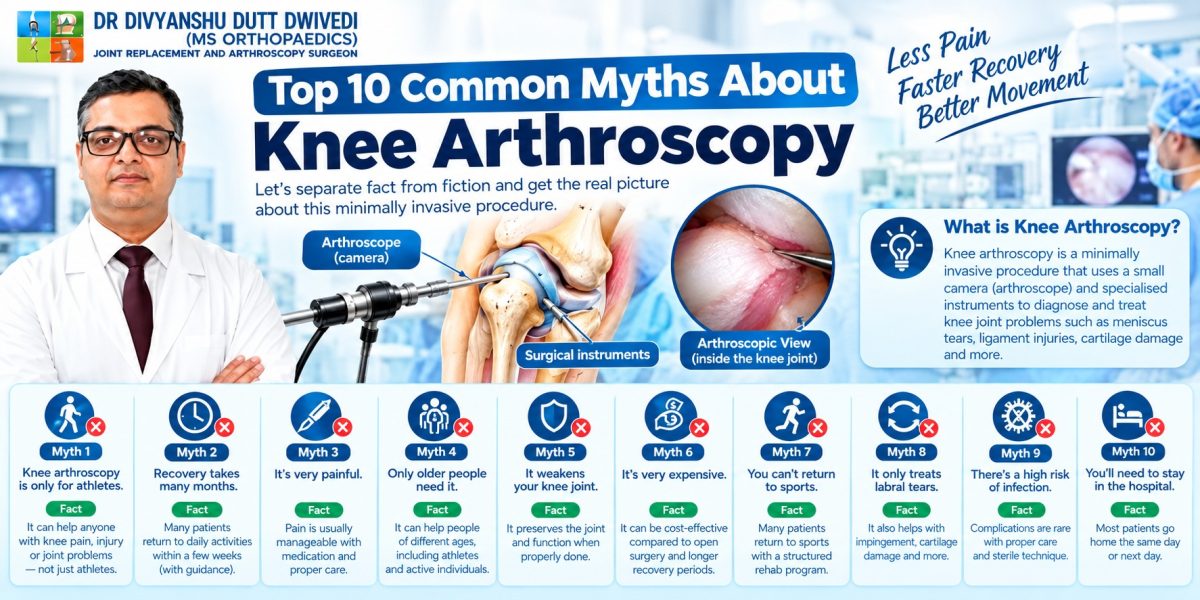
Top 10 Common Myths About Knee Arthroscopy: Myths vs Facts
| Myth | Fact |
| Knee arthroscopy is always necessary for knee pain. | Many knee conditions can be managed with non-surgical treatments. |
| Knee arthroscopy requires a large incision. | It generally uses small incisions and specialised instruments. |
| Knee arthroscopy is completely risk-free. | Like any surgery, it carries potential risks and complications. |
| Knee arthroscopy guarantees complete pain relief. | Outcomes depend on the condition being treated. |
| Every meniscus tear requires surgery. | Selected tears may improve with conservative treatment. |
| Knee arthroscopy can cure osteoarthritis. | It does not reverse cartilage degeneration and is not routinely recommended for osteoarthritis alone. |
| Recovery after knee arthroscopy is always quick. | Recovery time varies according to the procedure and individual healing. |
| Physiotherapy cannot help if surgery is considered. | Physiotherapy can improve strength, mobility, and symptoms in many patients. |
| Small incisions eliminate complications and aftercare. | Proper wound care, follow-up, and rehabilitation remain important. |
| Everyone returns to sports at the same time. | Return to sports depends on healing, strength, stability, and medical guidance. |
What Is Knee Arthroscopy?
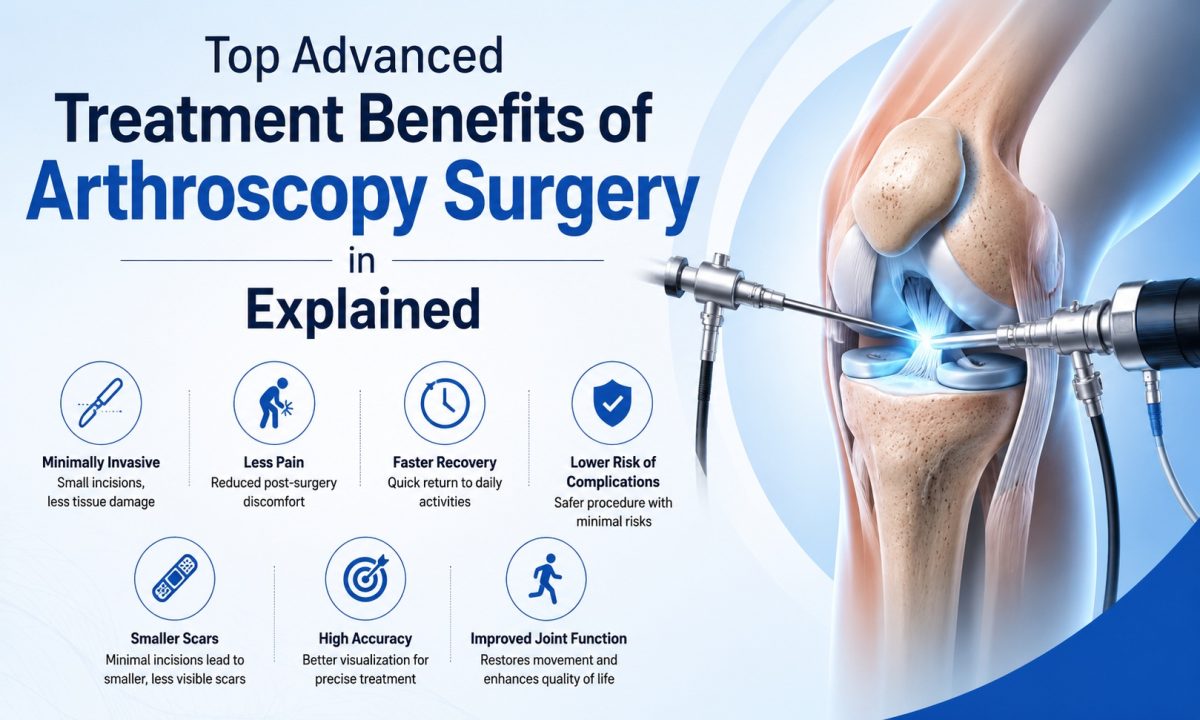
Knee arthroscopy is a minimally invasive surgical procedure that allows an orthopedic surgeon to examine and treat selected problems inside the knee joint. A small camera called an arthroscope is inserted through tiny incisions, providing clear images of the joint on a monitor. Specialized instruments may be used to treat certain meniscus injuries, loose fragments, selected ligament problems, and specific cartilage conditions. Arthroscopic knee surgery generally involves smaller incisions than traditional open surgery. However, it is not suitable for every cause of knee pain, particularly some cases of osteoarthritis. Depending on the diagnosis, physiotherapy, exercise, medication, or other treatments may be recommended. A clinical examination and appropriate imaging help determine the most suitable treatment.
Top 10 Common Myths About Knee Arthroscopy
Myth 1: Knee Arthroscopy Is Always Necessary for Knee Pain
Fact: Knee pain does not automatically mean surgery is required.
Knee pain can develop because of osteoarthritis, meniscus tears, ligament injuries, muscle weakness, or inflammation. Each condition requires a different treatment approach. An orthopedic assessment considers symptoms, medical history, physical examination, activity level, and relevant imaging to identify the likely cause. This helps determine whether surgery or conservative treatment is more appropriate.
Many patients can initially benefit from physiotherapy, strengthening exercises, activity modification, or clinician-recommended medication. Knee arthroscopy surgery may be appropriate for selected structural problems, but it is not the first choice for every painful knee. Treatment decisions should depend on the diagnosis, symptom severity, and individual needs rather than pain alone.
Myth 2: Knee Arthroscopy Is a Major Operation With a Large Incision
Fact: Knee arthroscopy generally uses small incisions, but it remains a surgical procedure.
During arthroscopic knee surgery, the surgeon inserts a small camera and specialized instruments through tiny openings around the knee. This approach allows selected joint problems to be examined and treated without a large incision. Depending on the procedure and the patient’s condition, surgery may be performed as a day-care procedure, allowing the patient to return home the same day.
Although smaller incisions can reduce tissue disruption, they do not guarantee an uncomplicated or immediate recovery. A simple procedure may require less rehabilitation than a meniscus repair or ligament reconstruction. Patients should discuss the planned treatment, anesthesia, hospital stay, recovery expectations, and postoperative restrictions with their surgeon before making a decision.
Myth 3: Knee Arthroscopy Is Completely Risk-Free
Fact: Knee arthroscopy is commonly performed, but every surgical procedure carries some risk.
Possible complications include infection, bleeding, blood clots, stiffness, persistent swelling, and reactions related to anesthesia. Some patients may continue experiencing pain or require additional treatment. Individual risks depend on general health, existing medical conditions, and the complexity of the procedure. Discussing medications, allergies, and previous surgeries with the medical team helps support appropriate preparation.
Following wound-care instructions, attending follow-up appointments, and completing prescribed rehabilitation can support recovery. Increasing pain, fever, spreading redness, or significant calf swelling requires prompt medical assessment. Chest pain or sudden breathlessness after surgery warrants emergency care. Patients should understand the potential benefits and risks of knee arthroscopy before consenting to treatment.
Myth 4: Knee Arthroscopy Guarantees Complete Pain Relief
Fact: Pain relief depends on the underlying condition and the problem being treated.
Knee arthroscopy can help selected patients with specific structural problems, including certain unstable meniscus tears or loose fragments causing symptoms. However, it cannot eliminate every cause of knee pain. Discomfort associated with advanced osteoarthritis, widespread cartilage degeneration, or other untreated conditions may persist. Surgical treatment should therefore target a clearly identified problem rather than promise complete relief.
Recovery outcomes can also depend on muscle strength, joint condition, general health, and adherence to rehabilitation. Before deciding on surgery, patients should ask their orthopedic surgeon what improvement is realistic, which symptoms may remain, and whether alternative treatments could provide similar benefits. Understanding these factors helps establish realistic expectations and supports informed treatment decisions.
Myth 5: Every Meniscus Tear Requires Arthroscopic Surgery
Fact: Many meniscus tears can initially be managed without surgery.
The meniscus is cartilage inside the knee that helps distribute loads and absorb forces during movement. Tears may occur after a sudden twisting injury or develop gradually through age-related changes. An MRI finding alone does not automatically mean surgery is necessary. Treatment depends on the tear’s location, type, symptoms, surrounding cartilage condition, and whether the knee experiences persistent locking.
Some patients improve with physiotherapy, activity modification, and clinician-recommended pain management. Others, particularly those with selected acute or repairable tears, may benefit from arthroscopic treatment. When surgery is appropriate, the surgeon considers whether the meniscus can be repaired or damaged tissue needs limited removal. Preserving functional meniscus tissue whenever feasible is important for long-term joint health.
Myth 6: Knee Arthroscopy Can Cure Osteoarthritis
Fact: Knee arthroscopy does not reverse the cartilage degeneration associated with osteoarthritis.
Knee osteoarthritis develops through progressive changes in the joint and may cause pain, stiffness, swelling, and difficulty walking or climbing stairs. Although arthroscopy can treat certain specific problems inside the knee, it is generally not recommended solely to manage degenerative knee disease. Evidence-based guidance advises against routine arthroscopy for most patients with degenerative knee disease because meaningful long-term benefits are usually limited.
Treatment may include strengthening exercises, physiotherapy, activity modification, weight management when appropriate, and clinician-recommended medication. Patients with advanced symptoms may need assessment for additional treatment options, including joint replacement when indicated. An orthopedic evaluation helps distinguish osteoarthritis from other conditions that may coexist and determines which treatment best suits the patient’s symptoms and functional needs.
Myth 7: Recovery After Knee Arthroscopy Is Always Quick
Fact: Recovery time varies according to the procedure, the injury, and individual healing.
Although some patients recover relatively quickly after simple arthroscopic knee surgery, healing involves more than the incisions closing. Pain, swelling, stiffness, and muscle weakness can temporarily affect daily activities. Some patients resume routine activities within a few weeks, while meniscus repair, ligament reconstruction, and cartilage procedures may require longer rehabilitation. Recovery expectations should reflect the actual procedure performed.
The surgeon will explain when to bear weight, use crutches, drive, return to work, and begin specific exercises. Physiotherapy can help restore movement, strength, balance, and functional ability. Returning to strenuous activities too early may interfere with healing or increase reinjury risk. Following individual rehabilitation instructions and progressing according to clinical advice supports a safer return to normal activities.
Myth 8: Physiotherapy Cannot Help If Surgery Is Being Considered
Fact: Physiotherapy can improve symptoms and function in many patients with knee conditions.
A structured physiotherapy program may include strengthening exercises, flexibility training, balance work, movement training, and guidance on modifying activities that aggravate pain. For many people with degenerative knee pain, including selected degenerative meniscus problems, exercise-based treatment is an important management option. Research indicates that arthroscopy does not provide better results than exercise therapy for many patients with degenerative meniscal tears.
However, conservative treatment is not appropriate for every injury or stage of disease. Certain acute injuries, displaced tears, or associated ligament problems may require specialist assessment. Patients should discuss the likely benefits, limitations, and expected duration of physiotherapy before deciding whether surgery is necessary. Treatment should be tailored to the diagnosis, symptoms, activity level, and rehabilitation goals.
Myth 9: Small Incisions Mean There Are No Complications or Aftercare Requirements
Fact: Minimally invasive surgery still requires proper postoperative care and rehabilitation.
The small incisions used during knee arthroscopy surgery can reduce tissue disruption compared with open procedures, but they do not eliminate surgical risks or recovery requirements. Patients may need to protect the wound, manage swelling, take prescribed medication, and follow instructions about movement and weight-bearing. Some procedures require crutches or a brace for a specified period, depending on the treatment performed.
Rehabilitation helps restore knee movement, strengthen surrounding muscles, and improve everyday function. Follow-up appointments allow the surgical team to monitor wound healing and recovery progress. Patients should promptly report unusual symptoms rather than assume everything is fine because the incisions are small. Successful recovery depends on appropriate patient selection, careful surgical planning, and adherence to aftercare instructions throughout rehabilitation.
Myth 10: Everyone Can Return to Sports at the Same Time After Knee Arthroscopy
Fact: Returning to sports depends on healing, strength, stability, and the procedure performed.
An athlete recovering from a straightforward arthroscopic procedure may progress differently from someone undergoing meniscus repair or anterior cruciate ligament reconstruction. Before returning to running, jumping, twisting, or contact sports, patients may need adequate muscle strength, knee stability, movement control, and sport-specific function. The injury, surgical technique, physical conditioning, and response to rehabilitation all influence recovery and readiness for athletic activity.
Rehabilitation usually progresses from basic movement and strengthening exercises to more demanding activities as healing allows. Returning too early may increase the risk of reinjury or place excessive stress on healing tissues. The orthopedic surgeon and physiotherapist can guide the return-to-sport plan and assess readiness. Patients should follow individual medical advice rather than compare their recovery with others or rely on a fixed timeline.
When May Knee Arthroscopy Be Appropriate?
Knee arthroscopy may be recommended when a specific problem inside the knee joint is likely to benefit from surgical treatment. Examples include selected meniscus tears, loose bone or cartilage fragments, and certain ligament or cartilage injuries. An orthopedic surgeon evaluates symptoms, physical examination findings, imaging results, activity requirements, and previous treatments before recommending surgery. For example, an acute, repairable meniscus tear may require a different approach from knee pain caused by osteoarthritis. Depending on the diagnosis, physiotherapy or other non-surgical treatments may be appropriate. Patients should discuss expected benefits, risks, alternatives, and recovery requirements with their surgeon before deciding.
What Are the Alternatives to Knee Arthroscopy?
Not every knee condition requires an operation. Depending on the diagnosis, alternatives may include:
- Physiotherapy and exercise: To improve muscle strength, movement, balance, and joint function.
- Activity modification: To reduce activities that aggravate symptoms while maintaining suitable movement.
- Weight management: When appropriate, reducing excess body weight can help lower the load placed on the knee.
- Medication: A healthcare professional may recommend suitable pain-relief or anti-inflammatory treatment after considering individual risks.
- Structured rehabilitation: To improve mobility and support recovery following an injury.
These options are not interchangeable, and they may not be suitable for every patient. Some structural injuries require timely specialist assessment, while others can improve with conservative care.
A treatment plan should be based on the underlying condition, symptom severity, medical history, and personal goals. Patients should not delay urgent assessment for a severely injured knee, a locked joint, or a hot, red knee accompanied by fever.
Meet Dr. Divyanshu Dutt Dwivedi—Trusted Knee Arthroscopy Specialist in Lucknow
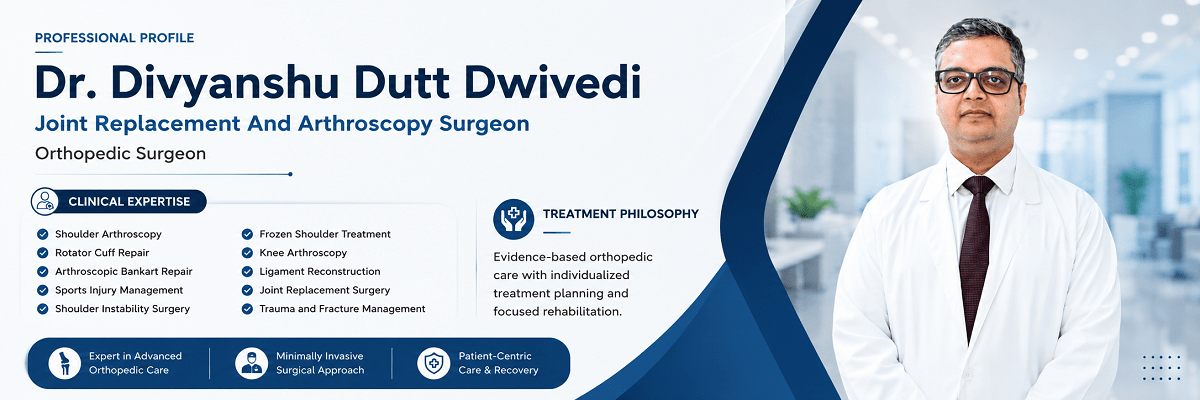
Dr. Divyanshu Dutt Dwivedi is an orthopedic and joint replacement surgeon at Max Super Speciality Hospital, Lucknow. Patients seeking a knee arthroscopy specialist in Lucknow can consult him for assessment of knee pain, sports injuries, meniscus tears, and selected knee joint conditions. Treatment recommendations depend on the diagnosis, symptoms, and individual medical needs.
Clinical Expertise:
- Knee Arthroscopy: Assessment and surgical management of selected knee joint problems.
- Meniscus Injuries: Evaluation of meniscus tears and appropriate treatment options.
- ACL Reconstruction: Management of selected anterior cruciate ligament injuries.
- Sports Injuries: Diagnosis and treatment planning for knee-related sports injuries.
- Joint Preservation: Exploring suitable options to improve knee function and mobility.
Patients can schedule a consultation to discuss their symptoms, treatment alternatives, expected recovery, and personalized care plan.
Conclusion: Understand the Facts Before Choosing Knee Arthroscopy
The top 10 common myths about knee arthroscopy highlight the importance of understanding the facts before choosing treatment. Although knee arthroscopy can help address selected joint problems, it is not suitable for every case of knee pain, meniscus tear, or osteoarthritis. The right approach depends on the diagnosis, symptoms, medical history, and expected benefits of treatment. Some patients may improve with physiotherapy and other non-surgical options, while others may benefit from surgery. Recovery and rehabilitation requirements also vary. Consulting an orthopedic surgeon helps patients understand their options, potential risks, and realistic outcomes before making an informed decision about knee treatment.
Frequently Asked Questions About Knee Arthroscopy
Is knee arthroscopy always necessary for knee pain?
No. Knee arthroscopy is not needed for every case of knee pain. Treatment depends on the diagnosis, symptoms, examination, imaging, and response to non-surgical care.
Is knee arthroscopy safe?
Knee arthroscopy is generally considered safe, but complications such as infection, blood clots, stiffness, or swelling can occur. Your individual risk depends on health and procedure.
Does every meniscus tear require knee arthroscopy?
No. Some meniscus tears improve with physiotherapy and activity changes, while selected tears may need surgery. The decision depends on tear type, symptoms, and examination.
Can knee arthroscopy cure osteoarthritis?
No. Knee arthroscopy does not reverse osteoarthritis and is generally not recommended solely for degenerative knee disease. Treatment may include exercise, physiotherapy, and medical advice.
How long does recovery from knee arthroscopy take?
Recovery varies by procedure. Some patients resume daily activities within weeks, while meniscus repair or ligament reconstruction may require several months of structured rehabilitation and follow-up.
Is knee arthroscopy painful?
Some pain, swelling, and stiffness are common after knee arthroscopy. Your care team can recommend appropriate pain relief, wound care, and activity guidance during recovery.
Can knee arthroscopy make knee pain worse?
Pain may persist if the underlying problem is not addressed or recovery is complicated. Discuss expected benefits, limitations, and alternatives with your orthopedic surgeon before surgery.
When can I return to sports after knee arthroscopy?
Return to sports depends on the procedure, healing, strength, knee stability, and rehabilitation progress. Follow your surgeon’s guidance rather than a fixed recovery timeline for everyone.
Are there alternatives to knee arthroscopy?
Yes, depending on the diagnosis. Physiotherapy, strengthening exercises, activity modification, and clinician-recommended treatment may help; some injuries still require specialist assessment or surgery for appropriate care.
When should I consult a knee arthroscopy specialist in Lucknow?
Consult an orthopedic specialist if pain, swelling, locking, or instability persists after an injury. In Lucknow, seek an assessment to discuss diagnosis and treatment options.