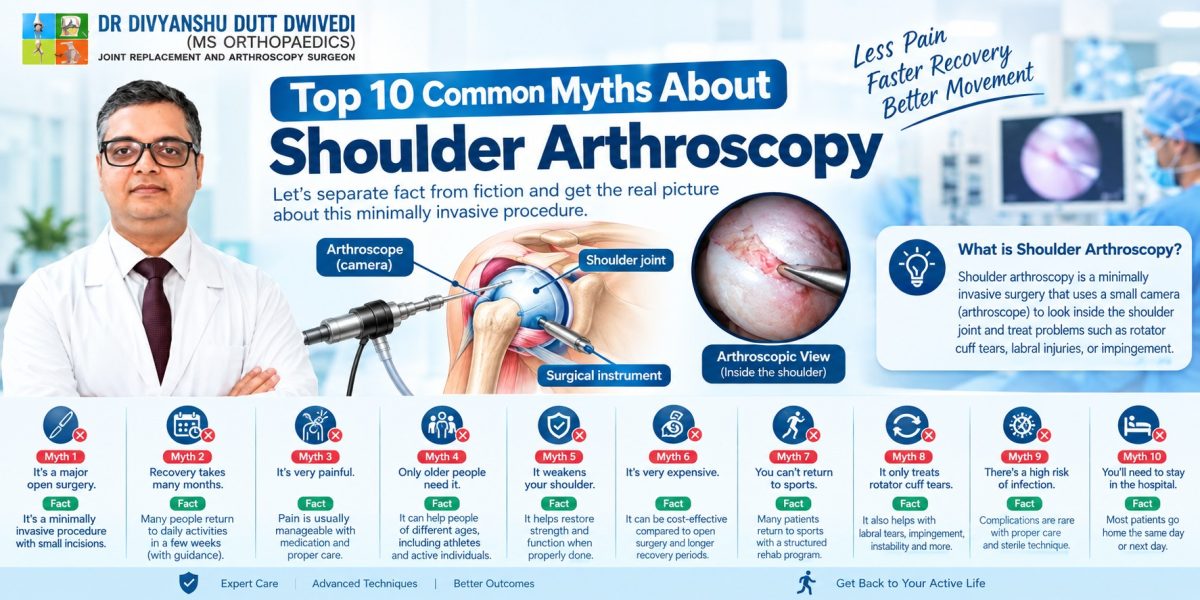
The top 10 common myths about shoulder arthroscopy often create confusion about pain, safety, recovery, scars, sports, and the need for surgery. While shoulder arthroscopy is a minimally invasive procedure used to diagnose and treat several shoulder conditions, it is not suitable or necessary for every patient. Understanding the facts can help you make informed treatment decisions.
In this guide, we explain common misconceptions about arthroscopic shoulder surgery and what patients should realistically expect. From recovery time and postoperative pain to rotator cuff repair, rehabilitation, and surgical risks, each myth We explain each myth in simple language, covering topics such as recovery time, postoperative pain, rotator cuff repair, rehabilitation, and surgical risks. in simple language. If persistent shoulder pain, weakness, instability, or restricted movement is affecting daily life, an orthopedic evaluation can help identify the right treatment approach.
What Is Shoulder Arthroscopy?
Shoulder arthroscopy is a minimally invasive procedure in which an orthopedic surgeon uses a small camera, called an arthroscope, to examine and treat problems inside the shoulder joint. During arthroscopic shoulder surgery, specialized instruments can be inserted through small portals to address conditions affecting the rotator cuff, labrum, cartilage, ligaments, biceps tendon, or shoulder stability. Depending on the diagnosis, procedures may include rotator cuff repair, labral repair, treatment of shoulder instability, or removal of damaged tissue. However, shoulder arthroscopy is not required for every shoulder problem. Treatment depends on symptoms, examination, imaging, diagnosis, activity level, and response to nonsurgical care.
Top 10 Common Myths About Shoulder Arthroscopy
Myth 1: Shoulder Arthroscopy Is Only for Athletes
Fact: Shoulder arthroscopy is not limited to athletes. It may be recommended for suitable patients with specific shoulder conditions, depending on their symptoms, diagnosis, and treatment needs.
Shoulder arthroscopy is often linked to sports injuries, but it’s not just for athletes. Active adults, office workers, older adults, and recreational athletes may also require arthroscopic shoulder surgery for certain conditions. The decision depends on the underlying shoulder problem, not simply on a person’s lifestyle or activity level.
Depending on the diagnosis, shoulder arthroscopy may be used to treat selected rotator cuff injuries, labral tears, shoulder instability, cartilage damage, or recurrent dislocation. Before recommending surgery, an orthopedic specialist considers symptoms, physical examination, imaging findings, functional limitations, and response to nonsurgical treatment. Therefore, being an athlete is not a requirement for shoulder arthroscopy.
Myth 2: Shoulder Arthroscopy Means You Will Recover in Just a Few Days
Fact: Shoulder arthroscopy uses small incisions, but complete recovery can take weeks or months. The timeline depends on the procedure, tissue healing, rehabilitation, and individual recovery.
Many patients believe shoulder arthroscopy recovery takes only a few days because the procedure uses small incisions. However, small incisions do not mean the shoulder has completely healed. The tissues treated or repaired during arthroscopic shoulder surgery may need significantly more time to recover. The recovery period varies according to the specific procedure and the extent of the shoulder problem.
After shoulder arthroscopy, recovery may include a sling, controlled movements, physiotherapy, and gradual strengthening. Activities such as lifting weights or returning to sports During the healing process, you may need to limit activities like lifting weights or returning to sports. during healing. A minor procedure may allow a faster recovery, while rotator cuff repair or labral repair can require longer rehabilitation. Always follow your surgeon’s recovery plan.
Myth 3: Shoulder Arthroscopy Is Completely Painless
Fact: Shoulder arthroscopy is minimally invasive, but it does not mean completely painless. Some postoperative pain, soreness, swelling, or stiffness can occur while the shoulder heals and during rehabilitation.
During shoulder arthroscopy, anesthesia helps control pain during the procedure, but some discomfort may occur afterward as the tissues begin to heal. The level of pain can vary depending on the type of procedure, tissues treated, and individual recovery.
After arthroscopic shoulder surgery, your surgeon may recommend appropriate pain management, ice application, wound care, and activity restrictions. Following these instructions can support a comfortable recovery. Mild discomfort can be part of normal healing, but severe or worsening pain, fever, unusual swelling, wound discharge, or numbness should be promptly discussed with your healthcare provider.
Myth 4: Shoulder Arthroscopy Is Always Necessary for Shoulder Pain
Fact: Not every shoulder pain problem requires surgery. Treatment depends on the underlying cause, symptoms, severity, diagnosis, and response to appropriate nonsurgical treatments.
Shoulder pain can result from many conditions, including rotator cuff problems, inflammation, stiffness, instability, arthritis, injury, or overuse. Because the underlying cause varies, treatment also differs. Doctors may initially recommend activity modification, physiotherapy, medication, or other suitable nonsurgical options. Shoulder arthroscopy may be considered when a specific condition requires surgical treatment or symptoms continue despite appropriate conservative management.
A proper diagnosis is essential before deciding on arthroscopic shoulder surgery. An orthopedic specialist may assess your medical history, physical examination, imaging results, movement limitations, and previous treatments. The goal is to identify the actual cause of pain and select an appropriate treatment plan. Therefore, experiencing shoulder pain alone does not automatically mean surgery is necessary for every patient.
Myth 5: Arthroscopy Is Always Better Than Open Shoulder Surgery
Fact: Arthroscopy is not automatically better than open shoulder surgery. The appropriate approach depends on the shoulder condition, affected structures, required repair, and individual patient factors.
Shoulder arthroscopy uses small portals and may reduce disruption to surrounding tissues in suitable cases. This minimally invasive approach can offer advantages for certain procedures and may support recovery. However, smaller incisions do not mean arthroscopy is always the preferred option. The choice depends on the specific diagnosis, location and severity of the injury, and treatment required.
Some complex shoulder conditions may require open shoulder surgery or a combination of surgical techniques. For example, certain shoulder replacement procedures are performed using an open approach. Your orthopedic specialist will consider your examination, imaging findings, affected structures, and surgical goals before recommending an approach. Therefore, the important question is not which method is universally better, but which approach is appropriate for your individual shoulder condition.
Myth 6: Small Incisions Mean the Surgery Is Very Minor
Fact: Small incisions do not mean shoulder arthroscopy is a minor procedure. The significance depends on the internal repair performed, affected tissues, healing requirements, and rehabilitation.
The small portals used during arthroscopic shoulder surgery allow specialized instruments and a camera to access the joint. Through these portals, a surgeon may repair a rotator cuff tear, treat a labral injury, address shoulder instability, remove damaged tissue, or perform other necessary repairs. The external incision size does not determine the complexity of the procedure.
For example, an arthroscopic rotator cuff repair may involve reattaching a damaged tendon to the bone using sutures or anchors. Although the skin openings are small, the repaired tissues still need time to heal. Recovery can require several weeks or months of rehabilitation, depending on the procedure. Therefore, recovery should be planned around the internal repair, not simply the appearance of the incisions.
Myth 7: You Can Return to the Gym or Sports Immediately After Arthroscopy
Fact: Returning to the gym or sports after shoulder arthroscopy should be gradual. Healing, rehabilitation progress, procedure type, and your surgeon’s advice determine when activities can safely resume.
After shoulder arthroscopy, the shoulder may need protection while repaired tissues heal. Depending on the procedure, your surgeon may recommend a sling and temporary movement restrictions. Shoulder arthroscopy recovery often includes physiotherapy to gradually restore range of motion, flexibility, strength, and shoulder function. Returning to demanding activities too soon can place unnecessary stress on healing tissues.
The timeline for returning to the gym after shoulder arthroscopy or sports varies between patients. A minor procedure may allow faster progression, while rotator cuff repair or labral repair can require longer rehabilitation. Activities such as weight training, swimming, throwing, and overhead exercises should be reintroduced gradually. Your surgeon or physiotherapist should guide your return to sports based on healing, strength, movement, and functional recovery.
Myth 8: Shoulder Arthroscopy Guarantees a Permanent Cure
Fact: Shoulder arthroscopy can improve pain and function for suitable patients, but it cannot guarantee a permanent cure. Outcomes depend on the condition, healing, rehabilitation, and individual factors.
The results of arthroscopic shoulder surgery depend on factors such as the underlying diagnosis, injury severity, tissue condition, procedure performed, healing response, and rehabilitation. Some patients experience significant improvement in pain, movement, and shoulder function, while others may need longer recovery or continue to have some symptoms after treatment.
There is also a possibility of recurrent problems depending on the original injury and future activities. Returning too quickly to demanding sports or activities may increase stress on healing tissues. This does not mean shoulder arthroscopy is ineffective; rather, patients should have realistic expectations. Following postoperative instructions, completing physiotherapy, and gradually returning to activities can support recovery and help protect the treated shoulder.
Myth 9: Shoulder Arthroscopy Has No Risks Because It Is Minimally Invasive
Fact: Shoulder arthroscopy is minimally invasive, but it is not completely risk-free. Like other surgeries, it may involve complications, depending on the procedure and individual patient factors.
Although shoulder arthroscopy uses small portals and specialized instruments, potential complications can still occur. Possible risks include infection, bleeding, blood clots, nerve or blood-vessel injury, stiffness, and anesthesia-related problems. The level of risk may vary depending on your overall health, underlying shoulder condition, and procedure performed.
Before arthroscopic shoulder surgery, your surgeon should explain the expected benefits, possible risks, and recovery requirements. Following postoperative instructions can support safe healing. Contact your medical team if you experience significant bleeding, fever, unusual wound discharge, severe or worsening pain, numbness, or unusual swelling after surgery. Understanding these potential risks helps patients have realistic expectations and make informed treatment decisions with their healthcare provider.
Myth 10: Everyone With a Rotator Cuff Tear Needs Shoulder Arthroscopy
Fact: A rotator cuff tear does not automatically require shoulder arthroscopy. Treatment depends on symptoms, tear severity, shoulder function, patient factors, and response to appropriate nonsurgical care.
A rotator cuff tear can vary in size, location, severity, and effect on shoulder function. Depending on the individual case, treatment may include physiotherapy, medication, activity modification, rehabilitation, or surgery. Doctors may consider pain, weakness, functional limitations, tear characteristics, symptom duration, age, activity requirements, and previous treatment response before recommending an appropriate approach.
If surgery is required, arthroscopic rotator cuff repair may be one option. However, an MRI finding should not be considered alone when making treatment decisions. Your specialist should assess imaging alongside symptoms and physical examination findings. Therefore, patients should avoid deciding on shoulder arthroscopy surgery based only on an MRI report or diagnosis. A personalized evaluation helps determine whether surgery is appropriate.
Shoulder Arthroscopy: Myth vs. Fact at a Glance
| Common Myth | What Patients Should Know |
| Arthroscopy is only for athletes | It may be used for suitable shoulder conditions in many types of patients. |
| Recovery takes only a few days | Incisions may heal quickly, but full recovery can take much longer. |
| Arthroscopy is painless | Some postoperative pain and discomfort can occur. |
| Every shoulder pain needs surgery | Treatment depends on the cause and severity of the problem. |
| Arthroscopy is always better than open surgery | The appropriate approach depends on the condition and required repair. |
| Small incision means minor surgery | Significant internal repairs can be performed through small portals. |
| You can exercise immediately | Return to activity should follow a gradual rehabilitation plan. |
| Surgery guarantees a permanent cure | Results vary according to the condition and individual recovery. |
| Arthroscopy has no risks | Complications are possible, although many are uncommon. |
| Every rotator cuff tear needs surgery | Treatment should be based on individual clinical factors. |
What Should You Really Expect After Shoulder Arthroscopy?
Understanding the shoulder arthroscopy recovery process can help you prepare realistically. After surgery, your medical team may provide guidance on wound care, pain management, sling use, sleeping, driving, and activity restrictions. Depending on the procedure, the shoulder may need protection while repaired tissues heal. Temporary help with daily activities may also be needed during early recovery and healing.
As recovery progresses, physical therapy can help restore shoulder movement, flexibility, strength, and function. Recovery time varies according to the procedure and individual healing. Minor procedures may allow faster progress, while tendon or labral repairs often require longer rehabilitation. Your orthopedic surgeon can provide a personalized recovery plan and guide your gradual return to normal activities and daily routines.
Why Is Rehabilitation Important After Shoulder Arthroscopy?
Shoulder arthroscopy rehabilitation is an important part of recovery because surgery is only one stage of treatment. A structured rehabilitation program can help restore shoulder movement, flexibility, strength, and function while protecting healing tissues. Early exercises may focus on controlled movement and reducing stiffness, while later stages gradually introduce strengthening and functional activities. The timing depends on the procedure performed.
Recovery after shoulder arthroscopy is different for every patient. A simple procedure may require a different rehabilitation plan than a rotator cuff repair or labral repair. Therefore, patients should avoid comparing their progress with someone else’s recovery. Following prescribed exercises, activity restrictions, and follow-up appointments allows the medical team to monitor healing and adjust rehabilitation when needed. Consistent participation can support a gradual and safe return to daily activities and sports.
When Should You Consult a Shoulder Specialist?
Consider consulting a shoulder specialist if persistent pain interferes with daily activities, you have difficulty lifting or moving your arm, significant weakness, recurrent shoulder dislocation, or pain following an injury. Medical evaluation is also important when symptoms continue despite appropriate nonsurgical treatment. A specialist can identify the underlying cause and recommend suitable treatment based on your condition.
For patients in Lucknow, Dr. Divyanshu Dutt Dwivedi provides orthopedic and joint-related care and can evaluate shoulder problems to determine whether conservative treatment, shoulder arthroscopy, or another approach may be appropriate. A proper clinical assessment may include your medical history, physical examination, and relevant imaging. Treatment decisions should be based on individual findings rather than an online article or general information alone, helping ensure the recommended approach matches your specific shoulder condition.
Meet Dr. Divyanshu Dutt Dwivedi—Trusted Shoulder Arthroscopy Specialist in Lucknow
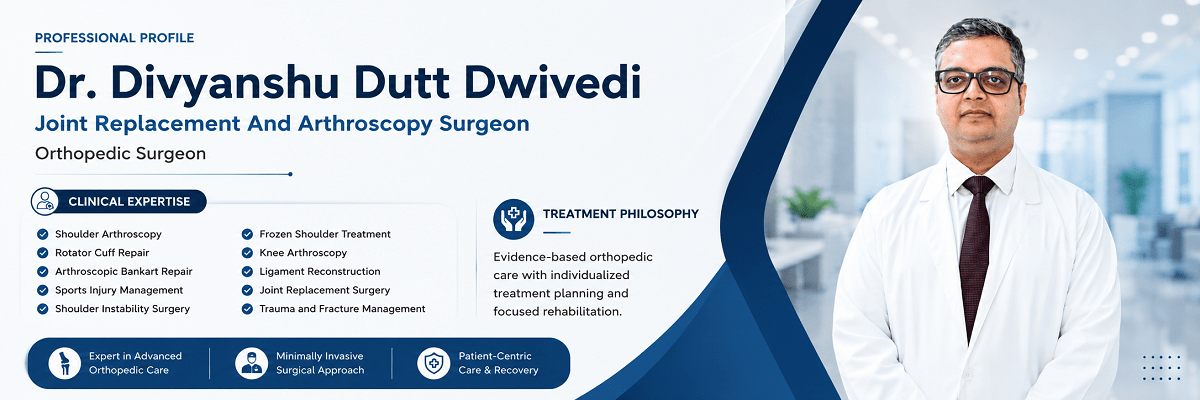
Dr. Divyanshu Dutt Dwivedi is an experienced orthopedic and joint replacement surgeon providing specialized shoulder arthroscopy treatment in Lucknow. He focuses on accurate diagnosis, individualized treatment planning, and evidence-based orthopedic care. His approach considers the patient’s symptoms, imaging findings, activity requirements, and recovery goals before recommending treatment.
Clinical Expertise
- Shoulder arthroscopy and minimally invasive shoulder procedures
- Rotator cuff tear evaluation and arthroscopic repair
- Labral injuries and shoulder instability management
- Sports-related shoulder injuries
- Shoulder pain and tendon-related conditions
- Post-surgical rehabilitation and recovery guidance
Dr. Divyanshu Dutt Dwivedi is Associate Director & Unit Head – Orthopaedics & Joint Replacement at Max Super Speciality Hospital, Lucknow. For consultation and appointments, call +919899389359.
Conclusion
Understanding the top 10 common myths about shoulder arthroscopy can help patients make informed decisions about their shoulder health. Shoulder arthroscopy is a minimally invasive procedure used for selected shoulder conditions, but it is not always necessary, completely painless, risk-free, or associated with immediate recovery. Treatment and recovery depend on the diagnosis, procedure performed, tissue healing, and individual factors. If you experience persistent shoulder pain, weakness, stiffness, instability, or difficulty moving your arm, consult an experienced orthopedic specialist for proper evaluation. For personalized shoulder care in Lucknow, consult Dr. Divyanshu Dutt Dwivedi and discuss the most suitable treatment for your condition.
FAQs About Common Myths About Shoulder Arthroscopy
Is shoulder arthroscopy safe?
Shoulder arthroscopy is generally considered a safe procedure when appropriately indicated, but like other surgeries, it has potential risks. Your individual risks depend on your health and the procedure being performed.
Is shoulder arthroscopy painful?
Some postoperative pain and discomfort are possible. Pain management, appropriate protection of the shoulder, and rehabilitation are important parts of recovery.
How long does shoulder arthroscopy recovery take?
Recovery varies significantly. Some procedures recover relatively quickly, while more extensive repairs can require several months of rehabilitation before full function returns.
Is shoulder arthroscopy a major surgery?
It is minimally invasive because surgeons use small portals, but the significance of the procedure depends on what is being repaired inside the shoulder.
Is shoulder arthroscopy only for athletes?
No. Athletes commonly undergo arthroscopy for sports injuries, but suitable patients with other shoulder conditions may also require arthroscopic treatment.
Can shoulder arthroscopy repair a rotator cuff tear?
Yes, selected rotator cuff tears can be repaired arthroscopically. Whether surgery is appropriate depends on the individual patient’s symptoms, tear characteristics, and clinical assessment.
Do I need physiotherapy after shoulder arthroscopy?
Many patients require a structured rehabilitation program after shoulder arthroscopy. The exact exercises and timing depend on the procedure and the tissues that need to heal.
When can I return to the gym after shoulder arthroscopy?
There is no single timeline for everyone. Return to gym exercises should be gradual and based on healing, rehabilitation progress, and your surgeon’s advice.
Does shoulder arthroscopy leave scars?
Small scars may remain where the arthroscope and surgical instruments were inserted. Their appearance varies between individuals and generally changes as the wounds heal.
Is shoulder arthroscopy always necessary for shoulder pain?
No. Many shoulder conditions can initially be managed without surgery. Arthroscopy may be considered when a specific condition requires surgical treatment or when appropriate nonsurgical care has not provided sufficient improvement.
Is arthroscopy better than open shoulder surgery?
Neither approach is automatically better for every patient. The appropriate technique depends on the diagnosis, extent of the problem, required repair, and clinical circumstances.
Can shoulder problems heal without surgery?
Some shoulder conditions can improve with nonsurgical treatment such as activity modification, physiotherapy, medication, or other appropriate care. The correct treatment depends on the diagnosis.
