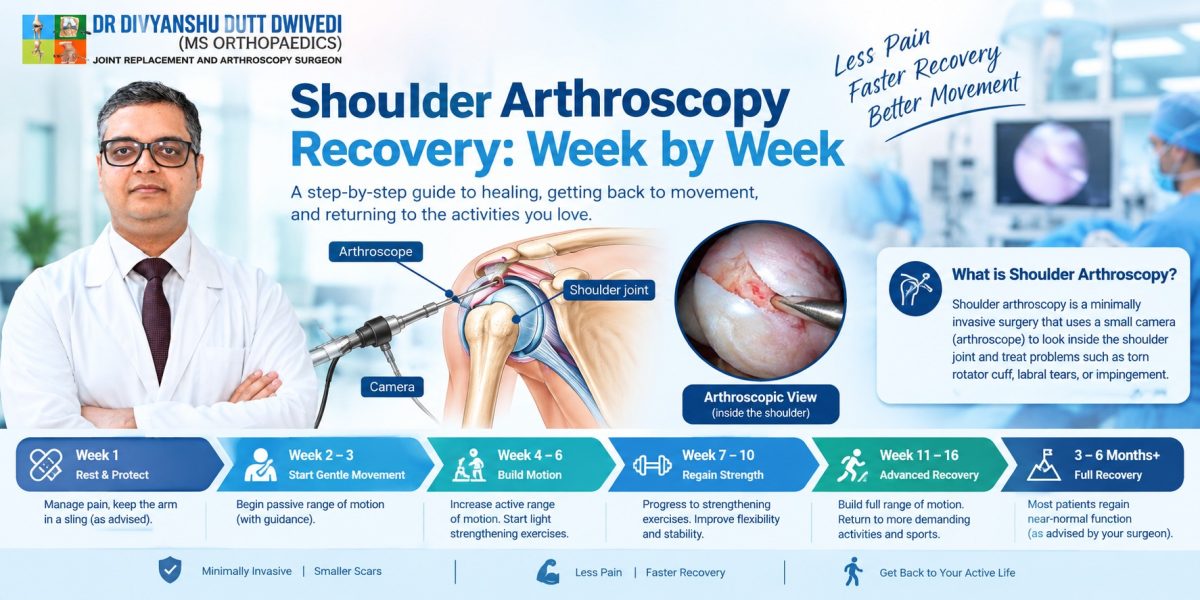
Shoulder arthroscopy is a minimally invasive procedure used to diagnose and treat several shoulder problems, including rotator cuff injuries, labral tears, shoulder instability, and other joint conditions. While the procedure uses small incisions, shoulder arthroscopy recovery is not the same for every patient. The healing period depends on the type of procedure, tissue repaired, overall health, and rehabilitation plan. Some people return to exercise and activities relatively quickly, while repairs involving tendons or the labrum can require several months of protected recovery. This shoulder arthroscopy recovery week-by-week guide explains what patients may expect from the first few days through the later stages of rehabilitation, including physiotherapy, pain, daily activities, work, exercise, and return to sports.
How Long Does Shoulder Arthroscopy Recovery Take?
There is no single shoulder arthroscopy recovery time that applies to everyone. Minor arthroscopic procedures may allow a quicker return to everyday activities, whereas procedures such as rotator cuff or labral repair usually require a longer rehabilitation period. The skin and small surgical wounds may heal relatively early, but deeper tissues can continue healing for months.
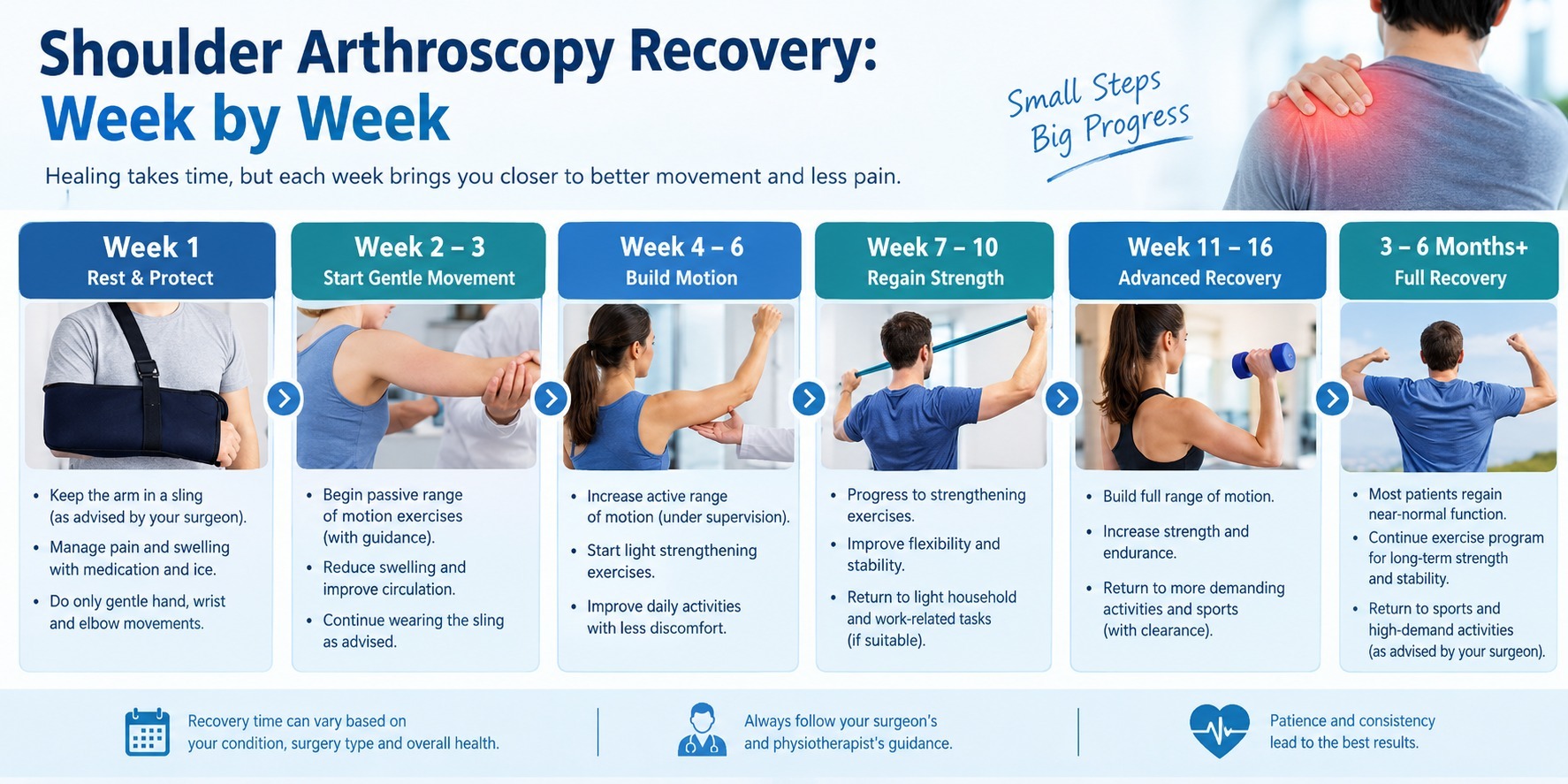
A general shoulder arthroscopy recovery timeline may progress from pain and protection during the first days to gradual movement, strengthening, and functional activity over the following weeks and months. Cleveland Clinic notes that full rehabilitation may take several months, depending on the procedure and individual circumstances. Your surgeon and physiotherapist should determine when specific movements and activities are appropriate.
What Factors Affect Shoulder Arthroscopy Recovery?
Several factors can influence your shoulder arthroscopy recovery. The type and extent of surgery are most important. Recovery after a minor procedure may differ from rehabilitation following rotator cuff repair, labral repair, or shoulder stabilization. Your age, overall health, tissue quality, severity of the shoulder condition, and physical activity level can also affect healing. Smoking, other medical conditions, pain levels, and following your physiotherapy program may influence progress. Because every patient heals differently, an online shoulder arthroscopy recovery timeline should be viewed as a general guide. Your surgeon may adjust rehabilitation based on healing, movement, strength, and the procedure performed.
Shoulder Arthroscopy Recovery: Week by Week
Day 0–2: Immediate Recovery After Surgery
The first 48 hours are an important stage of shoulder arthroscopy recovery. After anesthesia wears off, mild pain, swelling, soreness, and restricted shoulder movement are common. Many patients can return home the same day, depending on the procedure and their overall health. A sling may be advised to protect the shoulder, particularly after rotator cuff or labral repair procedures.
During this early shoulder arthroscopy recovery period, your surgeon may recommend prescribed medicines, cold therapy, wound care, and gentle movement of the hand, wrist, and elbow. Avoid lifting, pushing, pulling, or unnecessary shoulder movement unless advised. Following your surgeon’s instructions and rehabilitation plan helps protect the treated tissues and supports a safe, gradual recovery.
Week 1: Protecting the Shoulder
During the first week, the priority is protection and comfortable recovery. Pain and swelling may still be noticeable, particularly after more extensive repairs. Sleeping can also be difficult because lying on the operated side is usually uncomfortable.
Your dressing and incision sites should be kept according to the instructions provided by your healthcare team. Some patients begin gentle rehabilitation during this stage, while others may need a more protective programme depending on the repair.
Do not judge your recovery by pain alone. A reduction in pain does not necessarily mean that repaired tendons or other tissues have completely healed. If you have been prescribed a sling, use it as directed.
Week 2: Follow-Up and Controlled Movement
By the second week, many patients have their early postoperative review. The surgical team may assess the wounds, pain, swelling, and shoulder movement and adjust the rehabilitation program when appropriate.
Shoulder arthroscopy physiotherapy may already be underway for some procedures. Exercises can focus on maintaining movement or gradually improving range of motion, depending on what was treated.
It is important not to compare your progress with another patient’s recovery. Someone who had a simple arthroscopic procedure may be allowed to move more quickly than someone recovering from a rotator cuff or labral repair. The purpose of early rehabilitation is controlled progress, not rushing back to normal activity.
Weeks 3–4: Improving Range of Motion
During weeks three and four, the shoulder may gradually become easier to move, although stiffness can remain. Rehabilitation may progress according to the procedure and the surgeon’s protocol.
Some patients begin using the arm more for carefully selected daily activities, while others still require significant protection. The difference is particularly important after tendon or labral repair, where healing tissues need appropriate protection.
At this stage, physiotherapy generally focuses on restoring safe movement rather than immediately building maximum strength. Your therapist may gradually progress passive, assisted, or active movements when clinically appropriate.
Avoid lifting heavy objects, sudden pulling movements, and unapproved overhead activities. The goal is steady improvement without placing unnecessary stress on healing tissues.
Weeks 5–6: Gradual Functional Progress
Around weeks five and six, some patients begin moving into a more active rehabilitation phase. However, this does not mean everyone is ready for unrestricted shoulder use.
Depending on the procedure, the rehabilitation plan may progress from protected movement toward active motion and eventually strengthening. Patients recovering from a rotator cuff repair may continue to follow a more cautious program than someone who underwent a less extensive arthroscopic procedure.
Daily activities can gradually become easier, but heavy lifting and demanding shoulder movements may still be restricted. Continue attending physiotherapy and follow the specific progression recommended by your treating team.
A useful principle during recovery after shoulder arthroscopy is to progress according to healing and clinical assessment rather than simply following a calendar.
Weeks 7–12: Building Strength and Function
Between approximately seven and twelve weeks, rehabilitation may increasingly focus on functional movement and strength when the procedure allows it. The shoulder may feel considerably better, but deeper tissues can still be healing.
Physiotherapy may include progressive strengthening, movement control, and exercises designed around your daily or occupational needs. Patients with physically demanding jobs may require a longer recovery than those with desk-based work.
Returning to the gym should also be gradual. Heavy shoulder exercises, overhead lifting, and movements that place high loads on the joint should not be restarted simply because pain has reduced.
For patients recovering from a repair, the surgeon or physiotherapist may use clinical milestones rather than a fixed date to decide when strengthening and more demanding activity can safely progress.
Months 3–6 and Beyond: Returning to Higher-Level Activity
The later phase of shoulder arthroscopy rehabilitation focuses on restoring strength, endurance, movement, and confidence. Many patients continue improving during this period, particularly after rotator cuff or labral procedures.
Return to higher-level activities depends on the original injury, procedure, strength, range of motion, and functional testing. Athletes may require sport-specific rehabilitation before returning to competition.
It is also important to understand that being able to perform basic daily activities does not necessarily mean that the shoulder is ready for heavy lifting or contact sports. Tendons and repaired tissues can require considerably more time to regain strength and biological healing.
For some patients, full recovery can extend beyond six months. Research on rotator cuff repair has shown that recovery continues over several months, with different aspects of pain, function, and strength improving at different rates.
Does Recovery Differ for Different Shoulder Arthroscopy Procedures?
Yes. This is one of the most important points to understand about shoulder arthroscopy recovery. Arthroscopy describes the surgical technique, not one single operation.
A patient having a relatively simple arthroscopic procedure can have a very different recovery pathway from a patient undergoing rotator cuff repair, labral repair, or shoulder stabilization.
| Procedure | Main rehabilitation consideration |
| Rotator cuff repair | Protecting the repaired tendon while gradually restoring movement and strength |
| Labral repair | Controlled movement followed by progressive strengthening and stability work |
| Bankart repair | Protecting the repair while restoring shoulder stability and function |
| Subacromial procedures | Gradual restoration of movement, function and strength |
| Capsular release | Restoring and maintaining shoulder range of motion |
These are general principles rather than individual rehabilitation prescriptions. The exact program should always be based on the procedure performed and your surgeon’s instructions.
Physiotherapy After Shoulder Arthroscopy
Shoulder arthroscopy physiotherapy is an important part of recovery, helping restore shoulder movement, strength, and daily function. The timing and intensity of rehabilitation depend on the procedure performed and how the treated tissues are healing. Early physiotherapy may focus on protected movements and preventing excessive stiffness, while later stages can include active range-of-motion exercises, muscle control, and gradual strengthening. Patients recovering from rotator cuff repair, labral repair, or shoulder stabilization may require different rehabilitation protocols. Your physiotherapist should progress exercises according to your surgeon’s instructions, healing stage, and clinical assessment. Following a personalized rehabilitation plan can support steady recovery while reducing the risk of overloading the shoulder too early.
What Exercises Are Done After Shoulder Arthroscopy?
The right shoulder arthroscopy exercises depend on the procedure performed, tissue healing, and your surgeon’s rehabilitation plan. Early exercises may focus on gentle, controlled movements to maintain flexibility and reduce stiffness. As healing progresses, assisted and active range-of-motion exercises may be introduced, followed by gradual strengthening and functional activities. Patients recovering from rotator cuff repair, labral repair, or shoulder stabilization may have different exercise restrictions and timelines. Avoid heavy resistance, forceful stretching, or overhead movements until your surgeon or physiotherapist considers them safe. Performing the right exercises at the right stage can support mobility, strength, and function while protecting healing tissues from unnecessary stress during recovery.
How Long Do You Need to Wear a Sling?
The sling after shoulder arthroscopy helps protect the shoulder while the repaired tissues begin to heal. The duration depends on the type of procedure, the extent of tissue damage, and your surgeon’s rehabilitation protocol. After minor procedures, sling use may be shorter, while rotator cuff repair, labral repair, or shoulder stabilization may require longer protection. Your surgeon will explain when to wear the sling, including whether it is needed during sleep or when moving around. Do not stop using it simply because pain improves, and avoid wearing it longer than advised. Following medical guidance helps protect healing tissues while reducing unnecessary shoulder stiffness.
When Can You Drive After Shoulder Arthroscopy?
Returning to driving after shoulder arthroscopy depends on your recovery, shoulder movement, pain control, medication use, and the type of procedure performed. You should be able to control the steering wheel comfortably, move your arm safely, and respond quickly during an emergency before driving again. Wearing a sling can restrict movement and make steering or sudden maneuvers unsafe. Strong pain medicines may also affect alertness and reaction time. Instead of following a fixed number of days, ask your surgeon when driving is appropriate for your specific procedure and recovery. You should also follow local driving laws, insurance requirements, and your healthcare team’s advice before returning to the road.
When Can You Return to Work?
Return to work after shoulder arthroscopy depends on the type of surgery, your recovery progress, and the physical demands of your job. People with desk-based roles may return earlier if they can work comfortably without placing stress on the shoulder. Jobs involving lifting, pushing, pulling, repetitive movements, or overhead activity may require a longer recovery period. After rotator cuff repair or labral surgery, returning to physically demanding work too soon may affect tissue healing. Your surgeon may recommend modified duties or a gradual return to work based on your movement, strength, pain, and rehabilitation progress. Always discuss your job requirements during follow-up before resuming work.
When Can You Return to the Gym and Sports?
Returning to the gym after shoulder arthroscopy should be gradual. Basic activity and rehabilitation exercises are different from heavy resistance training.
The timing of weight training, swimming, racquet sports, cricket, and other activities depends on the operation and your recovery. Sports involving overhead movement or contact may require additional strength and functional testing.
Do not use the absence of pain as the only measure of readiness. The shoulder also needs sufficient strength, control, and healing.
Athletes may need a sport-specific rehabilitation program before returning to competition. Your surgeon and physiotherapist can determine when the shoulder is ready for each stage.
What Is Normal During Shoulder Arthroscopy Recovery?
Some symptoms can occur during normal recovery, including soreness, swelling, stiffness, and temporary difficulty using the arm. Sleep can also be uncomfortable during the early period.
The important factor is the overall trend. Recovery should generally progress according to the procedure and rehabilitation plan. A temporary increase in soreness after physiotherapy can occur, but significant or persistent worsening should not simply be ignored.
If something feels different from the instructions you received, contact your healthcare team rather than trying to diagnose the problem yourself.
Warning Signs After Shoulder Arthroscopy
Although complications are not expected in most patients, certain symptoms need medical assessment. Contact your surgical team if you develop:
- Increasing or severe pain rather than gradual improvement
- Fever or feeling significantly unwell
- Increasing redness or swelling around the wound
- Unusual wound discharge
- New or worsening numbness or tingling
- Sudden weakness or unexpected loss of movement
- Any symptom that concerns you or becomes progressively worse
Prompt assessment can help identify problems early. Do not wait for a routine appointment if your postoperative instructions tell you to seek earlier medical advice.
How Can You Support a Better Recovery?
A successful shoulder arthroscopy recovery depends on following your surgeon’s instructions and allowing the shoulder to heal at its own pace. Attend follow-up appointments and complete your prescribed physiotherapy program regularly. Get adequate rest while performing approved movements to prevent unnecessary stiffness. Protect the operated shoulder from lifting, pushing, pulling, or overhead activities until your healthcare team allows them. Take medicines as prescribed and follow wound-care instructions carefully. Maintaining a balanced diet, staying hydrated, and avoiding smoking can also support overall healing. Most importantly, do not compare your recovery with someone else’s timeline. Your procedure, tissue healing, health, and rehabilitation plan can all affect recovery.
Meet Dr. Divyanshu Dutt Dwivedi—Trusted Shoulder Arthroscopy Specialist in Lucknow
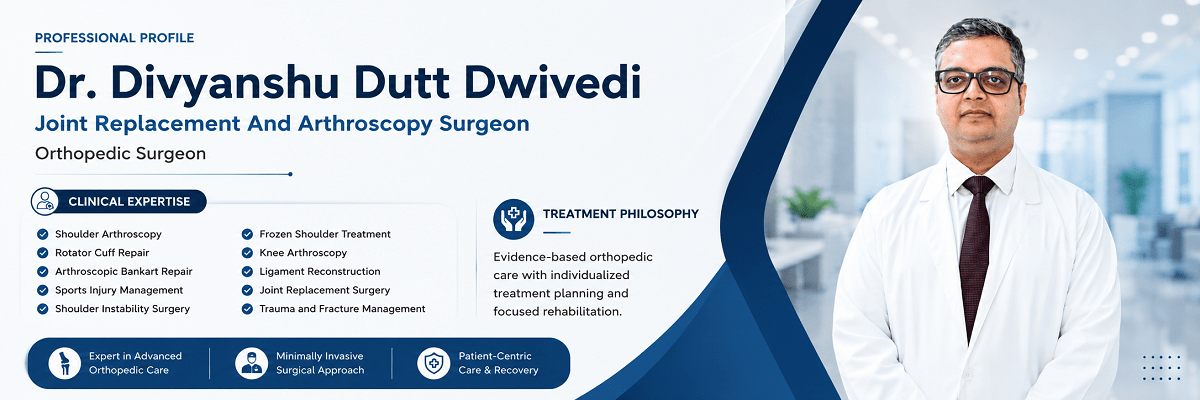
Dr. Divyanshu Dutt Dwivedi is an experienced orthopedic and joint replacement surgeon in Lucknow, providing personalized care for patients with shoulder injuries and joint conditions. His approach combines clinical assessment, appropriate imaging, arthroscopic techniques, and structured rehabilitation to support safe recovery and improved shoulder function.
Clinical Expertise:
- Shoulder arthroscopy and minimally invasive shoulder procedures
- Rotator cuff tear assessment and arthroscopic repair
- Labral, Bankart, and SLAP tear treatment
- Shoulder instability and dislocation management
- Arthroscopic treatment of selected shoulder impingement conditions
- Post-operative rehabilitation and recovery planning
For personalized guidance about shoulder arthroscopy in Lucknow, patients can consult Dr. Divyanshu Dutt Dwivedi and discuss the most suitable treatment approach based on their condition, activity level, and recovery goals.
Conclusion
Shoulder arthroscopy recovery is a gradual process that depends on the type of procedure, tissue healing, overall health, and rehabilitation plan. The early stages focus on protecting the shoulder, managing discomfort, and controlling swelling, followed by progressive movement, physiotherapy, strengthening, and a gradual return to daily activities. Recovery after rotator cuff or labral repair may take longer than after simpler procedures. Following your surgeon’s advice and attending regular follow-ups can help support safe healing. If you are considering shoulder arthroscopy in Lucknow or need guidance about recovery, consult Dr. Divyanshu Dutt Dwivedi for personalized orthopedic care. For consultation, call +919899389359 and discuss your treatment and recovery plan.
FAQs About Shoulder Arthroscopy Recovery
How long does shoulder arthroscopy recovery take?
Recovery can range from several weeks to several months. The exact shoulder arthroscopy recovery time depends on the procedure, tissue healing, rehabilitation, and individual health.
What happens during the first week after shoulder arthroscopy?
The first week generally focuses on pain control, wound care, protection, and the rehabilitation plan. Sling use and shoulder movement depend on the procedure performed.
How long should I wear a sling after shoulder arthroscopy?
Sling duration varies by procedure. Repairs such as rotator cuff or labral surgery may require longer protection than less extensive procedures. Follow your surgeon’s instructions.
When should physiotherapy start after shoulder arthroscopy?
The timing varies according to the operation. Some patients begin controlled rehabilitation early, while others need a more protective program before progressing movement.
When can I drive after shoulder arthroscopy?
You should return to driving only when you can safely control the vehicle, perform emergency maneuvers, and are not affected by sedating medication. Your surgeon can advise you about your individual recovery.
When can I return to work after shoulder arthroscopy?
Desk-based work may be possible sooner than manual work. Heavy lifting and repetitive overhead duties generally require greater recovery and may need a staged return.
When can I exercise after shoulder arthroscopy?
Gentle rehabilitation usually progresses before demanding exercise. Gym training and resistance exercises should be introduced according to your procedure and professional rehabilitation plan.
When can I return to sports after shoulder arthroscopy?
Return to sport depends on strength, movement, healing, and the type of surgery. Overhead and contact sports may require additional rehabilitation and functional assessment.
Is stiffness normal after shoulder arthroscopy?
Some stiffness can occur during recovery, particularly when shoulder movement has been restricted. Persistent or worsening stiffness should be discussed with your surgeon or physiotherapist.
Why does rotator cuff repair take longer to recover?
A repaired rotator cuff tendon needs time to heal to the bone. Rehabilitation therefore often progresses gradually to protect the repair while restoring movement and strength.
