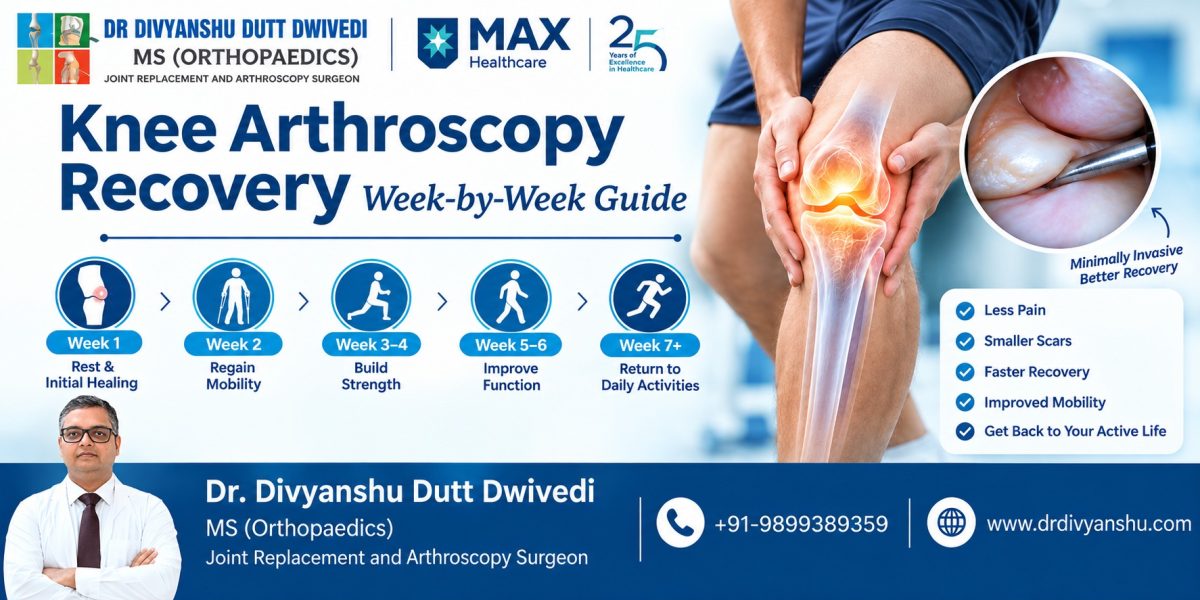
Knee-Arthroscopy-Recovery-Week-by-Week-Guide-1200x600.jpg

Knee arthroscopy recovery week by week depends on the procedure performed, the condition of the knee, and the patient’s overall health. Recovery involves managing pain and swelling, restoring knee movement, rebuilding muscle strength, and gradually returning to daily activities. Understanding each recovery stage helps patients set realistic expectations and follow their rehabilitation plan safely.

This guide explains knee arthroscopy recovery time, including walking, physiotherapy, driving, returning to work, and resuming sports. It also highlights why meniscus repair recovery may take longer than recovery after partial meniscectomy. Following your orthopedic surgeon’s instructions and attending scheduled follow-up appointments are essential for safe healing and long-term knee function.

What Is the Typical Knee Arthroscopy Recovery Time?

The knee arthroscopy recovery time depends on the procedure performed, the extent of knee damage, and individual healing progress. After a simple procedure, such as removing damaged meniscus tissue, many patients resume routine activities within a few weeks, although complete recovery may take longer. Meniscus repair, cartilage treatment, and ligament reconstruction often require more structured rehabilitation, with possible restrictions on weight-bearing or knee movement. Age, general health, existing arthritis, muscle strength, and physiotherapy consistency can also influence recovery. There is no universal timeline for every patient. Follow your orthopedic surgeon’s instructions and increase activities gradually according to your progress.

Knee Arthroscopy Recovery Week by Week

First 24–48 Hours: Rest, Pain Relief, and Swelling Control

The first 24–48 hours after surgery focus on protecting the knee, managing discomfort, and following postoperative instructions. Mild pain, swelling, bruising, and stiffness are common after knee arthroscopy surgery. The severity of these symptoms depends on the procedure performed and your individual healing response. Rest appropriately and avoid activities that place unnecessary strain on the operated knee.

Keep the dressing clean and follow your hospital’s wound-care instructions. Apply ice with a protective barrier if recommended, and elevate your leg to help manage swelling. Take prescribed medicines as directed. Walking may be permitted after simple procedures, but some patients need crutches or weight-bearing restrictions. Contact your surgical team if pain becomes severe or increasingly difficult to control.

Week 1: Managing Pain, Swelling, and Early Movement

During the first week, the main goals of knee arthroscopy recovery are to control swelling, protect the surgical wounds, and begin comfortable knee movement. Some patients notice gradual improvement in mobility, although stiffness and discomfort may continue, particularly after walking or standing. Follow your discharge instructions and avoid increasing activity too quickly.

Your surgeon or physiotherapist may recommend gentle exercises, such as ankle pumps and quadriceps contractions, depending on your procedure. Walking after knee arthroscopy should follow your prescribed weight-bearing instructions. Avoid strenuous housework and prolonged standing if they increase discomfort. Attend scheduled wound checks and follow dressing-care advice. Seek prompt medical assessment if you develop fever, increasing redness, wound discharge, or worsening pain rather than assuming these symptoms are part of normal healing.

Week 2: Improving Knee Movement and Everyday Mobility

By the second week, some patients experience less pain and find everyday movement easier. However, recovery varies, and swelling or restricted knee movement may persist. The goal is to improve comfortable mobility, maintain muscle activation, and gradually resume permitted activities without placing excessive stress on healing tissues.

Your physiotherapist may adjust exercises according to your strength, swelling, and surgical procedure. Recovery after partial meniscectomy may progress differently from meniscus repair recovery, which can involve longer restrictions on bending or weight-bearing. Do not stop using crutches simply because walking feels easier. Your treating team should guide this transition. Avoid forcing the knee to bend or straighten if movement causes sharp pain or conflicts with your rehabilitation instructions.

Weeks 3–4: Building Strength and Improving Function

During weeks three and four, patients recovering from uncomplicated arthroscopy may gradually increase their everyday activities. Walking can become more comfortable as swelling settles, although stiffness and muscle weakness may remain. Progress should be assessed through knee movement, strength, and functional improvement rather than by following a fixed calendar alone.

Physiotherapy after knee arthroscopy may focus on restoring range of motion, activating the quadriceps, strengthening surrounding muscles, and improving balance. Exercise progression depends on the procedure and individual recovery. If pain or swelling increases significantly after activity, reduce the workload and seek guidance if symptoms persist. Patients recovering from meniscus repair or cartilage procedures may still have movement or weight-bearing restrictions. These precautions should only be changed with approval from the treating surgeon.

Weeks 5–6: Progressing Strength and Daily Activities

By weeks five and six, some patients who have undergone simple arthroscopy may return to many routine activities. Others may continue experiencing stiffness, weakness, or discomfort after prolonged standing or walking. Recovery depends on the procedure, the knee’s response to rehabilitation, and the patient’s overall physical condition.

Rehabilitation may now focus on improving leg strength, balance, movement control, and endurance. Returning to work depends on job requirements; desk-based duties may be easier to resume than work involving heavy lifting, climbing, or kneeling. Although walking may feel normal, running and jumping require greater strength and control. Do not resume these activities without appropriate guidance. Patients recovering from more complex procedures may need additional time before progressing to higher-demand activities.

Weeks 7–12 and Beyond: Returning to Higher-Level Activities

During the later stages of knee arthroscopy recovery, patients may focus on improving strength, endurance, balance, and confidence during everyday activities. Those recovering from uncomplicated procedures may gradually resume recreational exercise after clinical assessment. However, progress depends on symptoms, functional ability, and the rehabilitation plan rather than the number of weeks since surgery.

Recovery after meniscus repair, cartilage restoration, or ACL reconstruction can take considerably longer. Before running after knee arthroscopy or returning to sports, patients should demonstrate appropriate knee movement, strength, balance, and movement control. Returning too early may aggravate symptoms or place healing tissues at risk. Follow a progressive exercise plan and consult your surgeon or physiotherapist before increasing activity intensity. Individual clearance is especially important for sports involving jumping, pivoting, or sudden changes in direction.

Knee Arthroscopy Recovery Timeline at a Glance

The following table summarizes common recovery phases after an uncomplicated procedure. It is a general guide, not a guaranteed timetable.


Recovery stage Main focus Important consideration
First 48 hours Pain relief and swelling control Follow wound care and mobility instructions
Week 1 Early movement and protection Use crutches if prescribed
Week 2 Comfortable movement and daily mobility Progress according to the procedure
Weeks 3–4 Strength and functional movement Avoid overloading the knee
Weeks 5–6 Increased activity and rehabilitation Work demands affect return-to-work timing
Weeks 7–12 and beyond Higher-level activity and sports preparation Obtain clinical clearance before impact activities

Patients who have undergone more complex procedures may need a different schedule. The surgeon’s rehabilitation protocol takes priority over this general timeline.

What Affects Recovery After Knee Arthroscopy?

Several factors influence knee arthroscopy recovery time, so patients should avoid comparing their progress with others. The type of surgery, extent of knee damage, general health, and physical fitness can all affect healing. Recovery may be faster after a simple procedure than after surgery involving tissue repair. Your orthopedic surgeon can explain realistic expectations based on your individual condition.

Important factors include existing arthritis, cartilage damage, muscle strength, postoperative swelling, and rehabilitation consistency. Meniscus repair recovery usually requires different precautions from recovery after partial meniscectomy. Work demands and sporting goals also influence rehabilitation planning. Follow prescribed exercises, attend follow-up appointments, and report persistent symptoms. Your surgeon will adjust activity levels according to healing, movement, strength, and functional progress rather than time alone.

Walking After Knee Arthroscopy: When Can You Walk Normally?

Many patients can begin walking after knee arthroscopy soon after uncomplicated surgery, provided their surgeon permits it. Walking ability depends on the procedure, pain, swelling, balance, and weight-bearing instructions. Some patients need crutches for only a few days, while others require them longer after meniscus repair or cartilage procedures. Follow your discharge instructions carefully and avoid placing excessive pressure on healing tissues.

You may gradually reduce walking support when permitted weight-bearing feels comfortable, your knee remains controlled, and your limp improves. Confirm this transition with your treating team. Increase walking distance gradually and monitor discomfort. If pain or swelling noticeably increases after activity, reduce your workload. Never abandon prescribed crutches early or force normal walking by ignoring pain, instability, or postoperative restrictions during rehabilitation.

Physiotherapy and Exercises After Knee Arthroscopy

Physiotherapy after knee arthroscopy helps restore knee movement, muscle strength, balance, and confidence during daily activities. Your rehabilitation program should match the procedure performed and your stage of healing. Depending on clinical instructions, early exercises may include ankle pumps, quadriceps contractions, gentle knee bending, and straight-leg raises. More demanding strengthening and functional exercises are introduced gradually when your surgeon or physiotherapist considers them appropriate.

Follow your prescribed exercise schedule rather than copying another patient’s routine. Perform movements with control, and never force your knee beyond permitted limits. Tell your physiotherapist if exercises cause sharp pain or repeatedly increase swelling. Progress repetitions, resistance, and activity intensity gradually under professional guidance. Patients recovering from meniscus repair or ligament reconstruction may need different restrictions from those undergoing simple arthroscopy. Attend follow-up appointments to monitor progress and adjust rehabilitation safely.

How to Manage Pain and Swelling After Knee Arthroscopy

Mild pain, bruising, and swelling are common during knee arthroscopy recovery, particularly in the early days. Symptoms may increase temporarily after walking or prescribed exercises. Follow your discharge plan and monitor whether discomfort gradually improves. Your care team may recommend ice application, leg elevation, prescribed pain medication, and temporary activity adjustments to support comfort while protecting the operated knee during healing.

Apply ice with a protective barrier and follow recommended timing instructions; never place ice directly on your skin. Take medicines only as directed, and avoid prolonged standing when it worsens discomfort. Balance permitted movement with rest and follow your rehabilitation plan. Contact your surgeon if pain or swelling worsens or the knee becomes increasingly warm or red. Sudden calf pain or swelling requires urgent assessment because it may indicate a potentially serious blood clot.

When Can You Drive or Return to Work?

Driving after knee arthroscopy depends on which leg was operated on, the vehicle type, pain levels, mobility, and medication use. You must be able to control the vehicle and perform an emergency stop safely without hesitation or significant discomfort. Never drive while taking medication that impairs alertness. Follow your surgeon’s advice and applicable driving requirements before returning to the road after surgery.

Returning to work depends on your recovery and job responsibilities. Desk-based workers may resume duties sooner than people whose jobs involve lifting, climbing, kneeling, or prolonged standing. Some patients benefit from shorter hours or temporary workplace adjustments. Before restarting either activity, assess whether you can move safely without aggravating symptoms. Ask your treating team for individual clearance rather than relying on a fixed recovery timeline or another patient’s experience.

Recovery After Meniscus Repair vs Partial Meniscectomy

Meniscus repair recovery differs from recovery after partial meniscectomy because these procedures involve different healing requirements. During partial meniscectomy, the surgeon removes the damaged portion of the meniscus. Patients may progress through rehabilitation sooner because the removed tissue does not need to heal together. However, recovery still depends on the extent of surgery, symptoms, and any additional knee damage or treatment.

During meniscus repair, the surgeon stitches the torn tissue to support healing. Temporary restrictions on weight-bearing, knee bending, or exercises may therefore be necessary. Running, twisting, and sports require gradual progression and appropriate clinical clearance. Cartilage procedures and ACL reconstruction also have specific rehabilitation protocols. Follow the instructions provided for your operation rather than comparing timelines with someone who underwent a different procedure. Your surgeon will guide safe progression according to healing, strength, and function.

When Should You Contact Your Surgeon?

Some discomfort and swelling may occur after knee arthroscopy surgery, but certain symptoms require prompt medical attention. Contact your healthcare team if you develop increasing redness, warmth, or discharge around the wound; fever or chills; worsening pain despite prescribed treatment; or swelling that limits movement. These symptoms should not automatically be considered normal recovery, especially when they worsen instead of gradually improving.

Seek urgent medical assessment for new calf pain or swelling because these symptoms may indicate a blood clot. Sudden shortness of breath or chest pain requires emergency medical care, as these can signal a serious complication. Do not wait for your next scheduled appointment when concerning symptoms develop. Your treating team can assess the problem and determine whether examination or treatment is necessary. Follow postoperative instructions carefully and report unexpected changes in your recovery promptly.

Meet Dr. Divyanshu Dutt Dwivedi—Trusted Knee Arthroscopy Specialist in Lucknow
Robotic Knee replacement Surgeon in Lucknow
Dr. Divyanshu Dutt Dwivedi

Dr. Divyanshu Dutt Dwivedi is an experienced orthopedic surgeon associated with Max Super Speciality Hospital, Gomti Nagar, Lucknow. He provides evaluation and treatment guidance for knee conditions that may require knee arthroscopy, helping patients understand their treatment options, rehabilitation needs, and recovery expectations. Treatment recommendations depend on the diagnosis, symptoms, and individual health requirements.

Clinical Expertise Includes:

  • Knee Arthroscopy: Assessment and minimally invasive treatment of suitable knee conditions.
  • Meniscus Injuries: Evaluation of meniscus tears and appropriate treatment options.
  • ACL Injuries: Assessment and guidance regarding ligament reconstruction when indicated.
  • Sports Injuries: Management planning for selected knee-related sports injuries.
  • Postoperative Rehabilitation: Guidance on recovery milestones, physiotherapy, and returning to daily activities.

For consultation, contact +91-9899389359 to discuss your knee symptoms and treatment options.

Conclusion

Knee arthroscopy recovery week by week involves gradual improvements in knee movement, strength, comfort, and daily function. The knee arthroscopy recovery time depends on the procedure performed, the extent of knee damage, and individual healing progress. While simple arthroscopy may allow an earlier return to routine activities, meniscus repair and complex procedures often require longer rehabilitation. Following your orthopedic surgeon’s instructions, completing prescribed physiotherapy, and increasing activity gradually can support safer recovery. Monitor pain and swelling, and seek medical advice if symptoms worsen. Consult your treating specialist before driving, running, or returning to sports to ensure your knee is ready.

Frequently Asked Questions About Knee Arthroscopy Recovery

1. How long does it take to recover from knee arthroscopy?

Recovery may take a few weeks after a simple procedure, while meniscus repair, cartilage treatment, and ACL reconstruction can require several months or longer.

2. When can I walk normally after knee arthroscopy?

Some patients walk comfortably within days, while others need crutches and additional rehabilitation. The procedure performed and your surgeon’s weight-bearing instructions determine the appropriate timeline.

3. How long does swelling last after knee arthroscopy?

Swelling often improves gradually over the first few weeks, but it can persist longer depending on the procedure and activity levels. Worsening swelling needs medical assessment.

4. When can I start exercising after knee arthroscopy?

Gentle rehabilitation exercises may begin early when approved by your surgical team. Strengthening, running, and impact activities should be introduced according to your individual recovery plan.

5. Can I drive after knee arthroscopy?

You should drive only when you can safely control the vehicle, perform an emergency stop, and meet your surgeon’s advice and applicable requirements. Sedating medication can make driving unsafe.

6. When can I return to work after knee arthroscopy?

Some patients return to desk-based work within a relatively short period, while physically demanding jobs may require longer. Your mobility, pain, procedure, and work duties influence the decision.

7. Is pain normal several weeks after knee arthroscopy?

Some discomfort can persist during recovery, particularly after activity. However, severe, increasing, or persistent pain should be discussed with your surgeon rather than assumed to be normal.

8. Does meniscus repair take longer to recover from than partial meniscectomy?

Yes, meniscus repair generally requires more time because the repaired tissue needs to heal. Partial meniscectomy often allows faster progression, although individual recovery varies.
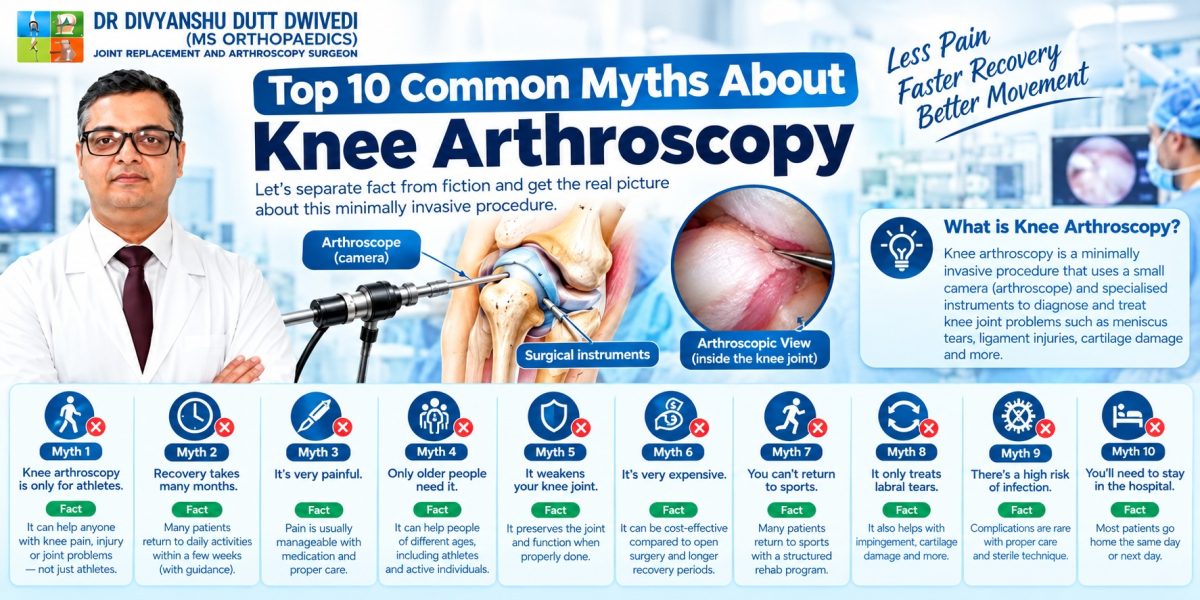


Top-10-Common-Myths-About-Knee-Arthroscopy-1200x600.jpg

Top 10 Common Myths About Knee Arthroscopy helps patients understand the facts about this minimally invasive procedure. Misconceptions about its safety, benefits, recovery time, and effectiveness can create confusion and unnecessary anxiety. Understanding these myths helps patients make informed decisions about their knee health. Learning when knee arthroscopy may be appropriate also helps individuals explore suitable treatment options based on their symptoms, diagnosis, and overall health.

Knee arthroscopy is a surgical procedure used to diagnose and treat selected knee joint problems through small incisions. However, not every knee condition requires surgery. Depending on the diagnosis, physiotherapy, exercise, medication, or other non-surgical treatments may be appropriate. An orthopedic assessment helps determine whether arthroscopic knee surgery is suitable for the patient and supports realistic expectations about treatment outcomes and recovery. 


Top 10 Common Myths About Knee Arthroscopy: Myths vs Facts

Myth Fact
Knee arthroscopy is always necessary for knee pain. Many knee conditions can be managed with non-surgical treatments.
Knee arthroscopy requires a large incision. It generally uses small incisions and specialised instruments.
Knee arthroscopy is completely risk-free. Like any surgery, it carries potential risks and complications.
Knee arthroscopy guarantees complete pain relief. Outcomes depend on the condition being treated.
Every meniscus tear requires surgery. Selected tears may improve with conservative treatment.
Knee arthroscopy can cure osteoarthritis. It does not reverse cartilage degeneration and is not routinely recommended for osteoarthritis alone.
Recovery after knee arthroscopy is always quick. Recovery time varies according to the procedure and individual healing.
Physiotherapy cannot help if surgery is considered. Physiotherapy can improve strength, mobility, and symptoms in many patients.
Small incisions eliminate complications and aftercare. Proper wound care, follow-up, and rehabilitation remain important.
Everyone returns to sports at the same time. Return to sports depends on healing, strength, stability, and medical guidance.

What Is Knee Arthroscopy?

Knee arthroscopy is a minimally invasive surgical procedure that allows an orthopedic surgeon to examine and treat selected problems inside the knee joint. A small camera called an arthroscope is inserted through tiny incisions, providing clear images of the joint on a monitor. Specialized instruments may be used to treat certain meniscus injuries, loose fragments, selected ligament problems, and specific cartilage conditions. Arthroscopic knee surgery generally involves smaller incisions than traditional open surgery. However, it is not suitable for every cause of knee pain, particularly some cases of osteoarthritis. Depending on the diagnosis, physiotherapy, exercise, medication, or other treatments may be recommended. A clinical examination and appropriate imaging help determine the most suitable treatment.

Top 10 Common Myths About Knee Arthroscopy

Myth 1: Knee Arthroscopy Is Always Necessary for Knee Pain

Fact: Knee pain does not automatically mean surgery is required.

Knee pain can develop because of osteoarthritis, meniscus tears, ligament injuries, muscle weakness, or inflammation. Each condition requires a different treatment approach. An orthopedic assessment considers symptoms, medical history, physical examination, activity level, and relevant imaging to identify the likely cause. This helps determine whether surgery or conservative treatment is more appropriate.

Many patients can initially benefit from physiotherapy, strengthening exercises, activity modification, or clinician-recommended medication. Knee arthroscopy surgery may be appropriate for selected structural problems, but it is not the first choice for every painful knee. Treatment decisions should depend on the diagnosis, symptom severity, and individual needs rather than pain alone.

Myth 2: Knee Arthroscopy Is a Major Operation With a Large Incision

Fact: Knee arthroscopy generally uses small incisions, but it remains a surgical procedure.

During arthroscopic knee surgery, the surgeon inserts a small camera and specialized instruments through tiny openings around the knee. This approach allows selected joint problems to be examined and treated without a large incision. Depending on the procedure and the patient’s condition, surgery may be performed as a day-care procedure, allowing the patient to return home the same day.

Although smaller incisions can reduce tissue disruption, they do not guarantee an uncomplicated or immediate recovery. A simple procedure may require less rehabilitation than a meniscus repair or ligament reconstruction. Patients should discuss the planned treatment, anesthesia, hospital stay, recovery expectations, and postoperative restrictions with their surgeon before making a decision.

Myth 3: Knee Arthroscopy Is Completely Risk-Free

Fact: Knee arthroscopy is commonly performed, but every surgical procedure carries some risk.

Possible complications include infection, bleeding, blood clots, stiffness, persistent swelling, and reactions related to anesthesia. Some patients may continue experiencing pain or require additional treatment. Individual risks depend on general health, existing medical conditions, and the complexity of the procedure. Discussing medications, allergies, and previous surgeries with the medical team helps support appropriate preparation.

Following wound-care instructions, attending follow-up appointments, and completing prescribed rehabilitation can support recovery. Increasing pain, fever, spreading redness, or significant calf swelling requires prompt medical assessment. Chest pain or sudden breathlessness after surgery warrants emergency care. Patients should understand the potential benefits and risks of knee arthroscopy before consenting to treatment.

Myth 4: Knee Arthroscopy Guarantees Complete Pain Relief

Fact: Pain relief depends on the underlying condition and the problem being treated.

Knee arthroscopy can help selected patients with specific structural problems, including certain unstable meniscus tears or loose fragments causing symptoms. However, it cannot eliminate every cause of knee pain. Discomfort associated with advanced osteoarthritis, widespread cartilage degeneration, or other untreated conditions may persist. Surgical treatment should therefore target a clearly identified problem rather than promise complete relief.

Recovery outcomes can also depend on muscle strength, joint condition, general health, and adherence to rehabilitation. Before deciding on surgery, patients should ask their orthopedic surgeon what improvement is realistic, which symptoms may remain, and whether alternative treatments could provide similar benefits. Understanding these factors helps establish realistic expectations and supports informed treatment decisions.

Myth 5: Every Meniscus Tear Requires Arthroscopic Surgery

Fact: Many meniscus tears can initially be managed without surgery.

The meniscus is cartilage inside the knee that helps distribute loads and absorb forces during movement. Tears may occur after a sudden twisting injury or develop gradually through age-related changes. An MRI finding alone does not automatically mean surgery is necessary. Treatment depends on the tear’s location, type, symptoms, surrounding cartilage condition, and whether the knee experiences persistent locking.

Some patients improve with physiotherapy, activity modification, and clinician-recommended pain management. Others, particularly those with selected acute or repairable tears, may benefit from arthroscopic treatment. When surgery is appropriate, the surgeon considers whether the meniscus can be repaired or damaged tissue needs limited removal. Preserving functional meniscus tissue whenever feasible is important for long-term joint health.

Myth 6: Knee Arthroscopy Can Cure Osteoarthritis

Fact: Knee arthroscopy does not reverse the cartilage degeneration associated with osteoarthritis.

Knee osteoarthritis develops through progressive changes in the joint and may cause pain, stiffness, swelling, and difficulty walking or climbing stairs. Although arthroscopy can treat certain specific problems inside the knee, it is generally not recommended solely to manage degenerative knee disease. Evidence-based guidance advises against routine arthroscopy for most patients with degenerative knee disease because meaningful long-term benefits are usually limited.

Treatment may include strengthening exercises, physiotherapy, activity modification, weight management when appropriate, and clinician-recommended medication. Patients with advanced symptoms may need assessment for additional treatment options, including joint replacement when indicated. An orthopedic evaluation helps distinguish osteoarthritis from other conditions that may coexist and determines which treatment best suits the patient’s symptoms and functional needs.

Myth 7: Recovery After Knee Arthroscopy Is Always Quick

Fact: Recovery time varies according to the procedure, the injury, and individual healing.

Although some patients recover relatively quickly after simple arthroscopic knee surgery, healing involves more than the incisions closing. Pain, swelling, stiffness, and muscle weakness can temporarily affect daily activities. Some patients resume routine activities within a few weeks, while meniscus repair, ligament reconstruction, and cartilage procedures may require longer rehabilitation. Recovery expectations should reflect the actual procedure performed.

The surgeon will explain when to bear weight, use crutches, drive, return to work, and begin specific exercises. Physiotherapy can help restore movement, strength, balance, and functional ability. Returning to strenuous activities too early may interfere with healing or increase reinjury risk. Following individual rehabilitation instructions and progressing according to clinical advice supports a safer return to normal activities.

Myth 8: Physiotherapy Cannot Help If Surgery Is Being Considered

Fact: Physiotherapy can improve symptoms and function in many patients with knee conditions.

A structured physiotherapy program may include strengthening exercises, flexibility training, balance work, movement training, and guidance on modifying activities that aggravate pain. For many people with degenerative knee pain, including selected degenerative meniscus problems, exercise-based treatment is an important management option. Research indicates that arthroscopy does not provide better results than exercise therapy for many patients with degenerative meniscal tears.

However, conservative treatment is not appropriate for every injury or stage of disease. Certain acute injuries, displaced tears, or associated ligament problems may require specialist assessment. Patients should discuss the likely benefits, limitations, and expected duration of physiotherapy before deciding whether surgery is necessary. Treatment should be tailored to the diagnosis, symptoms, activity level, and rehabilitation goals.

Myth 9: Small Incisions Mean There Are No Complications or Aftercare Requirements

Fact: Minimally invasive surgery still requires proper postoperative care and rehabilitation.

The small incisions used during knee arthroscopy surgery can reduce tissue disruption compared with open procedures, but they do not eliminate surgical risks or recovery requirements. Patients may need to protect the wound, manage swelling, take prescribed medication, and follow instructions about movement and weight-bearing. Some procedures require crutches or a brace for a specified period, depending on the treatment performed.

Rehabilitation helps restore knee movement, strengthen surrounding muscles, and improve everyday function. Follow-up appointments allow the surgical team to monitor wound healing and recovery progress. Patients should promptly report unusual symptoms rather than assume everything is fine because the incisions are small. Successful recovery depends on appropriate patient selection, careful surgical planning, and adherence to aftercare instructions throughout rehabilitation.

Myth 10: Everyone Can Return to Sports at the Same Time After Knee Arthroscopy

Fact: Returning to sports depends on healing, strength, stability, and the procedure performed.

An athlete recovering from a straightforward arthroscopic procedure may progress differently from someone undergoing meniscus repair or anterior cruciate ligament reconstruction. Before returning to running, jumping, twisting, or contact sports, patients may need adequate muscle strength, knee stability, movement control, and sport-specific function. The injury, surgical technique, physical conditioning, and response to rehabilitation all influence recovery and readiness for athletic activity.

Rehabilitation usually progresses from basic movement and strengthening exercises to more demanding activities as healing allows. Returning too early may increase the risk of reinjury or place excessive stress on healing tissues. The orthopedic surgeon and physiotherapist can guide the return-to-sport plan and assess readiness. Patients should follow individual medical advice rather than compare their recovery with others or rely on a fixed timeline.

When May Knee Arthroscopy Be Appropriate?

Knee arthroscopy may be recommended when a specific problem inside the knee joint is likely to benefit from surgical treatment. Examples include selected meniscus tears, loose bone or cartilage fragments, and certain ligament or cartilage injuries. An orthopedic surgeon evaluates symptoms, physical examination findings, imaging results, activity requirements, and previous treatments before recommending surgery. For example, an acute, repairable meniscus tear may require a different approach from knee pain caused by osteoarthritis. Depending on the diagnosis, physiotherapy or other non-surgical treatments may be appropriate. Patients should discuss expected benefits, risks, alternatives, and recovery requirements with their surgeon before deciding.

What Are the Alternatives to Knee Arthroscopy?

Not every knee condition requires an operation. Depending on the diagnosis, alternatives may include:

  • Physiotherapy and exercise: To improve muscle strength, movement, balance, and joint function.
  • Activity modification: To reduce activities that aggravate symptoms while maintaining suitable movement.
  • Weight management: When appropriate, reducing excess body weight can help lower the load placed on the knee.
  • Medication: A healthcare professional may recommend suitable pain-relief or anti-inflammatory treatment after considering individual risks.
  • Structured rehabilitation: To improve mobility and support recovery following an injury.

These options are not interchangeable, and they may not be suitable for every patient. Some structural injuries require timely specialist assessment, while others can improve with conservative care.

A treatment plan should be based on the underlying condition, symptom severity, medical history, and personal goals. Patients should not delay urgent assessment for a severely injured knee, a locked joint, or a hot, red knee accompanied by fever. 

Meet Dr. Divyanshu Dutt Dwivedi—Trusted Knee Arthroscopy Specialist in Lucknow 

Robotic Knee replacement Surgeon in Lucknow
Dr. Divyanshu Dutt Dwivedi

Dr. Divyanshu Dutt Dwivedi is an orthopedic and joint replacement surgeon at Max Super Speciality Hospital, Lucknow. Patients seeking a knee arthroscopy specialist in Lucknow can consult him for assessment of knee pain, sports injuries, meniscus tears, and selected knee joint conditions. Treatment recommendations depend on the diagnosis, symptoms, and individual medical needs.

Clinical Expertise:

  • Knee Arthroscopy: Assessment and surgical management of selected knee joint problems.
  • Meniscus Injuries: Evaluation of meniscus tears and appropriate treatment options.
  • ACL Reconstruction: Management of selected anterior cruciate ligament injuries.
  • Sports Injuries: Diagnosis and treatment planning for knee-related sports injuries.
  • Joint Preservation: Exploring suitable options to improve knee function and mobility.

Patients can schedule a consultation to discuss their symptoms, treatment alternatives, expected recovery, and personalized care plan.

Conclusion: Understand the Facts Before Choosing Knee Arthroscopy

The top 10 common myths about knee arthroscopy highlight the importance of understanding the facts before choosing treatment. Although knee arthroscopy can help address selected joint problems, it is not suitable for every case of knee pain, meniscus tear, or osteoarthritis. The right approach depends on the diagnosis, symptoms, medical history, and expected benefits of treatment. Some patients may improve with physiotherapy and other non-surgical options, while others may benefit from surgery. Recovery and rehabilitation requirements also vary. Consulting an orthopedic surgeon helps patients understand their options, potential risks, and realistic outcomes before making an informed decision about knee treatment.

Frequently Asked Questions About Knee Arthroscopy

Is knee arthroscopy always necessary for knee pain?

No. Knee arthroscopy is not needed for every case of knee pain. Treatment depends on the diagnosis, symptoms, examination, imaging, and response to non-surgical care.

Is knee arthroscopy safe?

Knee arthroscopy is generally considered safe, but complications such as infection, blood clots, stiffness, or swelling can occur. Your individual risk depends on health and procedure.

Does every meniscus tear require knee arthroscopy?

No. Some meniscus tears improve with physiotherapy and activity changes, while selected tears may need surgery. The decision depends on tear type, symptoms, and examination.

Can knee arthroscopy cure osteoarthritis?

No. Knee arthroscopy does not reverse osteoarthritis and is generally not recommended solely for degenerative knee disease. Treatment may include exercise, physiotherapy, and medical advice.

 How long does recovery from knee arthroscopy take?

Recovery varies by procedure. Some patients resume daily activities within weeks, while meniscus repair or ligament reconstruction may require several months of structured rehabilitation and follow-up.

Is knee arthroscopy painful?

Some pain, swelling, and stiffness are common after knee arthroscopy. Your care team can recommend appropriate pain relief, wound care, and activity guidance during recovery.

 Can knee arthroscopy make knee pain worse?

Pain may persist if the underlying problem is not addressed or recovery is complicated. Discuss expected benefits, limitations, and alternatives with your orthopedic surgeon before surgery.

 When can I return to sports after knee arthroscopy?

Return to sports depends on the procedure, healing, strength, knee stability, and rehabilitation progress. Follow your surgeon’s guidance rather than a fixed recovery timeline for everyone.

 Are there alternatives to knee arthroscopy?

Yes, depending on the diagnosis. Physiotherapy, strengthening exercises, activity modification, and clinician-recommended treatment may help; some injuries still require specialist assessment or surgery for appropriate care.

 When should I consult a knee arthroscopy specialist in Lucknow?

Consult an orthopedic specialist if pain, swelling, locking, or instability persists after an injury. In Lucknow, seek an assessment to discuss diagnosis and treatment options.


Knee-Arthroscopy-Surgeon-in-Lucknow.jpg

Persistent knee pain, ligament injuries, or a meniscus tear can affect your ability to walk, exercise, work, and enjoy daily activities. If medications, physiotherapy, or rest have not provided lasting relief, knee arthroscopy may be the right treatment to diagnose and repair the underlying problem with minimal disruption to healthy tissues. If you are looking for the Knee Arthroscopy Surgeon in Lucknow, Dr. Divyanshu Dutt Dwivedi offers advanced arthroscopic procedures using modern techniques to help patients recover faster and regain knee function. With extensive experience in treating sports injuries, ACL tears, meniscus injuries, cartilage damage, and other knee conditions, he creates personalized treatment plans based on each patient’s needs. To schedule a consultation, call +91-9899389359.

Meet Dr. Divyanshu Dutt Dwivedi – Trusted Knee Arthroscopy Surgeon in Lucknow

Dr. Divyanshu Dutt Dwivedi Banner
Dr. Divyanshu Dutt Dwivedi

Selecting the right surgeon is one of the most important decisions when considering knee arthroscopy. Dr. Divyanshu Dutt Dwivedi is a highly experienced Knee Arthroscopy Surgeon in Lucknow with expertise in sports injury management, ligament reconstruction, and minimally invasive joint preservation procedures. His patient-focused approach combines accurate diagnosis, evidence-based treatment, and advanced arthroscopic techniques to achieve the best possible outcomes.

Dr. Divyanshu is currently associated with Max Super Speciality Hospital, Lucknow, where he manages a wide range of complex orthopedic and sports injury cases. His international fellowship training in arthroscopy, sports medicine, joint replacement, and revision surgery enables him to deliver comprehensive care while prioritizing faster recovery and long-term joint health.

Professional Highlights

  • MBBS, MS (Orthopaedics)
  • International Fellowship in Arthroscopy & Sports Medicine
  • Fellowship Training in South Korea and Germany
  • Associate Director & Unit Head – Orthopaedics & Joint Replacement
  • Expertise in ACL Reconstruction, Meniscus Repair, Knee Arthroscopy & Sports Injury Treatment
  • More than 5,000 successful orthopedic surgeries
  • Trusted by thousands of patients across Lucknow and nearby regions

Whether you require treatment for a sports injury or chronic knee pain, Dr. Divyanshu Dutt Dwivedi focuses on restoring mobility, reducing pain, and helping patients return to their active lifestyles safely.

Why Choose Dr. Divyanshu Dutt Dwivedi for Knee Arthroscopy?

Finding an experienced Knee Arthroscopy Doctor in Lucknow can significantly improve treatment outcomes. Dr. Divyanshu combines advanced surgical skills with personalized patient care to ensure every patient receives the most appropriate treatment.

What Makes Him the Preferred Choice?

  • Internationally trained arthroscopy and sports injury specialist
  • Expertise in minimally invasive knee arthroscopy procedures
  • Advanced treatment for ACL, PCL, meniscus, and cartilage injuries
  • Personalized treatment plans based on clinical evaluation
  • Modern surgical techniques that support faster recovery
  • Comprehensive rehabilitation guidance after surgery
  • Ethical, transparent, and patient-centric care
  • Treatment backed by the latest orthopedic advancements

His goal is not only to perform successful surgery but also to help patients regain confidence, movement, and long-term knee health.

What is Knee Arthroscopy?

Knee arthroscopy is a minimally invasive surgical procedure used to diagnose and treat a variety of knee joint conditions. During the procedure, a small camera called an arthroscope is inserted through tiny incisions, allowing the surgeon to view the inside of the knee on a high-definition monitor. Specialized instruments are then used to repair damaged tissues without making large incisions.

Compared with traditional open surgery, arthroscopy generally causes less tissue damage, smaller scars, reduced postoperative pain, and a quicker recovery. It is commonly recommended for patients with ligament injuries, meniscus tears, cartilage damage, loose fragments inside the joint, or persistent knee pain that does not improve with conservative treatment.

An experienced Knee Arthroscopy Specialist in Lucknow carefully evaluates your symptoms, imaging reports, and activity level before recommending the most suitable treatment plan.

Understanding the Knee Joint Anatomy

The knee is one of the largest and most complex joints in the body. It allows you to walk, run, climb stairs, squat, and participate in sports. Any injury to the knee structures can lead to pain, swelling, instability, and restricted movement. A thorough understanding of the knee anatomy helps patients understand why knee arthroscopy is often recommended for diagnosing and treating joint problems.

The knee joint is made up of the following important structures:

  • Femur: The thigh bone that forms the upper part of the knee.
  • Tibia: The shin bone that supports most of the body’s weight.
  • Patella (Kneecap): Protects the front of the knee and improves joint movement.
  • ACL (Anterior Cruciate Ligament): Prevents the knee from sliding forward and provides stability.
  • PCL (Posterior Cruciate Ligament): Prevents excessive backward movement of the knee.
  • Meniscus: Two C-shaped cartilage cushions that absorb shock and protect the joint.
  • Articular Cartilage: Smooth tissue covering the bone ends, allowing friction-free movement.
  • Synovium: A thin membrane that produces lubricating fluid for smooth joint motion.

Damage to any of these structures can cause persistent pain and reduced mobility. An experienced Knee Arthroscopy Surgeon in Lucknow can accurately diagnose the problem and recommend the most appropriate treatment.

Who Needs Knee Arthroscopy?

Not every knee problem requires surgery. However, when conservative treatments such as medications, physiotherapy, or lifestyle modifications fail to relieve symptoms, knee arthroscopy may be recommended. This minimally invasive procedure helps diagnose and treat several knee conditions while preserving healthy tissues.

You may benefit from consulting a Knee Arthroscopy Doctor in Lucknow if you have:

  • Persistent knee pain that does not improve with non-surgical treatment
  • Sports-related knee injuries
  • ACL or PCL ligament tears
  • Meniscus tears
  • Recurrent knee locking or catching
  • Cartilage damage
  • Swelling that keeps returning
  • Loose fragments inside the knee joint
  • Difficulty bending or straightening the knee
  • Knee instability during walking or sports

Early diagnosis and timely treatment can prevent further joint damage and improve long-term knee function.

Common Symptoms That May Require Knee Arthroscopy

Many knee conditions begin with mild discomfort but can gradually worsen if left untreated. Recognizing the symptoms early allows patients to seek appropriate medical care before the injury becomes more severe.

Common symptoms include:

  • Persistent knee pain
  • Swelling around the knee joint
  • Knee stiffness
  • Difficulty walking
  • Knee locking or catching
  • Clicking or popping sounds
  • Feeling that the knee may “give way”
  • Reduced range of motion
  • Pain while climbing stairs
  • Difficulty participating in sports or physical activities

If you experience these symptoms for several weeks despite rest or medication, it is advisable to consult a Knee Arthroscopy Specialist in Lucknow for a detailed evaluation.

Conditions Treated with Knee Arthroscopy

Knee arthroscopy is an effective treatment for a wide range of knee injuries and joint disorders. Using a tiny camera and specialized instruments, the surgeon can diagnose and treat damaged structures through small incisions.

ACL Tear

The Anterior Cruciate Ligament (ACL) is one of the most important stabilizing ligaments of the knee. ACL injuries commonly occur during sports that involve sudden twisting, jumping, or rapid changes in direction. Symptoms include severe pain, swelling, and knee instability. Arthroscopic ACL reconstruction helps restore stability and allows many patients to return to their active lifestyles after proper rehabilitation.

Meniscus Tear

The meniscus acts as a shock absorber between the thigh bone and shin bone. A torn meniscus can result from sports injuries or age-related degeneration. Patients often experience pain, swelling, knee locking, and difficulty bending the knee. Arthroscopic meniscus repair or trimming helps relieve symptoms while preserving as much healthy cartilage as possible.

PCL Injury

The Posterior Cruciate Ligament (PCL) provides stability by preventing excessive backward movement of the tibia. PCL injuries usually occur due to road accidents, falls, or direct impact to the knee. Arthroscopic treatment may be recommended for severe injuries that affect knee function and stability.

Cartilage Damage

Healthy cartilage allows smooth movement of the knee joint. Injury or wear of the cartilage can cause pain, stiffness, swelling, and difficulty walking. Arthroscopy enables the surgeon to assess the damaged cartilage and perform suitable procedures to improve joint function and reduce discomfort.

Loose Bodies Inside the Knee

Small pieces of bone or cartilage may break loose and move freely within the knee joint. These loose bodies can cause sudden pain, locking, clicking, or restricted movement. Arthroscopy allows precise removal of these fragments through tiny incisions, helping restore smooth joint movement.

Synovitis

Synovitis is inflammation of the synovial lining of the knee joint. It may cause pain, swelling, and stiffness, making daily activities uncomfortable. Arthroscopic synovectomy may be recommended when symptoms do not improve with medications or other conservative treatments.

Sports-Related Knee Injuries

Athletes and physically active individuals are more likely to experience ligament injuries, cartilage damage, or meniscus tears. Arthroscopic surgery provides an effective treatment option with smaller incisions, less postoperative pain, and a quicker return to sports compared to traditional open surgery.

Common Causes of Knee Injuries

Understanding the cause of a knee injury helps determine the most appropriate treatment plan. Several factors can increase the risk of damage to the knee joint.

Some of the most common causes include:

  • Sports activities involving sudden twisting or pivoting
  • Road traffic accidents
  • Falls from height
  • Direct injury to the knee
  • Age-related degeneration
  • Obesity and excess body weight
  • Repetitive strain from physical activities
  • Weak muscles around the knee
  • Previous ligament injuries
  • Osteoarthritis and cartilage wear

Maintaining a healthy weight, strengthening the muscles around the knee, and using proper techniques during sports can reduce the risk of future injuries.

Diagnosis Before Knee Arthroscopy

Before recommending surgery, Dr. Divyanshu Dutt Dwivedi performs a comprehensive evaluation to identify the exact cause of your knee problem. An accurate diagnosis ensures that every patient receives the most appropriate treatment.

The diagnostic process may include:

Medical History

Understanding your symptoms, previous injuries, activity level, and overall health helps identify possible causes of knee pain.

Physical Examination

The knee is carefully examined for swelling, tenderness, stability, alignment, and range of motion. Specific clinical tests help evaluate ligament and meniscus injuries.

X-ray

X-rays help detect fractures, bone alignment issues, and signs of arthritis.

MRI Scan

MRI provides detailed images of the ligaments, cartilage, meniscus, tendons, and other soft tissues. It is one of the most valuable investigations before planning knee arthroscopy.

Additional Tests

In selected cases, blood tests or other imaging studies may be recommended to rule out infection, inflammatory conditions, or complex joint disorders.

After reviewing all clinical findings and imaging results, Dr. Divyanshu Dutt Dwivedi explains the diagnosis in detail and discusses whether non-surgical treatment or knee arthroscopy is the most suitable option for your condition.

When is Knee Arthroscopy Recommended?

Not every knee condition requires surgery. In many cases, medications, physiotherapy, lifestyle modifications, and activity changes can effectively relieve symptoms. However, if knee pain continues despite conservative treatment or the injury affects your daily activities, your orthopedic specialist may recommend knee arthroscopy.

As an experienced Knee Arthroscopy Surgeon in Lucknow, Dr. Divyanshu Dutt Dwivedi carefully evaluates each patient’s condition before suggesting surgery. The decision is based on your symptoms, clinical examination, imaging reports, lifestyle, and treatment goals.

Knee Arthroscopy may be recommended if you have:

  • Persistent knee pain that does not improve with non-surgical treatment
  • ACL or PCL ligament tears
  • Meniscus tears causing pain or locking
  • Loose cartilage or bone fragments inside the joint
  • Recurrent knee swelling
  • Cartilage damage affecting movement
  • Knee instability during walking or sports
  • Difficulty bending or straightening the knee
  • Sports injuries requiring early return to activity

Early treatment can prevent further joint damage and improve long-term knee function.

How is Knee Arthroscopy Performed?

Knee arthroscopy is a minimally invasive procedure performed using advanced instruments through small incisions around the knee. It allows the surgeon to diagnose and treat joint problems with greater precision while preserving healthy tissues.

The procedure generally takes 30 to 90 minutes, depending on the condition being treated.

Step 1: Pre-operative Assessment

Before surgery, your medical history, physical examination, MRI scans, blood investigations, and other necessary tests are reviewed. The surgical plan is explained, and all questions are addressed to help you feel prepared.

Step 2: Anaesthesia

The procedure is usually performed under spinal or general anaesthesia, ensuring that you remain comfortable throughout the surgery.

Step 3: Small Incisions

Two or three tiny incisions are made around the knee. These small openings reduce tissue damage and help promote faster healing compared to traditional open surgery.

Step 4: Arthroscope Insertion

A thin camera called an arthroscope is inserted into the knee joint. The camera displays clear images on a monitor, allowing the surgeon to examine every structure inside the joint.

Step 5: Treatment of the Injury

Using specialized instruments, the surgeon repairs or removes damaged tissue depending on the condition. This may include repairing a torn meniscus, reconstructing the ACL, removing loose bodies, or treating damaged cartilage.

Step 6: Closure and Recovery

After completing the procedure, the instruments are removed, and the tiny incisions are closed with small stitches or adhesive strips. Most patients are able to return home on the same day or after a short hospital stay.

Types of Arthroscopic Knee Procedures

Modern arthroscopy allows several knee conditions to be treated through minimally invasive techniques. Depending on your diagnosis, Dr. Divyanshu Dutt Dwivedi may recommend one of the following procedures.

ACL Reconstruction

ACL reconstruction is commonly performed for patients with complete ligament tears causing knee instability. A tendon graft is used to reconstruct the damaged ligament, restoring knee stability and improving function.

Meniscus Repair

Whenever possible, preserving the natural meniscus is preferred. Arthroscopic meniscus repair helps maintain knee cushioning, improve joint stability, and reduce the long-term risk of arthritis.

Partial Meniscectomy

If the torn meniscus cannot be repaired, only the damaged portion is carefully removed while preserving as much healthy tissue as possible.

PCL Reconstruction

Severe PCL injuries causing instability or functional limitations may require arthroscopic reconstruction to restore normal knee mechanics.

Cartilage Repair Procedures

Small cartilage defects can often be treated arthroscopically using advanced cartilage restoration techniques to improve joint function and reduce pain.

Loose Body Removal

Loose pieces of cartilage or bone inside the joint can cause pain, locking, and restricted movement. Arthroscopy enables their safe removal with minimal tissue damage.

Synovectomy

In cases of persistent synovial inflammation, arthroscopic synovectomy removes the inflamed tissue to reduce pain and improve knee movement.

Benefits of Knee Arthroscopy

One of the biggest advantages of knee arthroscopy is that it provides effective treatment while minimizing damage to surrounding tissues. Compared with traditional open surgery, patients often experience quicker recovery and improved comfort.

Key Benefits

  • Smaller surgical incisions
  • Minimal soft tissue damage
  • Reduced postoperative pain
  • Less blood loss during surgery
  • Lower risk of infection
  • Faster recovery
  • Shorter hospital stay
  • Better cosmetic results with smaller scars
  • Earlier return to work and daily activities
  • Improved knee stability and mobility
  • Accurate diagnosis and treatment in a single procedure

For active individuals and athletes, arthroscopy often allows an earlier return to sports when combined with proper rehabilitation.

Knee Arthroscopy vs Traditional Open Knee Surgery

Feature

Knee Arthroscopy

Traditional Open Surgery

Incision Size

Small incisions

Larger incision

Tissue Damage

Minimal

More extensive

Blood Loss

Usually less

Generally more

Hospital Stay

Often same day or 1 day

Usually longer

Recovery

Faster

Slower

Postoperative Pain

Usually less

Often more

Scar Size

Small

Larger

Return to Daily Activities

Earlier

May take longer

Are There Any Risks Associated with Knee Arthroscopy?

Like any surgical procedure, knee arthroscopy carries certain risks. However, serious complications are uncommon, especially when the procedure is performed by an experienced Knee Arthroscopy Specialist in Lucknow and appropriate postoperative care is followed.

Possible risks include:

  • Infection
  • Bleeding
  • Temporary swelling
  • Joint stiffness
  • Blood clot formation
  • Delayed healing
  • Persistent pain in rare cases
  • Anaesthesia-related complications

Dr. Divyanshu Dutt Dwivedi follows strict surgical protocols, advanced sterilization practices, and personalized rehabilitation plans to minimize these risks and support a safe recovery.

How to Prepare for Knee Arthroscopy

Proper preparation helps ensure a smoother surgical experience and recovery.

Before surgery, your doctor may advise you to:

  • Share your complete medical history.
  • Inform the doctor about any medications or allergies.
  • Stop certain blood-thinning medicines if advised.
  • Follow fasting instructions before surgery.
  • Arrange transportation for your return home.
  • Wear comfortable clothing on the day of surgery.
  • Complete all recommended investigations.

Following these instructions helps reduce surgical risks and supports a faster recovery.

What to Expect After Surgery?

Most patients begin gentle movement within a short time after the procedure. Depending on the type of repair performed, you may be advised to use crutches temporarily and begin physiotherapy soon after surgery.

Regular follow-up visits allow your surgeon to monitor healing, assess progress, and modify your rehabilitation plan if needed. With proper care and commitment to rehabilitation, many patients gradually return to work, daily activities, and sports with improved knee function.

Recovery After Knee Arthroscopy

Recovery after knee arthroscopy depends on the type of procedure, your overall health, and how well you follow your rehabilitation plan. Most patients experience less pain and faster healing compared to traditional open surgery. You may begin walking with support within a day or two, while returning to daily activities can take a few weeks. Athletes or patients undergoing ligament reconstruction may require a longer recovery period. Following your surgeon’s advice, attending regular follow-up appointments, and completing physiotherapy are essential for achieving the best long-term outcome after treatment with an experienced Knee Arthroscopy Surgeon in Lucknow.

Recovery Timeline After Knee Arthroscopy

Every patient’s recovery is different, but most follow a similar healing pattern. During the first week, the focus is on reducing pain and swelling. Between two and six weeks, patients gradually regain strength, flexibility, and confidence while walking. Those with ligament reconstruction may need several months of rehabilitation before returning to sports. Following the recovery plan provided by Dr. Divyanshu Dutt Dwivedi helps reduce complications and improves overall results. Regular follow-up visits ensure that healing progresses as expected and allow timely adjustments to your rehabilitation program.

Rehabilitation & Physiotherapy

Physiotherapy is an important part of recovery after knee arthroscopy. It helps restore joint mobility, improve muscle strength, reduce stiffness, and prevent future injuries. Your rehabilitation program is tailored according to your surgery and physical condition. Exercises usually begin with gentle range-of-motion activities before progressing to strengthening and balance training. Patients recovering from ACL reconstruction or meniscus repair may require a more structured rehabilitation plan. Following the prescribed exercise routine consistently helps improve knee stability and supports a safe return to work, sports, and other daily activities.

Recovery Tips for Better Healing

A successful recovery depends not only on surgery but also on proper postoperative care. Keep your leg elevated to reduce swelling, apply ice packs as advised, and take prescribed medications on time. Perform physiotherapy exercises regularly without overexerting yourself. Eat a balanced diet rich in protein, vitamins, and minerals to support tissue healing. Avoid smoking, excessive alcohol consumption, and high-impact activities until your surgeon approves. Following these simple recovery tips can improve healing, reduce discomfort, and help you return to an active lifestyle sooner after knee arthroscopy.

Success Rate of Knee Arthroscopy

Knee arthroscopy has a high success rate when performed for appropriate medical conditions and followed by proper rehabilitation. Many patients experience significant improvement in pain, mobility, and knee function after surgery. The overall outcome depends on factors such as the severity of the injury, the patient’s age, general health, and commitment to physiotherapy. Choosing an experienced Knee Arthroscopy Specialist in Lucknow also plays a vital role in achieving successful results. Early diagnosis and timely treatment often lead to better recovery and improved long-term joint health.

Knee Arthroscopy Cost in Lucknow

The cost of knee arthroscopy varies depending on several factors, including the type of procedure, hospital facilities, complexity of the injury, diagnostic investigations, implants (if required), and postoperative rehabilitation. Since every patient has unique treatment needs, the final cost is determined after a detailed clinical evaluation. During your consultation, Dr. Divyanshu Dutt Dwivedi will explain the recommended treatment plan, expected expenses, and available insurance options to help you make an informed decision. For personalized guidance, contact +91-9899389359 to schedule an appointment.

Why Early Treatment Matters

Ignoring persistent knee pain or delaying treatment can worsen the injury and increase the risk of long-term joint damage. Minor ligament tears, cartilage injuries, or meniscus damage may progress if left untreated, making treatment more complex in the future. Early consultation with a qualified Knee Arthroscopy Doctor in Lucknow allows timely diagnosis and appropriate management before the condition becomes severe. Prompt treatment can relieve pain, restore knee function, reduce the risk of arthritis, and help you return to your normal routine with greater confidence and improved mobility.

Why Choose Dr. Divyanshu Dutt Dwivedi for Knee Arthroscopy?

Choosing the right surgeon is essential for achieving the best possible outcome. Dr. Divyanshu Dutt Dwivedi is recognized as a trusted Knee Arthroscopy Surgeon in Lucknow, offering advanced treatment for sports injuries, ligament tears, meniscus injuries, and other knee conditions. His patient-first approach focuses on accurate diagnosis, minimally invasive surgical techniques, and comprehensive rehabilitation. Every treatment plan is personalized to the patient’s condition and lifestyle, ensuring safe care and optimal recovery. To consult Dr. Divyanshu Dutt Dwivedi, call +91-9899389359 and take the first step toward healthier, pain-free knees.

Book an Appointment with Dr. Divyanshu Dutt Dwivedi

If persistent knee pain, sports injuries, or ligament damage are affecting your daily life, don’t delay seeking expert care. Dr. Divyanshu Dutt Dwivedi, a trusted Knee Arthroscopy Surgeon in Lucknow, provides comprehensive evaluation and advanced arthroscopic treatment tailored to your condition. From diagnosis to rehabilitation, every step of your treatment is planned to restore knee function, relieve pain, and help you return to an active lifestyle with confidence.

Call: +91-9899389359
Book your consultation today and receive expert care for healthier, stronger knees.

FAQs About Knee Arthroscopy Surgery in Lucknow

  1. Who is the best Knee Arthroscopy Surgeon in Lucknow?

Choosing the best Knee Arthroscopy Surgeon in Lucknow depends on the surgeon’s qualifications, experience, fellowship training, patient outcomes, and expertise in minimally invasive knee procedures. Dr. Divyanshu Dutt Dwivedi is an experienced orthopedic surgeon specializing in knee arthroscopy, sports injuries, ACL reconstruction, meniscus repair, and advanced joint preservation procedures.

  1. What is Knee Arthroscopy Surgery?

Knee Arthroscopy Surgery is a minimally invasive procedure used to diagnose and treat various knee conditions through small incisions. A tiny camera called an arthroscope helps the surgeon repair damaged ligaments, cartilage, or meniscus with greater precision, resulting in less pain, smaller scars, and faster recovery compared to traditional open surgery.

  1. When should I consult a Knee Arthroscopy Doctor in Lucknow?

You should consult a Knee Arthroscopy Doctor in Lucknow if you experience persistent knee pain, swelling, instability, knee locking, difficulty walking, sports injuries, or symptoms that do not improve with medication or physiotherapy. Early evaluation helps prevent further joint damage and improves treatment outcomes.

  1. Which conditions can be treated with Knee Arthroscopy Surgery in Lucknow?

Knee Arthroscopy Surgery in Lucknow is commonly performed to treat ACL tears, meniscus injuries, PCL injuries, cartilage damage, loose bone or cartilage fragments, synovitis, and sports-related knee injuries. The procedure helps restore knee function while preserving healthy tissues.

  1. Is Knee Arthroscopy Surgery painful?

The surgery is performed under spinal or general anaesthesia, so you will not feel pain during the procedure. Mild discomfort after surgery is common but can usually be managed with prescribed medications, ice therapy, and physiotherapy. Most patients experience significantly less pain than with traditional open surgery.

  1. How long does Knee Arthroscopy Surgery take?

Most Knee Arthroscopy Surgery procedures take between 30 and 90 minutes, depending on the type and complexity of the knee condition being treated. Your surgeon will explain the expected duration after reviewing your clinical examination and MRI findings.

  1. How long is the recovery after Knee Arthroscopy Surgery in Lucknow?

Recovery varies according to the condition treated and the type of surgery performed. Many patients resume routine daily activities within a few weeks, while recovery after ACL reconstruction or complex ligament repair may take several months. Following physiotherapy and your surgeon’s advice is essential for successful healing.

  1. Can I walk after Knee Arthroscopy Surgery?

Yes. Many patients are encouraged to begin walking with support shortly after surgery, depending on the procedure performed. Your Knee Arthroscopy Surgeon in Lucknow will advise when you can bear weight safely and whether crutches or a knee brace are required during recovery.

  1. Is Knee Arthroscopy Surgery safe?

Yes. Knee Arthroscopy Surgery is considered a safe and effective procedure when performed by an experienced Knee Arthroscopy Specialist in Lucknow. Although every surgery carries some risks, complications are uncommon when appropriate surgical techniques and postoperative care are followed.

  1. What is the success rate of Knee Arthroscopy Surgery?

The success rate of Knee Arthroscopy Surgery is generally high for carefully selected patients. Most people experience reduced pain, improved knee stability, and better joint function. The outcome depends on the type of injury, overall health, rehabilitation, and the surgeon’s expertise.

  1. How much does Knee Arthroscopy Surgery in Lucknow cost?

The cost of Knee Arthroscopy Surgery in Lucknow depends on the specific procedure, hospital facilities, diagnostic investigations, implants (if required), and rehabilitation needs. A detailed consultation helps determine the most appropriate treatment plan and estimated expenses for your condition.

  1. Why should I choose Dr. Divyanshu Dutt Dwivedi for Knee Arthroscopy Surgery in Lucknow?

Dr. Divyanshu Dutt Dwivedi offers advanced arthroscopic treatment backed by international fellowship training, extensive surgical experience, and a patient-centred approach. He provides personalized treatment for sports injuries, ligament reconstruction, meniscus repair, and complex knee conditions using modern minimally invasive techniques to achieve optimal recovery.


Logo

Dr. Divyanshu Dutt Dwivedi is a well-known orthopedic surgeon in Lucknow, recognized for his expertise in treating a variety of musculoskeletal conditions. He is known as one of the Best Orthopedic Doctors in Lucknow.