

How-Accurate-Is-Robotic-Knee-Replacement-1200x600.jpg

Robotic knee replacement can improve the precision and consistency of implant positioning and knee alignment compared with conventional knee replacement. However, there is no single percentage that defines robotic knee replacement accuracy. Researchers measure accuracy in several ways, including bone-cut precision, implant positioning, mechanical-axis alignment, component orientation, and the number of alignment outliers.

Recent evidence is encouraging. A meta-analysis of 21 randomized controlled trials involving 2,692 patients found that robotic-assisted total knee replacement produced fewer mechanical-alignment outliers and less deviation from the neutral mechanical axis than conventional surgery. At the same time, research has not consistently shown that greater technical accuracy automatically produces better pain relief, function, or satisfaction for every patient. 

Disclaimer: This article is based on publicly available information, medical research papers, published articles, and online sources found through Google and other search engines. It is intended for general education only and should not replace professional medical advice, diagnosis, or treatment. Always consult a qualified orthopedic specialist for personalized guidance. 

What Does Accuracy Mean in Robotic Knee Replacement?

When people ask, “How accurate is robotic knee replacement?” they often expect one simple number. However, robotic knee replacement accuracy depends on bone-cut precision, implant positioning, limb alignment, and soft-tissue balance. The surgeon carefully prepares the femur and tibia, selects suitable implants, and adapts the plan to each patient’s anatomy.

Accuracy can therefore refer to:

  • Bone-cut accuracy: How closely the actual bone preparation follows the planned cut.
  • Implant-positioning accuracy: How closely the femoral and tibial components are placed to the intended position.
  • Mechanical alignment: How closely the operated leg approaches the intended hip-knee-ankle axis.
  • Coronal alignment: Position viewed from the front.
  • Sagittal alignment: Position viewed from the side.
  • Rotational alignment: How the implant is rotated around the bone.
  • Soft-tissue balance: How the surrounding ligaments and soft tissues behave after implant positioning.

This is why it is misleading to say that a robotic knee replacement is simply “99% accurate.” There is no universal accuracy percentage that applies to every robotic platform, surgeon, or patient.

How Does Robotic Technology Improve Knee Replacement Accuracy?

Robotic technology improves knee replacement accuracy by helping surgeons plan implant positioning, assess alignment, and perform controlled bone preparation. Depending on the system, it may use CT-based or imageless navigation, three-dimensional planning, anatomical registration, and real-time measurements. The robot does not replace the surgeon; it supports precise decision-making and execution while allowing adjustments based on the patient’s anatomy and soft-tissue balance. 

3D Surgical Planning

Some robotic knee replacement systems use a preoperative CT scan to create a detailed three-dimensional model of the knee. This helps the orthopedic surgeon plan bone removal, implant size, component position, and overall alignment before surgery, supporting a more personalized and precise knee replacement procedure.

Intraoperative Registration

Intraoperative registration matches the patient’s actual knee anatomy with the digital surgical plan. This allows the robotic system to identify important anatomical landmarks and helps the surgeon accurately follow the planned alignment, implant positioning, and bone-preparation targets during knee replacement surgery.

Controlled Bone Preparation

Robotic assistance helps the surgeon prepare the femur and tibia according to the preoperative plan. Depending on the system, a robotic arm, cutting guide, or handheld instrument can improve control over bone removal while helping protect the planned implant position and alignment.

Implant Positioning

After bone preparation, the surgeon places trial implants and evaluates knee alignment, stability, movement, and soft-tissue balance. Adjustments can be made before permanent components are implanted, helping achieve appropriate sizing, positioning, and function for the individual patient.

Hospital for Special Surgery emphasizes that robotic systems do not perform knee replacement independently. The orthopedic surgeon remains fully responsible and in direct control, while the technology assists with surgical planning, bone preparation, alignment assessment, and precise implant placement.

How Accurate Is Robotic Knee Replacement Compared With Traditional Surgery?

Scientific evidence shows that robotic-assisted knee replacement improves alignment precision compared with conventional surgery. A 2025 meta-analysis of 21 randomized controlled trials involving 2,692 patients found fewer mechanical-alignment outliers and approximately 0.93° less deviation from the neutral mechanical axis. The risk of alignment outliers was also significantly lower, with a reported risk ratio of 0.33. However, robotic procedures took about 20 minutes longer on average.

An updated 2026 review of 31 studies involving 4,086 patients reported similar findings, including improved hip-knee-ankle alignment and fewer alignment outliers. However, pain relief, knee function, safety, and patient satisfaction were broadly comparable between robotic and traditional surgery. Therefore, robotic technology offers greater technical accuracy, but it does not guarantee better clinical outcomes for every patient.


Measurement Robotic-assisted TKA Conventional TKA
Alignment consistency Generally improved More variability
Mechanical-axis outliers Fewer in pooled RCT evidence More frequent
Component positioning More reproducible in many studies More variable
Surgeon control Surgeon remains in control Surgeon remains in control
Operative time Often longer Often shorter
Patient outcomes Not consistently superior Strong established outcomes

The important point is that robotic assistance appears to provide a technical precision advantage, but that does not mean conventional knee replacement is inaccurate or ineffective.

How Much More Accurate Is Robotic Knee Replacement?

Robotic knee replacement accuracy depends on how precision is measured. Research evaluates bone cuts, implant positioning, limb alignment, and the number of alignment outliers. A 2025 meta-analysis found that robotic-assisted knee replacement achieved approximately 0.93° less deviation from the neutral mechanical axis than conventional surgery. It also showed a substantially lower risk of mechanical-alignment outliers, suggesting more consistent surgical results.

However, this does not mean every robotic knee replacement is exactly 0.93° more accurate. The figure represents an average across multiple randomized studies. Individual outcomes may vary according to anatomy, deformity, surgical technique, robotic platform, alignment philosophy, and surgeon experience. Therefore, robotic knee replacement accuracy should be understood as improved consistency in implant positioning and alignment—not a guarantee of perfect results or better pain relief for every patient.

.

Why Is Alignment Accuracy Important?

The knee functions as part of a connected hip-knee-ankle system. During knee replacement, implant position and leg alignment influence how forces move through the artificial joint. Surgeons carefully assess the femoral and tibial components, overall limb alignment, and their relationship with the surrounding ligaments. Accurate planning and consistent execution can reduce differences between the intended and final implant position, supporting stable and balanced knee movement.

However, alignment is only one part of a successful knee replacement. Surgeons also consider ligament balance, joint stability, component size, bone quality, individual anatomy, and the selected surgical technique. Robotic assistance may improve measurement and positioning consistency in suitable patients, but it does not guarantee better pain relief or faster recovery for everyone. The best approach depends on the patient’s condition, treatment goals, and the surgeon’s expertise.

Does Better Robotic Accuracy Mean Better Patient Outcomes?

Not necessarily. Robotic knee replacement can improve technical precision, implant positioning, and radiographic alignment, but these advantages do not automatically guarantee less pain, faster recovery, or better long-term function. Current research shows that robotic assistance may reduce alignment errors, yet improvements in patient satisfaction, mobility, and quality of life remain inconsistent. Outcomes depend on several factors, including the patient’s anatomy, knee condition, surgical technique, implant choice, surgeon experience, and rehabilitation.

A 2024 systematic review found improved prosthetic alignment without consistently superior clinical outcomes. Similarly, Cleveland Clinic research reported mixed results, including shorter hospital stays with robotic surgery but no major differences in pain, complications, or reoperation rates. Therefore, robotic accuracy should be viewed as one potential benefit—not a guarantee of better results for every patient.

Does the Robot Perform the Knee Replacement?

No. A robot does not independently perform knee replacement surgery. The orthopedic surgeon evaluates the patient, plans the procedure, makes clinical decisions, and remains in complete control throughout the operation. Robotic technology serves as an assistive tool, helping with three-dimensional planning, implant positioning, alignment assessment, and controlled bone preparation.

This distinction is important when comparing robotic and traditional knee replacement. The procedure is not performed by a robot instead of a surgeon; it is performed by a surgeon using robotic assistance rather than conventional instruments alone. The technology may improve precision and consistency, but clinical judgment, surgical skill, and patient-specific decision-making remain essential to achieving a successful outcome.

Is Robotic Knee Replacement Accuracy 100%?

No surgical procedure can be described as 100% accurate. Robotic knee replacement can improve surgical precision, consistency, and implant positioning, but it does not guarantee a perfect result. The final outcome may be influenced by:

  • Patient-specific anatomy and knee deformity
  • Bone quality and ligament condition
  • Accuracy of surgical registration and planning
  • Robotic platform and implant selection
  • Surgeon experience and surgical technique
  • Intraoperative findings and alignment strategy

Current evidence supports describing robotic knee replacement as a tool that assists the surgeon in achieving more precise results. The surgeon remains responsible for planning and performing the procedure, while the robotic system provides guidance and controlled assistance.

Are All Robotic Knee Replacement Systems Equally Accurate?

No. Robotic knee replacement systems are not identical. They use different combinations of imaging, navigation, registration, and surgical instruments, which can influence planning and implant positioning. A 2024 Scientific Reports study comparing NAVIO, an image-free handheld system, with ROSA, a radiography-based system, found similar results for most cutting and implant-positioning measurements. However, a difference was observed in femoral sagittal cutting accuracy, while neither system showed hip-knee-ankle alignment outliers.

Patients should consider more than the technology’s name. Ask which system is used, how it assists surgery, the surgeon’s experience, its suitability for your anatomy, and the alignment strategy planned.

Does Robotic Knee Replacement Require a CT Scan?

Not always. Some robotic knee replacement systems use a preoperative CT scan to create a three-dimensional model and plan implant positioning, while others use imageless navigation or alternative imaging methods. Therefore, every robotic knee replacement does not require CT imaging. The need for a scan depends on the robotic platform, surgical technique, and treatment protocol recommended by your orthopedic surgeon.

What Factors Affect Robotic Knee Replacement Accuracy?

Robotic technology improves precision, but accuracy also depends on surgeon expertise, patient anatomy, planning, implant selection, soft-tissue balance, and intraoperative judgment.

1. Surgeon Experience

Experienced surgeons interpret anatomy accurately, operate robotic systems effectively, and make appropriate decisions when surgical findings differ from the original plan.

2. Patient Anatomy

Bone shape, deformity, ligament condition, bone quality, previous injuries, and prior surgeries can influence planning, implant positioning, and final alignment.

3. Robotic Platform

Different robotic systems use distinct imaging, navigation, and cutting technologies, so their workflows, capabilities, and accuracy measurements may vary.

4. Surgical Planning

Detailed planning helps establish implant size, alignment, and bone cuts while allowing the surgical team to adapt treatment to individual anatomy.

5. Soft-Tissue Balance

Successful knee replacement requires stable movement. Implant positioning must work with balanced ligaments and surrounding soft tissues for comfortable, functional motion.

6. Intraoperative Findings

Surgeons may modify the plan after assessing bone quality, ligament tension, deformity correction, and knee stability directly during the operation.

Recent evidence suggests robotic assistance can improve alignment in complex primary knee replacements, including moderate-to-severe deformities, although patient-specific factors remain equally important.

Can Robotic Knee Replacement Help With Complex Knee Deformity?

Robotic knee replacement may help patients with complex deformities by improving surgical planning, bone preparation, and alignment. It can be useful for significant varus or valgus deformity, fixed flexion deformity, unusual anatomy, or previous surgery. Recent evidence reports improved coronal alignment in complex cases, but robotic surgery is not necessary for everyone. Suitability depends on anatomy, diagnosis, treatment goals, and surgeon assessment.

Is Robotic Knee Replacement Better Than Traditional Knee Replacement?

Robotic knee replacement may offer greater precision in implant positioning and alignment, but it is not automatically better for every patient. Traditional knee replacement remains a safe and effective procedure when performed by an experienced surgeon.

Current research shows that robotic-assisted surgery can reduce alignment errors and improve consistency. However, it does not guarantee less pain, faster recovery, or longer-lasting implants.

The best option depends on:

  • Knee deformity and anatomy
  • Ligament condition
  • Type of replacement required
  • Surgeon’s experience
  • Robotic system used
  • Expected benefits and limitations
  • Cost and availability
  • Personal treatment goals

The latest evidence supports an individualized approach. Your orthopedic surgeon can recommend robotic or traditional knee replacement based on your specific condition, surgical needs, and expected outcomes.

.

What Should You Ask Your Surgeon About Robotic Knee Replacement?

Before making a decision, patients can ask:

  1. Is robotic assistance appropriate for my knee?
  2. Which robotic platform will be used?
  3. Does the system use CT-based or imageless planning?
  4. How will my implant alignment be planned?
  5. How will ligament balance be assessed?
  6. What benefits do you expect from robotics in my particular case?
  7. Are there reasons conventional knee replacement may be equally suitable?
  8. What should I realistically expect during recovery?

These questions encourage a treatment decision based on the patient’s actual condition rather than technology alone. 

Meet Dr. Divyanshu Dutt Dwivedi—Trusted Robotic Knee Replacement Surgeon in Lucknow

Robotic Knee replacement Surgeon in Lucknow
Dr. Divyanshu Dutt Dwivedi

Dr. Divyanshu Dutt Dwivedi is an internationally fellowship-trained orthopedic, joint replacement, and sports injury surgeon with over 20 years of experience. As Associate Director and Unit Head – Orthopaedics & Joint Replacement at Max Super Speciality Hospital, Lucknow, he provides personalized, evidence-based care for patients seeking robotic knee replacement in Lucknow.

Clinical Expertise

  • Robotic-assisted knee replacement
  • Total and partial knee replacement
  • Complex knee deformity correction
  • Hip replacement surgery
  • Revision joint replacement
  • Knee and shoulder arthroscopy
  • Sports injury treatment
  • Complex orthopedic trauma care

Dr. Dwivedi evaluates each patient’s symptoms, imaging, alignment, ligament condition, and treatment goals before recommending robotic or conventional knee replacement. To schedule a consultation, call +91-9899389359.

Conclusion

Robotic knee replacement accuracy is best understood as improved precision and consistency in selected technical aspects of knee replacement, particularly alignment and implant positioning. Current evidence shows that robotic-assisted TKA can reduce mechanical-alignment outliers and improve radiographic accuracy compared with conventional surgery. However, accuracy alone does not guarantee less pain, faster recovery, or better function for every patient. The surgeon, robotic platform, patient anatomy, surgical plan, and rehabilitation all contribute to the final result. For anyone considering robotic knee replacement in Lucknow, the right question is not simply whether robotic surgery is more accurate, but whether robotic assistance offers a meaningful advantage for their specific knee and treatment goals.

FAQs About Robotic Knee Replacement Accuracy

How accurate is robotic knee replacement?

Robotic knee replacement can improve the consistency of implant positioning and mechanical alignment. Recent randomized-trial evidence shows fewer alignment outliers compared with conventional knee replacement, although no single accuracy percentage applies to every case.

Is robotic knee replacement more accurate than traditional knee replacement?

Research generally shows better radiographic alignment and fewer alignment outliers with robotic-assisted TKA. However, this technical advantage has not consistently produced better patient-reported outcomes across all studies.

Is robotic knee replacement 100% accurate?

No. Robotic assistance can improve precision and reproducibility, but the final result depends on patient anatomy, planning, technology, surgical decisions, soft-tissue balance, and surgeon experience.

Does the robot perform the knee replacement?

No. The orthopedic surgeon remains in control of the operation. The robotic system provides assistance with planning, navigation, and controlled execution depending on the platform.

Does robotic knee replacement guarantee faster recovery?

No. Some studies report benefits in early recovery measures, but clinical evidence is inconsistent. Cleveland Clinic’s matched study found a shorter hospital stay with robotic surgery but mixed results across other recovery measures.

Does robotic surgery make knee implants last longer?

A more accurately positioned implant may be beneficial, but current evidence does not justify promising every patient a longer implant lifespan solely because robotic assistance was used. Long-term outcomes remain an important area of research.

Does robotic knee replacement require a CT scan?

Not always. Some systems use CT-based three-dimensional planning, while other robotic platforms use different imaging or imageless navigation approaches.

Who is a candidate for robotic knee replacement?

Many patients who are candidates for primary knee replacement may also be candidates for robotic-assisted surgery. Suitability depends on the patient’s diagnosis, anatomy, deformity, surgical requirements, and the surgeon’s assessment.


Robotic-Knee-Replacement-Complete.jpg

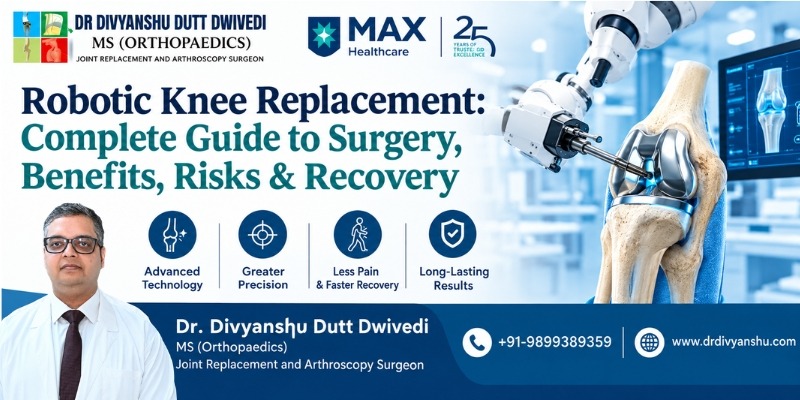
Knee pain can make walking, climbing stairs, exercising, and daily activities difficult. When advanced arthritis causes persistent pain and stiffness despite medicines, physiotherapy, and other treatments, knee replacement may be considered. For eligible patients, robotic knee replacement in Lucknow offers a technology-assisted approach that supports accurate planning and implant positioning under the supervision of an experienced orthopedic surgeon.

During robotic-assisted knee replacement, the surgeon uses detailed imaging, computer-based planning, and robotic guidance to perform the procedure with controlled precision. The robot does not operate independently; the surgeon makes all clinical decisions. This guide explains robotic knee replacement in Lucknow, including the procedure, benefits, risks, recovery, rehabilitation, cost factors, and comparison with conventional knee replacement.

What Is Robotic Knee Replacement?

Robotic knee replacement is an advanced form of knee replacement surgery in which robotic-assisted technology helps the surgeon plan and perform the procedure with greater precision. Using detailed imaging, computer software, and a three-dimensional model of the knee, the surgeon can evaluate the patient’s anatomy, identify damaged areas, prepare the bone, and position the implant accurately. This personalized approach may help improve implant alignment and support a more balanced knee joint.

During robotic-assisted knee replacement, the surgeon removes the worn or damaged parts of the knee and replaces them with artificial components. The technique may be used for partial or total knee replacement, depending on the extent of joint damage and the patient’s overall condition. Robotic technology does not perform the operation independently; it assists the surgeon with planning and execution. Outcomes can vary based on surgical expertise, implant quality, rehabilitation, activity level, and overall health.

.

How Does Robotic Knee Replacement Work?

The process begins with a comprehensive orthopedic evaluation, including your symptoms, physical examination, medical history, and imaging results. If robotic knee replacement is appropriate, advanced imaging may create a detailed 3D model of your knee. Using this information, the surgeon plans the procedure according to your bone anatomy, alignment, and joint condition.

During surgery, the robotic system provides real-time guidance and helps the surgeon follow the personalized plan. It may assist with precise bone preparation and implant positioning. However, the surgeon remains fully in control, continuously assessing the knee and making all final decisions throughout the procedure.

The general process includes:

  • Preoperative orthopedic assessment
  • Diagnostic imaging and surgical planning
  • Anesthesia
  • Preparation of the damaged joint surfaces
  • Robotic-assisted bone preparation
  • Implant positioning and joint balancing
  • Testing knee movement and stability
  • Closure of the surgical incision
  • Postoperative monitoring and rehabilitation

The exact workflow varies according to the robotic platform, implant system, surgical technique, and individual patient.

Who May Need Robotic Knee Replacement?

Not everyone with knee pain needs knee replacement, and robotic assistance is not required for every knee replacement procedure. The decision depends on the severity of joint damage, pain levels, mobility limitations, overall health, treatment response, and the orthopedic surgeon’s evaluation. Robotic knee replacement may be considered for selected patients with advanced arthritis or significant knee damage when symptoms interfere with daily activities and non-surgical treatments have not provided sufficient relief.

Common conditions and symptoms that may lead to consideration of knee replacement include:

  • Advanced osteoarthritis
  • Rheumatoid arthritis
  • Post-traumatic arthritis after a previous injury
  • Significant cartilage damage
  • Persistent knee pain and stiffness
  • Progressive difficulty walking or climbing stairs
  • Reduced mobility that affects daily activities
  • Knee deformity caused by advanced joint disease

Age alone does not determine whether a patient is suitable for robotic knee replacement. Overall health, activity level, joint condition, bone quality, treatment goals, and the ability to participate in rehabilitation are also important factors. Before recommending surgery, the orthopedic surgeon may review imaging scans, physical symptoms, and previous treatments to determine the most appropriate approach.

Patients should also discuss whether conventional knee replacement or other treatment options may provide similar benefits. Robotic-assisted knee replacement is a surgical option, not automatically the best choice for every patient. A personalized evaluation helps determine whether robotic surgery is appropriate and whether it can improve pain, mobility, and quality of life.

What Are the Benefits of Robotic Knee Replacement?

Robotic knee replacement uses advanced imaging, digital planning, and computer-assisted guidance to support the surgeon during surgery. Its potential benefits include more personalized planning, controlled bone preparation, and accurate implant positioning. However, outcomes also depend on the surgeon’s experience, implant choice, overall health, physiotherapy, and commitment to postoperative instructions.

Greater Surgical Planning and Precision

Before surgery, robotic systems help create a detailed digital plan based on the patient’s knee anatomy. This allows the surgeon to evaluate bone structure, alignment, and joint balance more carefully. The technology supports precision, but the surgeon remains responsible for making clinical decisions throughout the procedure.

Individualized Surgical Planning

Every knee has unique anatomy, alignment, and patterns of wear. Robotic planning allows the surgical team to customize the procedure instead of relying only on standard measurements. This personalized approach may help the surgeon plan bone cuts, implant size, and positioning according to the patient’s specific requirements.

Controlled Bone Preparation

During surgery, robotic assistance can help guide bone preparation within the planned boundaries. This may reduce unnecessary bone removal and support consistent surgical execution. The level of robotic control varies between systems, and the surgeon can adjust the plan when necessary based on findings during the operation.

Potentially Better Implant Alignment

Correct implant alignment is important for knee function, stability, and long-term performance. Research has reported improved radiographic alignment and positioning with some robotic-assisted techniques. However, better alignment on imaging does not always guarantee faster recovery or superior long-term results for every patient.

Technology-Assisted Decision Making

Robotic systems provide real-time digital information about alignment, bone preparation, and joint balance. This information can help the surgeon make more informed decisions during the operation. Robotic technology supports surgical judgment; it does not replace the surgeon’s experience, training, or responsibility for patient safety.

Important Factors Affecting Recovery

Robotic assistance is only one part of successful knee replacement treatment. Recovery also depends on general health, muscle strength, weight, implant selection, surgical technique, pain control, and physiotherapy. Following exercise recommendations, attending follow-up appointments and maintaining realistic expectations are equally important for achieving a good outcome.

Is Robotic Knee Replacement Better Than Traditional Knee Replacement?

Many patients ask whether robotic knee replacement is better than traditional surgery. Robotic-assisted knee replacement offers advanced planning, precise bone preparation, and accurate implant positioning, which may be especially helpful in complex cases or patients with significant deformity. However, improved alignment does not always guarantee better pain relief, mobility, or long-term satisfaction. Traditional knee replacement remains effective and reliable when performed by an experienced surgeon. The best option depends on your knee condition, anatomy, age, activity level, surgeon’s expertise, available technology, and treatment goals. Discuss both approaches with your orthopedic surgeon before making an informed decision. 


Factor Robotic Knee Replacement Traditional Knee Replacement
Surgical planning Computer-assisted planning Conventional planning
Implant positioning Robotic-assisted guidance Surgeon-guided
Patient anatomy Digital planning can account for individual anatomy Standard surgical measurements
Surgeon control Surgeon performs and controls the procedure Surgeon performs the procedure
Technology Requires robotic/navigation technology Does not require robotic technology
Cost May be higher depending on hospital and technology May be lower
Suitability Depends on individual patient and surgeon assessment Widely used for appropriate candidates


What Happens During Robotic Knee Replacement Surgery?

Before robotic knee replacement surgery, the orthopedic team performs a complete medical evaluation to confirm that the patient is fit for the procedure. Anesthesia is administered based on the patient’s health and the anesthesiologist’s recommendation. The surgeon then accesses the knee joint and removes damaged bone surfaces according to the personalized surgical plan.

The robotic system assists with precise bone preparation and implant positioning, while the surgeon remains in complete control. Artificial components are placed to restore knee function, followed by checks for alignment, stability, and movement. After surgery, pain management, early mobilization, physiotherapy, and regular follow-up support a safe and effective recovery.

Risks and Limitations of Robotic Knee Replacement

Like conventional knee replacement, robotic knee replacement surgery has potential risks and complications. Robotic assistance does not eliminate the normal risks associated with major orthopedic surgery.

Possible complications may include:

  • Infection
  • Blood clots
  • Bleeding
  • Stiffness
  • Persistent pain
  • Nerve or blood vessel injury
  • Implant-related complications
  • Anesthesia-related complications
  • Delayed rehabilitation
  • Need for additional treatment or revision surgery

There are also practical limitations. Robotic surgery may involve additional technology, planning, and equipment costs. Some procedures may take longer, and access to specific robotic systems varies between hospitals.

Recent research continues to evaluate whether the technical advantages of robotic surgery result in consistently superior clinical outcomes. A 2025 systematic review and a more recent network meta-analysis show that the evidence is evolving rather than supporting a universal claim that robotic surgery is superior in every outcome.


Robotic Knee Replacement Recovery: What to Expect


Recovery Stage What Patients May Expect
First few days Assisted walking, pain and swelling management
Week 1 Wound care, walking practice and prescribed exercises
Weeks 2–3 Gradual improvement in mobility and knee movement
Weeks 4–6 Increasing independence and daily activities
Around 3 months Continued improvement in strength and function
6 months+ Ongoing improvement depending on individual recovery


Robotic knee replacement recovery varies from person to person. Your age, physical condition, muscle strength, medical history, surgical complexity, and commitment to rehabilitation can influence the recovery process.

First Few Days

Patients generally begin moving the knee and walking with assistance as advised by the healthcare team. Pain and swelling are expected during the early recovery period and are managed with prescribed medication, ice, elevation, and other measures recommended by the surgical team.

First Few Weeks

Walking gradually becomes easier, although a walking aid may still be needed. Physiotherapy focuses on restoring knee movement, improving muscle strength, and increasing independence.

Around Four to Six Weeks

Many patients can perform more everyday activities by this stage, but recovery is not identical for everyone. Some people progress faster, while others need additional rehabilitation.

Three Months and Beyond

Strength, endurance, and knee function can continue improving for several months. Full recovery may take longer depending on the individual’s condition and rehabilitation progress.

The most important point is that robotic knee replacement recovery time is not determined by the robotic technology alone. Your overall health and rehabilitation plan have a major influence on the outcome.

Physiotherapy After Robotic Knee Replacement

Physiotherapy is essential after robotic-assisted knee replacement to support safe, steady recovery. A personalized rehabilitation program may include exercises that improve knee range of motion, quadriceps and leg strength, balance, flexibility, walking ability, and daily functional independence. Patients should follow the guidance provided by their orthopedic surgeon and physiotherapist, as recovery varies from person to person. Progressing too quickly may increase pain, swelling, or discomfort, while avoiding movement can lead to stiffness, weakness, and delayed recovery. The goal is gradual, consistent improvement through appropriate exercises, mobility training, and regular follow-up—not forcing the knee to heal faster than it safely can.

How Much Does Robotic Knee Replacement Cost in Lucknow?

The robotic knee replacement cost in Lucknow varies from patient to patient because it depends on the type of surgery, implant, hospital facilities, surgeon’s fees, robotic technology, anesthesia, diagnostic tests, room category, hospital stay, medicines, and rehabilitation. Insurance coverage also differs by policy and insurer, so patients should confirm inclusions, exclusions, and pre-authorization requirements before surgery. Rather than choosing a hospital only on the lowest estimate, consider the surgeon’s experience, hospital infrastructure, implant quality, rehabilitation support, and follow-up care. An orthopedic evaluation is essential for an accurate estimate because each patient’s treatment plan and medical requirements are different.

How Long Do Robotic Knee Implants Last?

Patients often ask, “How long does a robotic knee replacement last?” Implant longevity depends on several factors, including implant design, materials, surgical positioning, body weight, activity level, age, general health, and adherence to medical advice. Robotic assistance can support detailed planning and accurate implant positioning, but it cannot guarantee a specific implant lifespan. Maintaining a healthy weight, following recommended activity guidelines, attending follow-up appointments, and addressing symptoms early may help preserve knee function. Your orthopedic surgeon can provide more personalized guidance based on your implant, lifestyle, bone health, and overall clinical condition.

How to Prepare for Robotic Knee Replacement

Proper preparation can make robotic knee replacement surgery and recovery more manageable. Your surgeon may recommend blood tests, imaging, medical clearance, and a review of your current medicines. Conditions such as diabetes, heart disease, high blood pressure, or other health problems should be discussed because they may affect surgical planning and recovery. Prepare your home by removing trip hazards, arranging support, organizing essential items, and creating a comfortable resting area. If preoperative strengthening exercises are advised, complete them regularly. Always follow the specific instructions provided by your orthopedic surgeon, anesthetist, and physiotherapy team.

How to Choose a Robotic Knee Replacement Surgeon in Lucknow

Choosing the right surgeon is an important step when considering robotic knee replacement in Lucknow. Do not focus only on the availability of robotic technology; also evaluate the surgeon’s experience in knee replacement, training in robotic-assisted procedures, hospital infrastructure, implant options, infection-control standards, rehabilitation services, and follow-up care. Ask why robotic assistance is suitable for your specific knee condition and request a clear explanation of its potential benefits, limitations, and alternatives. A trustworthy orthopedic surgeon should communicate openly, discuss possible complications, and help you make an informed decision based on your medical needs.

Important questions include:

  • Am I a suitable candidate for knee replacement?
  • Why is robotic assistance recommended in my case?
  • Would conventional knee replacement also be appropriate?
  • Which robotic technology will be used?
  • What implant is being recommended?
  • What should I expect during recovery?
  • What is included in the estimated treatment cost?
  • How long will physiotherapy be required?

A detailed consultation allows you to make a decision based on your condition rather than marketing claims.

Robotic Knee Replacement in Lucknow: Making an Informed Decision

Robotic knee replacement in Lucknow uses advanced computer-assisted planning to help surgeons achieve accurate implant positioning and personalized treatment. However, successful results depend on the surgeon’s experience, proper patient selection, implant quality, hospital facilities, and dedicated rehabilitation. Patients should undergo a detailed orthopedic evaluation before choosing robotic-assisted surgery and discuss its benefits, risks, alternatives, expected recovery, and overall cost. If persistent knee pain, stiffness, or arthritis is affecting mobility and daily activities, consult a qualified orthopedic surgeon in Lucknow to determine whether medicines, physiotherapy, conventional knee replacement, or robotic knee replacement is most suitable for your condition. 

Consult Dr. Divyanshu Dutt Dwivedi for robotic knee replacement in Lucknow

Robotic Knee replacement Surgeon in Lucknow
Dr. Divyanshu Dutt Dwivedi

Dr. Divyanshu Dutt Dwivedi is an experienced orthopedic and joint replacement specialist offering advanced knee care in Lucknow. Patients considering robotic knee replacement can discuss persistent knee pain, arthritis, stiffness, mobility problems, imaging results, and treatment options during a personalized consultation. Robotic-assisted knee surgery may help support accurate implant positioning and individualized surgical planning when clinically appropriate. The right procedure depends on your knee condition, overall health, and treatment goals—not technology alone. If knee pain is affecting your daily activities, schedule an evaluation to understand whether robotic knee replacement is suitable for you. Contact Dr. Divyanshu Dutt Dwivedi at +919899389359 for consultation. 

Conclusion

Robotic knee replacement is an advanced approach to treating severe knee arthritis and other conditions when non-surgical treatments no longer provide adequate relief. By combining detailed surgical planning with robotic-assisted technology, the surgeon can achieve precise bone preparation and implant positioning. However, successful results depend on several factors, including the patient’s condition, surgeon’s experience, implant selection, overall health, and commitment to rehabilitation. Understanding the benefits, risks, procedure, recovery, and expected outcomes of robotic knee replacement can help patients make an informed decision. If you are considering robotic knee replacement in Lucknow, consult an experienced orthopedic and joint replacement surgeon for personalized guidance.

FAQs About Robotic Knee Replacement in Lucknow

1. What is robotic knee replacement?

Robotic knee replacement is a technology-assisted procedure where the surgeon uses computer planning and robotic guidance to improve bone preparation, alignment, and implant positioning.

2. Is robotic knee replacement better than traditional knee replacement?

Robotic surgery can provide more precise planning and implant alignment, but it is not automatically better for every patient. Suitability depends on anatomy, diagnosis, and surgeon expertise.

3. Is robotic knee replacement safe?

Robotic knee replacement is generally considered safe when appropriately performed, but risks such as infection, blood clots, stiffness, bleeding, and anesthesia complications can still occur.

4. Who is a candidate for robotic knee replacement?

Patients with advanced knee arthritis, persistent pain, stiffness, deformity, or reduced mobility despite non-surgical treatment may be candidates after detailed orthopedic evaluation.

5. How much does robotic knee replacement cost in Lucknow?

Robotic knee replacement costs in Lucknow vary according to the implant, hospital, surgeon, procedure complexity, technology, and rehabilitation requirements. A personalized estimate is recommended.

6. How long does robotic knee replacement surgery take?

Robotic knee replacement surgery commonly takes around one to two hours, although operating time varies depending on the patient’s condition, surgical complexity, and procedure performed.

7. When can I walk after robotic knee replacement?

Many patients begin standing and walking with assistance soon after surgery when medically appropriate. Exact timing depends on health, surgical findings, and the surgeon’s rehabilitation protocol.

8. How long does robotic knee replacement recovery take?

Initial recovery generally progresses over several weeks, while strength, flexibility, and knee function can continue improving for several months with appropriate physiotherapy and rehabilitation.

9. Does a robot perform the knee replacement surgery?

No. The orthopedic surgeon performs the surgery and makes all clinical decisions. Robotic technology assists with surgical planning, guidance, bone preparation, and implant positioning.

10. Does robotic knee replacement require a CT scan?

CT requirements depend on the robotic system being used. Some platforms use CT-based three-dimensional planning, while other systems use different imaging or registration methods.

11. Does insurance cover robotic knee replacement in Lucknow?

Insurance coverage depends on your policy, insurer, and hospital. Before surgery, confirm pre-authorization requirements, covered expenses, exclusions, and any expected out-of-pocket costs.

12. How do I choose a robotic knee replacement surgeon in Lucknow?

Consider the surgeon’s knee replacement experience, robotic surgery training, hospital infrastructure, implant options, rehabilitation support, complication management, and willingness to explain alternatives clearly.


Logo

Dr. Divyanshu Dutt Dwivedi is a well-known orthopedic surgeon in Lucknow, recognized for his expertise in treating a variety of musculoskeletal conditions. He is known as one of the Best Orthopedic Doctors in Lucknow.

© 2025 Dr. Divyanshu. All rights reserved.| Developed By Websofy Software