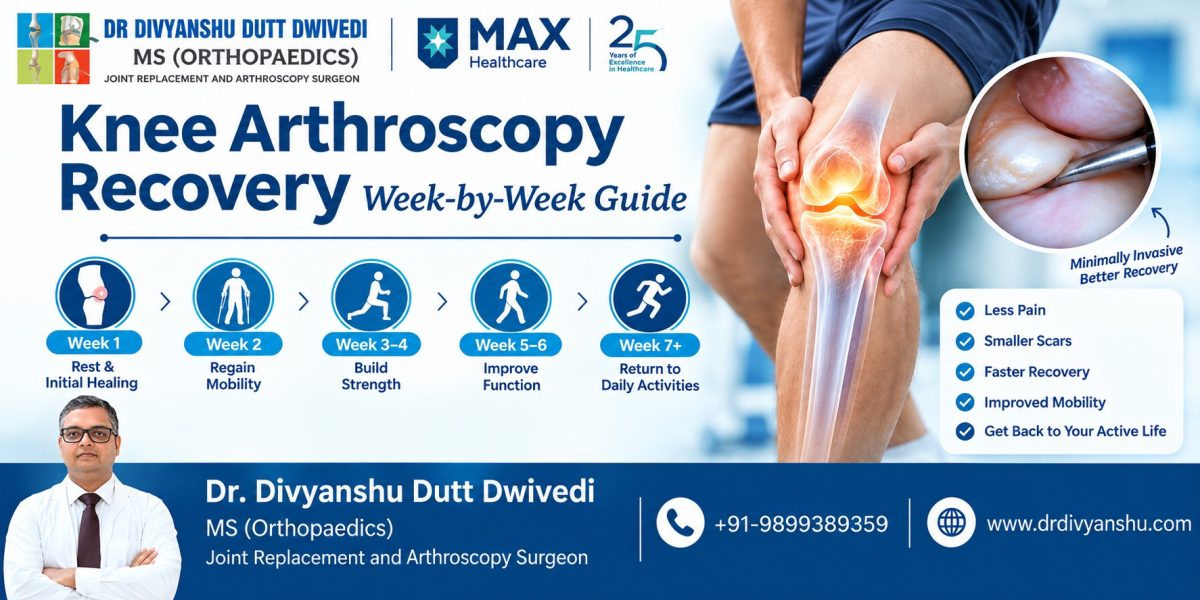
Knee arthroscopy recovery week by week depends on the procedure performed, the condition of the knee, and the patient’s overall health. Recovery involves managing pain and swelling, restoring knee movement, rebuilding muscle strength, and gradually returning to daily activities. Understanding each recovery stage helps patients set realistic expectations and follow their rehabilitation plan safely.
This guide explains knee arthroscopy recovery time, including walking, physiotherapy, driving, returning to work, and resuming sports. It also highlights why meniscus repair recovery may take longer than recovery after partial meniscectomy. Following your orthopedic surgeon’s instructions and attending scheduled follow-up appointments are essential for safe healing and long-term knee function.
What Is the Typical Knee Arthroscopy Recovery Time?
The knee arthroscopy recovery time depends on the procedure performed, the extent of knee damage, and individual healing progress. After a simple procedure, such as removing damaged meniscus tissue, many patients resume routine activities within a few weeks, although complete recovery may take longer. Meniscus repair, cartilage treatment, and ligament reconstruction often require more structured rehabilitation, with possible restrictions on weight-bearing or knee movement. Age, general health, existing arthritis, muscle strength, and physiotherapy consistency can also influence recovery. There is no universal timeline for every patient. Follow your orthopedic surgeon’s instructions and increase activities gradually according to your progress.
Knee Arthroscopy Recovery Week by Week
First 24–48 Hours: Rest, Pain Relief, and Swelling Control
The first 24–48 hours after surgery focus on protecting the knee, managing discomfort, and following postoperative instructions. Mild pain, swelling, bruising, and stiffness are common after knee arthroscopy surgery. The severity of these symptoms depends on the procedure performed and your individual healing response. Rest appropriately and avoid activities that place unnecessary strain on the operated knee.
Keep the dressing clean and follow your hospital’s wound-care instructions. Apply ice with a protective barrier if recommended, and elevate your leg to help manage swelling. Take prescribed medicines as directed. Walking may be permitted after simple procedures, but some patients need crutches or weight-bearing restrictions. Contact your surgical team if pain becomes severe or increasingly difficult to control.
Week 1: Managing Pain, Swelling, and Early Movement
During the first week, the main goals of knee arthroscopy recovery are to control swelling, protect the surgical wounds, and begin comfortable knee movement. Some patients notice gradual improvement in mobility, although stiffness and discomfort may continue, particularly after walking or standing. Follow your discharge instructions and avoid increasing activity too quickly.
Your surgeon or physiotherapist may recommend gentle exercises, such as ankle pumps and quadriceps contractions, depending on your procedure. Walking after knee arthroscopy should follow your prescribed weight-bearing instructions. Avoid strenuous housework and prolonged standing if they increase discomfort. Attend scheduled wound checks and follow dressing-care advice. Seek prompt medical assessment if you develop fever, increasing redness, wound discharge, or worsening pain rather than assuming these symptoms are part of normal healing.
Week 2: Improving Knee Movement and Everyday Mobility
By the second week, some patients experience less pain and find everyday movement easier. However, recovery varies, and swelling or restricted knee movement may persist. The goal is to improve comfortable mobility, maintain muscle activation, and gradually resume permitted activities without placing excessive stress on healing tissues.
Your physiotherapist may adjust exercises according to your strength, swelling, and surgical procedure. Recovery after partial meniscectomy may progress differently from meniscus repair recovery, which can involve longer restrictions on bending or weight-bearing. Do not stop using crutches simply because walking feels easier. Your treating team should guide this transition. Avoid forcing the knee to bend or straighten if movement causes sharp pain or conflicts with your rehabilitation instructions.
Weeks 3–4: Building Strength and Improving Function
During weeks three and four, patients recovering from uncomplicated arthroscopy may gradually increase their everyday activities. Walking can become more comfortable as swelling settles, although stiffness and muscle weakness may remain. Progress should be assessed through knee movement, strength, and functional improvement rather than by following a fixed calendar alone.
Physiotherapy after knee arthroscopy may focus on restoring range of motion, activating the quadriceps, strengthening surrounding muscles, and improving balance. Exercise progression depends on the procedure and individual recovery. If pain or swelling increases significantly after activity, reduce the workload and seek guidance if symptoms persist. Patients recovering from meniscus repair or cartilage procedures may still have movement or weight-bearing restrictions. These precautions should only be changed with approval from the treating surgeon.
Weeks 5–6: Progressing Strength and Daily Activities
By weeks five and six, some patients who have undergone simple arthroscopy may return to many routine activities. Others may continue experiencing stiffness, weakness, or discomfort after prolonged standing or walking. Recovery depends on the procedure, the knee’s response to rehabilitation, and the patient’s overall physical condition.
Rehabilitation may now focus on improving leg strength, balance, movement control, and endurance. Returning to work depends on job requirements; desk-based duties may be easier to resume than work involving heavy lifting, climbing, or kneeling. Although walking may feel normal, running and jumping require greater strength and control. Do not resume these activities without appropriate guidance. Patients recovering from more complex procedures may need additional time before progressing to higher-demand activities.
Weeks 7–12 and Beyond: Returning to Higher-Level Activities
During the later stages of knee arthroscopy recovery, patients may focus on improving strength, endurance, balance, and confidence during everyday activities. Those recovering from uncomplicated procedures may gradually resume recreational exercise after clinical assessment. However, progress depends on symptoms, functional ability, and the rehabilitation plan rather than the number of weeks since surgery.
Recovery after meniscus repair, cartilage restoration, or ACL reconstruction can take considerably longer. Before running after knee arthroscopy or returning to sports, patients should demonstrate appropriate knee movement, strength, balance, and movement control. Returning too early may aggravate symptoms or place healing tissues at risk. Follow a progressive exercise plan and consult your surgeon or physiotherapist before increasing activity intensity. Individual clearance is especially important for sports involving jumping, pivoting, or sudden changes in direction.
Knee Arthroscopy Recovery Timeline at a Glance
The following table summarizes common recovery phases after an uncomplicated procedure. It is a general guide, not a guaranteed timetable.
| Recovery stage | Main focus | Important consideration |
| First 48 hours | Pain relief and swelling control | Follow wound care and mobility instructions |
| Week 1 | Early movement and protection | Use crutches if prescribed |
| Week 2 | Comfortable movement and daily mobility | Progress according to the procedure |
| Weeks 3–4 | Strength and functional movement | Avoid overloading the knee |
| Weeks 5–6 | Increased activity and rehabilitation | Work demands affect return-to-work timing |
| Weeks 7–12 and beyond | Higher-level activity and sports preparation | Obtain clinical clearance before impact activities |
Patients who have undergone more complex procedures may need a different schedule. The surgeon’s rehabilitation protocol takes priority over this general timeline.
What Affects Recovery After Knee Arthroscopy?
Several factors influence knee arthroscopy recovery time, so patients should avoid comparing their progress with others. The type of surgery, extent of knee damage, general health, and physical fitness can all affect healing. Recovery may be faster after a simple procedure than after surgery involving tissue repair. Your orthopedic surgeon can explain realistic expectations based on your individual condition.
Important factors include existing arthritis, cartilage damage, muscle strength, postoperative swelling, and rehabilitation consistency. Meniscus repair recovery usually requires different precautions from recovery after partial meniscectomy. Work demands and sporting goals also influence rehabilitation planning. Follow prescribed exercises, attend follow-up appointments, and report persistent symptoms. Your surgeon will adjust activity levels according to healing, movement, strength, and functional progress rather than time alone.
Walking After Knee Arthroscopy: When Can You Walk Normally?
Many patients can begin walking after knee arthroscopy soon after uncomplicated surgery, provided their surgeon permits it. Walking ability depends on the procedure, pain, swelling, balance, and weight-bearing instructions. Some patients need crutches for only a few days, while others require them longer after meniscus repair or cartilage procedures. Follow your discharge instructions carefully and avoid placing excessive pressure on healing tissues.
You may gradually reduce walking support when permitted weight-bearing feels comfortable, your knee remains controlled, and your limp improves. Confirm this transition with your treating team. Increase walking distance gradually and monitor discomfort. If pain or swelling noticeably increases after activity, reduce your workload. Never abandon prescribed crutches early or force normal walking by ignoring pain, instability, or postoperative restrictions during rehabilitation.
Physiotherapy and Exercises After Knee Arthroscopy
Physiotherapy after knee arthroscopy helps restore knee movement, muscle strength, balance, and confidence during daily activities. Your rehabilitation program should match the procedure performed and your stage of healing. Depending on clinical instructions, early exercises may include ankle pumps, quadriceps contractions, gentle knee bending, and straight-leg raises. More demanding strengthening and functional exercises are introduced gradually when your surgeon or physiotherapist considers them appropriate.
Follow your prescribed exercise schedule rather than copying another patient’s routine. Perform movements with control, and never force your knee beyond permitted limits. Tell your physiotherapist if exercises cause sharp pain or repeatedly increase swelling. Progress repetitions, resistance, and activity intensity gradually under professional guidance. Patients recovering from meniscus repair or ligament reconstruction may need different restrictions from those undergoing simple arthroscopy. Attend follow-up appointments to monitor progress and adjust rehabilitation safely.
How to Manage Pain and Swelling After Knee Arthroscopy
Mild pain, bruising, and swelling are common during knee arthroscopy recovery, particularly in the early days. Symptoms may increase temporarily after walking or prescribed exercises. Follow your discharge plan and monitor whether discomfort gradually improves. Your care team may recommend ice application, leg elevation, prescribed pain medication, and temporary activity adjustments to support comfort while protecting the operated knee during healing.
Apply ice with a protective barrier and follow recommended timing instructions; never place ice directly on your skin. Take medicines only as directed, and avoid prolonged standing when it worsens discomfort. Balance permitted movement with rest and follow your rehabilitation plan. Contact your surgeon if pain or swelling worsens or the knee becomes increasingly warm or red. Sudden calf pain or swelling requires urgent assessment because it may indicate a potentially serious blood clot.
When Can You Drive or Return to Work?
Driving after knee arthroscopy depends on which leg was operated on, the vehicle type, pain levels, mobility, and medication use. You must be able to control the vehicle and perform an emergency stop safely without hesitation or significant discomfort. Never drive while taking medication that impairs alertness. Follow your surgeon’s advice and applicable driving requirements before returning to the road after surgery.
Returning to work depends on your recovery and job responsibilities. Desk-based workers may resume duties sooner than people whose jobs involve lifting, climbing, kneeling, or prolonged standing. Some patients benefit from shorter hours or temporary workplace adjustments. Before restarting either activity, assess whether you can move safely without aggravating symptoms. Ask your treating team for individual clearance rather than relying on a fixed recovery timeline or another patient’s experience.
Recovery After Meniscus Repair vs Partial Meniscectomy
Meniscus repair recovery differs from recovery after partial meniscectomy because these procedures involve different healing requirements. During partial meniscectomy, the surgeon removes the damaged portion of the meniscus. Patients may progress through rehabilitation sooner because the removed tissue does not need to heal together. However, recovery still depends on the extent of surgery, symptoms, and any additional knee damage or treatment.
During meniscus repair, the surgeon stitches the torn tissue to support healing. Temporary restrictions on weight-bearing, knee bending, or exercises may therefore be necessary. Running, twisting, and sports require gradual progression and appropriate clinical clearance. Cartilage procedures and ACL reconstruction also have specific rehabilitation protocols. Follow the instructions provided for your operation rather than comparing timelines with someone who underwent a different procedure. Your surgeon will guide safe progression according to healing, strength, and function.
When Should You Contact Your Surgeon?
Some discomfort and swelling may occur after knee arthroscopy surgery, but certain symptoms require prompt medical attention. Contact your healthcare team if you develop increasing redness, warmth, or discharge around the wound; fever or chills; worsening pain despite prescribed treatment; or swelling that limits movement. These symptoms should not automatically be considered normal recovery, especially when they worsen instead of gradually improving.
Seek urgent medical assessment for new calf pain or swelling because these symptoms may indicate a blood clot. Sudden shortness of breath or chest pain requires emergency medical care, as these can signal a serious complication. Do not wait for your next scheduled appointment when concerning symptoms develop. Your treating team can assess the problem and determine whether examination or treatment is necessary. Follow postoperative instructions carefully and report unexpected changes in your recovery promptly.
Meet Dr. Divyanshu Dutt Dwivedi—Trusted Knee Arthroscopy Specialist in Lucknow
Dr. Divyanshu Dutt Dwivedi is an experienced orthopedic surgeon associated with Max Super Speciality Hospital, Gomti Nagar, Lucknow. He provides evaluation and treatment guidance for knee conditions that may require knee arthroscopy, helping patients understand their treatment options, rehabilitation needs, and recovery expectations. Treatment recommendations depend on the diagnosis, symptoms, and individual health requirements.
Clinical Expertise Includes:
- Knee Arthroscopy: Assessment and minimally invasive treatment of suitable knee conditions.
- Meniscus Injuries: Evaluation of meniscus tears and appropriate treatment options.
- ACL Injuries: Assessment and guidance regarding ligament reconstruction when indicated.
- Sports Injuries: Management planning for selected knee-related sports injuries.
- Postoperative Rehabilitation: Guidance on recovery milestones, physiotherapy, and returning to daily activities.
For consultation, contact +91-9899389359 to discuss your knee symptoms and treatment options.
Conclusion
Knee arthroscopy recovery week by week involves gradual improvements in knee movement, strength, comfort, and daily function. The knee arthroscopy recovery time depends on the procedure performed, the extent of knee damage, and individual healing progress. While simple arthroscopy may allow an earlier return to routine activities, meniscus repair and complex procedures often require longer rehabilitation. Following your orthopedic surgeon’s instructions, completing prescribed physiotherapy, and increasing activity gradually can support safer recovery. Monitor pain and swelling, and seek medical advice if symptoms worsen. Consult your treating specialist before driving, running, or returning to sports to ensure your knee is ready.
Frequently Asked Questions About Knee Arthroscopy Recovery
1. How long does it take to recover from knee arthroscopy?
Recovery may take a few weeks after a simple procedure, while meniscus repair, cartilage treatment, and ACL reconstruction can require several months or longer.
2. When can I walk normally after knee arthroscopy?
Some patients walk comfortably within days, while others need crutches and additional rehabilitation. The procedure performed and your surgeon’s weight-bearing instructions determine the appropriate timeline.
3. How long does swelling last after knee arthroscopy?
Swelling often improves gradually over the first few weeks, but it can persist longer depending on the procedure and activity levels. Worsening swelling needs medical assessment.
4. When can I start exercising after knee arthroscopy?
Gentle rehabilitation exercises may begin early when approved by your surgical team. Strengthening, running, and impact activities should be introduced according to your individual recovery plan.
5. Can I drive after knee arthroscopy?
You should drive only when you can safely control the vehicle, perform an emergency stop, and meet your surgeon’s advice and applicable requirements. Sedating medication can make driving unsafe.
6. When can I return to work after knee arthroscopy?
Some patients return to desk-based work within a relatively short period, while physically demanding jobs may require longer. Your mobility, pain, procedure, and work duties influence the decision.
7. Is pain normal several weeks after knee arthroscopy?
Some discomfort can persist during recovery, particularly after activity. However, severe, increasing, or persistent pain should be discussed with your surgeon rather than assumed to be normal.
8. Does meniscus repair take longer to recover from than partial meniscectomy?
Yes, meniscus repair generally requires more time because the repaired tissue needs to heal. Partial meniscectomy often allows faster progression, although individual recovery varies.
