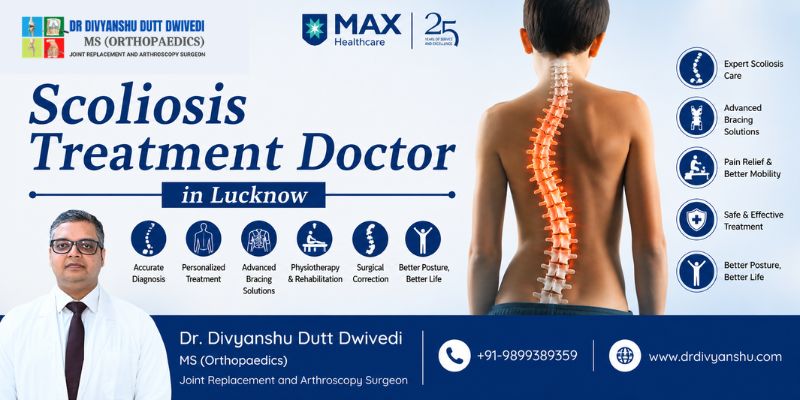
Scoliosis-Treatment-Doctor-in-Lucknow.jpg

Scoliosis is more than just a spinal curve. If left untreated, it can affect posture, movement, breathing, and overall quality of life. Choosing an experienced scoliosis treatment doctor in Lucknow helps ensure an accurate diagnosis and a treatment plan that matches your condition and lifestyle. Dr. Divyanshu Dutt Dwivedi provides comprehensive evaluation and advanced treatment for children, adolescents, and adults with scoliosis.

Whether your condition requires regular monitoring, physiotherapy, bracing, or surgical intervention, every treatment is planned after a detailed clinical assessment. If you are looking for the best scoliosis doctor in Lucknow, a scoliosis specialist in Lucknow, or an experienced spine specialist for scoliosis in Lucknow, timely consultation can help prevent the condition from progressing and improve long-term spinal health.

Meet Dr. Divyanshu Dutt Dwivedi—Trusted Scoliosis Treatment Doctor in Lucknow

Scoliosis Treatment Doctor in Lucknow
Dr. Divyanshu Dutt Dwivedi

Dr. Divyanshu Dutt Dwivedi is a highly skilled orthopedic surgeon dedicated to providing advanced diagnosis and personalized treatment for spinal disorders, including scoliosis. With a patient-centric approach and evidence-based orthopedic care, he offers comprehensive management for children, adolescents, and adults. From conservative treatments such as physiotherapy and bracing to complex spinal surgeries, every treatment plan is tailored to the patient’s condition. His commitment to clinical excellence, ethical practice, and long-term patient outcomes has made him a trusted scoliosis specialist in Lucknow.

Clinical Expertise

  • Scoliosis Diagnosis and Treatment
  • Pediatric Scoliosis Management
  • Adult Degenerative Scoliosis Treatment
  • Congenital Scoliosis Evaluation
  • Neuromuscular Scoliosis Care
  • Spinal Deformity Correction
  • Non-Surgical Scoliosis Treatment
  • Spinal Bracing for Scoliosis
  • Spine Rehabilitation and Physiotherapy Guidance
  • Minimally Invasive Spine Surgery
  • Spinal Fusion Surgery
  • Back Pain and Spine Disorder Management
  • Complex Trauma and Fracture Management
  • Knee Replacement Surgery
  • Hip Replacement Surgery
  • Sports Injury and Arthroscopy
  • ACL Reconstruction Surgery
  • Shoulder Arthroscopy
  • Robotic Joint Replacement Surgery
  • Comprehensive Orthopedic Consultation

What is scoliosis?

Scoliosis is a medical condition in which the spine develops an abnormal sideways curve instead of remaining straight. The curve may appear as an “S” or “C” shape and can affect the upper, middle, or lower back. While mild scoliosis may not cause noticeable symptoms, moderate or severe cases can lead to uneven shoulders, back pain, poor posture, and difficulty performing daily activities. An experienced scoliosis treatment doctor in Lucknow evaluates the severity using clinical examination, Cobb angle, X-rays, and other diagnostic tests before recommending the most suitable treatment. Early diagnosis plays a crucial role in preventing further spinal deformity and preserving normal spinal function.

Types of Scoliosis

Understanding the type of scoliosis helps determine the most effective treatment. A qualified scoliosis specialist in Lucknow identifies the underlying cause before preparing a personalized treatment plan.

Type Description
Idiopathic Scoliosis The most common form with no definite cause, often seen in adolescents.
Congenital Scoliosis Develops before birth due to abnormal spinal formation.
Neuromuscular Scoliosis Associated with neurological or muscular disorders such as cerebral palsy or muscular dystrophy.
Degenerative Scoliosis Occurs in adults because of age-related wear and tear of the spine.

Proper diagnosis helps the doctor decide whether observation, physiotherapy, bracing, or surgery is the best option.

Symptoms of Scoliosis

The symptoms of scoliosis vary depending on the degree of spinal curvature. Some people experience only mild posture changes, while others may develop persistent discomfort and physical limitations. Visiting the Best Scoliosis Doctor in Lucknow at the earliest sign of symptoms can reduce the risk of progression.

Common symptoms include:

  • Uneven shoulders
  • One shoulder blade appearing more prominent
  • Uneven waistline
  • Tilted pelvis
  • One hip higher than the other
  • Visible sideways curve of the spine
  • Rib hump while bending forward
  • Persistent back pain
  • Muscle fatigue after standing for long periods
  • Reduced flexibility
  • Difficulty maintaining proper posture

These symptoms should never be ignored, especially in growing children and teenagers.

Common Causes of Scoliosis

The exact cause of scoliosis is not always known, but several medical and developmental factors can contribute to an abnormal spinal curvature. Identifying the underlying cause helps a Scoliosis Treatment Doctor in Lucknow recommend the most effective treatment and reduce the risk of curve progression. Early diagnosis is essential for achieving better long-term outcomes.

Common Causes

  • Idiopathic scoliosis, the most common type with no identifiable cause
  • Congenital spinal abnormalities present at birth
  • Neuromuscular disorders, including cerebral palsy and muscular dystrophy
  • Age-related degeneration of the spine in older adults
  • Genetic or family history of scoliosis
  • Spinal injuries, infections, or tumors affecting spinal alignment
  • Uneven spinal growth during adolescence
  • Connective tissue or neurological disorders that influence spinal stability

Risk Factors for Scoliosis

Several factors increase the likelihood of developing scoliosis. Recognizing these risks allows early monitoring and timely intervention by an experienced scoliosis treatment doctor in Lucknow. Children between the ages of 10 and 18 years are more commonly affected, particularly during periods of rapid growth. A family history of scoliosis, congenital spinal abnormalities, neuromuscular diseases, osteoporosis, previous spinal injuries, and degenerative changes in older adults also contribute to the condition. Girls are generally at a higher risk of developing progressive scoliosis than boys. Regular spinal screening and clinical evaluation help detect abnormalities early and reduce the chances of severe spinal deformity.

When Should You Visit a Scoliosis Doctor?

Many patients ignore early signs because the condition usually progresses slowly. However, consulting a scoliosis specialist in Lucknow at the right time can prevent complications and reduce the need for extensive treatment. You should seek medical attention if you notice uneven shoulders, one hip higher than the other, frequent back pain, difficulty standing straight, a visible spinal curve, or a rib hump while bending forward. Parents should also observe posture changes during a child’s growth years. Dr. Divyanshu Dutt Dwivedi performs a comprehensive spinal assessment using clinical examination and imaging to determine the severity and recommend the most effective treatment plan for every patient.

Why Early Diagnosis Matters

Early diagnosis significantly improves treatment outcomes for scoliosis treatment in Lucknow. Mild spinal curves can often be managed through regular monitoring, physiotherapy, posture correction, and bracing, reducing the likelihood of surgery. Delayed treatment may allow the spinal curvature to progress, leading to chronic pain, reduced mobility, cosmetic concerns, and, in severe cases, breathing difficulties due to chest deformity. A timely consultation with Dr. Divyanshu Dutt Dwivedi, an experienced orthopedic spine specialist, ensures accurate diagnosis using the Cobb angle, X-rays, and advanced imaging. Early intervention not only preserves spinal alignment but also supports better physical function and long-term quality of life.

Diagnosis of Scoliosis

Accurate diagnosis is the foundation of successful scoliosis treatment in Lucknow. During the initial consultation, Dr. Divyanshu Dutt Dwivedi carefully evaluates your medical history, symptoms, posture, and spinal alignment to identify the type and severity of scoliosis. A comprehensive examination helps determine whether the spinal curve is stable or progressing. Early diagnosis is especially important for children and adolescents because the condition may worsen during growth. Adults with back pain or spinal deformity also benefit from timely evaluation. Consulting an experienced scoliosis treatment doctor in Lucknow ensures that every patient receives a personalized treatment plan based on clinical findings and advanced diagnostic methods.

Clinical Examination for Scoliosis

A detailed physical examination provides valuable information about spinal health before imaging tests are performed. The doctor observes posture, shoulder height, waist symmetry, pelvic alignment, and spinal balance while the patient stands and walks. The Adam’s Forward Bend Test is commonly performed to detect rib prominence or spinal rotation. Muscle strength, flexibility, reflexes, and nerve function are also assessed to identify associated neurological problems. These findings help Dr. Divyanshu Dutt Dwivedi, an experienced scoliosis specialist in Lucknow, determine whether additional investigations are required and guide the next steps in treatment planning.

Imaging Tests Used for Diagnosis

Modern imaging techniques provide a detailed understanding of spinal curvature and help develop an effective treatment strategy. Depending on the patient’s condition, the following investigations may be recommended:

  • Digital X-rays to measure spinal curvature
  • Standing Spine X-rays for alignment assessment
  • Cobb Angle measurement
  • MRI to evaluate the spinal cord and nerves
  • CT Scan for complex spinal deformities
  • EOS Imaging, where available for low-radiation evaluation
  • Bone density assessment in selected adult patients

These investigations help the best scoliosis doctor in Lucknow accurately diagnose the condition and recommend the most appropriate treatment.

Understanding Cobb Angle

The Cobb angle is the internationally accepted method for measuring the degree of spinal curvature. It plays an important role in deciding the most suitable treatment approach. A curve below 20 degrees usually requires observation and regular follow-up. Curves between 20 and 40 degrees may benefit from physiotherapy and spinal bracing, particularly in growing children. Curves exceeding 40 to 50 degrees often require surgical evaluation to prevent further progression. Dr. Divyanshu Dutt Dwivedi carefully measures the Cobb angle using high-quality spinal imaging to determine the severity of scoliosis and monitor changes over time.

Treatment Options for Scoliosis

The treatment of scoliosis depends on several factors, including the patient’s age, type of scoliosis, degree of spinal curvature, symptoms, and future risk of progression. Every patient requires an individualized approach rather than a standard treatment plan. As a trusted scoliosis treatment doctor in Lucknow, Dr. Divyanshu Dutt Dwivedi focuses on preserving spinal function, relieving pain, improving posture, and preventing further curvature. Treatment may involve observation, physiotherapy, spinal bracing, pain management, or surgery depending on the severity of the condition. The primary goal is to help patients return to an active and healthy lifestyle while maintaining long-term spinal stability.

Observation and Regular Monitoring

Not every patient with scoliosis requires immediate treatment. Mild spinal curves, particularly in children who are still growing, can often be managed through regular observation. During follow-up visits, the doctor monitors spinal growth, posture, and changes in the Cobb angle using periodic X-rays. This approach allows timely intervention if the curve begins to progress. Regular monitoring reduces unnecessary treatment while ensuring that worsening scoliosis is detected early. Choosing an experienced scoliosis specialist in Lucknow helps patients receive appropriate care at the right stage without delaying treatment when it becomes necessary.

Physiotherapy for Scoliosis

Physiotherapy is an important part of conservative scoliosis treatment in Lucknow. A customized rehabilitation program strengthens the muscles supporting the spine, improves flexibility, enhances posture, and reduces pain. Exercises are selected according to the patient’s age, spinal curvature, and functional limitations. Physiotherapy also improves balance and helps patients perform daily activities more comfortably. While exercises cannot completely straighten structural scoliosis, they can significantly improve spinal function and quality of life. Under the guidance of Dr. Divyanshu Dutt Dwivedi, patients receive evidence-based rehabilitation plans designed to complement other treatment methods and slow disease progression.

Spinal Bracing

Spinal bracing is commonly recommended for children and adolescents whose bones are still growing and whose spinal curves have a moderate risk of progression. The brace helps control further spinal curvature by maintaining proper alignment during growth. Its effectiveness depends on early diagnosis, proper fitting, and consistent use as advised by the specialist. Regular follow-up is essential to monitor progress and make necessary adjustments. Dr. Divyanshu Dutt Dwivedi, a leading spine specialist for scoliosis in Lucknow, evaluates each patient carefully before recommending bracing and explains its benefits, expected outcomes, and duration of treatment to patients and their families.

Pain Management and Lifestyle Modification

Adults with scoliosis often experience chronic back pain, muscle stiffness, and reduced mobility. Along with medical treatment, certain lifestyle changes can help improve comfort and spinal health. Maintaining a healthy body weight, performing doctor-recommended exercises, following correct sitting and standing posture, avoiding prolonged inactivity, and using ergonomic furniture can reduce stress on the spine. Pain-relieving medications may also be prescribed when necessary. Dr. Divyanshu Dutt Dwivedi believes in a comprehensive treatment approach that combines medical expertise with practical lifestyle advice, helping patients manage symptoms effectively and maintain an active daily routine.

Can Scoliosis Be Treated Without Surgery?

Yes, many patients can successfully manage scoliosis without surgery, particularly when the condition is diagnosed early. Mild and moderate spinal curves often respond well to observation, physiotherapy, spinal bracing, posture correction, and pain management. The decision depends on the patient’s age, Cobb angle, symptoms, and rate of curve progression. Non-surgical treatment aims to control spinal curvature, reduce discomfort, improve movement, and enhance overall quality of life. Consulting Dr. Divyanshu Dutt Dwivedi, an experienced best-scoliosis doctor in Lucknow, helps determine whether conservative treatment is appropriate or if surgical evaluation should be considered.

Benefits of Early Non-Surgical Scoliosis Treatment

Early scoliosis treatment in Lucknow helps control spinal curvature progression, improves posture, and supports better long-term spinal health without the need for surgery in many cases.

Key Benefits

  • Helps prevent worsening of spinal curvature
  • Improves posture and spinal alignment
  • Reduces back pain and muscle fatigue
  • Enhances flexibility and mobility
  • Strengthens spinal support muscles
  • Supports healthy growth in children and adolescents
  • Reduces the risk of future complications
  • Delays or avoids the need for surgery in suitable cases
  • Improves daily functional activities
  • Boosts confidence and overall quality of life
  • Enables better long-term spine health monitoring
  • Encourages active and independent living

Surgical Treatment for Scoliosis

Surgery is recommended when the spinal curve becomes severe, continues to progress despite conservative treatment, or significantly affects daily life. Patients with a high Cobb angle, persistent back pain, noticeable spinal deformity, breathing difficulties, or neurological symptoms may benefit from surgical correction. As an experienced scoliosis treatment doctor in Lucknow, Dr. Divyanshu Dutt Dwivedi carefully evaluates every patient before suggesting surgery. The decision is based on age, overall health, spinal flexibility, and the severity of the curvature. The primary objective is to correct spinal alignment, stabilize the spine, relieve symptoms, and improve long-term quality of life while preserving spinal function.

When is scoliosis surgery required?

Not every patient requires surgery, but delaying treatment in advanced cases may lead to irreversible spinal deformity and functional limitations. Surgery may be considered when:

  • The spinal curve exceeds 40–50 degrees.
  • The curve continues to progress rapidly.
  • Conservative treatment fails to control progression.
  • Severe back pain affects daily activities.
  • The spinal deformity becomes visibly significant.
  • Breathing or lung function is compromised.
  • Neurological symptoms develop due to nerve compression.

Consulting a qualified best-scoliosis doctor in Lucknow ensures timely evaluation and helps determine the most appropriate treatment for long-term spinal health.

Advanced Surgical Techniques for Scoliosis

Modern spinal surgery focuses on correcting spinal alignment while minimizing tissue damage and promoting faster recovery. Depending on the patient’s condition, Dr. Divyanshu Dutt Dwivedi may recommend the most suitable surgical technique after a detailed clinical assessment.

Common surgical procedures include:

Surgical Procedure Purpose
Spinal Fusion Surgery Stabilizes the spine by permanently joining affected vertebrae.
Instrumentation with Rods and Screws Corrects spinal curvature and maintains alignment.
Posterior Spinal Fusion Most commonly performed approach for scoliosis correction.
Anterior Spinal Surgery Selected for specific spinal deformities when clinically appropriate.
Growth-Friendly Procedures Used in carefully selected children with progressive scoliosis.

Each treatment plan is individualized according to the patient’s age, spinal flexibility, and degree of curvature.

Recovery After Scoliosis Treatment

Recovery depends on the severity of scoliosis, the chosen treatment, and the patient’s overall health. Patients managed conservatively often notice gradual improvement with regular physiotherapy, posture correction, and exercise. Following surgery, a structured rehabilitation program helps restore strength, flexibility, and confidence in daily activities. Most patients gradually return to normal routines while avoiding excessive strain during the healing phase. Regular follow-up visits allow Dr. Divyanshu Dutt Dwivedi, a trusted scoliosis specialist in Lucknow, to monitor recovery, assess spinal alignment, and guide patients through each stage of rehabilitation for the best possible long-term outcome.

Possible Complications if Scoliosis Is Left Untreated

Ignoring scoliosis can lead to progressive spinal deformity and long-term health complications. Early consultation with a scoliosis treatment doctor in Lucknow significantly reduces these risks. Untreated scoliosis may result in:

  • Progressive spinal curvature
  • Chronic neck and back pain
  • Poor posture and body imbalance
  • Reduced spinal flexibility
  • Difficulty walking or standing for long periods
  • Rib prominence and cosmetic concerns
  • Breathing problems in severe cases
  • Nerve compression and neurological symptoms
  • Reduced quality of life

Early diagnosis and timely treatment remain the most effective way to prevent these complications.

Why Choose Dr. Divyanshu for Scoliosis Treatment in Lucknow?

Selecting the right specialist is one of the most important decisions for successful scoliosis treatment. Dr. Divyanshu Dutt Dwivedi is recognized for providing patient-focused orthopedic care supported by evidence-based clinical practice. Every patient undergoes a detailed evaluation to understand the severity of the spinal curvature before a personalized treatment plan is created. Whether conservative management or surgical intervention is required, the emphasis remains on achieving the best functional outcome with maximum safety. Patients looking for the best scoliosis doctor in Lucknow, a scoliosis specialist in Lucknow, or an experienced orthopedic spine specialist receive compassionate care, transparent guidance, and comprehensive treatment throughout their recovery journey.

Why Patients Across Lucknow Trust Dr. Divyanshu Dutt Dwivedi

Patients from Gomti Nagar, Indira Nagar, Aliganj, Jankipuram, Hazratganj, Alambagh, and nearby areas choose Dr. Divyanshu Dutt Dwivedi because of his commitment to ethical, personalized orthopedic care. Every treatment recommendation is based on clinical findings rather than a one-size-fits-all approach. From early diagnosis to rehabilitation, patients receive clear communication, thorough evaluations, and ongoing support. The clinic follows modern diagnostic protocols and evidence-based treatment strategies to ensure the highest standards of care. This patient-first philosophy has made him a trusted spine specialist for scoliosis in Lucknow for children, adolescents, and adults seeking reliable orthopedic treatment.

Book an Appointment with a Scoliosis Specialist in Lucknow.

If you or your child is experiencing symptoms of scoliosis, do not wait for the condition to progress. Early diagnosis and appropriate treatment can make a significant difference in spinal health and overall quality of life. Dr. Divyanshu Dutt Dwivedi provides comprehensive evaluation and personalized treatment plans for mild, moderate, and severe scoliosis. Whether you require conservative management or advanced surgical care, you will receive evidence-based treatment tailored to your needs. To consult an experienced scoliosis treatment doctor in Lucknow, call +91-9899389359 and schedule your appointment today.

FAQs About Scoliosis Treatment in Lucknow

  1. Which is the best scoliosis treatment doctor in Lucknow for children and adults?

Dr. Divyanshu Dutt Dwivedi provides comprehensive scoliosis treatment in Lucknow, offering diagnosis, physiotherapy, bracing, and advanced surgical care for children, adolescents, and adults with personalized treatment plans.

  1. When should patients visit a scoliosis specialist in Lucknow for spinal curvature?

Patients should consult a scoliosis specialist in Lucknow after noticing uneven shoulders, spinal curvature, persistent back pain, posture imbalance, or rapid growth-related changes to prevent further progression.

  1. Which treatment options are available for scoliosis patients in Lucknow?

Scoliosis treatment in Lucknow includes observation, physiotherapy, spinal bracing, pain management, rehabilitation, and surgery based on age, symptoms, Cobb angle, and curve progression.

  1. Can a scoliosis treatment doctor in Lucknow treat scoliosis without surgery?

Yes. Many mild and moderate scoliosis cases respond well to physiotherapy, posture correction, spinal bracing, and regular monitoring under an experienced scoliosis treatment doctor in Lucknow.

  1. How does a scoliosis specialist in Lucknow diagnose spinal curvature accurately?

Diagnosis includes physical examination, posture assessment, the Adam’s Forward Bend Test, digital X-rays, Cobb Angle measurement, and MRI when necessary to determine the most suitable treatment plan.

  1. Which patients require scoliosis surgery from a spine specialist in Lucknow?

Surgery is recommended for severe or progressive spinal curves, persistent pain, neurological symptoms, or curves exceeding recommended limits after complete evaluation by a spine specialist in Lucknow.

  1. Is scoliosis treatment effective for adults visiting a doctor in Lucknow?

Yes. Adults benefit from personalized scoliosis treatment in Lucknow, including pain management, rehabilitation, physiotherapy, and surgery when required to improve mobility and spinal function.

  1. What is the ideal age to start scoliosis treatment in Lucknow for better results?

Early diagnosis during childhood and adolescence offers better outcomes, but adults can also achieve excellent improvement through timely evaluation and personalized treatment by a scoliosis specialist.

  1. Which diagnostic tests are used by scoliosis doctors in Lucknow before treatment?

A scoliosis treatment doctor in Lucknow may recommend standing spine X-rays, Cobb angle measurement, MRI, CT scan, and neurological assessment to accurately evaluate spinal deformity.

  1. Why should families choose Dr. Divyanshu Dutt Dwivedi for scoliosis treatment in Lucknow?

Dr. Divyanshu Dutt Dwivedi offers evidence-based orthopedic care, accurate diagnosis, individualized treatment planning, advanced spine management, and compassionate follow-up for patients across Lucknow.

  1. Can untreated scoliosis become serious without consulting a doctor in Lucknow?

Yes. Untreated scoliosis may progress, causing chronic pain, posture imbalance, breathing difficulties, reduced mobility, and spinal deformity, making early medical evaluation highly important.

  1. How can patients book an appointment with a scoliosis doctor in Lucknow?

Patients can schedule an appointment with Dr. Divyanshu Dutt Dwivedi by calling +91-9899389359 for expert evaluation, personalized treatment, and long-term scoliosis management in Lucknow.


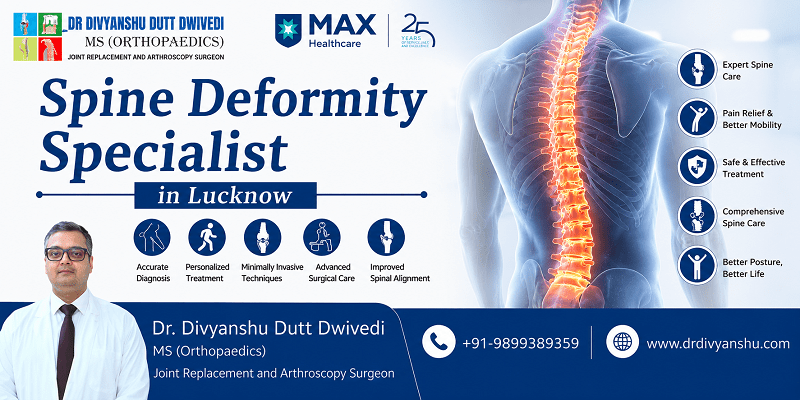
Spine-Deformity-Specilist-in-Lucknow.png

Living with a spinal deformity can affect your posture, mobility, confidence, and overall quality of life. Whether the condition is present from birth or develops over time, receiving timely medical care is essential to prevent further complications. If you are looking for a trusted spine deformity specialist in Lucknow, Dr. Divyanshu Dutt Dwivedi provides comprehensive evaluation and advanced treatment for children, adults, and elderly patients experiencing spinal deformities.

With a patient-focused approach, modern diagnostic techniques, and evidence-based treatment plans, he aims to restore spinal alignment, relieve pain, and improve daily function. Whether your condition requires conservative care or surgery, every treatment plan is tailored to your specific needs, ensuring the best possible outcome.

Spine Deformity Specialist in Lucknow

A healthy spine plays a vital role in maintaining balance, supporting body movement, and protecting the spinal cord. Any abnormal curvature or misalignment of the spine can lead to discomfort, restricted movement, and long-term complications if left untreated. As an experienced spine deformity specialist in Lucknow, Dr. Divyanshu Dutt Dwivedi offers accurate diagnoses and personalized treatment for a wide range of spinal deformities using the latest medical practices.

His goal is not only to correct spinal alignment but also to improve posture, reduce pain, restore mobility, and enhance the patient’s overall quality of life. Patients of all age groups receive compassionate care with treatment plans designed around their condition, lifestyle, and recovery goals.

Meet Dr. Divyanshu Dutt Dwivedi—Experienced Spine Deformity Doctor in Lucknow

Dr. Divyanshu Dutt Dwivedi Banner
Dr. Divyanshu Dutt Dwivedi

Choosing the right specialist is one of the most important decisions when dealing with a spinal condition. Dr. Divyanshu Dutt Dwivedi is a trusted spine deformity doctor in Lucknow known for providing comprehensive care for both simple and complex spine disorders. He combines detailed clinical assessment with advanced imaging techniques to identify the exact cause of spinal deformities and recommend the most suitable treatment.

His approach focuses on preserving spinal function whenever possible through non-surgical methods while offering advanced surgical correction for severe cases. Every patient receives clear guidance, transparent communication, and dedicated follow-up care throughout the treatment journey.

What is a Spine Deformity?

A spine deformity refers to an abnormal curvature or alignment of the spinal column that changes the natural shape of the back. Instead of maintaining its normal curves, the spine may bend sideways, become excessively rounded, or curve inward beyond the normal range. These conditions can affect children, adolescents, adults, and older individuals due to congenital abnormalities, growth-related conditions, injuries, infections, degenerative diseases, or osteoporosis.

A qualified spine deformity surgeon in Lucknow can evaluate the severity of the condition through physical examination and imaging studies before recommending the most effective treatment plan based on the patient’s age, symptoms, and overall spinal health.

Common Types of Spine Deformities

Different spinal deformities require different treatment approaches depending on their severity and underlying cause. Some of the most frequently diagnosed conditions include:

Spine Deformity Description
Scoliosis Sideways curvature of the spine that may worsen during growth.
Kyphosis Excessive forward rounding of the upper back causing a hunched posture.
Lordosis Increased inward curvature of the lower back leading to imbalance.
Congenital Spine Deformity Present at birth due to abnormal spinal development.
Adult Degenerative Scoliosis Curvature caused by age-related degeneration of spinal discs and joints.
Neuromuscular Spine Deformity Associated with neurological or muscular disorders affecting spinal stability.

Early diagnosis by the best spine deformity specialist in Lucknow helps prevent progression and improves treatment success.

Signs and Symptoms of Spine Deformity

The symptoms of spinal deformity vary depending on the type and severity of the condition. Some individuals may experience only mild discomfort, while others develop significant pain and movement limitations. Common symptoms include:

  • Persistent back or neck pain
  • Uneven shoulders or hips
  • Visible spinal curvature
  • Rounded upper back
  • Leaning to one side while standing
  • Difficulty maintaining proper posture
  • Muscle stiffness and fatigue
  • Reduced flexibility
  • Tingling or numbness due to nerve compression
  • Difficulty walking or prolonged standing

If these symptoms continue or worsen over time, consulting a spine deformity treatment expert in Lucknow can help identify the underlying problem before permanent damage occurs.

What Causes Spine Deformities?

Spinal deformities can develop for several reasons, and identifying the root cause is essential for effective treatment. Some conditions are present from birth, while others appear later due to aging, injuries, or medical disorders. Common causes include:

  • Congenital spinal abnormalities
  • Degenerative disc disease
  • Osteoporosis
  • Spinal fractures
  • Poor posture over many years
  • Neuromuscular disorders
  • Spinal infections
  • Spinal tumors
  • Previous spinal injuries
  • Genetic factors
  • Age-related wear and tear

As an experienced orthopedic spine surgeon in Lucknow, Dr. Divyanshu Dutt Dwivedi carefully evaluates each patient’s medical history and diagnostic reports to determine the exact cause before planning treatment.

Who is at Risk of Developing a Spine Deformity?

Although anyone can develop a spinal deformity, certain individuals are at greater risk due to age, genetics, lifestyle, or existing medical conditions. Understanding these risk factors allows for early detection and preventive care.

People at higher risk include:

  • Children during rapid growth phases
  • Teenagers with adolescent scoliosis
  • Older adults with osteoporosis
  • Individuals with a family history of scoliosis
  • Patients with spinal trauma
  • People with degenerative spine disorders
  • Individuals with neuromuscular diseases
  • Patients with poor bone health
  • People with long-standing poor posture
  • Those with previous spinal surgery

Regular spine evaluations can help detect problems early, reducing the likelihood of severe deformity and complex surgical intervention.

When Should You Consult a Spine Deformity Specialist?

Many people ignore persistent back pain or changes in posture until the condition becomes severe. Early consultation with the best spine deformity specialist in Lucknow improves treatment outcomes and may help avoid surgery. You should seek medical attention if you notice persistent back pain, visible spinal curvature, difficulty walking, numbness in the limbs, loss of balance, or progressive posture changes. Children with uneven shoulders or adults experiencing increasing spinal curvature should also undergo prompt evaluation. Timely diagnosis allows for appropriate treatment, preventing complications such as nerve compression, breathing difficulties, reduced mobility, and chronic pain while improving long-term spinal health.

Why Early Diagnosis Makes a Difference

Spinal deformities often progress gradually, making early diagnosis essential for successful treatment. Detecting the condition at an early stage allows doctors to monitor spinal changes, recommend physiotherapy, prescribe corrective braces when needed, and delay or prevent surgery. Advanced imaging techniques such as digital X-ray, MRI, CT scan, and Cobb angle measurement help determine the severity of spinal curvature and guide treatment decisions. Dr. Divyanshu Dutt Dwivedi, a trusted spine deformity specialist in Lucknow, focuses on identifying the condition early and providing evidence-based treatment plans that preserve spinal function, reduce pain, and improve posture while helping patients return to an active and healthy lifestyle.

Types of Spine Deformities Treated by Dr. Divyanshu Dutt Dwivedi

Every spinal deformity is different and requires a personalized treatment approach based on the patient’s age, symptoms, spinal flexibility, and overall health. As a trusted spine deformity specialist in Lucknow, Dr. Divyanshu Dutt Dwivedi treats both common and complex spinal conditions using evidence-based treatment protocols. Some patients respond well to conservative management, while others may require advanced surgical correction to restore spinal alignment and prevent long-term complications. Early diagnosis and regular monitoring play a crucial role in achieving successful outcomes, reducing pain, and improving posture, mobility, and overall quality of life.

Scoliosis Treatment in Lucknow

Scoliosis is one of the most common spinal deformities, characterized by an abnormal sideways curvature of the spine. It may occur during childhood, adolescence, or adulthood and can vary from mild to severe. While some patients experience no symptoms, others may develop uneven shoulders, an uneven waistline, back pain, or difficulty maintaining posture. As an experienced scoliosis specialist in Lucknow, Dr. Divyanshu Dutt Dwivedi carefully evaluates the degree of spinal curvature using physical examination and imaging studies. Treatment options may include observation, physiotherapy, spinal bracing, or corrective surgery depending on the progression of the condition and the patient’s functional needs.

Kyphosis Treatment

Kyphosis refers to an excessive forward curvature of the upper spine, giving the back a rounded or hunched appearance. Mild kyphosis may not cause significant problems, but severe cases can result in chronic back pain, stiffness, fatigue, breathing difficulty, and reduced mobility. As a skilled spine deformity doctor in Lucknow, Dr. Divyanshu Dutt Dwivedi identifies the underlying cause, whether congenital, postural, degenerative, or related to osteoporosis. Treatment focuses on relieving symptoms, improving posture, strengthening spinal muscles, and restoring spinal balance through physiotherapy, medication, bracing, or surgery when conservative treatment is no longer effective.

Lordosis Treatment

Lordosis, often called swayback, is an exaggerated inward curve of the lower spine. Although a mild curve is normal, excessive curvature may cause lower back pain, muscle tightness, posture imbalance, and difficulty standing for long periods. As an experienced orthopedic spine surgeon in Lucknow, Dr. Divyanshu Dutt Dwivedi performs a detailed assessment to determine whether the condition is caused by obesity, muscle weakness, congenital abnormalities, spinal degeneration, or other medical conditions. Depending on the severity, treatment may include posture correction exercises, weight management, physiotherapy, medication, or advanced surgical correction for severe spinal instability.

Adult Degenerative Spine Deformity

Age-related wear and tear of the spine can gradually lead to spinal deformities, particularly in adults over the age of fifty. Degeneration of spinal discs, arthritis, weakened ligaments, and osteoporosis may contribute to abnormal spinal curvature and chronic pain. Patients often experience lower back pain, leg pain, numbness, or difficulty walking due to nerve compression. Dr. Divyanshu Dutt Dwivedi, a leading spine deformity surgeon in Lucknow, provides comprehensive evaluation using advanced imaging and develops individualized treatment plans. Depending on the condition, patients may benefit from medication, physiotherapy, spinal injections, or minimally invasive spine surgery.

Congenital Spine Deformities

Some children are born with abnormalities in spinal development that may become more noticeable as they grow. Congenital spine deformities occur due to improper formation or separation of the vertebrae during fetal development. Early diagnosis is important because untreated deformities can worsen during growth and affect posture, mobility, and lung function. As a trusted best spine deformity specialist in Lucknow, Dr. Divyanshu Dutt Dwivedi closely monitors spinal development through regular clinical examinations and imaging. Treatment may involve observation, bracing, or corrective surgery to prevent progression and support healthy spinal growth.

Neuromuscular Spine Deformities

Neuromuscular conditions such as cerebral palsy, muscular dystrophy, and spina bifida can weaken the muscles supporting the spine, leading to progressive spinal deformities. These conditions often require specialized care because the deformity may continue to worsen with time. Patients may experience poor sitting balance, posture abnormalities, pain, and reduced mobility. Dr. Divyanshu Dutt Dwivedi develops multidisciplinary treatment plans that combine orthopedic care, physiotherapy, rehabilitation, and surgical correction when necessary. The primary goal is to improve spinal stability, enhance daily function, and maximize the patient’s independence and quality of life.

Advanced Diagnosis for Spine Deformities

Accurate diagnosis is the foundation of successful spine deformity treatment in Lucknow. A detailed clinical evaluation helps determine the severity, flexibility, and progression of the spinal curve while identifying any associated neurological symptoms. Dr. Divyanshu Dutt Dwivedi combines clinical expertise with modern diagnostic technology to create an individualized treatment plan for every patient. Early and precise diagnosis not only improves treatment outcomes but also helps prevent irreversible spinal damage, nerve compression, and long-term disability through timely intervention and continuous monitoring.

Diagnostic Tests Used for Spine Evaluation

To understand the exact nature of a spinal deformity, several advanced investigations may be recommended.

Diagnostic Test Purpose
Digital X-ray Measures spinal curvature and overall alignment.
MRI Spine Evaluates spinal cord, discs, nerves, and soft tissues.
CT Scan Provides detailed images of spinal bones before surgery.
Cobb Angle Measurement Determines the severity of scoliosis and spinal curvature.
Neurological Examination Assesses nerve function, muscle strength, and reflexes.
Posture & Gait Analysis Evaluates balance, posture, and walking pattern.

These investigations enable a spine deformity specialist in Lucknow to recommend the most appropriate treatment strategy based on the patient’s condition.

How Dr. Divyanshu Dutt Dwivedi Plans Personalized Treatment

No two patients experience spinal deformities in the same way. Factors such as age, degree of curvature, symptoms, activity level, bone quality, and neurological involvement all influence treatment decisions. Dr. Divyanshu Dutt Dwivedi follows a patient-centered approach that emphasizes accurate diagnosis, shared decision-making, and evidence-based care. Every treatment plan is designed to relieve pain, improve spinal alignment, restore mobility, and help patients return to their daily activities with confidence. Whether conservative management or surgery is required, each step is carefully explained to ensure patients and their families understand the expected outcomes and recovery process.

When Should Surgery Be Considered for a Spine Deformity?

Not every spinal deformity requires surgery. However, surgical intervention may become necessary when conservative treatment no longer controls symptoms or when the spinal curvature continues to progress. Surgery is generally considered in the following situations:

  • Persistent or severe back pain affecting daily life
  • Progressive spinal curvature despite treatment
  • Significant spinal imbalance
  • Nerve compression causing weakness or numbness
  • Difficulty standing or walking
  • Reduced lung function due to severe deformity
  • Failure of physiotherapy or spinal bracing
  • Complex congenital or degenerative spinal deformities

As an experienced spine deformity surgeon in Lucknow, Dr. Divyanshu Dutt Dwivedi carefully evaluates every case before recommending surgery, ensuring that patients receive the safest and most appropriate treatment for their condition.

Comprehensive Spine Deformity Treatment in Lucknow

The treatment of a spinal deformity depends on several factors, including the patient’s age, the type and severity of the deformity, symptoms, overall health, and the rate at which the condition is progressing. As an experienced spine deformity specialist in Lucknow, Dr. Divyanshu Dutt Dwivedi believes in providing personalized treatment rather than a one-size-fits-all approach. The primary objectives are to reduce pain, prevent further progression, restore spinal alignment, improve posture, protect nerve function, and help patients regain an active lifestyle. Whenever possible, conservative treatments are recommended first, while advanced surgical procedures are reserved for patients who require corrective intervention.

Non-Surgical Spine Deformity Treatment

Many patients with mild to moderate spinal deformities can achieve significant improvement without surgery. Early intervention helps slow disease progression, reduce discomfort, and improve spinal function. As a trusted spine deformity doctor in Lucknow, Dr. Divyanshu Dutt Dwivedi designs customized non-surgical treatment plans based on individual needs and clinical findings. These conservative approaches focus on relieving symptoms, strengthening spinal muscles, improving flexibility, and enhancing overall quality of life while minimizing the need for surgical correction whenever appropriate.

Common Non-Surgical Treatment Options

  • Personalized physiotherapy programs
  • Posture correction exercises
  • Core muscle strengthening
  • Pain management medications
  • Activity modification
  • Lifestyle and ergonomic guidance
  • Weight management counseling
  • Spinal bracing (for selected patients)
  • Bone health management for osteoporosis
  • Regular clinical monitoring and follow-up

Consistent adherence to these treatments often helps patients maintain spinal stability and continue their daily activities comfortably.

Role of Physiotherapy and Rehabilitation

Physiotherapy is one of the most effective components of spine deformity treatment in Lucknow, especially during the early and moderate stages of spinal curvature. A structured rehabilitation program improves muscle strength, spinal flexibility, balance, posture, and functional mobility. Under the guidance of Dr. Divyanshu Dutt Dwivedi, rehabilitation plans are tailored according to the patient’s diagnosis, physical condition, and treatment goals. Regular therapeutic exercises not only relieve pain but also enhance spinal support, reduce muscle fatigue, and improve overall body mechanics. Continued rehabilitation after surgery is equally important to achieve optimal recovery and restore confidence in daily movement.

Advanced Surgical Treatment for Spine Deformities

Surgery may be recommended when spinal deformities continue to progress, cause severe pain, compress spinal nerves, or significantly affect posture and mobility. As a highly skilled spine deformity surgeon in Lucknow, Dr. Divyanshu Dutt Dwivedi performs advanced corrective procedures using modern surgical techniques aimed at improving spinal alignment while preserving nerve function. Careful preoperative planning, precision during surgery, and structured postoperative rehabilitation contribute to safer procedures, faster recovery, and long-term improvement in spinal stability and quality of life.

Spine Deformity Surgeries Performed

Depending on the nature of the spinal deformity, different surgical procedures may be recommended. Each surgery is selected after detailed evaluation and discussion with the patient.

Procedure Purpose
Spinal Fusion Surgery Stabilizes the spine and corrects abnormal curvature.
Spinal Decompression Surgery Relieves pressure on compressed spinal nerves.
Corrective Osteotomy Reshapes spinal bones to restore proper alignment.
Spinal Instrumentation Uses rods, screws, and implants to maintain spinal stability.
Complex Spine Reconstruction Treats severe or multi-level spinal deformities.
Revision Spine Surgery Corrects complications from previous spinal operations.

Every surgical recommendation is based on clinical evidence, patient safety, and expected long-term outcomes.

Minimally Invasive Spine Surgery

Advancements in medical technology have transformed the way spinal disorders are treated. Whenever clinically appropriate, Dr. Divyanshu Dutt Dwivedi offers minimally invasive spine surgery to reduce tissue damage and promote quicker recovery. Compared to traditional open surgery, minimally invasive techniques involve smaller incisions, less blood loss, lower infection risk, reduced postoperative pain, and shorter hospital stays. Patients often recover faster and return to their daily activities sooner. As a leading orthopedic spine surgeon in Lucknow, Dr. Dwivedi carefully evaluates whether minimally invasive surgery is suitable based on the patient’s spinal condition, anatomy, and treatment goals.

Advanced Technology for Accurate Spine Care

Modern technology plays an essential role in improving the safety and precision of spinal deformity treatment. Accurate diagnosis, detailed surgical planning, and advanced imaging enable better clinical decision-making and enhanced patient outcomes. Dr. Divyanshu Dutt Dwivedi utilizes contemporary diagnostic methods and evidence-based surgical principles to provide comprehensive spine care. This technology-driven approach helps reduce complications, improve surgical accuracy, and support faster recovery while ensuring every patient receives high-quality treatment tailored to their specific spinal condition.

Technologies Used in Spine Evaluation and Treatment

  • Digital Spine X-ray
  • High-Resolution MRI
  • CT Scan with 3D Reconstruction
  • Cobb Angle Measurement
  • Neurological Assessment
  • Computer-Assisted Surgical Planning
  • Intraoperative Imaging Guidance
  • Advanced Spinal Instrumentation Systems

These technologies contribute to accurate diagnosis, effective treatment planning, and improved long-term results for patients with spinal deformities.

Recovery After Spine Deformity Treatment

Recovery varies depending on the severity of the spinal deformity and the type of treatment performed. Patients receiving conservative treatment often notice gradual improvement through physiotherapy, posture correction, and regular follow-up. Surgical patients require a structured rehabilitation program that focuses on restoring mobility, strengthening spinal muscles, and safely returning to normal activities. As a dedicated best spine deformity specialist in Lucknow, Dr. Divyanshu Dutt Dwivedi closely monitors every stage of recovery, ensuring that healing progresses smoothly while minimizing complications. Regular follow-up appointments also help evaluate spinal alignment and maintain long-term treatment success.

Benefits of Early Spine Deformity Treatment

Timely diagnosis and treatment significantly improve the chances of successful recovery and help prevent long-term complications. Seeking care from an experienced spine deformity specialist in Lucknow allows patients to receive the right treatment before the condition progresses.

Key benefits include the following:

  • Relief from chronic back and neck pain
  • Improved spinal alignment
  • Better posture and body balance
  • Enhanced flexibility and movement
  • Prevention of curve progression
  • Reduced nerve compression
  • Improved walking and daily activities
  • Better lung function in severe deformities
  • Higher quality of life
  • Reduced likelihood of complex surgery when diagnosed early

Early intervention enables patients to maintain independence and enjoy a healthier, more active lifestyle.

Why Choose Dr. Divyanshu for Spine Deformity Treatment in Lucknow?

Selecting the right specialist is essential for achieving the best possible outcome. Dr. Divyanshu Dutt Dwivedi is recognized for providing patient-focused, evidence-based spine care with an emphasis on accurate diagnosis, personalized treatment, and long-term recovery. Every patient receives detailed clinical evaluation, transparent treatment discussions, and continuous support throughout the care journey. Whether managing mild scoliosis or performing complex spinal reconstruction, his commitment is to deliver safe, effective, and compassionate care. Patients trust him for his clinical expertise, ethical approach, and dedication to restoring spinal health while improving comfort, mobility, and overall quality of life.

Why Patients Trust Dr. Divyanshu Dutt Dwivedi

  • Comprehensive spine evaluation
  • Personalized treatment plans
  • Expertise in complex spinal deformities
  • Focus on minimally invasive techniques
  • Evidence-based clinical approach
  • Advanced diagnostic facilities
  • Patient education and counseling
  • Compassionate follow-up care
  • Commitment to long-term spinal health
  • Comprehensive rehabilitation guidance

Patient-Centered Approach to Spine Care

Every patient experiences spinal deformity differently, which is why individualized care is essential for achieving the best outcomes. As a leading spine deformity specialist in Lucknow, Dr. Divyanshu Dutt Dwivedi believes in understanding each patient’s symptoms, lifestyle, medical history, and treatment goals before recommending any intervention. Every consultation includes a detailed discussion about the diagnosis, available treatment options, expected recovery, and long-term prognosis. This transparent and collaborative approach empowers patients to make informed decisions while building confidence throughout their treatment journey. Personalized care also helps improve recovery, enhance patient satisfaction, and achieve sustainable improvements in spinal health.

What to Expect During Your First Consultation

Your first appointment is an important step toward understanding your spinal condition and receiving the right treatment. Dr. Divyanshu Dutt Dwivedi, an experienced spine deformity doctor in Lucknow, performs a comprehensive evaluation to identify the cause and severity of the deformity. The consultation focuses on understanding your symptoms, reviewing previous medical records, and planning further investigations if required. Patients also receive guidance on lifestyle modifications and treatment options based on their individual condition.

During your consultation, you can expect:

  • Detailed medical history review
  • Physical and neurological examination
  • Posture and spinal alignment assessment
  • Review of previous X-rays, MRI, or CT scans
  • Recommendation for additional investigations, if required
  • Discussion of non-surgical and surgical treatment options
  • Opportunity to ask questions and understand the treatment plan

Preparing for Your Appointment

Being well-prepared for your consultation helps your specialist make an accurate diagnosis and recommend the most suitable treatment. Patients are encouraged to bring all previous medical reports, imaging studies, and a list of current medications. It is also helpful to note when symptoms began, activities that worsen the pain, and any previous treatments received. As a trusted best spine deformity specialist in Lucknow, Dr. Divyanshu Dutt Dwivedi carefully reviews every detail to develop a personalized treatment strategy that addresses both the underlying condition and the patient’s long-term health goals.

Lifestyle Tips to Support Spine Health

While medical treatment plays a key role, maintaining a healthy lifestyle can significantly improve spinal health and reduce the risk of worsening deformities. Daily habits that support posture, flexibility, and bone strength can complement professional treatment and enhance recovery. Patients receiving spine deformity treatment in Lucknow are encouraged to adopt healthy routines that protect the spine and improve overall well-being.

Healthy Habits for a Stronger Spine

  • Maintain proper sitting and standing posture
  • Exercise regularly under professional guidance
  • Strengthen core and back muscles
  • Maintain a healthy body weight
  • Consume a calcium- and vitamin D-rich diet
  • Avoid smoking and excessive alcohol consumption
  • Lift heavy objects using correct techniques
  • Sleep on a supportive mattress
  • Stay physically active throughout the day
  • Attend regular follow-up appointments

Possible Complications of Untreated Spine Deformities

Ignoring spinal deformities may lead to progressive curvature and complications that affect daily life. As the condition worsens, patients may experience persistent pain, reduced mobility, nerve compression, and difficulty maintaining balance. In severe cases, spinal deformities can affect lung capacity, walking ability, and overall physical function. Consulting an experienced spine deformity surgeon in Lucknow at the earliest stage allows timely intervention and helps prevent irreversible damage. Early diagnosis and appropriate treatment significantly reduce the risk of long-term disability while improving overall quality of life and functional independence.

Why Early Intervention Matters

Early diagnosis provides the greatest opportunity to control spinal deformities before they become severe. Children and adolescents benefit from regular monitoring during growth, while adults with age-related spinal degeneration can slow disease progression through timely treatment. Dr. Divyanshu Dutt Dwivedi, a highly experienced spine deformity specialist in Lucknow, emphasizes proactive spine care because early intervention often reduces the need for complex surgery. Patients who receive prompt treatment generally experience better pain relief, improved posture, enhanced mobility, and faster recovery compared with those who delay seeking medical attention.

Book Your Consultation with Dr. Divyanshu Dutt Dwivedi

If you or a family member is experiencing persistent back pain, abnormal spinal curvature, posture changes, or symptoms of scoliosis, kyphosis, or lordosis, seeking expert medical advice is the first step toward recovery. Dr. Divyanshu Dutt Dwivedi, a trusted spine deformity specialist in Lucknow, provides comprehensive evaluation, advanced diagnostic services, and personalized treatment plans tailored to every patient’s needs. Whether conservative care or complex spine surgery is required, you will receive compassionate, evidence-based treatment focused on restoring mobility, reducing pain, and improving quality of life.

📞 Call Now: +91-9899389359

Conclusion

A spinal deformity should never be ignored, as timely diagnosis and appropriate treatment can prevent long-term complications and significantly improve daily life. Whether the condition is congenital, age-related, or caused by injury, choosing an experienced, the best spine deformity specialist in Lucknow is essential for achieving the best possible outcome. Dr. Divyanshu Dutt Dwivedi combines clinical expertise, modern diagnostic techniques, and personalized treatment strategies to deliver comprehensive spine care for patients of all ages. From early diagnosis and conservative management to advanced corrective surgery and rehabilitation, every stage of treatment is guided by a commitment to patient safety, functional recovery, and long-term spinal health.

FAQs About Spine Deformity Doctor in Lucknow

  1. Who is the best spine deformity specialist in Lucknow?

Dr. Divyanshu Dutt Dwivedi is a trusted spine deformity specialist in Lucknow, offering expert diagnosis, non-surgical management, and advanced spine deformity correction tailored to each patient’s condition.

  1. What conditions does a spine deformity specialist treat?

A spine deformity specialist treats scoliosis, kyphosis, lordosis, congenital spine deformities, adult degenerative scoliosis, spinal imbalance, and complex spinal curvature disorders using personalized treatment approaches.

  1. When should I consult a spine deformity doctor in Lucknow?

Consult a spine deformity doctor in Lucknow if you experience persistent back pain, abnormal posture, uneven shoulders, spinal curvature, difficulty walking, numbness, or worsening spinal alignment.

  1. Can scoliosis be treated without surgery?

Yes. Mild to moderate scoliosis can often be managed with physiotherapy, posture correction, spinal bracing, and regular monitoring. Surgery is recommended only for progressive or severe spinal curves.

  1. What is the most common spinal deformity?

Scoliosis is the most common spinal deformity, causing a sideways curvature of the spine. Early diagnosis and treatment improve posture, reduce pain, and prevent curve progression.

  1. How is a spinal deformity diagnosed?

Diagnosis includes a physical examination, digital X-ray, MRI, CT scan, neurological assessment, and Cobb angle measurement to evaluate spinal curvature and determine the most appropriate treatment plan.

  1. Is spine deformity surgery safe?

Yes. Modern spine deformity surgery is safe when performed by an experienced spine deformity surgeon in Lucknow, using advanced techniques, precise planning, and comprehensive post-operative rehabilitation.

  1. What are the symptoms of a spinal deformity?

Common symptoms include back pain, uneven shoulders, abnormal posture, visible spinal curvature, muscle fatigue, reduced flexibility, numbness, balance problems, and difficulty standing or walking comfortably.

  1. How long does recovery take after spine deformity surgery?

Recovery varies by procedure and patient health. Most patients begin walking within a few days and continue rehabilitation for several weeks to restore mobility, strength, and spinal function.

  1. Can adults develop spinal deformities?

Yes. Adults can develop spinal deformities due to aging, degenerative disc disease, osteoporosis, arthritis, previous spinal injuries, or untreated scoliosis that progresses over time.

  1. Why should I choose Dr. Divyanshu Dutt Dwivedi for spine deformity treatment in Lucknow?

Dr. Divyanshu Dutt Dwivedi provides evidence-based spine deformity treatment in Lucknow, combining advanced diagnostics, personalized care, minimally invasive techniques, and comprehensive rehabilitation for optimal patient outcomes.

  1. How can I book an appointment with a spine deformity specialist in Lucknow?

To consult Dr. Divyanshu Dutt Dwivedi, call +91-9899389359 to schedule an appointment for expert evaluation, personalized treatment, and comprehensive spine deformity care in Lucknow.


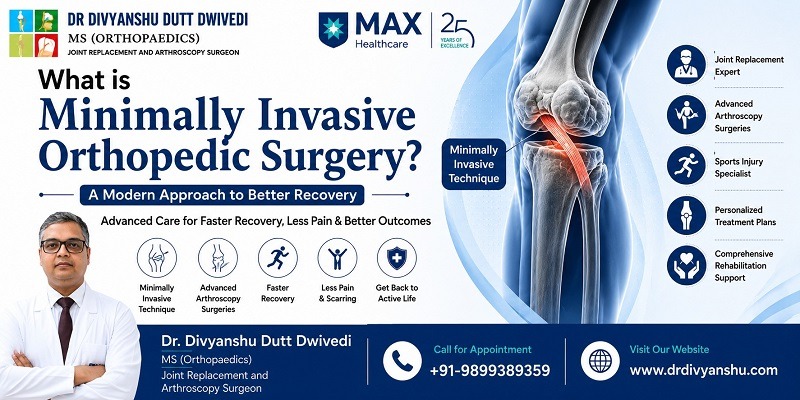
What-is-Minimally-Invasive-Orthopedic-Surgery.jpg

Minimally invasive orthopedic surgery is an advanced surgical technique that allows orthopedic surgeons to diagnose and treat bone, joint, muscle, tendon, and ligament conditions through small incisions instead of large surgical cuts. Unlike traditional open surgery, this modern approach uses specialized instruments, high-definition cameras, arthroscopes, and advanced imaging systems to perform precise procedures while causing minimal damage to healthy tissues. As a result, patients often experience less pain, reduced blood loss, smaller scars, shorter hospital stays, and a quicker recovery. Today, minimally invasive orthopedic surgery is widely used for treating sports injuries, arthritis, cartilage damage, ligament tears, and various joint disorders. It has become a preferred treatment option because it combines surgical precision with improved patient comfort and faster rehabilitation.

Understanding Minimally Invasive Orthopedic Surgery

Minimally invasive orthopedic surgery focuses on preserving healthy muscles, ligaments, and surrounding tissues while treating the affected area. Instead of exposing the entire joint or bone, the surgeon makes one or more small incisions through which specialized surgical instruments and a tiny camera are inserted. The live images displayed on a monitor help the surgeon perform the procedure with exceptional accuracy. This approach reduces unnecessary tissue disruption and lowers the chances of complications compared to conventional surgery. Whether treating knee injuries, shoulder disorders, hip problems, or fractures, minimally invasive orthopedic surgery has transformed orthopedic care by improving surgical outcomes and helping patients return to their daily activities more quickly.

How Does Minimally Invasive Orthopedic Surgery Work?

The procedure begins with a detailed clinical evaluation, physical examination, and advanced diagnostic imaging such as X-rays, MRI scans, or CT scans to identify the exact cause of the problem. During surgery, the orthopedic surgeon creates small incisions that allow an arthroscope or specialized surgical instruments to reach the affected joint or bone. The camera provides a magnified view of the internal structures, enabling precise treatment while protecting nearby healthy tissues. Depending on the condition, the surgeon may repair torn ligaments, remove damaged cartilage, stabilize fractures, or reconstruct injured joints. This precise approach makes minimally invasive orthopedic surgery a highly effective solution for many orthopedic conditions with improved recovery and long-term functional outcomes.

Why is Minimally Invasive Orthopedic Surgery Becoming More Popular?

The growing popularity of minimally invasive orthopedic surgery is driven by its ability to deliver excellent clinical outcomes with fewer complications than traditional techniques. Smaller incisions reduce tissue trauma, leading to less postoperative pain, minimal scarring, and a lower risk of infection. Patients can often begin gentle movement soon after surgery, which supports faster rehabilitation and improved joint function. Advances in arthroscopic technology, robotic-assisted systems, and surgical imaging have further enhanced the accuracy and safety of these procedures. As more patients seek treatments that minimize recovery time without compromising effectiveness, minimally Invasive orthopedic surgery continues to become the preferred choice for both orthopedic surgeons and individuals requiring advanced musculoskeletal care.

Conditions That Can Be Treated with Minimally Invasive Orthopedic Surgery

Many orthopedic conditions can now be managed successfully through minimally invasive orthopedic surgery. The suitability of the procedure depends on the patient’s diagnosis, overall health, and severity of the condition. Common conditions include:

  • ACL Tears and Ligament Injuries
  • Meniscus Tears
  • Rotator Cuff Tears
  • Shoulder Instability
  • Hip Labral Tears
  • Sports Injuries
  • Cartilage Damage
  • Early Osteoarthritis
  • Joint Impingement
  • Loose Bone or Cartilage Fragments
  • Certain Fractures
  • Selected Knee and Hip Replacement Procedures

Early consultation with an experienced orthopedic surgeon helps determine whether minimally invasive orthopedic surgery is the most appropriate treatment option for your condition.

Is Minimally Invasive Orthopedic Surgery the Same as Arthroscopy?

Many people assume that minimally invasive orthopedic surgery and arthroscopy are identical, but they are not exactly the same. Arthroscopy is one of the most commonly used minimally invasive techniques in orthopedics. It involves inserting a small camera, called an arthroscope, into the joint to diagnose and treat problems through tiny incisions. However, minimally invasive orthopedic surgery is a broader category that also includes minimally invasive joint replacement, fracture fixation, tendon repair, and other advanced procedures performed with specialized instruments. In simple terms, arthroscopy is a type of minimally invasive orthopedic surgery, but not every minimally invasive orthopedic procedure is arthroscopic.

Key Benefits of Minimally Invasive Orthopedic Surgery

Compared with conventional open surgery, minimally invasive orthopedic surgery offers several important advantages that improve both the surgical experience and recovery process.

Benefit How It Helps Patients
Smaller Incisions Reduced scarring and improved cosmetic appearance
Less Tissue Damage Preserves healthy muscles and ligaments
Reduced Blood Loss Lowers the need for blood transfusions
Less Postoperative Pain Improves patient comfort after surgery
Lower Infection Risk Smaller wounds heal more efficiently
Faster Recovery Enables earlier return to work and daily activities
Shorter Hospital Stay Many procedures are performed as day-care or short-stay surgeries
Better Joint Function Supports improved mobility and long-term outcomes

These benefits make minimally invasive orthopedic surgery an increasingly preferred option for eligible patients seeking effective treatment with a smoother recovery.

Traditional Open Surgery vs. Minimally Invasive Orthopedic Surgery

Choosing between traditional open surgery and minimally invasive orthopedic surgery depends on the patient’s condition, the complexity of the injury, and the surgeon’s clinical assessment. Traditional surgery usually requires a larger incision to expose the affected joint or bone, whereas minimally invasive orthopedic surgery uses small incisions with advanced cameras and specialized instruments to complete the procedure accurately. This modern approach causes less damage to surrounding muscles and soft tissues, resulting in reduced pain and quicker recovery. Although open surgery is still necessary for some complex orthopedic conditions, many patients with ligament injuries, cartilage damage, sports injuries, and early joint disorders can benefit from minimally invasive techniques that promote faster healing and improved mobility.

Difference Between Traditional Surgery and Minimally Invasive Orthopedic Surgery

The following comparison highlights why many orthopedic specialists recommend minimally invasive orthopedic surgery whenever it is clinically appropriate.

Feature Traditional Open Surgery Minimally Invasive Orthopedic Surgery
Incision Size Large Small
Tissue Damage Higher Minimal
Blood Loss More Less
Pain After Surgery More Less
Risk of Infection Higher Lower
Hospital Stay Longer Shorter
Recovery Time Slower Faster
Cosmetic Appearance Larger Scar Smaller Scar
Return to Daily Activities Delayed Earlier

While this comparison explains the general differences, the final treatment decision should always be based on a thorough evaluation by an experienced orthopedic surgeon.

Types of Minimally Invasive Orthopedic Surgery

Modern orthopedic care includes several procedures performed through minimally invasive techniques. Each procedure is designed to treat a specific condition while preserving healthy tissues and reducing recovery time. Advances in arthroscopic technology, image-guided surgery, and precision instruments have expanded the range of conditions that can be treated with minimally invasive orthopedic surgery. The most appropriate procedure depends on the affected joint, the severity of the injury, and the patient’s activity level. An orthopedic specialist will recommend the best option after reviewing medical history, imaging reports, and clinical findings.

Common minimally invasive orthopedic procedures include:

Each of these procedures aims to restore movement, relieve pain, and help patients return to their normal activities safely.

What Conditions Are Best Treated with Minimally Invasive Orthopedic Surgery?

Not every orthopedic condition requires open surgery. Many common bone and joint disorders can now be treated successfully using minimally invasive orthopedic surgery, particularly when diagnosed early. These techniques are especially effective for treating sports injuries, ligament tears, tendon damage, and joint problems without extensive surgical exposure. Early treatment not only improves outcomes but also reduces the risk of long-term joint damage. Consulting an orthopedic specialist at the first sign of persistent pain or limited movement allows patients to explore minimally invasive options before the condition becomes more advanced.

Common conditions include:

  • ACL Tears
  • PCL Injuries
  • Meniscus Tears
  • Shoulder Dislocation
  • Rotator Cuff Tears
  • Hip Labral Tears
  • Cartilage Injuries
  • Joint Impingement
  • Loose Cartilage Fragments
  • Sports Injuries
  • Early Knee Osteoarthritis
  • Early Hip Arthritis
  • Selected Fractures
  • Joint Instability

Candidate for Minimally Invasive Orthopedic Surgery

Although minimally invasive orthopedic surgery offers several advantages, it is not suitable for everyone. The ideal candidate is someone whose condition can be effectively treated through smaller incisions without compromising surgical safety or outcomes. Factors such as age, overall health, severity of joint damage, previous surgeries, and lifestyle all influence treatment planning. A detailed examination combined with imaging tests helps the orthopedic surgeon determine whether a minimally invasive approach is appropriate. Choosing the right candidate is essential for achieving the best possible recovery, restoring joint function, and minimizing the risk of complications after surgery.

You may be an ideal candidate if you:

  • Have persistent joint pain despite conservative treatment.
  • Have a sports injury affecting the knee, shoulder, or hip.
  • Have a torn ligament or meniscus.
  • Need cartilage repair or joint preservation surgery.
  • Have early-stage arthritis requiring surgical treatment.
  • Want a quicker recovery and earlier return to daily activities.
  • Are medically fit for surgery.
  • Have realistic expectations regarding rehabilitation and outcomes.

Who May Not Be Suitable for Minimally Invasive Orthopedic Surgery?

While many patients benefit from minimally invasive orthopedic surgery, certain conditions may require traditional open procedures to ensure complete treatment. Extensive joint destruction, severe deformities, complicated fractures, or multiple previous surgeries may limit the effectiveness of minimally invasive techniques. Some patients may also have underlying medical conditions that increase surgical risks. During the consultation, the orthopedic surgeon carefully evaluates all clinical factors before recommending the safest and most effective treatment plan. The goal is always to select the approach that provides the best long-term outcome rather than simply choosing the least invasive option.

Patients who may not be suitable include those with:

  • Severe joint deformities.
  • Advanced arthritis requiring complex reconstruction.
  • Extensive bone loss.
  • Highly complicated fractures.
  • Active joint infections.
  • Certain uncontrolled medical conditions.
  • Revision surgeries with significant scar tissue.
  • Conditions where open surgery offers better visibility and surgical control.

How to Prepare for Minimally Invasive Orthopedic Surgery

Proper preparation plays an important role in ensuring a safe procedure and smooth recovery after minimally invasive orthopedic surgery. Before surgery, your orthopedic surgeon will review your medical history, medications, allergies, and previous treatments. Blood investigations, ECG, X-rays, MRI scans, or other imaging studies may be recommended to assist with surgical planning. Patients are usually advised to stop certain medications, follow fasting instructions, and arrange transportation after discharge. Maintaining good nutrition, controlling diabetes or blood pressure, and performing recommended prehabilitation exercises can also improve recovery. Following your surgeon’s instructions carefully helps reduce complications and prepares your body for successful healing.

What Happens During Minimally Invasive Orthopedic Surgery?

The exact surgical steps depend on the condition being treated, but most minimally invasive orthopedic surgery procedures follow a similar process. After anesthesia is administered, the surgeon makes one or more small incisions near the affected joint. A miniature camera and specialized instruments are introduced through these openings to visualize and treat the damaged structures with precision. The surgeon repairs ligaments, removes damaged tissue, restores cartilage, or stabilizes bones while preserving healthy surrounding tissues. Once the procedure is complete, the incisions are closed with fine sutures or adhesive strips, and the patient is transferred to recovery. Many minimally invasive procedures allow patients to return home on the same day or after a short hospital stay.

Recovery Timeline After Minimally Invasive Orthopedic Surgery

Recovery after minimally invasive orthopedic surgery is generally faster than traditional surgery because smaller incisions cause less tissue damage. Healing varies depending on the procedure, age, overall health, and rehabilitation. Following your surgeon’s advice and physiotherapy plan helps restore mobility, reduce pain, and improve long-term outcomes. Most patients gradually resume normal activities within a few weeks, while complete recovery may take several months for complex procedures.

  • First 24–48 Hours: Pain and swelling are managed, and gentle movement begins under medical supervision to promote circulation and prevent stiffness.
  • Week 1–2: Walking with support improves, daily activities gradually resume, and wound healing continues while following prescribed medications and physiotherapy.
  • Week 3–6: Joint flexibility, muscle strength, and mobility improve significantly through structured rehabilitation and regular follow-up visits.
  • Month 2–3: Most patients return to work, driving, and moderate daily activities with improved confidence and joint function.

Rehabilitation After Minimally Invasive Orthopedic Surgery

Rehabilitation is a vital part of minimally invasive orthopedic surgery because it helps restore joint strength, flexibility, and normal movement. A personalized physiotherapy program reduces stiffness, improves balance, and lowers the risk of future injuries. Consistent rehabilitation allows patients to recover safely, regain independence, and achieve the best long-term surgical outcomes.

  • Pain Management: Medications, ice therapy, and guided exercises help reduce pain, swelling, and post-operative discomfort during the early recovery phase.
  • Range of Motion Exercises: Gentle stretching exercises gradually restore joint flexibility and improve comfortable movement without placing excessive stress on healing tissues.
  • Strengthening Exercises: Targeted muscle strengthening improves joint stability, supports healing, and helps patients return safely to normal physical activities.
  • Regular Follow-up: Scheduled orthopedic consultations monitor healing progress, assess recovery milestones, and modify rehabilitation plans whenever necessary.

Are There Any Risks Associated with Minimally Invasive Orthopedic Surgery?

Although minimally invasive orthopedic surgery is considered safe, every surgical procedure carries some potential risks. Most complications are uncommon and can be minimized through proper surgical planning, experienced orthopedic care, and following post-operative instructions. Understanding these risks helps patients make informed treatment decisions and prepares them for a smooth recovery.

  • Infection: Although uncommon, infections may occur and are usually prevented with sterile surgical techniques and prescribed antibiotics.
  • Bleeding or Swelling: Mild bleeding and temporary swelling are expected after surgery and usually improve with medication and proper post-operative care.
  • Joint Stiffness: Limited movement may occur temporarily but generally improves with early physiotherapy and regular rehabilitation exercises.
  • Nerve or Blood Vessel Injury: Rare complications involving nearby nerves or blood vessels are minimized through precise surgical techniques and experienced orthopedic expertise.

What Is the Success Rate of Minimally Invasive Orthopedic Surgery?

The success rate of minimally invasive orthopedic surgery is generally high when the procedure is performed for the right indication by an experienced orthopedic specialist. Outcomes depend on several factors, including the patient’s age, the severity of the condition, overall health, surgical technique, and adherence to rehabilitation. Many patients experience significant pain relief, improved joint stability, better mobility, and a faster return to daily activities. Early diagnosis and timely intervention also contribute to successful long-term results. Following the recommended rehabilitation program remains one of the most important factors in achieving the best possible outcome after surgery.

Common Myths About Minimally Invasive Orthopedic Surgery

Many misconceptions prevent patients from considering minimally invasive orthopedic surgery, even though it has become a well-established treatment option for various orthopedic conditions. Understanding the facts can help patients make confident healthcare decisions based on medical evidence rather than misinformation. While minimally invasive procedures offer many benefits, they are not a shortcut or a replacement for proper rehabilitation. Every treatment plan should be personalized according to the patient’s diagnosis and overall health.

Myth vs. Fact

  • Myth: Small incisions mean the surgery is less effective.
    Fact: The effectiveness depends on the surgical technique and the condition being treated, not the size of the incision.
  • Myth: Recovery is immediate after surgery.
    Fact: Although recovery is usually faster, proper rehabilitation is still necessary.
  • Myth: Every orthopedic problem can be treated with minimally invasive surgery.
    Fact: Some complex conditions still require traditional open surgery.
  • Myth: The procedure is only suitable for athletes.
    Fact: It can benefit people of different ages and activity levels when clinically appropriate.

When Should You Consult an Orthopedic Surgeon?

Persistent joint pain should never be ignored, especially when it begins to affect your daily routine, work, or physical activities. Early consultation allows orthopedic conditions to be diagnosed before they become more severe, increasing the possibility of treatment through minimally invasive orthopedic surgery. Delaying medical care may lead to further joint damage and longer recovery times. If non-surgical treatments such as medication, physiotherapy, or lifestyle modifications have not provided adequate relief, a specialist can determine whether advanced minimally invasive treatment is the right option for you.

You should consult an orthopedic surgeon if you experience:

  • Persistent joint pain lasting several weeks
  • Recurrent knee, shoulder, or hip injuries
  • Joint instability or repeated dislocations
  • Difficulty walking or climbing stairs
  • Swelling that does not improve
  • Limited joint movement
  • Sports injuries
  • Pain that interferes with sleep or daily activities

Meet Dr. Divyanshu Dutt Dwivedi—Minimally Invasive Orthopedic Surgery in Lucknow

If you are looking for expert care for joint pain, sports injuries, or advanced orthopedic treatment, Dr. Divyanshu Dutt Dwivedi offers comprehensive evaluation and personalized treatment using modern orthopedic techniques, including minimally invasive orthopedic surgery. He focuses on accurate diagnosis, evidence-based treatment planning, and patient-centered care to help individuals regain mobility with minimal disruption to healthy tissues. Whether you require arthroscopic surgery, ligament reconstruction, cartilage repair, or minimally invasive joint procedures, every treatment plan is tailored to your specific condition and lifestyle. For expert consultation and personalized orthopedic care, schedule an appointment with Dr. Divyanshu Dutt Dwivedi or call +91-9899389359 to discuss the most suitable treatment options for your orthopedic condition.

Conclusion

Minimally invasive orthopedic surgery has transformed the way many orthopedic conditions are treated by combining advanced surgical technology with precise techniques that protect healthy tissues. Compared with conventional surgery, it often offers smaller incisions, less pain, reduced blood loss, quicker recovery, and earlier return to daily life. However, the success of any orthopedic procedure depends on accurate diagnosis, selecting the right surgical approach, and following a structured rehabilitation program. If you are experiencing persistent joint pain, sports injuries, or reduced mobility, consulting an experienced orthopedic specialist can help you understand whether minimally invasive orthopedic surgery is the right treatment option. Early intervention often leads to better outcomes, improved joint function, and a higher quality of life.

FAQs About Minimally Invasive Orthopedic Surgery in Lucknow

  1. What is Minimally Invasive Orthopedic Surgery?

Minimally invasive orthopedic surgery uses small incisions, specialized instruments, and advanced imaging to treat bone and joint problems with less pain, faster recovery, and minimal tissue damage.

  1. Is minimally invasive orthopedic surgery better than traditional surgery?

For many orthopedic conditions, minimally invasive orthopedic surgery offers smaller scars, reduced pain, shorter hospital stays, and quicker recovery. However, complex cases may still require traditional open surgery.

  1. What conditions can be treated with minimally invasive orthopedic surgery?

It can treat ACL tears, meniscus injuries, rotator cuff tears, cartilage damage, shoulder instability, hip disorders, sports injuries, selected fractures, and certain joint replacement procedures.

  1. How long does recovery take after minimally invasive orthopedic surgery?

Most patients recover faster than with open surgery. Recovery may take a few weeks for minor procedures and several months for ligament reconstruction or joint replacement surgeries.

  1. Is arthroscopy the same as minimally invasive orthopedic surgery?

Arthroscopy is one type of minimally invasive orthopedic surgery that uses a tiny camera to diagnose and treat joint problems through small incisions with high surgical precision.

  1. Who is the ideal candidate for minimally invasive orthopedic surgery?

Patients with sports injuries, ligament tears, cartilage damage, early arthritis, or persistent joint pain may benefit after a complete orthopedic evaluation and imaging assessment.

  1. What are the benefits of minimally invasive orthopedic surgery?

Key benefits include less pain, smaller incisions, reduced blood loss, lower infection risk, minimal scarring, shorter hospital stay, and quicker return to normal daily activities.

  1. Is minimally invasive orthopedic surgery safe?

Yes. When performed by an experienced orthopedic surgeon, minimally invasive orthopedic surgery is considered safe and delivers excellent outcomes with fewer complications and faster rehabilitation.

  1. Does minimally invasive orthopedic surgery leave permanent scars?

Small incisions usually result in minimal, less noticeable scars. Proper wound care, healthy healing, and following your surgeon’s advice help achieve better cosmetic outcomes.

  1. Can knee replacement be performed using minimally invasive surgery?

Yes. Selected patients may undergo minimally invasive knee replacement using smaller incisions, reducing muscle damage and supporting quicker recovery compared with conventional surgical techniques.

  1. When should I consult an orthopedic surgeon for minimally invasive orthopedic surgery?

Consult an orthopedic surgeon if you have persistent joint pain, sports injuries, swelling, limited movement, or symptoms that do not improve with medication or physiotherapy.

  1. Where can I get expert minimally invasive orthopedic surgery in Lucknow?

If you are looking for minimally invasive orthopedic surgery in Lucknow, consult Dr. Divyanshu Dutt Dwivedi for a comprehensive evaluation, personalized treatment, and advanced orthopedic care. Call +91-9899389359 to book an appointment.


Rotator-Cuff-Tear-Surgeon-in-Lucknow-Dr.-Divyanshu-Dutt-Dwivedi.jpg

Shoulder pain that does not improve with rest can affect your daily routine, work, sports activities, and even sleep. A rotator cuff tear is one of the most common shoulder injuries that causes pain, weakness, and restricted movement. If left untreated, it may worsen over time and make simple tasks like lifting your arm or carrying objects difficult. Consulting an experienced Rotator Cuff Tear Surgeon in Lucknow at the right time can help prevent further damage and restore normal shoulder function.

Dr. Divyanshu Dutt Dwivedi is a trusted Shoulder Surgeon in Lucknow with expertise in diagnosing and treating partial and complete rotator cuff tears using advanced, evidence-based techniques. Whether your injury is caused by sports, an accident, or age-related tendon degeneration, you receive a personalized treatment plan focused on long-term recovery. From accurate diagnosis and conservative treatment to advanced Rotator Cuff Surgery in Lucknow through minimally invasive arthroscopic techniques, every step is designed to help you regain strength, reduce pain, and return to an active lifestyle. Call +91-9899389359 today to schedule your consultation.

Meet Dr. Divyanshu Dutt Dwivedi – Trusted Rotator Cuff Tear Surgeon in Lucknow

Rotator Cuff Tear Surgeon in Lucknow
Dr. Divyanshu Dutt Dwivedi

When choosing a Best Rotator Cuff Tear Surgeon in Lucknow, experience, clinical expertise, and patient-focused care play an important role. Dr. Divyanshu Dutt Dwivedi is a highly skilled orthopedic and shoulder specialist known for providing advanced treatment for complex shoulder injuries, including rotator cuff tears, shoulder instability, sports injuries, and tendon disorders. He follows internationally accepted treatment protocols and recommends surgery only when it is medically necessary, ensuring every patient receives honest guidance and personalized care.

Patients appreciate his detailed evaluations, clear communication, and commitment to achieving the best possible outcomes through both non-surgical and surgical treatment options. As an experienced Shoulder Specialist in Lucknow, Dr. Divyanshu specializes in modern arthroscopic shoulder surgery, which involves smaller incisions, less pain, faster recovery, and improved shoulder function. His patient-centric approach, advanced surgical skills, and comprehensive rehabilitation guidance make him a preferred choice for individuals seeking effective Rotator Cuff Tear Treatment in Lucknow.

What Is a Rotator Cuff Tear?

A rotator cuff tear is an injury to the group of four muscles and tendons that stabilize the shoulder joint and allow smooth arm movement. These tendons connect the shoulder muscles to the upper arm bone and help perform activities such as lifting, reaching, throwing, and rotating the arm. A tear may occur suddenly after trauma or develop gradually due to repetitive shoulder movements, aging, or tendon wear.

Depending on the severity, the tendon may be partially damaged or completely detached from the bone. Early diagnosis by an experienced Rotator Cuff Tear Surgeon in Lucknow is essential to prevent the tear from becoming larger and causing permanent shoulder weakness. With timely evaluation and appropriate treatment, many patients recover successfully and regain normal shoulder mobility without long-term complications.

Types of Rotator Cuff Tears

Understanding the type of injury helps determine the most suitable treatment plan. An experienced Shoulder Surgeon in Lucknow carefully evaluates the extent of tendon damage before recommending conservative management or surgery.

Type Description
Partial Rotator Cuff Tear The tendon is damaged but not completely detached from the bone.
Full-Thickness Rotator Cuff Tear The tendon is completely torn, creating a gap that often requires surgical repair.
Acute Tear Occurs suddenly due to trauma, falls, or heavy lifting.
Degenerative Tear Develops gradually because of aging, repetitive overhead activities, or tendon degeneration.

Identifying the exact type of tear allows Dr. Divyanshu Dutt Dwivedi to recommend the most effective Rotator Cuff Tear Treatment while preserving shoulder strength, flexibility, and long-term function.

Common Symptoms of a Rotator Cuff Tear

The symptoms of a rotator cuff injury can vary depending on the size and severity of the tear. Some patients experience mild discomfort, while others struggle with significant pain and limited shoulder movement. If these symptoms continue for several weeks, consulting a Shoulder Specialist in Lucknow is highly recommended.

Common symptoms include:

  • Persistent shoulder pain, especially during movement
  • Pain that becomes worse at night
  • Difficulty lifting or rotating the arm
  • Weakness while carrying objects
  • Clicking or popping sensation in the shoulder
  • Reduced range of shoulder movement
  • Pain during sports or overhead activities
  • Difficulty dressing or combing hair
  • Shoulder stiffness
  • Loss of shoulder strength

Ignoring these warning signs may lead to increased tendon damage, muscle weakness, and more complex treatment in the future.

What Causes a Rotator Cuff Tear?

A rotator cuff tear can develop due to a sudden injury or gradual wear and tear of the shoulder tendons. Athletes, manual workers, older adults, and people performing repetitive overhead activities are at a higher risk of developing this condition. Early assessment by a qualified Rotator Cuff Tear Surgeon in Lucknow helps identify the underlying cause and prevents further deterioration.

The most common causes include:

  • Sports-related shoulder injuries
  • Falling on an outstretched arm
  • Heavy lifting accidents
  • Repetitive overhead work
  • Aging and tendon degeneration
  • Shoulder impingement syndrome
  • Poor shoulder biomechanics
  • Repeated micro-trauma
  • Bone spurs irritating the tendon
  • Previous untreated shoulder injuries

Understanding the root cause allows Dr. Divyanshu Dutt Dwivedi to create a personalized treatment plan that focuses on long-term shoulder health rather than simply relieving symptoms.

Who Is at Higher Risk of Developing a Rotator Cuff Tear?

Although anyone can suffer a shoulder injury, certain individuals have a higher chance of developing a rotator cuff tear due to their age, profession, or lifestyle. Recognizing these risk factors encourages early diagnosis and timely treatment before the condition becomes severe.

People at higher risk include:

  • Athletes involved in cricket, badminton, tennis, or swimming
  • Gym enthusiasts performing heavy shoulder exercises
  • Construction and factory workers
  • Painters and electricians
  • Individuals above 40 years of age
  • People with repetitive overhead movements
  • Patients with previous shoulder injuries
  • Individuals with poor posture
  • People with chronic shoulder impingement
  • Manual laborers performing repetitive lifting

If you belong to any of these groups and experience persistent shoulder pain, consulting Dr. Divyanshu Dutt Dwivedi, an experienced Best Shoulder Surgeon in Lucknow, can help prevent long-term shoulder dysfunction and improve your quality of life.

When Should You Consult a Rotator Cuff Tear Surgeon in Lucknow?

Many people ignore shoulder pain, assuming it will improve with rest or painkillers. However, persistent discomfort can be a sign of a serious tendon injury that requires medical attention. Consulting an experienced Rotator Cuff Tear Surgeon in Lucknow at the right time can help prevent further tendon damage and improve the chances of a successful recovery. Early diagnosis also reduces the risk of long-term stiffness, muscle weakness, and loss of shoulder function.

You should consult Dr. Divyanshu Dutt Dwivedi if you experience:

  • Shoulder pain lasting more than two weeks
  • Difficulty lifting or rotating your arm
  • Weakness while carrying objects
  • Pain that disturbs your sleep
  • Clicking or catching sensation in the shoulder
  • Limited shoulder movement
  • Swelling after an injury
  • Pain following a fall or sports injury
  • Difficulty performing overhead activities
  • Shoulder pain that does not improve with medication or physiotherapy

Early consultation ensures timely treatment and helps restore normal shoulder movement before the condition worsens.

How Is a Rotator Cuff Tear Diagnosed?

Accurate diagnosis is the first step toward successful treatment. Dr. Divyanshu Dutt Dwivedi, a trusted Shoulder Specialist in Lucknow, performs a detailed clinical evaluation to determine the severity of the injury and recommend the most appropriate treatment plan. A combination of physical examination and advanced imaging helps confirm the diagnosis and identify associated shoulder problems such as tendon degeneration, impingement, or muscle weakness.

The diagnostic process may include:

Diagnostic Test Purpose
Physical Examination Evaluates pain, strength, flexibility, and shoulder stability
X-ray Detects bone spurs, arthritis, or fractures
MRI Scan Confirms the size and location of the tendon tear
Ultrasound Assesses tendon movement and soft tissue damage
Range of Motion Assessment Measures shoulder flexibility and function

A precise diagnosis allows your Rotator Cuff Tear Surgeon in Lucknow to create a personalized treatment plan based on your age, activity level, and the extent of tendon damage.

Non-Surgical Rotator Cuff Tear Treatment

Not every rotator cuff tear requires surgery. Small or partial tears often respond well to conservative treatment, especially when diagnosed early. The goal of non-surgical treatment is to reduce pain, improve shoulder strength, restore movement, and help patients return to their normal activities. Dr. Divyanshu Dutt Dwivedi carefully evaluates each patient before recommending the most suitable treatment option.

Non-surgical treatment may include:

  • Activity modification to avoid painful movements
  • Anti-inflammatory medications for pain relief
  • Ice therapy to reduce swelling
  • Structured physiotherapy programs
  • Shoulder strengthening exercises
  • Stretching to improve flexibility
  • Lifestyle modifications
  • Ultrasound-guided injections in selected cases
  • Regular follow-up assessments
  • Gradual return to sports and work

Many patients experience significant improvement with conservative care, although larger or complete tears may eventually require Rotator Cuff Surgery in Lucknow for lasting relief.

When Is Rotator Cuff Surgery Recommended?

While conservative treatment works for many patients, surgery becomes necessary when the tendon cannot heal on its own or when shoulder function continues to decline. Delaying surgery for a complete tear may result in tendon retraction, muscle wasting, and reduced surgical success. An experienced Rotator Cuff Tear Surgeon in Lucknow carefully evaluates all clinical findings before recommending surgical intervention.

Surgery is commonly advised when:

  • The tendon is completely torn
  • Pain persists despite several months of conservative treatment
  • Shoulder weakness affects daily activities
  • MRI shows a significant tendon injury
  • The injury is caused by acute trauma
  • The patient is an athlete or performs heavy physical work
  • Shoulder function continues to deteriorate
  • Night pain becomes severe
  • The tear progressively increases in size
  • Quality of life is significantly affected

Timely surgery helps restore tendon function, reduce pain, and improve long-term shoulder strength.

What Is Arthroscopic Rotator Cuff Repair Surgery?

Arthroscopic Rotator Cuff Repair is a minimally invasive surgical procedure used to repair torn shoulder tendons through small incisions. Instead of making a large cut, the surgeon inserts a tiny camera called an arthroscope into the shoulder joint. This provides a clear, magnified view of the damaged tendon, allowing precise repair with specialized instruments. Dr. Divyanshu Dutt Dwivedi, an experienced Arthroscopic Shoulder Surgeon in Lucknow, performs this advanced procedure to ensure accurate tendon repair with minimal disruption to surrounding tissues.

During the surgery, the torn tendon is reattached to the upper arm bone using specially designed anchors and sutures. Because the procedure is minimally invasive, patients usually experience less pain, smaller scars, reduced blood loss, and faster recovery compared to traditional open surgery. Arthroscopic repair is considered the preferred treatment for many rotator cuff tears due to its excellent clinical outcomes and quicker rehabilitation.

Rotator Cuff Tear Surgery Procedure

Rotator Cuff Surgery in Lucknow is performed using advanced arthroscopic techniques to repair damaged shoulder tendons with precision. Dr. Divyanshu Dutt Dwivedi, an experienced Rotator Cuff Tear Surgeon in Lucknow, follows a patient-focused approach to ensure safe treatment and faster recovery. The minimally invasive procedure involves small incisions, resulting in less pain, minimal scarring, and quicker rehabilitation while restoring shoulder strength and mobility.

Step-by-Step Rotator Cuff Tear Surgery Process

  • Step 1: Clinical Evaluation – A detailed consultation and physical examination are performed to assess your symptoms, shoulder movement, and overall condition.
  • Step 2: Diagnostic Imaging – MRI, X-rays, or ultrasound scans are recommended to confirm the rotator cuff tear and evaluate the extent of tendon damage.
  • Step 3: Pre-Surgical Planning – Your medical history, fitness for anesthesia, and treatment plan are carefully reviewed before the procedure.
  • Step 4: Arthroscopic Repair – Small incisions are made to insert a high-definition camera and specialized instruments to repair the torn tendon with surgical anchors.
  • Step 5: Tendon Reconstruction – The damaged tendon is securely reattached to the upper arm bone to restore shoulder stability and function.
  • Step 6: Post-Operative Care – The incisions are closed, a protective sling is applied, and patients receive detailed recovery and pain management instructions.
  • Step 7: Rehabilitation Program – A personalized physiotherapy plan begins gradually to improve flexibility, rebuild shoulder strength, and ensure a safe return to daily activities.

If you are looking for an experienced Rotator Cuff Tear Surgeon in Lucknow, Dr. Divyanshu Dutt Dwivedi offers comprehensive evaluation, advanced Arthroscopic Rotator Cuff Surgery, and complete rehabilitation support. Call +91-9899389359 to book your consultation today.

Benefits of Arthroscopic Rotator Cuff Surgery

Modern arthroscopic surgery has transformed the treatment of shoulder injuries by providing effective tendon repair while minimizing surgical trauma. Patients undergoing Rotator Cuff Surgery in Lucknow through arthroscopy often recover faster and return to daily activities sooner than with conventional open surgery. Dr. Divyanshu Dutt Dwivedi recommends this approach whenever it is clinically appropriate for the patient’s condition.

Key benefits include:

  • Smaller surgical incisions
  • Less postoperative pain
  • Minimal blood loss
  • Reduced risk of infection
  • Better cosmetic results
  • Faster rehabilitation
  • Improved shoulder mobility
  • Shorter hospital stay
  • Early return to work and sports
  • High success rate with proper rehabilitation

The combination of advanced surgical techniques and a structured recovery program helps patients regain strength, flexibility, and confidence in their shoulder movement.

What Happens During Rotator Cuff Surgery?

Understanding the surgical process helps patients feel more confident before the procedure. Dr. Divyanshu Dutt Dwivedi, a trusted Shoulder Surgeon in Lucknow, explains every step of the surgery and recovery plan to ensure patients know what to expect. The procedure is performed using advanced arthroscopic equipment under appropriate anesthesia in a sterile operating environment.

The surgery generally involves:

  1. Administration of anesthesia.
  2. Creation of small arthroscopic incisions.
  3. Insertion of a high-definition camera into the shoulder joint.
  4. Detailed assessment of the damaged tendon and surrounding structures.
  5. Removal of inflamed tissue or bone spurs if required.
  6. Reattachment of the torn tendon using surgical anchors.
  7. Confirmation of tendon stability and shoulder movement.
  8. Closure of the small incisions and application of dressings.

Most patients are discharged according to their overall condition and begin a guided rehabilitation program soon after surgery to achieve the best possible outcome.

Why Early Treatment Makes a Difference

Many patients postpone treatment because the pain seems manageable in the beginning. Unfortunately, untreated rotator cuff tears may enlarge over time, making the tendon more difficult to repair. Early evaluation by a qualified Rotator Cuff Tear Surgeon in Lucknow increases the chances of successful treatment and may even help avoid surgery in selected cases. Prompt care also reduces the risk of chronic shoulder stiffness and muscle weakness.

Seeking treatment early offers several advantages:

  • Prevents progression of the tendon tear
  • Preserves shoulder strength
  • Improves treatment success rates
  • Reduces long-term pain
  • Helps maintain normal shoulder function
  • Minimizes muscle wasting
  • Supports faster rehabilitation
  • Enables an earlier return to daily activities
  • Reduces the likelihood of complex surgery
  • Improves overall quality of life

Choosing timely medical care can make a significant difference in recovery and long-term shoulder health.

Recovery Timeline After Rotator Cuff Surgery in Lucknow

Recovery after Rotator Cuff Surgery in Lucknow is a gradual process that depends on the size of the tear, the surgical technique used, the patient’s overall health, and commitment to rehabilitation. Following your surgeon’s advice and attending physiotherapy sessions are essential for achieving the best possible outcome. Dr. Divyanshu Dutt Dwivedi provides a personalized recovery plan that focuses on safe healing while gradually restoring shoulder strength and mobility.

Recovery Phase What to Expect
Week 1–2 Pain control, sling support, wound care
Week 3–6 Gentle passive shoulder movements under supervision
Week 6–12 Active shoulder exercises and gradual strengthening
Month 3–6 Improved flexibility, muscle strength, and daily activities
After 6 Months Return to sports, heavy work, and full functional recovery in most patients

Every patient heals differently, so regular follow-up appointments help monitor progress and ensure a smooth recovery.

Physiotherapy After Rotator Cuff Tear Surgery

Physiotherapy plays a vital role in restoring shoulder function after Rotator Cuff Surgery. Surgery repairs the damaged tendon, but rehabilitation helps rebuild strength, flexibility, and coordination. Skipping or delaying physiotherapy can slow recovery and affect long-term shoulder movement. Under the guidance of Dr. Divyanshu Dutt Dwivedi, every rehabilitation program is tailored to the patient’s age, activity level, and type of tendon repair.

The rehabilitation program generally focuses on:

  • Pain and swelling management
  • Passive range-of-motion exercises
  • Gradual active shoulder movements
  • Muscle strengthening exercises
  • Scapular stabilization training
  • Flexibility improvement
  • Posture correction
  • Functional activity training
  • Sports-specific rehabilitation
  • Safe return to work and recreational activities

Following the recommended rehabilitation schedule significantly improves the success rate of Rotator Cuff Tear Treatment and helps patients regain confidence in their shoulder movements.

What Is the Rotator Cuff Surgery Cost in Lucknow?

One of the most common concerns among patients is the cost of treatment. The Rotator Cuff Surgery Cost in Lucknow varies because every shoulder injury is different. Factors such as the severity of the tendon tear, type of surgery, hospital facilities, diagnostic investigations, implants used, anesthesia, and rehabilitation requirements all influence the overall treatment cost. Instead of offering a standard estimate, Dr. Divyanshu Dutt Dwivedi recommends a detailed clinical evaluation to prepare a transparent and personalized treatment plan.

The overall cost may depend on:

  • Severity of the tendon tear
  • Arthroscopic or open surgical technique
  • Hospital and operation theatre facilities
  • Type of surgical anchors and implants
  • Diagnostic tests such as MRI and X-rays
  • Hospital stay duration
  • Physiotherapy and rehabilitation program
  • Insurance coverage and policy benefits

For an accurate estimate, patients are encouraged to schedule a consultation and discuss their individual treatment requirements.

Why Choose Dr. Divyanshu as Your Rotator Cuff Tear Surgeon in Lucknow?

Selecting the right surgeon is one of the most important decisions for achieving a successful recovery. Dr. Divyanshu Dutt Dwivedi is recognized for providing comprehensive shoulder care with a strong focus on accurate diagnosis, ethical treatment, advanced surgical techniques, and patient education. Every treatment plan is designed according to the patient’s condition rather than following a one-size-fits-all approach.

Patients choose Dr. Divyanshu Dutt Dwivedi because of:

  • Expertise in advanced shoulder and sports injury treatment
  • Experience in Arthroscopic Shoulder Surgery
  • Evidence-based treatment protocols
  • Personalized treatment planning
  • Honest advice with surgery recommended only when necessary
  • Modern diagnostic and surgical techniques
  • Comprehensive rehabilitation guidance
  • Patient-friendly consultation approach
  • Focus on long-term shoulder function
  • Dedicated post-operative follow-up and care

His commitment to quality treatment has made him a trusted Shoulder Specialist in Lucknow for patients with rotator cuff injuries and other complex shoulder disorders.

Conditions Commonly Treated Along with Rotator Cuff Tears

Many patients with a rotator cuff tear may also have other shoulder conditions that contribute to pain and restricted movement. A thorough evaluation helps identify associated problems so they can be treated simultaneously, improving the overall outcome. As an experienced Shoulder Surgeon in Lucknow, Dr. Divyanshu Dutt Dwivedi provides comprehensive care for a wide range of shoulder disorders.

These conditions include:

  • Shoulder impingement syndrome
  • Frozen shoulder
  • Shoulder instability
  • Labral tears
  • Biceps tendon injuries
  • Shoulder arthritis
  • Recurrent shoulder dislocation
  • Calcific tendonitis
  • Acromioclavicular joint disorders
  • Sports-related shoulder injuries

Treating all associated shoulder problems together helps reduce pain, restore movement, and lower the risk of future complications.

Tips to Prevent a Rotator Cuff Tear

While not every shoulder injury can be prevented, adopting healthy habits can significantly reduce the risk of tendon damage. Prevention is especially important for athletes, fitness enthusiasts, and individuals whose work involves repetitive overhead activities. Following simple shoulder care practices helps maintain tendon strength and joint stability.

Helpful prevention tips include:

  • Perform regular shoulder strengthening exercises
  • Warm up before sports and workouts
  • Avoid sudden heavy lifting
  • Maintain proper posture while working
  • Use correct exercise techniques
  • Take breaks during repetitive activities
  • Improve shoulder flexibility with stretching
  • Manage chronic shoulder pain early
  • Maintain a healthy body weight
  • Consult a Shoulder Specialist in Lucknow if shoulder pain persists

Early attention to shoulder discomfort can prevent small tendon injuries from progressing into complete tears.

Book an Appointment with Dr. Divyanshu Dutt Dwivedi 

Rotator Cuff Surgery in Lucknow is performed using advanced arthroscopic techniques to repair damaged shoulder tendons with precision. Dr. Divyanshu Dutt Dwivedi, an experienced Rotator Cuff Tear Surgeon in Lucknow, begins with a detailed evaluation and imaging to assess the severity of the tear. During the procedure, a tiny camera and specialized instruments are inserted through small incisions to repair and reattach the torn tendon to the bone using surgical anchors. This minimally invasive approach reduces pain, minimizes scarring, shortens hospital stay, and promotes faster recovery. Book your consultation today by calling +91-9899389359 for expert shoulder care and personalized treatment. 


FAQs About Rotator Cuff Tear Surgeon in Lucknow

  1. Who is the best Rotator Cuff Tear Surgeon in Lucknow?

Dr. Divyanshu Dutt Dwivedi is an experienced Rotator Cuff Tear Surgeon in Lucknow, offering advanced diagnosis, arthroscopic shoulder surgery, personalized treatment plans, and comprehensive rehabilitation for long-term shoulder recovery.

  1. What are the early symptoms of a rotator cuff tear?

Common symptoms include persistent shoulder pain, arm weakness, difficulty lifting the arm, night pain, clicking sensations, and reduced shoulder movement. Early diagnosis improves treatment outcomes.

  1. Can a rotator cuff tear heal without surgery?

Small or partial tears often improve with physiotherapy, medication, and lifestyle changes. Complete or severe tendon tears usually require evaluation by a Shoulder Specialist in Lucknow for appropriate treatment.

  1. When should I consult a Shoulder Surgeon in Lucknow?

Consult a shoulder surgeon if pain lasts over two weeks, shoulder weakness increases, movement becomes difficult, or symptoms develop after an injury, sports activity, or accidental fall.

  1. Is arthroscopic rotator cuff surgery better than open surgery?

Arthroscopic surgery uses smaller incisions, causes less pain, reduces recovery time, minimizes scarring, and helps patients return to daily activities faster than traditional open surgery.

  1. How is a rotator cuff tear diagnosed?

Diagnosis includes a physical examination, shoulder movement assessment, X-rays, and MRI scans to determine tendon damage and plan the most effective treatment approach.

  1. How long does recovery take after Rotator Cuff Surgery in Lucknow?

Most patients recover within four to six months, although complete tendon healing depends on tear severity, surgical repair, physiotherapy participation, and adherence to post-operative rehabilitation instructions.

  1. What is the success rate of arthroscopic rotator cuff surgery?

Arthroscopic rotator cuff repair has a high success rate when performed by an experienced Arthroscopic Shoulder Surgeon in Lucknow and followed by a structured rehabilitation program.

  1. What is the cost of Rotator Cuff Surgery in Lucknow?

The surgery cost depends on the tear severity, surgical technique, hospital facilities, implants, diagnostic tests, and rehabilitation requirements. A consultation provides an accurate treatment estimate.

  1. Can I delay treatment for a rotator cuff tear?

Delaying treatment may enlarge the tendon tear, increase shoulder weakness, reduce mobility, and make surgery more complex. Early evaluation helps achieve better recovery and shoulder function.

  1. What activities should I avoid with a rotator cuff tear?

Avoid heavy lifting, repetitive overhead movements, intense sports, and activities that increase shoulder pain until evaluated by an experienced Rotator Cuff Tear Surgeon in Lucknow.

  1. Why choose Dr. Divyanshu Dutt Dwivedi for rotator cuff treatment in Lucknow?

Dr. Divyanshu Dutt Dwivedi provides evidence-based shoulder care, advanced arthroscopic techniques, personalized treatment plans, and complete rehabilitation support to help patients regain pain-free shoulder function.


Knee-Ligament-Injury-Treatment-in-Lucknow.png

A knee ligament injury can make simple activities like walking, climbing stairs, or playing sports difficult and painful. If left untreated, it may lead to chronic knee instability, cartilage damage, and early arthritis. Seeking timely medical care from an experienced orthopedic specialist is essential for restoring normal knee function and preventing long-term complications.

If you are looking for Knee Ligament Injury Treatment in Lucknow, Dr. Divyanshu Dutt Dwivedi offers comprehensive diagnosis and advanced treatment for all types of knee ligament injuries. As a trusted Knee Ligament Surgeon in Lucknow, Knee Ligament Doctor in Lucknow, and Knee Ligament Specialist in Lucknow, he provides personalized treatment plans using the latest arthroscopic techniques. Whether your injury is sports-related or caused by trauma, the goal is to relieve pain, restore stability, and help you return to your active lifestyle safely.

What Are Knee Ligaments?

Knee ligaments are strong bands of connective tissue that connect the bones of the knee joint and provide stability during movement. They control the forward, backward, and side-to-side motion of the knee while supporting activities such as walking, running, jumping, and changing direction. Damage to these ligaments can cause pain, swelling, instability, and difficulty bearing weight.

The four major knee ligaments include:

  • Anterior Cruciate Ligament (ACL) – Controls forward movement of the shin bone.
  • Posterior Cruciate Ligament (PCL) – Prevents the shin bone from moving backward.
  • Medial Collateral Ligament (MCL) – Stabilizes the inner side of the knee.
  • Lateral Collateral Ligament (LCL) – Supports the outer side of the knee.

Early Knee Ligament Injury Treatment in Lucknow helps preserve knee function and reduces the risk of long-term joint damage.

Types of Knee Ligament Injuries

Different ligaments perform different functions, and each type of injury requires a specific treatment approach. A thorough examination and MRI help determine the affected ligament and the severity of the injury.

Ligament Function Common Cause
ACL Prevents forward movement of the tibia Sudden twisting, sports injuries
PCL Prevents backward movement of the tibia Road accidents, direct impact
MCL Stabilizes the inner knee Side impact during sports
LCL Stabilizes the outer knee Direct blow to the inside of the knee

Dr. Divyanshu Dutt Dwivedi carefully evaluates every patient before recommending the most appropriate Knee Ligament Treatment in Lucknow, ensuring personalized care and better recovery outcomes.

Symptoms of a Knee Ligament Injury

The symptoms of a ligament injury vary depending on the affected ligament and the severity of the tear. While some patients experience immediate pain after an injury, others notice instability or swelling over the following hours.

Common symptoms include:

  • Sudden knee pain after an injury
  • A popping sound at the time of injury
  • Swelling around the knee joint
  • Difficulty walking or bearing weight
  • Knee instability or giving way
  • Reduced range of motion
  • Pain while climbing stairs
  • Difficulty running or playing sports
  • Stiffness in the knee joint

If these symptoms persist, consult Dr. Divyanshu Dutt Dwivedi, an experienced Knee Ligament Doctor in Lucknow, for an accurate diagnosis and timely treatment.

Common Causes and Risk Factors

Knee ligament injuries can occur during sports, accidents, or everyday activities that place excessive stress on the knee joint. Understanding the cause of the injury helps determine the most effective treatment plan.

Common causes include:

  • Sports involving sudden turning movements
  • Football, cricket, badminton, basketball, and volleyball
  • Road traffic accidents
  • Falls from height
  • Direct impact to the knee
  • Sudden stopping while running
  • Landing awkwardly after a jump
  • Weak thigh and leg muscles
  • Previous knee injuries
  • Obesity, which increases pressure on the knee joint

Early evaluation and Knee Ligament Injury Treatment in Lucknow can prevent further damage and improve the chances of a successful recovery, whether through conservative management or advanced arthroscopic surgery.

Grades of Knee Ligament Injuries

Knee ligament injuries are classified according to the extent of damage. Identifying the injury grade helps determine whether conservative treatment or Knee Ligament Surgery in Lucknow is the most suitable option. A detailed clinical examination and MRI scan provide valuable information about the severity of the injury and help create an individualized treatment plan.

Grade Description Recommended Treatment
Grade I Mild stretching of the ligament without a tear Rest, medication, physiotherapy
Grade II Partial ligament tear with moderate instability Knee brace, rehabilitation, or surgery in selected cases
Grade III Complete ligament tear with significant instability Knee Ligament Repair Surgery in Lucknow or ligament reconstruction

Early consultation with Dr. Divyanshu Dutt Dwivedi, a trusted Knee Ligament Specialist in Lucknow, improves the chances of restoring knee stability and preventing long-term complications.

When Should You See a Knee Ligament Doctor in Lucknow?

Many people continue their daily routine despite knee pain, believing it will improve with time. However, delaying treatment may worsen the ligament injury and increase the risk of cartilage damage, meniscus tears, and early arthritis. Prompt evaluation is especially important after a sports injury or road accident.

You should consult a Knee Ligament Doctor in Lucknow if you experience:

  • Severe knee pain after twisting or falling
  • Persistent swelling that does not improve
  • A popping sound at the time of injury
  • Knee instability or frequent giving way
  • Difficulty walking or standing
  • Inability to fully bend or straighten the knee
  • Recurrent pain during physical activity
  • Limited participation in sports due to knee discomfort

Seeking timely Knee Ligament Injury Treatment in Lucknow allows early diagnosis and improves the success of both non-surgical and surgical treatment.

Diagnosis of Knee Ligament Injuries

An accurate diagnosis is the first step toward effective treatment. Dr. Divyanshu Dutt Dwivedi performs a comprehensive evaluation to identify the injured ligament, assess knee stability, and determine the severity of the damage before recommending the most appropriate treatment.

Diagnosis generally includes:

  • Detailed medical history and injury assessment
  • Physical examination of the knee
  • Ligament stability tests
  • Digital X-rays to rule out fractures
  • MRI scan to evaluate ligament tears, meniscus injuries, and cartilage damage

MRI is considered the gold standard for diagnosing ligament injuries because it provides detailed images of the soft tissues within the knee. Early diagnosis enables timely Knee Ligament Treatment in Lucknow, helping patients recover faster and reduce the risk of future joint problems.

Non-Surgical Knee Ligament Treatment

Not every ligament injury requires surgery. Mild sprains and partial ligament tears often respond well to conservative treatment when started early. The treatment plan depends on the injured ligament, activity level, and degree of knee instability.

Non-surgical treatment may include:

  • Rest and activity modification
  • Ice application to reduce swelling
  • Anti-inflammatory medications
  • Knee braces for additional support
  • Physiotherapy to strengthen muscles
  • Balance and coordination exercises
  • Gradual return to normal activities

Patients with persistent instability, complete ligament tears, or high physical demands may require Knee Ligament Surgery in Lucknow for optimal recovery. Dr. Divyanshu Dutt Dwivedi carefully evaluates each case before recommending surgery, ensuring that treatment is tailored to the patient’s specific condition and lifestyle.

When Is Knee Ligament Surgery in Lucknow Recommended?

While many mild ligament injuries improve with rehabilitation, some patients require surgery to restore knee stability and prevent long-term joint damage. The decision depends on the type of ligament injury, severity of the tear, activity level, age, and overall health of the patient.

Your orthopedic surgeon may recommend Knee Ligament Surgery in Lucknow if you have:

  • A complete ACL, PCL, MCL, or LCL tear
  • Persistent knee instability despite physiotherapy
  • Combined ligament and meniscus injuries
  • Difficulty walking or performing daily activities
  • Recurrent knee giving way
  • Sports-related injuries requiring full knee function
  • Failure of conservative treatment
  • Young and physically active lifestyle

Dr. Divyanshu Dutt Dwivedi, an experienced Knee Ligament Surgeon in Lucknow, recommends surgery only after a detailed clinical assessment and MRI evaluation to ensure the best long-term outcome.

What Is Arthroscopic Knee Ligament Injury Treatment in Lucknow?

Arthroscopy is a modern, minimally invasive surgical technique used to diagnose and treat knee ligament injuries through small incisions. A tiny camera called an arthroscope is inserted into the knee joint, allowing the surgeon to clearly visualize the damaged ligament and perform precise repair or reconstruction.

Benefits of arthroscopic surgery include:

  • Small incisions with minimal scarring
  • Less post-operative pain
  • Reduced blood loss
  • Lower risk of infection
  • Faster recovery
  • Shorter hospital stay
  • Better visualization of the knee joint
  • Early return to daily activities

As a trusted Knee Ligament Specialist in Lucknow, Dr. Divyanshu Dutt Dwivedi performs advanced arthroscopic procedures with a focus on restoring knee stability while preserving healthy joint structures.

Step-by-Step Procedure of Knee Ligament Surgery

Understanding the surgical process helps patients feel more confident before treatment. Arthroscopic ligament surgery is performed under appropriate anesthesia and is carefully planned according to the injured ligament and the patient’s functional needs.

The procedure generally includes:

  1. Administration of anesthesia for patient comfort.
  2. Small keyhole incisions around the knee.
  3. Insertion of an arthroscope to examine the joint.
  4. Assessment of ligament damage and associated injuries.
  5. Repair or reconstruction of the torn ligament using advanced surgical techniques.
  6. Confirmation of knee stability and proper ligament tension.
  7. Closure of the incisions with sutures and application of a sterile dressing.

Most patients are discharged on the same day or within 24 hours, depending on the complexity of the surgery and their overall condition.

Benefits of Knee Ligament Injury Treatment in Lucknow

Timely treatment helps restore knee function, reduce pain, and prevent future joint problems. Whether managed conservatively or surgically, the primary goal is to regain stability and allow patients to return to an active lifestyle.

Key benefits include:

  • Relief from knee pain and instability
  • Restoration of normal knee movement
  • Improved balance and joint stability
  • Reduced risk of cartilage and meniscus damage
  • Better athletic performance after recovery
  • Lower chances of developing early osteoarthritis
  • Faster return to work and sports
  • Improved long-term knee health

With comprehensive care from Dr. Divyanshu Dutt Dwivedi, patients receive personalized treatment plans that focus on lasting recovery, safe rehabilitation, and excellent functional outcomes.

ACL Reconstruction Surgery

The Anterior Cruciate Ligament (ACL) is one of the most commonly injured knee ligaments, especially among athletes and physically active individuals. A complete ACL tear often requires surgical reconstruction because the ligament has limited ability to heal on its own. ACL Reconstruction Surgery replaces the damaged ligament with a graft, restoring knee stability and helping patients return to sports and daily activities.

Dr. Divyanshu Dutt Dwivedi performs advanced arthroscopic ACL reconstruction using modern surgical techniques that ensure precise graft placement and long-term joint stability. As an experienced Knee Ligament Doctor in Lucknow, he also evaluates associated injuries such as meniscus tears or cartilage damage and treats them during the same procedure whenever required. Early reconstruction followed by structured rehabilitation significantly improves recovery and reduces the risk of recurrent knee instability.

Recovery After Knee Ligament Injury Treatment in Lucknow

Recovery after Knee Ligament Injury Treatment in Lucknow depends on the type of ligament injured, the treatment performed, and the patient’s commitment to rehabilitation. Following the prescribed recovery plan helps restore strength, stability, and normal knee function while reducing the risk of re-injury.

A typical recovery timeline includes:

  • First 2 Weeks: Pain and swelling gradually reduce, and gentle knee movement begins.
  • 2–6 Weeks: Walking improves with guided physiotherapy and strengthening exercises.
  • 6–12 Weeks: Muscle strength, balance, and knee flexibility continue to improve.
  • 3–6 Months: Most patients resume daily activities, while athletes gradually return to sports after medical clearance.

Dr. Divyanshu Dutt Dwivedi closely monitors recovery at every stage to ensure safe healing and the best possible functional outcome.

Physiotherapy and Rehabilitation

Physiotherapy is one of the most important parts of successful Knee Ligament Injury Treatment in Lucknow. A structured rehabilitation program strengthens the muscles around the knee, restores flexibility, and improves balance, allowing patients to return to their normal lifestyle with confidence.

The rehabilitation program generally includes:

  • Pain and swelling management
  • Range of motion exercises
  • Quadriceps and hamstring strengthening
  • Balance and coordination training
  • Gait correction and walking practice
  • Functional and sports-specific exercises
  • Gradual return to physical activities

Patients are advised to follow the rehabilitation schedule carefully and attend regular follow-up appointments. Consistent physiotherapy plays a vital role in achieving long-term knee stability and preventing future ligament injuries.

Possible Risks and Complications

Although modern arthroscopic procedures are considered safe, every surgical treatment carries some potential risks. Choosing an experienced Knee Ligament Surgeon in Lucknow and following post-operative instructions significantly reduces the likelihood of complications.

Possible risks include:

  • Infection
  • Bleeding
  • Blood clot formation
  • Knee stiffness
  • Temporary swelling
  • Graft failure or ligament re-tear
  • Delayed healing
  • Rare nerve or blood vessel injury

With advanced surgical techniques, sterile operating conditions, and personalized rehabilitation, Dr. Divyanshu Dutt Dwivedi strives to minimize these risks and provide the highest standard of orthopedic care.

Success Rate of Knee Ligament Injury Treatment

The success of Knee Ligament Injury Treatment in Lucknow depends on early diagnosis, accurate surgical technique, proper rehabilitation, and patient commitment to recovery. Most patients regain excellent knee stability and return to their daily routine or sports after completing their rehabilitation program.

Factors that improve treatment outcomes include:

  • Early orthopedic consultation
  • Accurate MRI diagnosis
  • Advanced arthroscopic surgery
  • Timely ligament reconstruction when required
  • Dedicated physiotherapy
  • Healthy body weight and active lifestyle
  • Following post-operative instructions

Under the expert care of Dr. Divyanshu Dutt Dwivedi, patients benefit from evidence-based treatment focused on restoring knee function, improving mobility, and achieving long-term joint health.

Cost of Knee Ligament Injury Treatment in Lucknow

The cost of Knee Ligament Injury Treatment in Lucknow varies depending on the injured ligament, the severity of the tear, diagnostic investigations, surgical technique, implants, hospital facilities, and rehabilitation requirements. Every patient requires an individualized treatment plan, so the overall cost may differ from case to case.

The treatment cost may include:

  • Orthopedic consultation
  • Clinical examination
  • MRI and diagnostic investigations
  • Arthroscopic ligament surgery, if required
  • Surgical implants or grafts
  • Hospital charges
  • Medicines
  • Physiotherapy and follow-up visits

For an accurate diagnosis, personalized treatment plan, and cost estimate, consult Dr. Divyanshu Dutt Dwivedi. To book your appointment, call +91-9899389359.

Why Choose Dr. Divyanshu Dutt Dwivedi for Knee Ligament Injury Treatment in Lucknow?

Choosing the right orthopedic specialist plays a crucial role in achieving a successful recovery after a knee ligament injury. Dr. Divyanshu Dutt Dwivedi is committed to providing evidence-based orthopedic care with a strong focus on accurate diagnosis, minimally invasive treatment, and long-term joint preservation. As an experienced Knee Ligament Surgeon in Lucknow, Knee Ligament Doctor in Lucknow, and Knee Ligament Specialist in Lucknow, he offers personalized treatment plans for patients of all age groups.

Why Patients Trust Dr. Divyanshu Dutt Dwivedi

  • Expertise in Knee Ligament Injury Treatment in Lucknow
  • Advanced arthroscopic ligament reconstruction techniques
  • Personalized treatment for ACL, PCL, MCL, and LCL injuries
  • Comprehensive sports injury management
  • Modern diagnostic and rehabilitation protocols
  • Patient-focused treatment with transparent communication
  • Complete care from diagnosis to recovery
  • Emphasis on faster rehabilitation and long-term knee stability

Whether you are an athlete, working professional, or senior citizen, you receive individualized care aimed at restoring confidence, mobility, and an active lifestyle.

About Dr. Divyanshu Dutt Dwivedi

Dr. Divyanshu Dutt Dwivedi Banner
Dr. Divyanshu Dutt Dwivedi

Dr. Divyanshu Dutt Dwivedi is a highly skilled orthopedic and arthroscopy specialist with extensive experience in treating knee ligament injuries, sports-related trauma, and complex joint conditions. He specializes in minimally invasive arthroscopic procedures that help patients recover faster while preserving the natural function of the knee joint.

His treatment philosophy focuses on delivering personalized care based on detailed clinical evaluation, advanced imaging, and evidence-based treatment protocols. Every patient receives a customized treatment plan designed to reduce pain, improve mobility, and support long-term joint health.

Areas of Expertise

  • Knee Ligament Injury Treatment
  • ACL Reconstruction Surgery
  • PCL, MCL, and LCL Injury Management
  • Arthroscopic Knee Surgery
  • Sports Injury Treatment
  • Meniscus Repair Surgery
  • Cartilage Restoration Procedures
  • Shoulder Arthroscopy
  • Fracture and Trauma Management
  • Comprehensive Rehabilitation and Return-to-Sports Programs

For expert consultation, diagnosis, and advanced treatment, contact Dr. Divyanshu Dutt Dwivedi at +91-9899389359.

Book an Appointment for Knee Ligament Injury Treatment in Lucknow

Persistent knee pain, instability, or swelling should never be ignored. Early diagnosis and appropriate treatment can prevent long-term joint damage and help you return to an active, pain-free lifestyle. If you are looking for expert Knee Ligament Injury Treatment in Lucknow, Dr. Divyanshu Dutt Dwivedi offers comprehensive care using advanced arthroscopic techniques and evidence-based treatment protocols.

From accurate diagnosis and personalized treatment planning to minimally invasive surgery and guided rehabilitation, every stage of your care is focused on restoring knee strength, stability, and mobility. Whether you have an ACL, PCL, MCL, or LCL injury, you can expect compassionate care and modern orthopedic solutions tailored to your needs.

Call +91-9899389359 today to schedule your consultation with Dr. Divyanshu Dutt Dwivedi and take the first step toward a stronger, healthier, and pain-free knee.

FAQs For Knee Ligaments Injury Treatment in Lucknow

  1. What is the best treatment for a knee ligament injury?

The best treatment depends on the type and severity of the injury. Mild ligament sprains often improve with rest, medication, and physiotherapy, while complete tears may require Knee Ligament Surgery in Lucknow to restore stability.

  1. Can a torn knee ligament heal without surgery?

Partial ligament tears can often heal with conservative treatment. However, complete ACL and certain complex ligament injuries usually require surgical reconstruction for optimal knee function.

  1. How do I know if I have a ligament tear?

Common signs include a popping sound during injury, severe knee pain, swelling, instability, difficulty walking, and limited range of motion. An MRI scan confirms the diagnosis.

  1. How long does Knee Ligament Surgery take?

Most arthroscopic ligament reconstruction procedures are completed within 60 to 120 minutes, depending on the complexity of the injury.

  1. Is arthroscopic ligament surgery safe?

Yes. Arthroscopic surgery is considered a safe and minimally invasive procedure with smaller incisions, less pain, faster recovery, and a lower risk of complications compared to traditional open surgery.

  1. When can I walk after ligament surgery?

Most patients begin walking with support shortly after surgery. Your orthopedic surgeon will recommend weight-bearing based on the type of ligament repaired or reconstructed.

  1. How long is the recovery after ligament reconstruction?

Recovery generally takes six to nine months, although athletes may require additional rehabilitation before returning to competitive sports.

  1. What happens if a ligament tear is left untreated?

Untreated ligament injuries may cause chronic knee instability, repeated injuries, cartilage damage, meniscus tears, and an increased risk of developing osteoarthritis.

  1. Can I return to sports after treatment?

Yes. With proper surgery, rehabilitation, and medical clearance, many patients successfully return to sports and physically demanding activities.

  1. Why choose Dr. Divyanshu Dutt Dwivedi for Knee Ligament Injury Treatment in Lucknow?

Dr. Divyanshu Dutt Dwivedi provides comprehensive orthopedic care using advanced arthroscopic techniques, personalized treatment plans, and structured rehabilitation programs to help patients achieve the best possible recovery and long-term knee health.


ACL-Reconstruction-Surgeon-in-Lucknow.jpg

An ACL (Anterior Cruciate Ligament) injury can affect your ability to walk, run, or perform daily activities comfortably. It commonly occurs during sports, sudden twists, falls, or road accidents, causing pain, swelling, and knee instability. If left untreated, an ACL tear may lead to repeated injuries and long-term joint damage. Consulting an experienced ACL Reconstruction Surgeon in Lucknow at the right time can help restore knee stability and prevent further complications.

Dr. Divyanshu Dutt Dwivedi, an experienced ACL Reconstruction Surgeon in Lucknow, provides advanced ACL Reconstruction Surgery in Lucknow using modern arthroscopic techniques and personalized treatment plans. From accurate diagnosis to post-operative rehabilitation, every stage of care is focused on achieving the best possible recovery. If you are experiencing knee pain or instability after an ACL injury, call +91-9899389359 today to book your consultation and receive expert orthopedic care.

What is an ACL Injury?

The Anterior Cruciate Ligament (ACL) is one of the four major ligaments of the knee that connects the thigh bone (femur) to the shin bone (tibia). It plays a crucial role in maintaining knee stability, controlling rotational movements, and preventing the shin bone from sliding forward during walking, running, jumping, and sudden directional changes.

An ACL injury usually occurs when the ligament is stretched or torn due to a sudden twist, awkward landing, direct impact, or rapid change in direction. These injuries are common among athletes participating in football, cricket, badminton, basketball, volleyball, kabaddi, and other sports that involve pivoting or jumping. However, ACL tears can also occur during everyday activities, falls, or road traffic accidents.

A complete ACL tear often requires consultation with an experienced ACL Reconstruction Surgeon in Lucknow, especially when knee instability affects routine activities or sports participation. Early diagnosis and timely treatment help prevent further damage to the cartilage, meniscus, and surrounding knee structures.

Ignoring an ACL injury may lead to chronic knee instability, repeated episodes of the knee giving way, and an increased risk of developing early arthritis. Therefore, prompt medical evaluation is essential for preserving long-term knee health.

What is ACL Reconstruction Surgery?

ACL Reconstruction Surgery is an advanced arthroscopic procedure performed to replace a torn anterior cruciate ligament with a healthy tendon graft. Instead of repairing the damaged ligament directly, the surgeon reconstructs a new ligament using tissue obtained from the patient’s own body or, in selected cases, from a donor graft.

Today, Arthroscopic ACL Reconstruction Surgery in Lucknow is considered the gold standard for treating complete ACL tears in active individuals. The procedure is performed through small keyhole incisions using a high-definition arthroscope, resulting in less pain, minimal scarring, reduced blood loss, and faster recovery compared to traditional open surgery.

The primary goals of ACL Reconstruction Surgery are to:

  • Restore knee stability.
  • Reduce pain and instability.
  • Prevent further damage to the meniscus and cartilage.
  • Improve knee function.
  • Enable a safe return to sports and physical activities.
  • Lower the risk of long-term joint degeneration.

With advancements in orthopedic technology and rehabilitation protocols, most patients achieve excellent functional outcomes when surgery is performed by an experienced ACL Reconstruction Surgeon in Lucknow and followed by a structured physiotherapy program.

Meet Dr. Divyanshu Dutt Dwivedi

Dr. Divyanshu Dutt Dwivedi Banner
Dr. Divyanshu Dutt Dwivedi

Dr. Divyanshu Dutt Dwivedi is a trusted ACL Reconstruction Surgeon in Lucknow, dedicated to providing advanced orthopedic care for patients with ligament injuries, sports injuries, and complex knee conditions. With expertise in minimally invasive arthroscopic techniques, he focuses on restoring knee stability, reducing pain, and helping patients return to their daily activities and sports safely. Every patient receives a personalized treatment plan based on their clinical condition, activity level, and recovery goals, ensuring high-quality, evidence-based care from diagnosis through rehabilitation.

Clinical Expertise

  • ACL Reconstruction Surgery
  • Arthroscopic Knee Surgery
  • Sports Injury Treatment
  • Meniscus Repair Surgery
  • Knee Ligament Reconstruction
  • Complex Knee Injury Management
  • Minimally Invasive Orthopedic Procedures
  • Post-operative Rehabilitation Planning

With a patient-first approach, ethical medical practice, and modern surgical techniques, Dr. Divyanshu Dutt Dwivedi is committed to delivering safe, effective, and personalized ACL Tear Treatment in Lucknow. To schedule a consultation, call +91-9899389359 today.

Signs and Symptoms of an ACL Tear

Recognizing the symptoms of an ACL injury early can significantly improve treatment outcomes. Some patients experience immediate instability after the injury, while others notice persistent discomfort during daily activities.

Common signs and symptoms include:

  • Sudden popping sensation at the time of injury.
  • Severe knee pain immediately after the incident.
  • Rapid swelling within the first few hours.
  • Difficulty walking or bearing weight.
  • Feeling that the knee may “give way.”
  • Reduced range of motion.
  • Difficulty climbing stairs.
  • Pain while turning or twisting the knee.
  • Instability during sports or physical activity.
  • Recurrent episodes of knee buckling.

If you experience any of these symptoms, consult an experienced ACL Reconstruction Surgeon in Lucknow as early diagnosis can prevent additional damage to the knee joint.

Common Causes of ACL Injury

An injury to the Anterior Cruciate Ligament (ACL) can happen to anyone, but it is more common among athletes and physically active individuals. The ligament is responsible for maintaining knee stability during movements such as running, jumping, pivoting, and sudden changes in direction. When excessive force is applied to the knee, the ACL may stretch or tear, leading to pain, swelling, and instability. Consulting an experienced ACL Reconstruction Surgeon in Lucknow at the earliest stage can help prevent further joint damage and improve recovery outcomes.

Some of the most common causes of an ACL injury include:

  • Sudden twisting or pivoting of the knee while the foot remains planted.
  • Incorrect landing after a jump during sports activities.
  • Direct impact on the knee during contact sports or accidents.
  • Rapid changes in direction while running.
  • Sudden stopping while sprinting.
  • Road traffic accidents causing knee trauma.
  • Falls from height or slipping on uneven surfaces.
  • Weak thigh or hamstring muscles that fail to support the knee adequately.
  • Previous knee injuries that increase the risk of ligament damage.

Sports such as football, cricket, basketball, badminton, volleyball, kabaddi, and athletics involve frequent jumping, cutting, and pivoting movements, making players more susceptible to ACL injuries. Early diagnosis and timely ACL Tear Treatment in Lucknow can reduce the risk of meniscus tears, cartilage damage, and long-term knee instability.

Who Needs ACL Reconstruction Surgery?

Not every ACL injury requires surgery. Minor ligament sprains or partial tears may respond well to physiotherapy, activity modification, and structured rehabilitation. However, patients with complete ACL tears or persistent knee instability often benefit from ACL Reconstruction Surgery in Lucknow.

You may be a suitable candidate for surgery if you:

  • Have a complete ACL tear confirmed by MRI.
  • Experience repeated episodes of your knee giving way.
  • Participate in sports that involve jumping, pivoting, or sudden direction changes.
  • Have associated injuries such as a meniscus tear or cartilage damage.
  • Want to return to an active lifestyle without knee instability.
  • Continue to experience pain despite conservative treatment.
  • Have difficulty performing routine activities such as climbing stairs or walking on uneven surfaces.
  • Are a young or middle-aged active individual with high functional demands.

An experienced ACL Reconstruction Surgeon in Lucknow will carefully evaluate your symptoms, clinical findings, MRI reports, lifestyle, occupation, and activity level before recommending surgery. The goal is to restore knee stability while preserving long-term joint health.

When is ACL Reconstruction Surgery Recommended?

While physiotherapy can improve muscle strength and reduce symptoms in some patients, surgery becomes the preferred treatment when the ligament cannot provide adequate stability to the knee.

ACL Reconstruction Surgery is generally recommended when:

  • The ACL is completely torn.
  • The knee remains unstable despite rehabilitation.
  • There is a combined ACL and meniscus injury.
  • The patient wishes to return to sports or physically demanding work.
  • Recurrent knee buckling interferes with daily life.
  • Conservative treatment has failed to provide lasting relief.
  • There is a risk of additional cartilage or ligament damage.

Delaying treatment in patients with significant instability may increase the likelihood of further knee injuries and early degenerative arthritis. Seeking advice from Dr. Divyanshu Dutt Dwivedi, an experienced ACL Reconstruction Surgeon in Lucknow, ensures that every patient receives a treatment plan based on their individual needs rather than a one-size-fits-all approach.

How is an ACL Injury Diagnosed?

An accurate diagnosis is the foundation of successful treatment. Since many knee injuries produce similar symptoms, a detailed assessment is essential to identify the exact cause of pain and instability.

During your consultation, Dr. Divyanshu Dutt Dwivedi will review your medical history, understand how the injury occurred, and assess your symptoms before performing a thorough clinical examination.

The diagnostic process typically includes:

Detailed Medical History

The doctor will ask questions about:

  • How the injury happened.
  • Whether you heard a popping sound.
  • When the swelling started.
  • Episodes of knee instability.
  • Previous knee injuries.
  • Current activity level and sports participation.

Physical Examination

A comprehensive knee examination helps evaluate:

  • Joint stability.
  • Swelling and tenderness.
  • Range of motion.
  • Muscle strength.
  • Walking pattern.
  • Ligament integrity through specialized clinical tests.

These findings provide valuable information about the severity of the injury and whether other knee structures may also be involved.

MRI and Imaging for ACL Tears

Although a physical examination often provides strong clinical evidence, imaging studies help confirm the diagnosis and identify associated injuries.

Common investigations include:

MRI Scan

MRI is considered the gold standard for evaluating ACL ligament injuries because it provides detailed images of:

  • ACL tears.
  • Meniscus injuries.
  • Cartilage damage.
  • Bone bruises.
  • Other ligament injuries.

X-rays

While X-rays do not show ligaments directly, they help rule out fractures, joint deformities, or other bone-related conditions.

Additional Imaging (When Required)

In selected cases, further imaging or specialized investigations may be recommended to assist with surgical planning.

Accurate diagnosis allows the ACL Reconstruction Surgeon in Lucknow to recommend the most appropriate treatment plan and avoid unnecessary procedures.

ACL Reconstruction Surgery Procedure: Step-by-Step

Modern Arthroscopic ACL Reconstruction Surgery in Lucknow is performed using minimally invasive techniques that allow faster recovery, smaller incisions, and reduced post-operative discomfort.

The procedure generally involves the following steps:

1. Pre-operative Evaluation

Before surgery, the patient undergoes:

  • Clinical assessment.
  • MRI review.
  • Routine blood investigations.
  • Fitness evaluation for anesthesia.
  • Discussion regarding graft options and expected recovery.

2. Anesthesia

The surgery is usually performed under spinal or general anesthesia, ensuring that the patient remains comfortable throughout the procedure.

3. Arthroscopic Examination

A small camera called an arthroscope is inserted through tiny incisions around the knee. This allows the surgeon to examine the ACL, meniscus, cartilage, and other internal structures with high precision.

4. Removal of the Torn ACL

The damaged ligament is carefully removed while preserving healthy surrounding tissues.

5. Graft Preparation

A healthy tendon graft is prepared to replace the torn ACL. The graft may be taken from the patient’s own body or selected from a donor, depending on the individual case.

6. Bone Tunnel Creation

Small tunnels are created in the femur and tibia to position the new ligament accurately. Proper tunnel placement is essential for restoring natural knee movement and stability.

7. Graft Placement

The prepared graft is inserted through the tunnels and positioned anatomically to function like the original ACL.

8. Graft Fixation

Specialized medical implants are used to secure the graft firmly until it heals naturally with the surrounding bone.

9. Final Assessment

Before completing the procedure, the surgeon checks the stability and range of motion of the knee to ensure optimal graft placement.

10. Recovery Room

After surgery, patients are monitored closely before beginning the initial phase of rehabilitation. Most individuals are encouraged to start gentle knee movements under medical supervision soon after surgery.

With expert surgical care and a structured rehabilitation program, ACL Reconstruction Surgery in Lucknow offers excellent outcomes, helping patients regain confidence, stability, and an active lifestyle.

Why Early ACL Treatment Matters

Ignoring an ACL tear can lead to repeated episodes of knee instability, increasing the risk of additional injuries to the meniscus and joint cartilage. Over time, untreated instability may contribute to early osteoarthritis and chronic knee pain. Early consultation with Dr. Divyanshu Dutt Dwivedi, an experienced ACL Reconstruction Surgeon in Lucknow, allows for timely diagnosis and personalized treatment, helping preserve knee function and support a faster, safer recovery.

Types of ACL Grafts Used in ACL Reconstruction Surgery

One of the most important decisions during ACL Reconstruction Surgery in Lucknow is selecting the right graft. A graft is the tendon used to create a new anterior cruciate ligament. The choice depends on several factors, including the patient’s age, activity level, occupation, sports participation, overall health, and the surgeon’s clinical assessment.

As an experienced ACL Reconstruction Surgeon in Lucknow, Dr. Divyanshu Dutt Dwivedi carefully evaluates each patient before recommending the most suitable graft option to achieve long-term knee stability and optimal recovery.

Hamstring Tendon Graft

The hamstring tendon graft is one of the most commonly used options for ACL Reconstruction Surgery. It is obtained from the patient’s hamstring muscles and offers excellent strength with minimal surgical discomfort.

Advantages include:

  • Smaller incision
  • Reduced pain at the donor site
  • Strong and reliable graft
  • Faster rehabilitation
  • Suitable for many active individuals

This graft is widely preferred for patients seeking a balance between strength, recovery, and long-term knee function.

Patellar Tendon Graft

The patellar tendon graft uses the middle portion of the tendon located below the kneecap. It has long been considered an excellent option, particularly for athletes involved in high-impact sports.

Benefits include:

  • Excellent initial fixation
  • High long-term success rate
  • Strong knee stability
  • Suitable for competitive athletes
  • Proven clinical outcomes

Although some patients may experience temporary discomfort while kneeling, this graft remains an effective choice for selected individuals.

Quadriceps Tendon Graft

The quadriceps tendon graft has become increasingly popular due to its strength and versatility. It is often recommended for patients with specific anatomical considerations or for revision ACL surgeries.

Key advantages include:

  • Thick and strong tendon
  • Lower donor-site discomfort
  • Suitable for larger patients
  • Reliable healing potential
  • Excellent knee stability

Allograft

An allograft uses donor tissue obtained from a certified tissue bank. It may be considered in selected cases, such as revision surgeries or patients who prefer to avoid tendon harvesting from their own body.

Advantages include:

  • Shorter surgical time
  • Smaller surgical incision
  • Less post-operative pain at the donor site
  • Faster early recovery

The most appropriate graft is determined after a thorough evaluation by Dr. Divyanshu Dutt Dwivedi, ensuring that every patient receives a personalized treatment plan.

Benefits of ACL Reconstruction Surgery

A successful ACL Reconstruction Surgery in Lucknow can significantly improve knee function and quality of life. The procedure is designed not only to replace the damaged ligament but also to restore confidence in daily movement and physical activity.

Some of the major benefits include:

Restores Knee Stability

The reconstructed ligament helps stabilize the knee during walking, climbing stairs, running, and sporting activities.

Reduces Knee Pain

Many patients experience significant relief from pain caused by recurrent knee instability and ligament damage.

Prevents Further Joint Damage

Persistent instability can lead to meniscus tears and cartilage wear. Timely surgery helps protect these important structures.

Improves Mobility

Patients can gradually regain normal knee movement through proper rehabilitation and physiotherapy.

Supports Return to Sports

Athletes and physically active individuals often return to sports after completing rehabilitation under medical guidance.

Minimally Invasive Procedure

Modern arthroscopic techniques involve small incisions, resulting in less pain, minimal blood loss, and quicker recovery.

Better Long-Term Knee Health

Restoring ligament stability reduces the risk of chronic instability and helps maintain overall knee function over time.

Risks and Possible Complications of ACL Reconstruction Surgery

Like any surgical procedure, ACL Reconstruction Surgery carries certain risks. However, these complications are uncommon when the procedure is performed by an experienced ACL Reconstruction Surgeon in Lucknow and followed by appropriate rehabilitation.

Potential risks include:

  • Infection
  • Bleeding
  • Blood clot formation
  • Knee stiffness
  • Swelling
  • Delayed graft healing
  • Persistent pain
  • Re-injury of the reconstructed ligament
  • Temporary numbness around the incision
  • Rare complications related to anesthesia

Careful surgical planning, advanced arthroscopic techniques, and adherence to post-operative instructions significantly reduce these risks.

Recovery Timeline After ACL Reconstruction Surgery

Recovery after ACL Reconstruction Surgery in Lucknow is a gradual process. Every patient’s healing journey is unique, depending on age, fitness level, associated injuries, and commitment to rehabilitation.

First Week

During the initial days after surgery, the focus is on controlling pain and swelling while protecting the new ligament.

Patients are encouraged to:

  • Rest the knee
  • Apply ice packs as advised
  • Use prescribed medications
  • Walk with support if recommended
  • Begin gentle physiotherapy exercises

Weeks 2 to 6

As healing progresses, rehabilitation becomes more active.

During this period, patients typically work on:

  • Improving knee movement
  • Regaining muscle strength
  • Reducing swelling
  • Gradually increasing weight-bearing
  • Improving walking pattern

Regular follow-up with Dr. Divyanshu Dutt Dwivedi helps monitor progress and adjust the rehabilitation plan when necessary.

Months 2 to 4

At this stage, patients focus on rebuilding strength and improving knee function.

Physiotherapy may include:

  • Balance training
  • Muscle strengthening
  • Stationary cycling
  • Controlled functional exercises
  • Core strengthening

Most patients notice significant improvement in daily activities during this phase.

Months 4 to 6

Advanced rehabilitation aims to prepare the knee for higher levels of physical activity.

Exercises may include:

  • Jogging progression
  • Agility drills
  • Sport-specific training
  • Functional movement assessment
  • Endurance exercises

Six to Nine Months

Many patients can gradually return to recreational sports after meeting strength and functional recovery goals. Competitive athletes may require a longer rehabilitation period depending on the nature of their sport.

A safe return to sports should always be guided by the treating ACL Reconstruction Surgeon in Lucknow and an experienced physiotherapy team.

Physiotherapy and Rehabilitation After ACL Reconstruction

Rehabilitation is one of the most important components of successful ACL Tear Treatment in Lucknow. Surgery restores the ligament, but physiotherapy helps restore strength, flexibility, balance, and confidence.

A structured rehabilitation program generally focuses on:

  • Pain management
  • Swelling reduction
  • Restoring knee movement
  • Strengthening quadriceps and hamstring muscles
  • Improving balance and coordination
  • Gait correction
  • Functional training
  • Sports-specific rehabilitation
  • Injury prevention strategies

Patients who actively participate in physiotherapy often achieve better functional outcomes and return to normal activities more safely.

Success Rate of ACL Reconstruction Surgery

Modern ACL Reconstruction Surgery has a high success rate when performed using advanced arthroscopic techniques and followed by a dedicated rehabilitation program.

Most patients experience:

  • Improved knee stability
  • Reduced pain
  • Better mobility
  • Enhanced confidence during movement
  • Return to work and routine activities
  • Safe return to recreational or competitive sports after appropriate rehabilitation

Long-term success depends on several factors, including the severity of the injury, the surgical technique, adherence to physiotherapy, and maintaining muscle strength after recovery.

With personalized care from Dr. Divyanshu Dutt Dwivedi, patients receive comprehensive treatment designed to maximize recovery and support long-term knee health.

ACL Reconstruction Surgery Cost in Lucknow

One of the most common questions patients ask is about the cost of ACL Reconstruction Surgery in Lucknow. The overall expense can vary because every ACL injury is unique, and the treatment plan is tailored to the patient’s condition.

The final cost generally depends on several factors, including:

  • Severity of the ACL injury
  • Type of graft used for reconstruction
  • Whether there is an associated meniscus or cartilage injury
  • Hospital facilities and operation theatre charges
  • Diagnostic investigations such as MRI and blood tests
  • Type of implants required
  • Anaesthesia charges
  • Duration of hospital stay
  • Post-operative medications
  • Physiotherapy and rehabilitation program

During your consultation, Dr. Divyanshu Dutt Dwivedi will perform a detailed clinical examination, review your MRI findings, and explain the most suitable treatment plan along with a transparent estimate of the expected cost.

If you are looking for reliable ACL Tear Treatment in Lucknow, our priority is to provide advanced treatment, ethical medical care, and complete guidance throughout your recovery journey.

Why Choose Dr. Divyanshu Dutt Dwivedi for ACL Reconstruction Surgery in Lucknow?

Choosing the right ACL Reconstruction Surgeon in Lucknow is essential for a successful recovery and long-term knee health. Dr. Divyanshu Dutt Dwivedi is committed to providing advanced, patient-focused orthopedic care using modern arthroscopic techniques and evidence-based treatment.

Why patients choose Dr. Divyanshu Dutt Dwivedi:

  • Experienced in ACL Reconstruction Surgery and sports injury management.
  • Expertise in minimally invasive arthroscopic knee procedures.
  • Comprehensive evaluation with accurate diagnosis and personalized treatment plans.
  • Focus on restoring knee stability, mobility, and function.
  • Advanced surgical techniques for faster recovery and minimal discomfort.
  • Transparent communication and ethical medical care at every stage.
  • Individualized rehabilitation guidance for safe return to daily activities and sports.
  • Dedicated follow-up care to monitor healing and optimize long-term outcomes.

If you are looking for an experienced ACL Reconstruction Surgeon in Lucknow, consult Dr. Divyanshu Dutt Dwivedi for expert care tailored to your condition. Call +91-9899389359 today to schedule your appointment and begin your journey toward a stronger, more stable, and pain-free knee.

Why Choose Our Orthopedic Center for ACL Reconstruction Surgery?

Our orthopedic center is dedicated to providing high-quality care for patients with ligament injuries, sports injuries, and other complex knee conditions. From diagnosis to rehabilitation, every aspect of treatment is designed to deliver safe, effective, and patient-focused care.

Advanced Arthroscopic Technology

We use modern arthroscopic equipment that enables accurate diagnosis and minimally invasive ligament reconstruction with greater precision.

Comprehensive Orthopedic Care

Our services cover every stage of treatment, including consultation, diagnostic evaluation, surgery, rehabilitation, and long-term follow-up.

Individualized Patient Care

Every patient receives a customized treatment plan based on their injury pattern, functional goals, and lifestyle requirements.

Patient Education

We believe informed patients make better healthcare decisions. Before surgery, we explain the procedure, recovery process, rehabilitation milestones, and expected outcomes in simple language.

Rehabilitation Support

A structured physiotherapy program is an essential part of successful ACL Reconstruction Surgery. We guide patients through every stage of rehabilitation to maximize recovery and restore knee function.

Patient-Centered Experience

Our team is committed to providing compassionate care, clear communication, and continuous support throughout the treatment journey.

Book Your Consultation with Dr. Divyanshu Dutt Dwivedi

A torn ACL can limit your mobility, cause knee instability, and affect your daily activities. Early diagnosis and timely treatment are essential for restoring knee function and preventing further joint damage. Dr. Divyanshu Dutt Dwivedi, an experienced ACL Reconstruction Surgeon in Lucknow, offers comprehensive evaluation, advanced arthroscopic ACL Reconstruction Surgery in Lucknow, and personalized rehabilitation plans to help patients achieve optimal recovery. Whether your injury is sports-related or caused by an accident, expert care is available to support your return to an active lifestyle. Call +91-9899389359 today to schedule your consultation and take the first step toward a stronger, healthier, and pain-free knee.

FAQs About ACL Reconstruction Surgery in Lucknow

  1. What is ACL Reconstruction Surgery?

ACL Reconstruction Surgery is a minimally invasive arthroscopic procedure that replaces a torn anterior cruciate ligament with a tendon graft to restore knee stability and function.

  1. Who needs ACL Reconstruction Surgery?

Patients with complete ACL tears, persistent knee instability, recurrent knee buckling, or those wishing to return to sports often benefit from surgery.

  1. Is every ACL tear treated with surgery?

No. Partial ACL tears and certain low-demand patients may recover with physiotherapy and rehabilitation. Surgery is recommended based on the severity of the injury and the patient’s lifestyle.

  1. How long does ACL Reconstruction Surgery take?

The procedure usually takes between one and two hours, depending on the complexity of the injury and whether additional procedures such as meniscus repair are required.

  1. Is ACL Reconstruction Surgery painful?

The surgery is performed under anesthesia, so patients do not feel pain during the procedure. Mild to moderate discomfort after surgery is managed with medications and rehabilitation.

  1. How soon can I walk after ACL surgery?

Most patients begin walking with support within a short period after surgery, following the advice of their orthopedic surgeon and physiotherapist.

  1. When can I return to sports?

Return to sports depends on muscle strength, knee stability, and rehabilitation progress. Many patients return to sporting activities after completing a structured rehabilitation program under medical supervision.

  1. What is the success rate of ACL Reconstruction Surgery?

When performed by an experienced ACL Reconstruction Surgeon in Lucknow and followed by proper rehabilitation, ACL reconstruction has a high success rate and provides excellent long-term knee stability.

  1. How long does recovery take?

Recovery varies from patient to patient. Most individuals gradually resume normal daily activities over several months, while return to high-impact sports requires a longer rehabilitation period.

  1. Can an ACL tear heal without surgery?

Complete ACL tears generally do not heal on their own. Your orthopedic surgeon will determine whether non-surgical treatment or reconstruction is the most appropriate option.

  1. What happens if an ACL tear is left untreated?

Untreated ACL injuries may lead to repeated knee instability, meniscus damage, cartilage wear, chronic pain, and an increased risk of developing early osteoarthritis.

  1. Which doctor should I consult for an ACL injury?

You should consult an experienced ACL Reconstruction Surgeon in Lucknow or an orthopedic specialist with expertise in sports injuries and arthroscopic knee surgery.


Shoulder-Arthroscopy-Surgeon-in-Lucknow.jpg

Shoulder pain can affect your daily routine, making simple tasks like lifting your arm, driving, or playing sports challenging. If non-surgical treatments such as medication or physiotherapy have not provided lasting relief, consulting an experienced shoulder arthroscopy surgeon in Lucknow can help identify the underlying cause and recommend the right treatment. Dr. Divyanshu Dutt Dwivedi offers advanced shoulder arthroscopy surgery in Lucknow to treat conditions such as rotator cuff tears, shoulder instability, frozen shoulder, labral injuries, and sports-related shoulder problems. Using minimally invasive techniques and a patient-centered approach, every treatment plan is tailored to your condition and recovery goals. The objective is to relieve pain, restore shoulder function, and help you safely return to your everyday activities with confidence.

What is Shoulder Arthroscopy?

Shoulder arthroscopy is a minimally invasive surgical procedure used to diagnose and treat various shoulder conditions through small incisions. During the procedure, an arthroscope—a thin camera—is inserted into the shoulder joint, allowing the surgeon to view the internal structures with precision and perform the necessary treatment using specialized instruments. Compared to traditional open surgery, shoulder arthroscopy surgery usually results in less pain, smaller scars, reduced tissue damage, and a faster recovery. It is commonly recommended for treating rotator cuff tears, shoulder instability, frozen shoulder, labral tears, shoulder impingement, and recurrent dislocations. Consulting an experienced shoulder arthroscopy specialist in Lucknow ensures an accurate diagnosis, personalized treatment plan, and comprehensive rehabilitation for optimal long-term shoulder function.

Understanding the Shoulder Joint

The shoulder is one of the most flexible joints in the human body, allowing a wide range of movement for lifting, reaching, and rotating the arm. This mobility is made possible by several bones, muscles, tendons, ligaments, and cartilage working together. Because of its complex structure, the shoulder is also more vulnerable to injuries, overuse, and age-related wear.

Key parts of the shoulder include:

  • Rotator Cuff: A group of muscles and tendons that stabilize the shoulder and help with arm movement.
  • Labrum: A ring of cartilage that supports the shoulder socket and improves joint stability.
  • Glenoid: The socket of the shoulder joint where the upper arm bone fits.
  • Humerus: The upper arm bone that forms the ball of the shoulder joint.
  • Acromion: A part of the shoulder blade that protects the joint.
  • Bursa: A small fluid-filled sac that reduces friction during movement.
  • Biceps Tendon: Connects the biceps muscle to the shoulder and assists in lifting and rotation.
  • Shoulder Capsule: Strong connective tissue that surrounds and supports the joint.

Understanding these structures helps patients recognize why conditions such as rotator cuff tears, shoulder instability, labral injuries, and shoulder impingement often require specialized evaluation by a shoulder arthroscopy doctor in Lucknow for accurate diagnosis and effective treatment.

Signs You May Need to Visit a Surgeon

Persistent shoulder pain should never be ignored, especially when it affects your daily activities or sports performance. If your symptoms continue despite medication or physiotherapy, consult Dr. Divyanshu Dutt Dwivedi, an experienced shoulder arthroscopy surgeon in Lucknow, for a detailed evaluation and personalized treatment plan.

Common symptoms include:

  • Persistent shoulder pain
  • Difficulty lifting the arm
  • Shoulder weakness
  • Recurrent dislocations
  • Clicking or popping sounds
  • Night-time shoulder pain
  • Limited range of motion
  • Sports-related shoulder injuries
  • No improvement with conservative treatment

Early diagnosis helps prevent further joint damage and improves treatment outcomes.

Conditions Treated by a Shoulder Arthroscopy Surgeon

Shoulder arthroscopy is an advanced keyhole procedure used to diagnose and treat various shoulder disorders. It offers precise treatment with smaller incisions, less pain, and faster recovery for suitable patients.

Rotator Cuff Tear

A rotator cuff tear can cause pain, weakness, and difficulty lifting the arm. Arthroscopic repair restores the damaged tendon, improves shoulder strength, and helps patients return to everyday activities with better function.

Frozen Shoulder

Frozen shoulder causes pain and severe stiffness that restricts movement. When physiotherapy and medications fail, arthroscopic capsular release may improve mobility and reduce discomfort.

Shoulder Impingement Syndrome

Shoulder impingement develops when tendons become compressed during movement. Arthroscopy relieves pressure, reduces pain, and restores smoother shoulder motion.

Shoulder Instability

Repeated shoulder instability often occurs after ligament injuries or dislocations. Arthroscopic stabilization repairs damaged tissues to improve joint stability and reduce future dislocations.

Recurrent Shoulder Dislocation

Frequent shoulder dislocations may damage the labrum and supporting ligaments. Arthroscopic repair restores stability and helps protect the joint from further injury.

Bankart Lesion

A Bankart lesion is a labral tear commonly caused by shoulder dislocation. Arthroscopic Bankart repair restores shoulder stability and lowers the risk of recurrent dislocations.

SLAP Tear

A SLAP tear affects the upper labrum where the biceps tendon attaches. Arthroscopic repair relieves pain, improves shoulder function, and restores stability.

Labral Tear

A torn labrum can cause pain, weakness, and shoulder clicking. Arthroscopic labral repair helps restore joint stability and improve shoulder movement.

Shoulder Bursitis

Inflammation of the shoulder bursa can lead to pain during movement. If symptoms persist, arthroscopy removes inflamed tissue and helps restore comfortable shoulder function.

Shoulder Arthritis

In selected patients with early arthritis, shoulder arthroscopy can remove damaged tissue, reduce pain, and improve joint mobility while delaying more extensive surgery.

Loose Bodies in the Shoulder Joint

Loose cartilage or bone fragments may cause locking, pain, and restricted movement. Arthroscopic removal restores smoother joint motion and improves shoulder function.

Why Early Treatment is Important

Ignoring shoulder pain can lead to worsening symptoms and permanent joint damage. Early consultation with Dr. Divyanshu Dutt Dwivedi, an experienced shoulder arthroscopy specialist in Lucknow, helps ensure timely diagnosis, appropriate treatment, and a smoother recovery.

Advanced Shoulder Arthroscopy Procedures

Every shoulder injury is different, so the treatment approach should never be the same for everyone. After a detailed clinical examination and imaging assessment, Dr. Divyanshu Dutt Dwivedi, an experienced shoulder arthroscopy surgeon in Lucknow, recommends the most appropriate arthroscopic procedure based on the patient’s condition, activity level, and recovery expectations.

Arthroscopic Rotator Cuff Repair

Rotator cuff injuries often make lifting the arm painful and difficult. This procedure restores the torn tendon using minimally invasive techniques, helping improve shoulder strength, reduce discomfort, and support a smoother recovery.

Arthroscopic Bankart Repair

A shoulder dislocation can damage the soft tissue that stabilizes the joint. Bankart repair restores this support, helping reduce repeated dislocations and improving overall shoulder stability.

Arthroscopic SLAP Repair

A SLAP tear affects the upper rim of the shoulder socket and commonly causes pain during overhead activities. Arthroscopic repair restores stability while helping patients regain comfortable shoulder movement.

Arthroscopic Labral Repair

A damaged labrum can make the shoulder feel loose or unstable. Arthroscopic labral repair strengthens the joint by restoring the injured tissue, improving both stability and function.

Arthroscopic Acromioplasty

When shoulder impingement is caused by reduced space beneath the acromion, this procedure reshapes the bone to relieve tendon irritation and allow smoother shoulder movement.

Arthroscopic Capsular Release

For patients with severe frozen shoulder that limits everyday movement, this procedure gently releases the tightened capsule, helping improve flexibility and restore shoulder mobility.

Arthroscopic Shoulder Stabilization

Patients with repeated shoulder instability may benefit from arthroscopic stabilization, which repairs injured soft tissues and helps the joint remain stable during daily activities and sports.

Arthroscopic Biceps Tendon Repair

Injuries involving the biceps tendon can lead to persistent shoulder pain and weakness. Arthroscopic treatment helps restore tendon function while improving comfort and arm strength.

Arthroscopic Scapulothoracic Bursectomy

Chronic inflammation around the shoulder blade can make movement uncomfortable. This procedure removes the inflamed bursa, helping reduce pain and improve shoulder mechanics.

Arthroscopic Loose Body Removal

Loose fragments of cartilage or bone may interfere with smooth joint movement. Arthroscopic removal helps reduce locking sensations, improve mobility, and restore normal shoulder function.

Benefits of Shoulder Arthroscopy Surgery

Modern shoulder arthroscopy surgery offers an effective treatment option for many shoulder disorders while avoiding the larger incisions used in conventional surgery. Because the procedure is performed through small portals, it generally allows patients to recover more comfortably and return to everyday activities sooner.

Some of the key advantages include:

  • Small incisions with minimal scarring
  • Less injury to healthy muscles and tissues
  • Reduced post-operative discomfort
  • Lower chance of wound-related complications
  • Faster recovery in suitable patients
  • Improved shoulder movement and function
  • Early rehabilitation under medical guidance
  • Better cosmetic results
  • Quicker return to work and sports, depending on the condition treated

Every patient’s recovery is different, and the expected outcome depends on the type of injury, the procedure performed, and commitment to rehabilitation.

Who May Benefit from Shoulder Arthroscopy?

Shoulder arthroscopy is recommended only after a detailed assessment confirms that minimally invasive surgery is the most appropriate treatment. The decision is based on your symptoms, clinical findings, imaging reports, and response to previous treatment.

You may benefit from arthroscopy if you have:

  • Persistent shoulder pain
  • Rotator cuff injuries
  • Recurrent shoulder dislocations
  • Shoulder instability
  • Frozen shoulder
  • Labral or SLAP tears
  • Shoulder impingement
  • Loose bodies inside the joint
  • Shoulder problems affecting sports or daily activities

A comprehensive evaluation by Dr. Divyanshu Dutt Dwivedi helps determine the most suitable treatment plan for your condition.

How is shoulder arthroscopy performed?

Understanding each step of the procedure can help you feel more prepared before surgery.

Step 1 – Consultation: Your symptoms, medical history, and imaging reports are carefully reviewed.

Step 2 – Evaluation: Additional investigations are completed if required to confirm the diagnosis.

Step 3 – Anesthesia: The surgery is performed under suitable anesthesia for patient comfort.

Step 4 – Arthroscopy: Small openings are created to insert the arthroscope and specialized instruments.

Step 5 – Treatment: The damaged tendon, cartilage, ligament, or other shoulder structure is repaired according to the diagnosis.

Step 6 – Recovery: After surgery, detailed instructions regarding medications, sling use, physiotherapy, and follow-up are provided to support safe healing and long-term shoulder function.

Shoulder Arthroscopy vs. Open Shoulder Surgery

The choice between shoulder arthroscopy surgery and open shoulder surgery depends on the type of injury, the extent of damage, and your surgeon’s clinical assessment. While both procedures aim to relieve pain and restore shoulder function, arthroscopy is often preferred for many soft tissue injuries because it is performed through tiny keyhole incisions using a specialized camera. Open surgery may still be recommended for certain complex fractures, severe bone loss, or advanced reconstructive procedures.

Feature Shoulder Arthroscopy Open Shoulder Surgery
Procedure Performed through small keyhole incisions Performed through a larger surgical incision
Surgical View High-definition camera inside the joint Direct view through an open incision
Tissue Disruption Preserves more healthy soft tissue Greater exposure of muscles and tissues
Post-operative Comfort Generally more comfortable May involve more post-operative discomfort
Recovery Period Often quicker for suitable cases Recovery may take longer
Scar Size Small scars More noticeable scar
Best Suited For Tendon, ligament and cartilage injuries Selected complex shoulder conditions

After evaluating your condition, Dr. Divyanshu Dutt Dwivedi recommends the treatment option that offers the safest and most effective outcome for your shoulder.

Recovery Timeline After Shoulder Arthroscopy

Healing after Shoulder Arthroscopy Surgery in Lucknow is a gradual process and differs for every patient. Your recovery depends on the type of procedure performed, your overall health, and how consistently you follow the rehabilitation program.

Week 1: The shoulder is protected with a sling while pain and swelling are controlled. Gentle movements of the hand, wrist, and elbow are encouraged.

Weeks 2–4: Early physiotherapy begins to improve flexibility without placing stress on the repaired tissues.

Weeks 4–8: Shoulder mobility continues to improve, and strengthening exercises are gradually introduced.

After 3 Months: Most patients notice significant improvement in comfort and shoulder function. Returning to sports or physically demanding work depends on individual recovery and your surgeon’s advice.

Physiotherapy & Rehabilitation

Surgery repairs the damaged shoulder, but rehabilitation helps restore its strength and movement. A structured physiotherapy program is designed according to your procedure and recovery progress.

The initial focus is on protecting the shoulder while reducing pain and stiffness. As healing progresses, exercises are gradually added to improve flexibility, muscle strength, balance, and joint stability. Patients also receive guidance on sling care, sleeping posture, home exercises, and safely returning to daily activities.

Following the recommended rehabilitation plan is one of the most important factors in achieving a successful recovery and reducing the likelihood of future shoulder problems.

Risks & Possible Complications of Shoulder Arthroscopy

Although shoulder arthroscopy is considered a reliable and minimally invasive procedure, every surgery carries some degree of risk. Understanding these possibilities allows patients to make informed treatment decisions.

Potential complications may include infection, bleeding, temporary stiffness, persistent discomfort, delayed healing, nerve irritation, or, in uncommon situations, damage to nearby blood vessels. In certain cases, additional treatment may be required if the repaired tissues do not heal as expected.

Careful surgical planning, appropriate post-operative care, and regular follow-up appointments with Dr. Divyanshu Dutt Dwivedi help reduce these risks and support a smooth recovery.

What Results Can You Expect After Shoulder Arthroscopy?

The primary goal of shoulder arthroscopy surgery is to relieve pain, improve shoulder movement, and restore joint stability. Most patients notice gradual improvement as rehabilitation progresses, although recovery varies depending on the condition being treated.

Successful outcomes are influenced by early diagnosis, the severity of the injury, surgical technique, and commitment to physiotherapy. Many patients return to work, recreational activities, and sports after completing rehabilitation and receiving medical clearance.

Following your surgeon’s instructions throughout recovery plays a vital role in achieving the best long-term shoulder function.

Shoulder Arthroscopy Cost in Lucknow

The cost of shoulder arthroscopy surgery in Lucknow is determined after a detailed evaluation because every shoulder condition requires a different treatment approach. The overall expense depends on several clinical and hospital-related factors rather than a fixed price.

These may include the nature of the shoulder injury, the complexity of the arthroscopic procedure, hospital facilities, anesthesia, diagnostic investigations, rehabilitation requirements, and insurance coverage.

During your consultation, Dr. Divyanshu Dutt Dwivedi will explain the recommended treatment plan, discuss the expected expenses, and help you understand the available payment or insurance options with complete transparency.

Meet Your Shoulder Arthroscopy Surgeon in Lucknow

Choosing the right shoulder arthroscopy surgeon in Lucknow is important for patients with shoulder pain, sports injuries, rotator cuff tears, frozen shoulder, or recurrent shoulder dislocation. Accurate diagnosis, minimally invasive treatment, and structured rehabilitation are key to better recovery and long-term shoulder function.

Dr. Divyanshu Dutt Dwivedi

Shoulder Arthroscopy Surgeon in Lucknow – Dr. Divyanshu Dutt Dwivedi
Dr. Divyanshu Dutt Dwivedi

Dr. Divyanshu Dutt Dwivedi is an experienced orthopedic surgeon providing comprehensive care for shoulder, knee, hip, and other musculoskeletal conditions. His approach combines clinical expertise, modern orthopedic techniques, and patient-focused treatment to help reduce pain, restore mobility, and improve quality of life.

He offers personalized care for shoulder arthroscopy, sports injuries, ligament reconstruction, fracture management, and joint replacement surgery. Each patient is evaluated carefully so the treatment plan matches the exact cause and severity of the problem.

Whether treatment is non-surgical or surgical, the goal is always safe recovery, improved function, and clear guidance at every step.

Our Treatment Philosophy

Every shoulder condition needs a tailored approach. Dr. Divyanshu Dutt Dwivedi begins with a detailed history, clinical examination, and imaging when required to identify the exact cause of pain or instability.

Non-surgical treatment such as medication, physiotherapy, activity modification, and rehabilitation is considered first whenever appropriate. If surgery is needed, arthroscopic techniques are preferred for selected conditions because they are minimally invasive and support faster recovery.

Patients are encouraged to understand their diagnosis, treatment options, and recovery plan so they can make informed decisions with confidence.

Areas of Expertise

  • Shoulder Arthroscopy
  • Rotator Cuff Repair
  • Sports Injury Management
  • Frozen Shoulder
  • Shoulder Instability
  • Joint Replacement Surgery

Why Patients Choose Dr. Divyanshu Dutt Dwivedi

Patients choose Dr. Divyanshu Dutt Dwivedi for accurate diagnosis, clear communication, and individualized orthopedic care. Every consultation is focused on understanding symptoms, explaining the condition, and recommending the most suitable treatment.

His approach emphasizes joint preservation, minimally invasive surgery when appropriate, and structured rehabilitation for better recovery.

Key reasons patients trust our orthopedic services include:

  • Detailed shoulder evaluation
  • Personalized treatment plans
  • Evidence-based care
  • Advanced arthroscopic techniques
  • Clear explanation of treatment options
  • Rehabilitation guidance
  • Follow-up support
  • Patient-focused communication
  • Focus on mobility and pain relief

Why Choose Us for Shoulder Arthroscopy in Lucknow?

Choosing the right surgeon and care team is essential for successful shoulder treatment. Our practice offers modern orthopedic care with advanced surgical support and compassionate patient management.

From consultation to recovery, every step is planned carefully to ensure safety, comfort, and effective healing.

Our facilities and services include:

  • Modern operation theaters for arthroscopic surgery
  • High-definition arthroscopy systems
  • Comprehensive orthopedic assessment
  • Individualized treatment planning
  • Experienced surgical and nursing support
  • Physiotherapy and rehabilitation guidance
  • Evidence-based treatment protocols
  • Personalized follow-up care
  • Easy appointment scheduling
  • Ongoing patient support during recovery

Our goal is to help patients regain shoulder function, reduce pain, and return to daily activities with confidence.

Book an appointment with a shoulder arthroscopy surgeon in Lucknow.

If you are experiencing persistent shoulder pain, shoulder instability, sports injuries, or limited shoulder movement, early evaluation can help prevent further joint damage and improve treatment outcomes. Consult Dr. Divyanshu Dutt Dwivedi for a comprehensive assessment and personalized treatment plan based on your condition and recovery goals. 

Call: +91-9899389359

Schedule your consultation today to receive expert orthopedic care and advanced shoulder arthroscopy treatment in Lucknow from an experienced orthopedic specialist.

FAQs For Shoulder Arthroscopy Surgery in Lucknow

  1. What is shoulder arthroscopy?

Shoulder arthroscopy is a minimally invasive surgical procedure that uses a small camera and specialized instruments to diagnose and treat various shoulder conditions through small incisions.

  1. Who needs shoulder arthroscopy?

It may be recommended for patients with persistent shoulder pain, rotator cuff tears, shoulder instability, recurrent dislocations, labral injuries, frozen shoulder, or shoulder impingement that has not improved with conservative treatment.

  1. Is shoulder arthroscopy painful?

The procedure is performed under anesthesia. Mild discomfort after surgery is common and is usually managed with prescribed medications, physiotherapy, and rehabilitation.

  1. How long does shoulder arthroscopy take?

The duration varies depending on the condition being treated. Most procedures are completed within one to two hours.

  1. How long is the recovery period?

Recovery depends on the specific procedure performed and the patient’s rehabilitation progress. Simple procedures recover faster than complex tendon or labral repairs.

  1. When can I return to work?

Many patients with desk-based jobs can return within a few weeks, while physically demanding occupations may require a longer recovery period.

  1. Can athletes return to sports after shoulder arthroscopy?

Yes. Many athletes return to sports after completing rehabilitation and receiving clearance from their orthopedic surgeon.

  1. Is physiotherapy necessary after surgery?

Yes. Physiotherapy plays a crucial role in restoring shoulder movement, strength, flexibility, and overall function after arthroscopic surgery.

  1. What are the possible risks?

As with any surgical procedure, potential risks include infection, bleeding, stiffness, nerve injury, persistent pain, or delayed healing. Your surgeon will explain these risks during your consultation.

  1. How much does shoulder arthroscopy cost in Lucknow?

The overall cost depends on factors such as the underlying condition, surgical complexity, hospital charges, investigations, and insurance coverage. An accurate estimate is provided after clinical evaluation.

  1. Is shoulder arthroscopy covered by health insurance?

Many insurance providers cover medically indicated shoulder arthroscopy. Coverage depends on your individual policy and insurer.

  1. How do I know if I need shoulder arthroscopy?

A detailed consultation, physical examination, and imaging studies help determine whether arthroscopy is the most appropriate treatment for your condition.


Robotic-Knee-Replacement-Surgeon-in-Lucknow.png

Chronic knee pain can quietly take over daily life, turning simple things like climbing stairs or sitting cross-legged into a struggle. If medicines, injections, and physiotherapy are no longer helping, it may be time to speak with a qualified robotic knee replacement surgeon in Lucknow. Robotic-assisted surgery brings a new level of accuracy to implant placement, helping patients get back to a more active, pain-free life.

Dr. Divyanshu Dutt Dwivedi is a trusted robotic knee replacement surgeon in Lucknow, known for combining surgical experience with advanced robotic technology. As a leading robotic knee replacement doctor in Lucknow, he creates a personalized treatment plan for every patient based on age, bone quality, and the severity of arthritis so recovery feels smoother and results last longer.

What Is Robotic Knee Replacement Surgery?

Robotic knee replacement surgery uses a computer-guided robotic arm to help the surgeon plan and perform the operation with greater precision. It does not mean a machine operates on its own—the robotic knee replacement surgeon in Lucknow remains fully in control throughout the procedure. Before surgery, imaging scans create a 3D model of your knee, allowing exact measurements for implant size and position.

This planning helps preserve healthy bone and soft tissue around the joint. As a result, patients often notice better joint alignment and a more natural feel after healing. Many patients now search for the best robotic knee replacement surgeon in Lucknow specifically because this technology reduces guesswork during surgery, improving overall surgical confidence and outcomes.

How Does Robotic Knee Replacement Work?

A robotic knee replacement specialist in Lucknow follows a structured, technology-guided process to ensure accuracy at every stage of the surgery.

Stage What Happens
Evaluation  X-rays, CT scans, and physical examination assess joint damage 
3D Planning  Software builds a personalised model of your knee anatomy 
Robotic Guidance  Robotic arm assists precise bone cuts and implant placement 
Surgeon Control  The Robotic Knee Replacement Doctor in Lucknow guides every movement 
Rehabilitation  Structured physiotherapy begins soon after surgery 


This blend of technology and surgical skill is what makes Robotic Knee Replacement Surgery in Lucknow increasingly popular among patients who want predictable, well-planned outcomes rather than a purely manual approach.

Robotic vs Traditional Knee Replacement

Patients often ask how Robotic Knee Replacement Surgery compares with the conventional method. Here is a simple comparison to help you understand the difference before consulting a Robotic Knee Replacement Surgeon in Lucknow.


Factor Traditional Knee Replacement Robotic Knee Replacement
Planning  Manual measurement  3D computer-based planning 
Precision  Surgeon’s manual judgement  Robotic-arm assisted accuracy 
Tissue Handling  Slightly more soft tissue disturbance  More tissue-preserving 
Recovery  Standard recovery timeline  Often smoother, faster mobilisation 
Best For  Straightforward cases  Complex deformities, revision cases 


Clinical evidence shows robotic-assisted surgery consistently produces better anatomical and mechanical alignment, while overall functional outcomes remain broadly comparable to conventional surgery when performed by a skilled surgeon.

Signs You May Need a Robotic Knee Replacement Surgeon in Lucknow

Not every knee pain requires surgery, but certain symptoms suggest it is time to consult an experienced robotic knee replacement surgeon in Lucknow.

  • Persistent knee pain lasting several months
  • Pain that worsens while walking or climbing stairs
  • Visible swelling or joint deformity
  • Stiffness that limits bending or straightening the knee
  • Grinding or cracking sensation in the joint
  • Little to no relief from medicines or physiotherapy
  • Difficulty sleeping due to knee discomfort
  • Reduced ability to perform daily tasks independently

If these symptoms sound familiar, an early consultation with a robotic knee replacement doctor in Lucknow can help you understand your treatment options clearly.

Conditions Treated with Robotic Knee Replacement

A qualified robotic knee replacement specialist in Lucknow treats a wide range of knee conditions that affect mobility and comfort.

  • Severe osteoarthritis of the knee
  • Rheumatoid arthritis affecting joint surfaces
  • Bone-on-bone knee damage
  • Post-traumatic arthritis after old injuries
  • Knee deformities such as bow legs
  • Failed response to conservative treatment
  • Revision surgery after a previous knee implant
  • Age-related cartilage wear and joint degeneration

Each condition is evaluated individually, since not every patient with joint pain is automatically a candidate for surgery.

Benefits of Robotic Knee Replacement Surgery

Choosing the best robotic knee replacement surgeon in Lucknow offers several advantages over conventional surgical techniques for eligible patients.

  • More accurate implant alignment and positioning
  • Smaller incisions with reduced soft tissue damage
  • Lower blood loss during the procedure
  • Reduced post-operative pain in many cases
  • Faster mobilization after surgery
  • Improved joint balance and natural movement
  • Lower chances of implant misalignment
  • Shorter hospital stay for suitable patients
  • Better long-term implant performance
  • Higher patient satisfaction with surgical precision

These benefits explain why more patients across Lucknow now prefer robotic knee replacement surgery over the older manual approach for moderate to complex cases.

Why Robotic Technology Improves Surgical Outcomes

Robotic assistance gives the robotic knee replacement surgeon in Lucknow real-time data throughout the operation, something manual instruments cannot offer. The system continuously tracks bone position, helping maintain planned alignment even if the leg shifts slightly during surgery.

This live feedback reduces the margin of error in implant placement, which directly affects how naturally the knee moves after healing. For patients with complex deformities or previous fractures, this added precision often makes surgery technically safer and more predictable, supporting better long-term joint function and durability.

Robotic Technology Used for Knee Replacement in Lucknow

Modern robotic knee replacement surgery in Lucknow relies on advanced surgical systems that combine imaging, software planning, and a robotic arm for guided bone preparation. These systems create a digital map of your knee before the first incision is made, allowing the robotic knee replacement surgeon in Lucknow to plan implant size, angle, and position with millimeter-level accuracy.

During surgery, sensors track the exact position of your leg in real time, so the robotic arm only cuts bone within the pre-planned boundaries. This built-in safety margin protects healthy tissue and ligaments around the joint. For patients considering a robotic knee replacement specialist in Lucknow, understanding this technology can help build confidence before making a treatment decision, since the surgeon—not the machine—remains fully responsible for every step.

Meet Dr. Divyanshu Dutt Dwivedi—Trusted Robotic Knee Replacement Surgeon in Lucknow

Robotic Knee replacement Surgeon in Lucknow
Dr. Divyanshu Dutt Dwivedi

Dr. Divyanshu Dutt Dwivedi is a highly experienced robotic knee replacement surgeon in Lucknow with over 20 years in orthopedics and joint replacement. He currently serves as Associate Director & Unit Head—Robotic Joint Replacement and  Arthroscopy Surgeon at Max Super Specialty Hospital, Gomti Nagar, Lucknow. He holds MBBS and MS (Orthopaedics) degrees and trained at Kasturba Medical College Manipal, UCMS & GTB Hospital Delhi, and Maulana Azad Medical College, with international fellowships in Germany and South Korea, making him a well-qualified robotic knee replacement doctor in Lucknow.

Clinic & Surgical Expertise:

  • 20+ years of orthopedic and joint replacement experience
  • Specialized training in robotic and computer-assisted joint surgery
  • International fellowship exposure in Germany and South Korea
  • Focus on complex knee arthritis and revision knee surgery
  • Personalized, evidence-based treatment planning for every patient
  • Comprehensive care from diagnosis through post-surgery rehabilitation

Why Choose Dr. Divyanshu Dutt Dwivedi for Robotic Knee Replacement in Lucknow?

Selecting the right robotic knee replacement specialist in Lucknow matters as much as the technology itself. Dr. Divyanshu Dutt Dwivedi blends deep clinical experience with modern robotic-assisted tools to give every patient a treatment plan suited to their specific anatomy and lifestyle.

  • Recognized as the Best Robotic Knee Replacement Surgeon in Lucknow with a strong track record
  • Advanced robotic-assisted precision for accurate implant placement
  • Individualized surgical planning rather than a one-size-fits-all approach
  • Modern facilities at Max Super Specialty Hospital, Gomti Nagar
  • Transparent communication about risks, costs, and expected recovery
  • Dedicated physiotherapy support for faster, safer rehabilitation

Patients across Lucknow and nearby districts choose him for both the technical precision and the compassionate, patient-first approach he brings to every consultation.

Robotic Knee Replacement Surgery Cost in Lucknow

Robotic knee replacement surgery in Lucknow generally ranges from ₹2.8 lakh to ₹8.5 lakh. The total expense depends on factors such as whether one or both knees are operated on, the type of implant selected, hospital standards, surgeon experience, and the extent of post-surgery rehabilitation required. The exact cost differs for each patient based on their medical condition and treatment plan.

Cost Breakdown of Robotic Knee Replacement in Lucknow

Type of Surgery / Procedure Estimated Cost Range (INR)
Robotic Knee Replacement (Single Knee) ₹2,80,000 – ₹4,50,000
Robotic Knee Replacement (Both Knees) ₹5,50,000 – ₹8,50,000
Traditional Knee Replacement (Single Knee) ₹1,80,000 – ₹3,00,000
Advanced / Premium Knee Implant ₹4,00,000 – ₹5,50,000
Physiotherapy & Rehabilitation After Surgery ₹20,000 – ₹50,000

The total package usually covers implant cost, use of robotic technology, surgeon and anaesthesia fees, hospital admission charges, diagnostic tests, medications, and follow-up physiotherapy sessions.

Depending on the policy and hospital network, health insurance may cover a portion or the entire treatment cost. For an accurate estimate tailored to individual needs, it is advisable to consult a qualified Robotic Knee Replacement Surgeon in Lucknow.

Recovery and Rehabilitation After Robotic Knee Replacement

Recovery after surgery performed by a skilled robotic knee replacement surgeon in Lucknow is generally smoother due to reduced tissue trauma during the procedure. Most patients begin standing or walking with support within a day, guided by a structured physiotherapy plan.

Recovery Tips:

  • Follow your physiotherapy schedule without skipping sessions.
  • Walk gradually as advised by your surgical team.
  • Maintain a protein-rich, balanced diet for tissue healing
  • Take prescribed medications strictly as directed.
  • Avoid high-impact activities during early recovery
  • Attend every scheduled follow-up appointment

With consistent rehabilitation, many patients resume normal daily routines within a few weeks, while complete strength and flexibility continue improving over the following months.

Is Robotic Knee Replacement Surgery Safe?

Yes, robotic knee replacement surgery is considered a safe, well-established procedure when performed by an experienced robotic knee replacement surgeon in Lucknow. The robotic system only assists with planning and precision — the surgeon controls every surgical decision from start to finish.

As with any major surgery, potential risks such as infection, blood clots, or stiffness exist. However, thorough pre-surgical evaluation, sterile surgical protocols, and careful post-operative monitoring significantly lower these risks. Choosing an experienced robotic knee replacement doctor in Lucknow and following the recommended recovery plan are the two biggest factors influencing a safe, successful outcome.

Who Should Consult a Robotic Knee Replacement Surgeon in Lucknow?

You may benefit from consulting a robotic knee replacement specialist in Lucknow if conservative treatments have stopped providing lasting relief for your knee symptoms.

  • Severe knee pain affecting daily movement
  • Diagnosed bone-on-bone arthritis on X-ray
  • Knee deformity affecting walking pattern
  • Poor response to physiotherapy or medication
  • Previous knee surgery with ongoing discomfort
  • Difficulty performing routine household activities
  • Age-related joint degeneration limiting independence

A detailed clinical evaluation helps determine whether robotic surgery, another treatment path, or continued conservative care is the right next step for you.

Follow-Up Care After Robotic Knee Replacement

Long-term success after robotic knee replacement surgery depends heavily on consistent follow-up care, not just the operation itself. A robotic knee replacement doctor in Lucknow typically schedules review visits at regular intervals to monitor wound healing, implant positioning, and range of motion progress.

These visits allow early detection of any concerns, such as unexpected swelling or reduced flexibility, before they affect long-term outcomes. Patients are also guided on safe return to activities like driving, travel, and light exercise. Staying connected with your robotic knee replacement surgeon in Lucknow through this recovery window, rather than stopping care after discharge, plays a major role in achieving lasting pain relief and stable joint function for years to come.

Why Lucknow Patients Trust Robotic Knee Replacement

Lucknow has steadily become a preferred destination for advanced orthopedic care, with patients from nearby towns across Uttar Pradesh traveling here for treatment. Access to a qualified robotic knee replacement surgeon in Lucknow, combined with modern hospital infrastructure at centers like Max Super Specialty Hospital, means patients no longer need to travel to metro cities for advanced, technology-driven joint care.

This growing trust comes from consistent surgical outcomes, transparent cost discussions, and dedicated rehabilitation support—the same qualities patients look for when choosing the best robotic knee replacement surgeon in Lucknow for themselves or an aging family member.

Book Your Consultation Today

If persistent knee pain is affecting your daily life, don’t wait for it to worsen. Schedule a consultation with Dr. Divyanshu Dutt Dwivedi, a trusted robotic knee replacement surgeon in Lucknow, for a thorough evaluation and a personalized treatment plan built around your needs. Call +91-9899389359 today to book your appointment at Max Super Specialty Hospital, Gomti Nagar, Lucknow.

FAQs About Robotic Knee Replacement in Lucknow

  1. Who is the best robotic knee replacement surgeon in Lucknow?

Dr. Divyanshu Dutt Dwivedi, with 20+ years of orthopedic experience and robotic-assisted surgical training, is a trusted robotic knee replacement surgeon in Lucknow at Max Super Specialty Hospital.

  1. Is robotic knee replacement better than traditional knee replacement?

Robotic surgery offers more precise implant alignment and tissue preservation. Functional recovery is often similar to traditional surgery, but precision and consistency are generally higher.

  1. How much does robotic knee replacement cost in Lucknow?

Cost varies based on implant type, hospital stay, and robotic system used. Book a consultation for an accurate, personalized cost estimate suited to your condition.

  1. Is robotic knee replacement painful?

Most patients experience less post-operative pain than traditional surgery due to smaller incisions and reduced soft tissue damage during the robotic-assisted procedure.

  1. How long does recovery take after robotic knee replacement?

Many patients start walking with support within a day. Full recovery, including strength and flexibility, generally continues over several weeks to a few months.

  1. Is robotic knee replacement safe for elderly patients?

Yes, it can be safe for elderly patients after a thorough medical evaluation. Age alone does not disqualify a patient; overall health status matters more.

  1. What are the risks of robotic knee replacement surgery?

Risks include infection, blood clots, and stiffness, similar to traditional surgery. Careful evaluation and experienced surgical care significantly reduce these risks.

  1. How long does a robotic knee implant last?

Most robotic knee implants last 15 to 20 years or longer, depending on implant quality, patient activity level, and adherence to rehabilitation guidance.

  1. Can both knees be replaced robotically at the same time?

Yes, bilateral robotic knee replacement is possible for suitable candidates, but it depends on overall health, age, and your surgeon’s clinical assessment.

  1. What is the difference between partial and total robotic knee replacement?

Partial replacement treats only the damaged knee section, preserving healthy bone. Total replacement replaces the entire joint surface for widespread arthritis damage.

  1. How soon can I walk after robotic knee replacement surgery?

Most patients stand or take assisted steps within 24 hours of surgery, with independent walking improving steadily through structured physiotherapy sessions.

  1. Why choose robotic surgery over manual knee replacement?

Robotic surgery offers real-time precision, better implant alignment, and reduced tissue trauma, making it a preferred option for complex or deformity-related knee cases.


Sports-Injury-Prevention-Tips-Best-Sports-Injury-Surgeon-in-Lucknow.webp-1200x800.webp

Introduction: Why Preventing Sports Injuries Should Be Your First Priority - Expert Advice from the Best Sports Injury Surgeon in Lucknow

Every athlete or fitness enthusiast dreams of performing at their best without being held back by injuries. However, in the pursuit of performance, one crucial aspect often gets overlooked-injury prevention. According to Dr Divyanshu Dutt Dwivedi who is amongst the best sports injury surgeon in Lucknow, most sports-related injuries can be avoided by simply following a proper warm-up and stretching routine before engaging in any form of physical activity.

Whether you’re a professional athlete training for competition or someone who enjoys daily workouts, the way you prepare your body before exercise plays a major role in your overall safety and performance. According to the best sports injury surgeon in Lucknow, a structured warm-up prepares the muscles, joints, and cardiovascular system for the demands of exercise. Moreover, the best sports injury surgeon in Lucknow emphasizes that proper stretching ensures your muscles remain flexible and resilient against sudden strains or tears.

As emphasized by the Dr Divyanshu, skipping this crucial step can lead to a higher risk of injuries such as sprains, muscle pulls, joint pain, or even chronic issues that might require surgical interventions in the future. In severe cases, untreated sports injuries can progress into joint degeneration.

The good news is that by dedicating just a few minutes to a proper warm-up and stretching routine, you can not only safeguard yourself from painful injuries but also enhance your overall athletic performance. The best sports injury surgeon in Lucknow explains that these simple steps significantly reduce the risk of muscle tears and joint strain. According to the best sports injury surgeon in Lucknow, warm-up and stretching together form the foundation of every injury-free and effective workout.

Understanding the Importance of Warm-Up Before Exercise

A warm-up is not just a casual beginning to your exercise routine—it’s a physiological process that prepares the body for intense activity. The best sports injury surgeon in Lucknow highlights that a proper warm-up gradually elevates your heart rate, increases blood circulation, and delivers oxygen and nutrients to your muscles. According to the best sports injury surgeon in Lucknow, this process makes your body more responsive, flexible, and resistant to sudden shocks or strains that could otherwise lead to injury.

When you start exercising without warming up, your muscles remain cold and tight, your joints lack lubrication, and your heart rate is not yet adjusted to physical exertion. The best sports injury surgeon in Lucknow warns that this can create sudden stress on tendons, ligaments, and muscles, significantly increasing the risk of injury. That is why the best sports injury surgeon in Lucknow consistently stresses the importance of preparing your body before diving into vigorous movements.

Key Benefits of a Proper Warm-Up

A well-structured warm-up offers numerous physiological and mechanical benefits that directly contribute to injury prevention and enhanced performance, as emphasized by the best sports injury surgeon in Lucknow. According to the best sports injury surgeon in Lucknow, incorporating a proper warm-up routine ensures your muscles and joints are ready for activity, reducing the risk of strains and improving overall athletic performance.

  • Improved Blood Circulation: A warm-up increases the blood flow to your muscles, ensuring they receive more oxygen and nutrients, which enhances endurance and reduces stiffness.
  • Enhanced Flexibility: Gentle, progressive movements loosen tight muscles, making them more elastic and ready for intense activity.
  • Joint Mobility: As joints warm up, the production of synovial fluid increases, which lubricates them and reduces friction, improving overall movement efficiency.
  • Better Muscle Coordination: Gradual activation of muscles and the nervous system improves coordination, reducing the likelihood of missteps or awkward movements that lead to injuries.
  • Reduced Risk of Injury: By preparing your body for physical stress, a warm-up significantly lowers the chances of muscle tears, sprains, and joint injuries.
Athlete stretching before workout guided by the Best Sports Injury Surgeon in Lucknow

Expert-Approved Warm-Up Routine by the Best Sports Injury Surgeon in Lucknow

To gain maximum benefit, Dr Divyanshu Dutt Dwivedi recommends including the following elements in every warm-up session:

  • Start with Light Aerobic Activity: Engage in 5–10 minutes of brisk walking, jogging, or cycling to raise your heart rate and core temperature.
  • Incorporate Dynamic Movements: Perform movements such as arm swings, hip circles, or leg swings to loosen joints and muscles.
  • Add Sport-Specific Drills: Mimic the key movements of your sport or activity to prime the muscles you’ll use most.
  • Gradually Increase Intensity: Build up to the level of effort you’ll sustain during your main workout so that your body transitions smoothly.

Neglecting this process can leave your muscles unprepared, making you more vulnerable to acute injuries and overuse problems that might eventually require assessment from the best sports injury surgeon in Lucknow. The best sports injury surgeon in Lucknow also warns that skipping warm-ups can compromise performance and increase recovery time after workouts.

The Role of Stretching in Sports Injury Prevention

While a warm-up prepares your body for action, stretching ensures your muscles remain flexible and strong throughout movement. The best sports injury surgeon in Lucknow emphasizes that stretching helps maintain a healthy range of motion in the joints, enhances flexibility, and reduces tension within muscles. According to the best sports injury surgeon in Lucknow, flexible muscles are better equipped to handle stress and sudden force, lowering the risk of tears and strains.

Stretching can be categorized into two main types:

  1. Dynamic Stretching – Performed before a workout, it involves controlled, repetitive movements that prepare muscles for activity.
  2. Static Stretching – Performed after a workout, it involves holding a position for a specific duration to relax and lengthen muscles.

Each type plays a distinct role in preventing sports injuries and improving muscular performance.

Benefits of Stretching

The sports physicians recommend regular stretching for athletes and active individuals due to its long-term benefits:

  • Increases Flexibility: Enhances the length and elasticity of muscles, allowing greater movement efficiency.
  • Improves Posture: Regular stretching can correct muscular imbalances and alignment issues.
  • Prepares Muscles for Activity: Reduces stiffness and tension before exercise, helping prevent injuries.
  • Facilitates Recovery: After workouts, stretching aids in muscle relaxation and minimizes soreness.
  • Promotes Joint Health: Keeps joints supple and reduces the risk of degenerative issues like arthritis.
Warm-up routine for injury prevention advised by the Best Sports Injury Surgeon in Lucknow

Effective Stretching Techniques Recommended by the Best Sports Injury Surgeon in Lucknow

Here are stretching practices widely recommended by orthopedic experts:

  • Dynamic Stretching Before Workouts: Includes exercises like walking lunges, torso twists, or shoulder rolls to activate muscles.
  • Static Stretching After Workouts: Focus on holding stretches such as hamstring stretches or quadriceps stretches for 20–30 seconds.
  • Target Major Muscle Groups: Prioritize large muscle groups like calves, hamstrings, quadriceps, shoulders, and back for balanced flexibility.
  • Stretch Gradually and Smoothly: Avoid bouncing or jerky movements that can cause microtears.
  • Stay Consistent: Incorporate stretching into your daily routine for lasting results.

Athletes who neglect stretching often experience tightness, stiffness, and recurring muscle strains, which, over time, can lead to chronic issues requiring intervention from the best sports injury surgeon in Lucknow. The best sports injury surgeon in Lucknow also notes that regular stretching helps prevent long-term joint and muscle problems, keeping athletes injury-free.

How Warm-Up and Stretching Work Together for Injury Prevention

The best sports injury surgeon in Lucknow highlights that warm-up and stretching are most effective when performed together. A warm-up elevates body temperature and prepares muscles for movement, while stretching ensures those muscles remain pliable and responsive. When combined, they build a protective foundation that helps prevent:

  • Muscle strains and pulls
  • Ligament sprains
  • Tendon inflammation
  • Overuse injuries
  • Joint stiffness

This integrated approach also enhances performance, as prepared muscles respond faster, work more efficiently, and recover more effectively after exertion.

Combined Benefits

When you make both warm-up and stretching part of your routine, you gain multiple advantages:

  • Better Muscle Efficiency: Warm muscles with increased oxygen supply perform more effectively.
  • Reduced Risk of Tears: Flexible muscles can handle more stress without damage.
  • Enhanced Joint Mobility: Well-lubricated joints are less prone to stiffness and degeneration.
  • Quicker Recovery: Proper preparation reduces post-workout fatigue and soreness.
  • Long-Term Joint Health: Consistent practice prevents excessive strain, reducing the need for future surgical treatments.

Over time, neglecting these steps can result in repetitive stress injuries or joint deterioration, conditions often requiring advanced care.

Expert-Recommended Routine from the Best Sports Injury Surgeon in Lucknow

For optimal protection and performance, follow this routine designed by orthopedic specialists:

  • Begin with Light Cardio: Start every workout with low-intensity aerobic activity.
  • Include Dynamic Stretching: Prepare your muscles and joints for the specific movements of your sport.
  • Progress Gradually: Avoid sudden intensity; build up steadily to prevent shock to muscles.
  • Conclude with Static Stretching: Allow your muscles to cool down and recover efficiently.
  • Monitor Pain Signals: Stop if you feel sharp pain-never force a stretch.
  • Seek Professional Advice: Schedule periodic evaluations with experts like the best sports injury surgeon in Lucknow to customize your plan.
Sports injury prevention exercises demonstrated by the Best Sports Injury Surgeon in Lucknow

Common Sports Injuries Caused by Poor Warm-Up and Stretching

Skipping a proper warm-up or stretching routine is one of the most common mistakes athletes make. The best sports injury surgeon in Lucknow explains that when the body isn’t adequately prepared for physical stress, it becomes more prone to sudden trauma and micro-injuries that can escalate over time.

Without preparation, muscles remain stiff, tendons are tight, and joints lack lubrication. As a result, even simple activities such as sprinting, jumping, or twisting can lead to painful conditions that affect mobility and performance.

Here are some of the most frequent sports injuries caused by insufficient warm-up and poor flexibility:

  • Muscle Strains – Occur when muscles are forced to stretch or contract suddenly without preparation.
  • Ligament Sprains – Happen due to abrupt twisting or overstretching, especially in the knees and ankles.
  • Tendonitis – Inflammation from repetitive strain on tendons not conditioned for intense movement.
  • Shin Splints – Caused by stress on leg muscles and bones due to lack of gradual progression.
  • Joint Stiffness – Without proper movement prep, joints lose flexibility, leading to discomfort and restricted mobility.

If ignored, these conditions can worsen and require medical attention from experts.

Detailed Insights

According to Dr. Divyanshu, most of these injuries develop not because of overexertion but because the body was unprepared to handle the load. The best sports injury surgeon in Lucknow emphasizes that prevention is far easier, less painful, and more cost-effective than treatment. The best sports injury surgeon in Lucknow advises athletes to prioritize proper warm-up and stretching to minimize the risk of injury.

For instance:

  • A proper warm-up increases blood supply, preventing tears.
  • Stretching improves elasticity, reducing stress on tendons.
  • Gradual movement prepares the nervous system to respond quickly, avoiding awkward motions that can cause injuries.

If neglected for long, some untreated injuries-especially in the knees-can progress to cartilage damage or chronic joint pain, eventually requiring surgical intervention by specialists.

Expert Tips from the Best Sports Injury Surgeon in Lucknow:

How to Avoid These Common Injuries

Follow these practical steps recommended by orthopedic experts:

  • Never Start Cold: Always spend at least 10 minutes warming up before physical activity.
  • Combine Dynamic and Static Stretching: Use both to build flexibility and muscle readiness.
  • Don’t Push Beyond Limits: Avoid over-stretching or high-intensity movements without preparation.
  • Gradually Increase Intensity: Allow your muscles to adapt to stress progressively.
  • Cool Down Properly: After the session, stretch again to relax muscles and reduce soreness.
  • Seek Expert Evaluation: Consult the best sports injury surgeon in Lucknow periodically to assess your posture, technique, and recovery.

Additional Strategies to Prevent Sports Injuries

Warm-up and stretching form the foundation, but injury prevention is a multi-dimensional process. The best sports injury surgeon in Lucknow advises adopting a holistic approach that includes proper nutrition, hydration, rest, and regular check-ups.

When combined, these habits ensure the body remains resilient, flexible, and capable of handling demanding sports activities safely.

Importance of Nutrition and Hydration (Advice by the Best Orthopedic Doctor in Lucknow)

The Best Orthopedic Doctor in Lucknow emphasizes that muscles and joints perform best when adequately nourished.
A balanced diet supports strength, bone density, and recovery.

Key recommendations include:

  • Protein-Rich Foods: Essential for muscle repair and recovery.
  • Calcium and Vitamin D: Strengthen bones, reducing fracture risk.
  • Anti-Inflammatory Foods: Such as fish, nuts, and leafy greens to prevent chronic inflammation.
  • Proper Hydration: Water and electrolytes maintain joint lubrication and muscle function.

Dehydration or nutrient deficiency can weaken muscles and ligaments, increasing susceptibility to injuries and joint degeneration, which might lead to conditions requiring evaluation by the specialists.

Rest and Recovery: Essential Advice from the Best Sports Injury Surgeon in Lucknow

The best sports injury surgeon in Lucknow explains that rest is not a sign of weakness-it’s a critical part of any training regimen.
During rest, muscles rebuild, microtears heal, and the nervous system resets. Without adequate recovery, the body becomes prone to fatigue and overuse injuries such as tendonitis or stress fractures.

Incorporate:

  • Scheduled Rest Days: Allow the body to recover after intense sessions.
  • Active Recovery: Gentle movements like walking or yoga to improve circulation.
  • Sleep: Aim for 7-8 hours daily for complete recovery and hormone balance.

Ignoring rest can lead to chronic injuries that affect long-term performance and may eventually require specialized treatment from experts.

Technique and Posture: The Overlooked Keys to Injury Prevention

Even the most well-prepared body can be injured if movements are performed incorrectly. The Best Orthopedic Doctor in Lucknow stresses that proper posture and technique during training or sports are crucial.

Tips include:

  • Use Correct Form: Learn and maintain the right posture for all exercises.
  • Seek Professional Guidance: Trainers or physiotherapists can help correct errors.
  • Listen to Your Body: Pain or discomfort is a signal to stop and reassess.

Incorrect movement patterns often place excess strain on joints such as the knees and shoulders. Over time, this wear and tear can lead to conditions needing surgical care.

Professional advice on recovering from sports injuries by the Best Sports Injury Surgeon in Lucknow

The Role of Medical Experts in Sports Injury Prevention

While self-care and preventive practices are valuable, regular assessments by professionals remain essential.
The best sports injury surgeon in Lucknow recommends periodic orthopedic check-ups, especially for athletes engaged in high-intensity activities. These evaluations help detect early signs of strain or imbalance before they escalate into significant injuries.

The sports physicians use advanced diagnostic tools such as X-rays, MRIs, and gait analysis to identify problem areas. Early intervention with physiotherapy, bracing, or posture correction can often prevent the need for surgical procedures.

For athletes who already experience chronic knee pain or cartilage damage, early consultation with the knee specialists ensures timely management and improved long-term outcomes.

Importance of Warm-Up Before Sports - Insights by the Best Sports Injury Surgeon in Lucknow

A warm-up is one of the most underestimated parts of any sports activity. Many athletes and fitness enthusiasts rush into their workouts or games without taking the time to prepare their muscles, joints, and heart for the activity ahead. According to the best sports injury surgeon in Lucknow, this single mistake can lead to serious consequences such as muscle strains, ligament tears, joint stiffness, and even chronic pain.

Warming up is not just about increasing body temperature; it’s a scientifically proven method to enhance muscle elasticity, improve oxygen flow, and prepare your body both physically and mentally for performance. It acts as a protective shield against sudden jerks, overstretching, or shock loads that can occur during intense activities.

Why Warm-Up Matters Before Any Sports Activity

A proper warm-up gradually transitions your body from a resting state to an active one. It stimulates your cardiovascular system, boosts blood flow to your muscles, and increases your body’s core temperature – all of which significantly reduce the risk of injury.

Here’s why the best orthopedic doctor in Lucknow strongly recommends every athlete to follow a dedicated warm-up routine before any session:

  • Enhances Muscle Flexibility: Warmer muscles are more elastic and less prone to tearing.
  • Improves Joint Lubrication: Warm-ups increase synovial fluid production, allowing smoother joint movement.
  • Boosts Blood Flow: Helps deliver oxygen and nutrients faster to working muscles.
  • Activates Nervous System: Prepares your brain and reflexes for faster reaction times.
  • Increases Range of Motion: Promotes better control and balance during movement.
  • Prevents Sudden Stress: Gradual preparation reduces shock on the heart and muscles.

Key Benefits of Warm-Up - Explained by the Best Knee Replacement Doctor in Lucknow

  1. Prevents Common Sports Injuries:
    Many sports injuries such as hamstring pulls, groin strains, and knee ligament tears occur due to cold, stiff muscles. A structured warm-up prevents sudden jerks or overstretching.
  2. Improves Athletic Performance:
    Athletes who perform proper warm-ups tend to run faster, move smoother, and react quicker during play.
  3. Enhances Mental Focus:
    Warm-ups help you concentrate on the game, visualize your goals, and mentally prepare for high performance.
  4. Protects Joints and Ligaments:
    The best knee replacement doctor in Lucknow emphasizes that well-lubricated joints are less likely to suffer wear and tear, especially during high-impact sports like football, basketball, or running.

Increases Oxygen Efficiency:
Gradual heart rate elevation ensures your muscles get adequate oxygen supply from the very beginning of your activity.

Athlete receiving expert sports injury advice from the Best Sports Injury Surgeon in Lucknow

Step-by-Step Warm-Up Routine by the Best Sports Injury Surgeon in Lucknow

If you’re unsure how to start, here’s a structured warm-up routine recommended by leading orthopedic experts:

1. Cardiovascular Activation (5–10 minutes)

  • Light jogging or brisk walking
  • Jumping jacks
  • Skipping rope
  • Stationary cycling

Purpose: Increases heart rate and warms up your core.

2. Dynamic Stretching (5–7 minutes)

  • Arm circles
  • Hip rotations
  • Leg swings (front-to-back and side-to-side)
  • High knees and butt kicks

Purpose: Improves mobility and mimics actual sports movements.

3. Sport-Specific Drills (5 minutes)

  • Dribbling (for basketball/football players)
  • Shadow swings (for tennis players)
  • Short sprints or direction changes

Purpose: Prepares your body for exact motions used in your sport.

4. Mental Preparation (2 minutes)

  • Focused breathing
  • Visualization
  • Goal setting

Purpose: Engages your mind, reduces anxiety, and improves focus.

Mistakes to Avoid During Warm-Up

Even though warming up is crucial, doing it incorrectly can still lead to injuries or fatigue. Avoid these common mistakes:

  • Skipping Warm-Up Entirely: A direct jump into activity shocks muscles and joints.
  • Doing Only Static Stretches: Static holds should come after workouts, not before.
  • Overdoing Intensity: Warm-ups should be light, not exhausting.
  • Not Including Sport-Specific Movements: Generic movements aren’t enough for specialized sports.
  • Neglecting Mental Readiness: Mental focus is as important as physical preparation.

Bullet Summary: Key Takeaways on Warm-Up Importance

  • A proper warm-up boosts blood flow and flexibility.
  • Reduces risk of injuries like strains, sprains, and ligament tears.
  • Improves reaction time, coordination, and overall performance.
  • The best sports injury surgeon in Lucknow advises combining cardio, dynamic stretches, and sport-specific drills.
  • The best knee replacement doctor in Lucknow stresses that warm-ups protect joints from wear and tear.

Conclusion: Prevention Is the Strongest Protection

Warm-up and stretching are more than just rituals before exercise-they are scientifically proven strategies to keep your body safe, mobile, and strong. Guided by insights from the best sports injury surgeon in Lucknow, it is evident that even a few minutes of preparation can prevent months of pain, treatment, and downtime.

When combined with proper nutrition, adequate rest, correct technique, and regular medical evaluation, these habits create a powerful shield against injuries.
Remember, your body is your most valuable asset-take care of it with the same discipline you bring to your sport.

Prevention is not only the best strategy but also the easiest path to consistent, injury-free performance.

Thanks for Reading

Thank you for taking the time to learn about how to prevent sports injuries with proper warm-up and stretching.
For expert guidance, personalized injury prevention plans, or consultation for existing pain or mobility issues, consider reaching out to the best sports injury surgeon in Lucknow or consult the Best Orthopedic Doctor in Lucknow.
Early advice and proper preparation can make all the difference in your journey toward safe and sustainable athletic performance.

Frequently Asked Questions

What are the most common sports injuries and how can they be prevented?

Common sports injuries include sprains, strains, overuse injuries and joint injuries. Prevention strategies include proper warm-up, regular stretching, correct technique, appropriate equipment and gradual increase in intensity.

Very important – dynamic warm-up increases muscle temperature and blood flow, while good stretching improves flexibility and reduces injury risk from cold/tight muscles.

It’s best to listen to your body. Persistent or sharp pain, or inability to use the joint properly, can be a sign of something serious. Consult a specialist – especially if you’re looking for the best sports injury surgeon in Lucknow for evaluation.

Proper footwear fitting your activity and body mechanics is key. Protective gear should be sport-appropriate and fit well. These choices significantly reduce risk of overuse and acute injuries.

Yes – strengthening the core and supporting muscles improves balance and control, reducing load on vulnerable joints and lowering injury risk.

If you experience a sudden pop, severe swelling, inability to move the area, or if pain persists despite rest and basic care, you should consult a specialist. Early diagnosis and treatment often produce better outcomes.

It depends on the injury type and severity. You should only return when cleared by a medical professional and after completing rehabilitation. Rushing back increases the risk of reinjury.


Team-of-surgeons-performing-knee-surgery-led-by-the-Best-Orthopedic-Doctor-in-Lucknow-and-Best-Knee-Replacement-Specialist-in-Lucknow-1200x800.webp

Best Knee Replacement Specialist in Lucknow: Expert Tips for Faster Recovery

Best Knee Replacement Specialist in Lucknow explains that knee replacement surgery is one of the most advanced and effective treatments for patients struggling with chronic knee pain, arthritis, or severely damaged knee joints. For many individuals, living with constant discomfort makes even simple activities – like walking, climbing stairs, or sitting cross-legged – feel impossible. In such cases, knee replacement becomes a life-changing solution. By removing the damaged joint surfaces and replacing them with a high-quality artificial implant, patients can regain pain-free movement, improved mobility, and a renewed sense of independence.

But here’s an important truth: while surgery performed by the Best Knee Replacement Specialist in Lucknow plays a critical role in your journey, the real success depends on how well you recover afterward. A well-executed operation by a Best Knee Replacement specialist in Lucknow can give you a new joint, but it’s your recovery process that determines how strong, flexible, and functional your knee will ultimately become. That’s why patients are always advised to follow a structured plan that includes physiotherapy, proper diet, targeted exercises, and lifestyle adjustments to ensure the best long-term results.

The recovery journey after knee replacement surgery may feel challenging at first, but with guidance from the Best Knee Replacement Specialist in Lucknow and the right practices, it becomes much smoother. Every small effort – whether attending follow-ups, eating nutritious meals, or performing daily exercises – directly contributes to faster healing. In this blog, we will share 10 detailed tips for fast recovery after knee replacement, designed by a Best Knee Replacement Doctor in Lucknow to help patients rebuild strength, avoid complications, and return to an active, pain-free lifestyle with confidence.

Tip 1: Follow the Guidance of the Best Knee Replacement Specialist in Lucknow

The first and most important step to a fast recovery is to place your trust in the  Knee replacement specialist  who performed your surgery. Remember, your surgeon does not just replace your knee joint-they also guide you through every stage of recovery. Having an expert by your side ensures that your healing journey is safe, personalized, and free from unnecessary risks.

Every patient’s recovery speed is different. While some individuals regain mobility within weeks, others may take a few months. The difference often comes down to whether the recovery plan is carefully tailored by your Best Knee Replacement Specialist in Lucknow to suit your health conditions, age, and lifestyle. That’s why it’s crucial to attend all follow-up consultations, where your Best Knee Replacement Doctor in Lucknow will examine your operated knee, track your progress, and adjust your recovery plan as needed. Skipping appointments or ignoring your surgeon’s advice can delay healing and even lead to long-term complications, making expert guidance from a trusted knee replacement specialist essential for a safe and smooth recovery.

In short, always remember: your surgeon is not just the one who performed your surgery but your partner throughout your recovery journey. Regular check-ups, open communication, and strict adherence to medical advice from your Best Knee Replacement Specialist in Lucknow and Best Orthopedic Doctor in Lucknow form the foundation of a successful and smooth recovery.

Tip 2: Start Gentle Movement Early

After knee replacement surgery, it’s natural to feel hesitant about moving your operated leg due to pain or fear of harming the new joint. However, movement is one of the most important parts of a successful recovery. Under the guidance of your Best Knee Replacement Specialist in Lucknow, gentle exercises are usually started within 24 hours of surgery. These movements may feel slightly uncomfortable at first, but they are essential for preventing stiffness, improving blood circulation, and ensuring your new knee functions optimally. Guidance from a Best Knee Replacement Doctor in Lucknow ensures these exercises are safe and tailored to your recovery needs.

When you begin moving your knee early, you significantly reduce the risk of developing blood clots – a common concern after surgery. Early movement also helps prevent your joint from becoming stiff or rigid, allowing you to maintain flexibility and regain normal walking patterns more easily. Gentle exercises guided by your Best Knee Replacement Specialist in Lucknow strengthen the muscles around your knee, providing natural support for your new joint. Following advice from a Best Knee Replacement Specilaist in Lucknow ensures these exercises are safe, effective, and tailored to your recovery needs.

Early recovery exercises often include: Tips by Best Orthopedic Docotor in Lucknow

  • Ankle pumps – Moving your foot up and down while lying down to improve blood circulation.
  • Heel slides – Slowly sliding your heel towards your body to bend your knee gently.
  • Straight leg raises – Lifting your leg while keeping it straight to strengthen thigh muscles.
  • Quadriceps sets – Tightening the thigh muscles to activate strength without straining the knee.

Performing these exercises under proper medical guidance is crucial. Doing too much too soon can cause strain, while avoiding movement altogether may delay your recovery. That’s why the advice of your Best Knee Replacement Specialist in Lucknow is essential – so you know exactly how much to move, when to move, and which exercises to focus on or avoid in the early stages. Guidance from a Best Orthopedic Doctor in Lucknow ensures your recovery is safe, effective, and tailored to your individual needs.

Remember: controlled movement is not harmful; in fact, it is the first big step toward walking pain-free again.

Tip 3: Stick to a Physiotherapy Routine Prescribed

If surgery gives you a new joint, physiotherapy teaches you how to use it properly. Physiotherapy is the backbone of recovery after knee replacement, and skipping it can significantly delay your progress. That’s why your Best Knee Replacement Specialist in Lucknow always designs a structured physiotherapy plan tailored to each patient’s unique needs. Guidance from a Best Orthopedic Doctor in Lucknow ensures that your exercises are safe, effective, and help you regain strength, flexibility, and confidence in your new knee.

During the first few weeks after surgery, your physiotherapist will guide you through exercises focused on reducing stiffness and improving flexibility. Even though your joint is new, the muscles, ligaments, and tendons around it still need time to adjust and strengthen. Following a plan designed by your Best Knee Replacement Specialist in Lucknow and overseen by a Best Orthopedic Doctor in Lucknow ensures that each exercise is safe, effective, and tailored to support your recovery and long-term mobility.

As you progress, the exercises become more challenging, focusing on balance, strength training, and walking without support.

Why physiotherapy is so important:

  • It restores flexibility and helps your knee bend and straighten naturally.
  • It rebuilds muscle strength, especially in the thighs and calves, which are crucial for supporting the knee.
  • It improves balance and reduces the risk of falls or injuries.
  • It accelerates independence, helping you walk and climb stairs without external help.

Some patients stop physiotherapy once their pain decreases, but this is a mistake. Just because the pain has reduced doesn’t mean your recovery is complete. Continuing physiotherapy under the guidance of your Best Orthopedic Doctor in Lucknow and following the structured plan of your Best Knee Replacement Specialist in Lucknow ensures long-term success, prevents limping, and helps avoid future joint problems.

Think of physiotherapy as the bridge between surgery and full recovery. Without crossing this bridge properly, you may never achieve the full freedom of movement and strength you’re hoping for.

Tip 4: Maintain a Healthy Diet for Faster Healing

Your body heals from within, and diet plays a powerful role in this process. After surgery, your body requires extra nutrients to repair tissues, rebuild muscles, and strengthen bones. Following a balanced and nutrient-rich diet recommended by your Best Knee Replacement Specialist in Lucknow and overseen by a Best Orthopedic Doctor in Lucknow can significantly speed up recovery and support long-term joint health.

What to eat after knee replacement tips by Best Orthopedic Doctor in Lucknow

  • Protein-rich foods like eggs, fish, chicken, paneer, and dals help in repairing tissues and building muscles.
  • Calcium sources such as milk, curd, tofu, and leafy greens strengthen bones and support the knee joint.
  • Vitamin D from sunlight, fortified foods, and fish oil ensures proper calcium absorption.
  • Iron-rich foods like spinach, jaggery, and beetroot prevent weakness and improve hemoglobin levels.
  • Fresh fruits and vegetables provide antioxidants that reduce inflammation and boost immunity.

What to avoid after knee replacement tips by Best Knee Replacement Specialist in Lucknow

  • Fried and oily foods can trigger inflammation, slowing down recovery.
  • Excess salt may cause water retention, leading to swelling around the knee.
  • Sugary snacks and alcohol weaken immunity and delay healing.

Patients who follow the nutritional guidance of their Best Orthopedic Doctor in Lucknow often notice that their wounds heal faster, their energy levels remain stable, and they are able to perform exercises more effectively. A proper diet not only fuels recovery but also helps prevent weight gain, which can put unnecessary stress on your new knee joint.

Remember, your diet is just as important as your physiotherapy sessions. One strengthens you from the inside, while the other trains your body on the outside. Together, following advice from your Best Knee Replacement Specialist in Lucknow and Best Orthopedic Doctor in Lucknow, they create the perfect balance for a successful and smooth recovery.

Tip 5: Use Walking Aids as Advised

In the early weeks after surgery, your knee joint is still healing, and your muscles may not yet be strong enough to fully support your body weight. This is where walking aids such as walkers, crutches, or walking sticks become essential. Your Best Knee Replacement Specialist in Lucknow will usually recommend these aids for a specific period to ensure safety, stability, and proper weight distribution while walking. Following guidance from a Best Orthopedic Doctor in Lucknow ensures that you use these aids correctly, promoting a safer and smoother recovery.

Why walking aids matter tips by Best Orthopedic Doctor in Lucknow

  • Prevent falls by giving you extra balance during movement.
  • Reduce strain on your operated knee while it is still weak.
  • Boost confidence as you gradually regain mobility.

Many patients try to stop using walking aids too early because they want to feel “normal” again. However, discontinuing them before your doctor’s approval can increase the risk of falls or injury. Your Best Orthopedic Doctor in Lucknow will guide you on when it’s safe to transition from a walker to a walking stick, and eventually to walking independently.

Using walking aids correctly is not a sign of weakness – it’s a smart and safe step toward a strong and successful recovery under the supervision of your Best Knee Replacement Specialist in Lucknow.

Tip 6: Manage Pain Effectively with Guidance

Pain management is a crucial part of recovery. Experiencing some discomfort after surgery is normal, but when pain is well-controlled, patients can move more freely, perform physiotherapy effectively, and recover faster. Your Best Knee Replacement Specialist in Lucknow provides a combination of medications, therapies, and lifestyle guidance to keep pain under control. Additionally, following advice from a Best Orthopedic Doctor in Lucknow ensures that your pain management plan is safe, personalized, and supports a smoother, faster recovery.

Common pain management strategies tips by Best Knee Replacement Doctor in Lucknow

  • Prescribed medicines such as painkillers and anti-inflammatory drugs.
  • Ice packs to reduce swelling and numb the operated area.
  • Relaxation techniques like deep breathing and meditation.

Never self-medicate or change your dosage without consulting your Best Knee Replacement Specialist in Lucknow. Safe and supervised pain management, guided by your Best Orthopedic Doctor in Lucknow, ensures a smooth recovery while minimizing side effects and supporting faster healing.

Tip 7: Sleep Well and Give Your Body Rest

Rest is often underestimated during the recovery process. While exercise and movement are essential, proper rest gives your body the time it needs to repair tissues and strengthen your new knee joint. Your Best Knee Replacement Specialist in Lucknow always emphasizes the importance of balancing activity with rest, and guidance from a Best Orthopedic Doctor in Lucknow ensures you follow a safe, effective recovery plan that supports long-term mobility.

How to improve sleep during recovery tips by Best Knee replacement specilaist in Lucknow

  • Avoid sleeping on the operated side until your doctor allows it.
  • Maintain a routine sleep schedule to help your body heal faster.
  • Limit screen time before bed to promote deeper rest.

Patients who rest properly not only recover faster but also experience less pain and inflammation. Your Best Orthopedic Doctor in Lucknow may also recommend light relaxation techniques or gentle routines if you face post-surgery insomnia, ensuring that your recovery remains smooth and effective under the guidance of your Best Knee Replacement Specialist in Lucknow.

Tip 8: Keep Your Wound Clean and Follow the Best Knee Replacement Specialist in Lucknow’s Advice

Caring for your surgical wound is an essential part of a successful recovery. Infection around the operated area can lead to complications and slow down healing. That’s why your Best Knee Replacement Specialist in Lucknow provides clear, step-by-step instructions on how to keep the wound clean, protected, and free from infection. Following guidance from a Best Orthopedic Doctor in Lucknow ensures that your wound heals safely, supporting a smooth and faster recovery.

Wound care basics

  • Keep the dressing dry and clean until your doctor changes it.
  • Avoid scratching or touching the stitches, even if it feels itchy.
  • Look out for signs of infection such as redness, pus, or fever.
  • Wear loose clothing to prevent irritation around the wound area.

If you notice anything unusual during your recovery, consult your Best Knee Replacement Specialist in Lucknow immediately. Timely attention and guidance from a Best Orthopedic Doctor in Lucknow can prevent minor issues from turning into major complications, ensuring your recovery stays safe and on track.

Tip 9: Stay Active but Avoid Overexertion - Guidance from the Best Knee Replacement Specialist in Lucknow

After surgery, staying active is important, but overdoing it can be harmful. Your Best Knee Replacement Specialist in Lucknow will encourage gentle physical activity while reminding you to respect your body’s limits. Following guidance from a Best Orthopedic Doctor in Lucknow ensures that your activity supports recovery safely, helping you regain strength and mobility without setbacks.

Activities you should do tips by Best Orthopedic Doctor in Lucknow

  • Light walking indoors or in your garden.
  • Simple stretching exercises.
  • Gentle stair climbing, only when approved by your doctor.

Activities to avoid initially tips by Best Knee Replacement specialist in Lucknow

  • Running or jogging.
  • Jumping or high-impact exercises.
  • Carrying heavy weights.

Finding the right balance between activity and rest is key to helping your knee regain strength while avoiding unnecessary strain. Your Best Orthopedic Doctor in Lucknow ensures that patients recover at a safe and steady pace, while your Best Knee Replacement Specialist in Lucknow provides guidance to prevent long-term complications and support a smooth, successful recovery.

Tip 10: Stay Positive

Recovery is not only physical-it’s also mental. Many patients feel frustrated or anxious when they cannot walk normally in the first few weeks. But having a positive mindset makes the journey easier. The Knee replacement specialist  always reminds patients that recovery is a step-by-step process.

Ways to stay positive during recovery tips by Best Knee Replacement Specialist in Lucknow

  • Set small goals like walking a few extra steps each day.
  • Celebrate progress instead of focusing only on the pain.
  • Stay connected with friends, family, or support groups.
  • Trust your doctor’s advice and know that improvements take time.

With patience, persistence, and the right medical guidance from your Best Knee Replacement Specialist in Lucknow and Best Orthopedic Doctor in Lucknow, you can achieve long-term success and regain full mobility after knee replacement surgery.

Conclusion: Heal Faster with the Best Knee Replacement Specialist in Lucknow

Recovering after knee replacement requires patience, proper care, and expert guidance. With the support of your Best Knee Replacement Specialist in Lucknow, you can enjoy a smoother recovery, experience less pain, and regain improved mobility. Consulting a Best Orthopedic Doctor in Lucknow ensures you receive the right advice before, during, and after surgery, helping you achieve lasting results and long-term joint health.

Thanks for Reading

Thank you for reading our guide on 10 Tips for Fast Recovery After Knee Replacement. If you are looking for the Best Knee Replacement Specialist in Lucknow, choose a doctor who combines skill with personalized care. With the guidance of a Best Orthopedic Doctor in Lucknow, you can regain strength, confidence, and enjoy a pain-free, active life once again.


Logo

Dr. Divyanshu Dutt Dwivedi is a well-known orthopedic surgeon in Lucknow, recognized for his expertise in treating a variety of musculoskeletal conditions. He is known as one of the Best Orthopedic Doctors in Lucknow.

© 2025 Dr. Divyanshu. All rights reserved.| Developed By Websofy Software