

Life-After-Knee-Replacement-Surgery-Challenges-Recovery-Expert-Tips.jpeg

Knee replacement surgery is often recommended when persistent knee pain, stiffness, and reduced mobility begin to affect your daily routine. Whether the problem is caused by osteoarthritis, rheumatoid arthritis, or a serious knee injury, replacing the damaged joint can help restore movement, relieve pain, and improve overall quality of life. For patients considering the procedure, consulting an experienced knee replacement surgeon in Lucknow is an important first step toward understanding the right treatment plan and expected recovery.

While the surgery itself can provide long-term relief, recovery continues well after you leave the hospital. During the weeks and months that follow, your body gradually heals through rehabilitation, physiotherapy, and lifestyle adjustments. Some patients recover faster than others, but temporary challenges such as swelling, discomfort, stiffness, and difficulty performing everyday activities are common during the healing process.

This guide explores what life is really like after knee replacement surgery, including the most common recovery challenges and practical ways to overcome them. Whether you are preparing for surgery or supporting a loved one through recovery, these expert-backed insights will help you understand what to expect, regain confidence, and return to your normal activities safely.

What Is Knee Replacement Surgery? Insights from the Best Knee Replacement Doctor in Lucknow
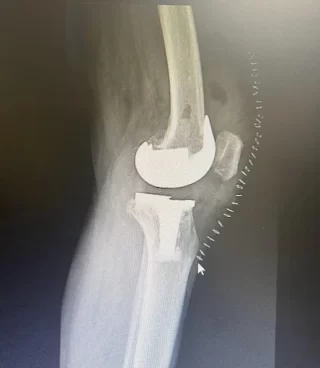
X ray showing successful knee replacement performed by the Best Knee Replacement Doctor in Lucknow.webp

Knee replacement, or knee arthroplasty, is a surgical procedure where the damaged parts of the knee joint are replaced with an artificial implant. It is usually recommended when arthritis, injury, or wear and tear severely damages the joint and non-surgical methods like physiotherapy, medicines, or injections no longer help.

Modern advancements such as robotic-assisted surgery and minimally invasive techniques have made knee replacement safer and less painful, with faster recovery times. Still, many patients wonder about the actual experience after surgery-how life changes, what challenges arise, and how to handle them. Consulting the Best Knee replacement specialist in Lucknow or the Best knee replacement surgeon in Lucknow can provide guidance and reassurance throughout this journey.

The Best knee replacement surgeon in Lucknow ensures that each patient receives personalized care, while the Best Knee replacement specialist in Lucknow helps plan recovery strategies, physiotherapy, and lifestyle adjustments to regain mobility and confidence. With the expertise of the Best knee replacement surgeon in Lucknow and support from the Best Knee replacement specialist in Lucknow, patients can feel confident about taking the first step toward a pain-free and active life.

Challenges Patients Face After Knee Replacement

Every patient’s journey is unique, but some challenges are common. Even under the care of the Best Knee replacement specialist in Lucknow or the Best knee replacement surgeon in Lucknow, patients may go through a recovery phase that requires patience and determination.

The guidance of the Best knee replacement surgeon in Lucknow and support from the Best Knee replacement specialist in Lucknow help patients manage these challenges effectively. With proper care and structured rehabilitation, patients can gradually regain mobility and return to an active, independent lifestyle.

Pain and Discomfort

Some degree of pain is natural after surgery. It may feel discouraging at first, but it gradually reduces as the knee heals. Proper pain management, rest, and physiotherapy, guided by the Best Knee replacement specialist in Lucknow, make the recovery process smoother.

With consistent care and guidance from the Best knee replacement surgeon in Lucknow, patients can manage discomfort effectively, regain mobility faster, and feel more confident throughout their post-surgery journey.

Stiffness and Limited Movement

Patients sometimes find their new knee difficult to bend or straighten fully. This stiffness is temporary but requires active rehabilitation. Gentle exercises, stretching, and regular physiotherapy sessions, under the guidance of the Best Knee replacement specialist in Lucknow, help restore flexibility.

With support from the Best knee replacement surgeon in Lucknow, patients can gradually regain full range of motion, improve strength, and return to their daily activities with confidence and ease.

Swelling Around the Joint

Swelling is a normal response to surgery and may last for weeks. Elevating the leg, wearing compression stockings, and applying ice packs are simple ways to manage it and speed up recovery, with guidance from the Best Knee replacement specialist in Lucknow.

The Best knee replacement surgeon in Lucknow also provides advice on monitoring swelling, adjusting activity levels, and following post-operative care instructions to ensure a safe and comfortable recovery process.

Emotional Adjustment

Recovery is not only about physical healing but also emotional strength. Some patients feel anxious, frustrated, or doubtful during the initial weeks. Staying positive, talking openly with family, and seeking reassurance from the Best Knee replacement specialist in Lucknow makes the emotional journey smoother.

The Best knee replacement surgeon in Lucknow also plays a key role in providing guidance, encouragement, and support, helping patients stay confident and motivated throughout their recovery.

Difficulty Resuming Daily Activities

Getting back to normal routines can feel slow. Activities such as climbing stairs, sitting cross-legged, or driving may take time. A structured recovery plan designed by the Best Knee replacement specialist in Lucknow ensures that patients gradually return to their lifestyle without strain.

With the guidance of the Best knee replacement surgeon in Lucknow, patients can regain mobility, build strength, and confidently resume their daily activities while minimizing the risk of setbacks.

How the Right Surgeon Makes a Difference

The surgeon you choose plays a vital role in determining your experience after surgery. Consulting the Best knee replacement doctor in Lucknow not only ensures precision in the surgical procedure but also provides expert guidance throughout the rehabilitation process. From selecting advanced implants to creating personalized recovery plans, the right doctor delivers both medical expertise and emotional support, helping patients overcome post-surgery challenges with confidence.

Overcoming Post-Surgery Challenges: Practical Tips

Recovery after knee replacement is not about rushing-it’s about consistent, steady progress. With guidance from the Best knee replacement surgeon in Lucknow, patients can follow proven strategies to overcome common challenges and move toward a stronger, healthier knee.

Follow Physiotherapy Strictly

Physiotherapy is the foundation of recovery. Skipping sessions can slow down progress, while regular exercises restore flexibility, balance, and strength. Patients who stay committed to physiotherapy usually enjoy faster and better outcomes. Under the guidance of the Best knee replacement doctor in Lucknow, physiotherapy plans are tailored to individual needs, ensuring safe recovery and long-term joint health.

Maintain a Nutritious Diet

Food plays a big role in healing. A diet rich in proteins helps repair muscles, while calcium and vitamin D strengthen bones. Staying hydrated and avoiding excess sugar or junk food supports the body’s natural recovery process. With personalized dietary guidance from the Best knee replacement specialist in Lucknow, patients can boost healing, strengthen their joints, and achieve a faster recovery.

Take Care of the Surgical Wound

The surgical site needs extra attention in the first few weeks. Keeping it clean and dry, following dressing instructions, and watching for signs of infection help prevent complications and ensure faster healing. Guidance from the Best knee replacement surgeon in Lucknow ensures that patients receive the right wound-care advice and professional monitoring for a smooth recovery.

Stay Active but Don’t Overstrain

Light movement is essential after surgery. Walking short distances, changing positions frequently, and performing light exercises improve circulation and prevent stiffness. However, overexertion can slow healing, so activity levels must increase gradually under medical guidance. With the support of the Best knee replacement specialist in Lucknow, patients receive tailored recovery plans that ensure safe progress and long-term mobility.

Manage Weight Effectively

Maintaining a healthy weight after surgery is crucial because extra weight puts unnecessary strain on the artificial joint. A balanced diet and regular physical activity not only protect the knee implant but also improve overall health. With proper guidance from the Best knee replacement doctor in Lucknow, patients can adopt lifestyle changes that support long-term recovery and enhance mobility.

Support Mental Well-being

Emotional health is as important as physical healing. Patients who stay positive, practice relaxation techniques like meditation, and connect with support groups often recover faster with greater confidence. Guidance from the Best knee replacement surgeon in Lucknow can make this journey even smoother, as expert care addresses not just physical recovery but also emotional well-being.

Life After Knee Replacement: What to Expect

Patients often ask how soon they will return to normal life. While timelines may vary, here’s a general recovery pattern:

  • 0 to 3 Weeks: Walking with support and managing light household activities.
  • 3 to 6 Weeks: Improved flexibility, resuming daily routines, and in some cases, driving.
  • 6 to 12 Weeks: Returning to work, pursuing hobbies, and walking longer distances.
  • 12 Weeks: Complete recovery with the ability to live pain-free and enjoy a wide range of activities.

Recovery becomes smoother when guided by the Best Knee Replacement Surgeon in Lucknow, as they provide continuous support and adjust the rehabilitation plan based on patient needs.

Why Choose the Best Knee Replacement Specialist in Lucknow?

Lucknow has become a hub for advanced orthopedic care, but choosing the right doctor is the most important step toward a successful recovery. The Best Knee Replacement Specialist in Lucknow offers:

  • Advanced implants that last longer and provide natural movement.
  • Minimally invasive techniques for smaller scars and quicker recovery.
  • Affordable treatment without compromising quality.
  • Complete care, from pre-surgery preparation to post-surgery rehabilitation.

Patients who choose an experienced surgeon not only enjoy better surgical outcomes but also experience greater comfort and confidence throughout their recovery journey.

FAQs About Knee Replacement Doctor in Lucknow

1. Who is considered one of the best knee replacement doctors in Lucknow?

One of the best knee replacement doctors in Lucknow is an experienced orthopedic and joint replacement specialist who offers comprehensive evaluation, personalized treatment plans, advanced surgical techniques, and dedicated post-operative care to help patients achieve long-term pain relief and improved mobility.

2. When should I consult a knee replacement doctor?

You should consult a knee replacement doctor if you experience persistent knee pain, stiffness, swelling, difficulty walking, or reduced mobility that does not improve with medications, physiotherapy, or other conservative treatments. Early consultation can help determine the most effective treatment option for your condition.

3. Is knee replacement surgery safe?

Yes, knee replacement surgery is considered a safe and highly successful procedure when performed by an experienced orthopedic surgeon. Modern surgical techniques, advanced implants, and comprehensive rehabilitation programs help minimize risks and improve recovery outcomes.

4. How long does recovery take after knee replacement surgery?

Recovery time varies from patient to patient, but most individuals can resume daily activities within 6 to 8 weeks after surgery. Full recovery and optimal joint function may take several months, depending on overall health, adherence to physiotherapy, and the type of knee replacement performed.

5. Is robotic knee replacement better than traditional knee replacement?

Robotic knee replacement offers greater surgical precision, personalized planning, and improved implant alignment compared to traditional knee replacement techniques. These advantages may contribute to better joint function, less tissue damage, and a smoother recovery for suitable patients. However, the best approach depends on the patient’s condition and the surgeon’s recommendation.

Conclusion

Life after knee replacement is not without its hurdles, but those challenges are only temporary. With proper care, discipline, and the guidance of the Best knee replacement specialist in Lucknow, patients can look forward to living pain-free, active, and fulfilling lives. The choice of the right surgeon plays a vital role in this journey, and consulting the Best knee replacement doctor in Lucknow ensures that you receive expert care, advanced treatment, and personalized rehabilitation at every step.

If knee pain is affecting your daily lifestyle, don’t delay seeking expert help. It may be the right time to consult the Best knee replacement surgeon in Lucknow and take the first step toward a healthier, more mobile, and independent future.

Thanks for Reading

Thank you for taking the time to read our detailed guide on life after knee replacement. We hope this blog has given you practical insights and the confidence to move forward in your recovery journey. Choosing the right surgeon is one of the most important steps toward long-term success. If you are looking for the Best knee replacement surgeon in Lucknow, you deserve a specialist who combines advanced medical expertise with compassionate care.

Many patients today trust the Best knee replacement doctor in Lucknow not only for precise surgery but also for complete rehabilitation support that ensures faster recovery and better mobility outcomes. With the guidance of the Best knee replacement specialist in Lucknow, you can overcome post-surgery challenges and return to living an active, pain-free life.

Your health and mobility matter. If knee pain is affecting your daily routine, don’t delay seeking expert care. Take the first step today toward regaining your independence and quality of life.
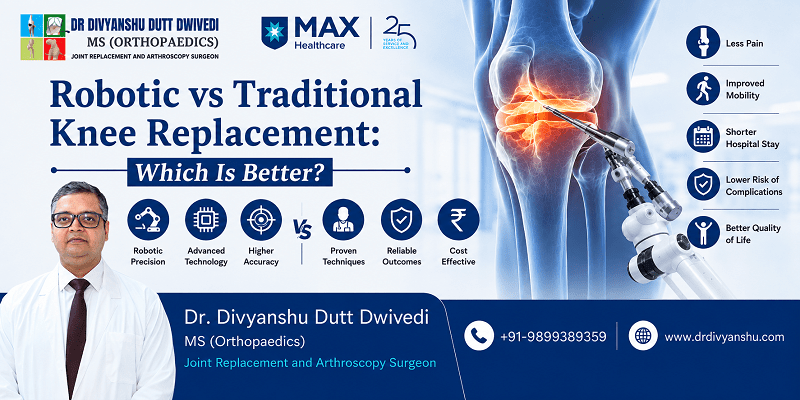

Robotic-vs-Traditional-Knee-Replacement-Which-Is-Better.png

Knee replacement has changed significantly with advances in surgical planning and computer-assisted technology. Today, patients with advanced knee arthritis may hear about both robotic knee replacement and traditional knee replacement and naturally ask, “Which is better, robotic or traditional knee replacement?”

Both techniques are established approaches for total knee replacement and can relieve severe pain, improve mobility, and help patients return to everyday activities. The main difference is how the surgeon plans and performs certain parts of the procedure. Robotic-assisted surgery uses digital planning, tracking, and technology to help the surgeon achieve precise bone preparation and implant positioning. Traditional knee replacement relies on conventional instruments and established surgical techniques.

The right choice is not simply about choosing the newer technology. It depends on your knee condition, alignment, bone quality, deformity, treatment goals, surgeon experience, and the technology available at the hospital.

Robotic vs Traditional Knee Replacement: Quick Comparison

Factor Robotic Knee Replacement Traditional Knee Replacement
Surgical planning Computer-assisted and highly detailed Conventional planning and measurements
Surgical guidance Robotic/computer assistance Conventional surgical instruments
Implant positioning Technology-assisted precision Surgeon-guided positioning
Alignment Data-guided planning and execution Established alignment techniques
Surgeon involvement Surgeon remains in control Surgeon performs the complete procedure
Cost Usually higher Generally more affordable
Availability Requires suitable robotic technology Widely available
Long-term evidence Still developing Extensive clinical experience
Best choice Depends on individual patient factors Depends on individual patient factors

The important point is that robotic assistance does not replace the orthopedic surgeon. It is a technology used to support planning and execution during surgery.

What Is Traditional Knee Replacement?

Traditional knee replacement, also called conventional total knee arthroplasty, is a well-established operation for people with advanced knee arthritis and significant joint damage.

During surgery, the damaged surfaces of the femur and tibia are prepared using conventional surgical instruments. The surgeon removes the damaged cartilage and a small amount of bone, prepares the joint surfaces, checks alignment and ligament balance, and places the knee implant.

Traditional surgery has been performed successfully for decades. Its results depend on careful preoperative assessment, appropriate implant selection, surgical technique, accurate bone preparation, and the surgeon’s experience.

One major advantage is its broad availability. Most orthopedic centers that perform knee replacement can offer conventional surgery, while robotic systems require additional equipment, trained teams, and appropriate infrastructure.

For many patients, traditional knee replacement remains an effective treatment that can provide substantial pain relief and improved function.

What Is Robotic Knee Replacement?

Robotic knee replacement is a form of knee arthroplasty in which computer-assisted technology and, depending on the system, a robotic arm or other robotic instrumentation help the surgeon with surgical planning and execution.

The technology can create a detailed plan based on the patient’s anatomy. During the procedure, the system may help the surgeon assess alignment, implant position, bone preparation, and soft-tissue balance.

A common misconception is that a robot independently performs the entire operation. It does not. The orthopedic surgeon performs the knee replacement and remains responsible for clinical decisions throughout the procedure.

The purpose of robotic assistance is to provide additional information and control during specific stages of surgery. This can be particularly useful when detailed planning and accurate implant positioning are important.

Robotic Knee Replacement vs. Traditional: What Is the Main Difference?

The fundamental difference is the technology used to support surgical planning and execution.

In conventional surgery, the surgeon uses established instruments, anatomical landmarks, and measurements to prepare the knee and position the implant. In robotic-assisted surgery, the surgeon can use computer-generated information, digital planning, and intraoperative tracking to guide certain steps.

Research consistently suggests that robotic-assisted total knee arthroplasty can improve the accuracy and consistency of certain alignment measurements. However, better radiographic alignment does not automatically mean that every patient will experience dramatically better pain relief, mobility, or long-term results.

A systematic review of randomized controlled trials found that robotic-assisted surgery improved alignment accuracy, while differences in patient-reported outcomes and range of motion were limited or inconsistent.

This distinction is important when deciding between robotic knee replacement and traditional knee replacement.

Robotic vs. Traditional Knee Replacement: Accuracy and Precision

Accuracy is one of the strongest reasons surgeons use robotic assistance.

Robotic systems can help with detailed preoperative or intraoperative planning and may provide real-time information about bone cuts, alignment, and implant positioning. This can help the surgeon reproduce the planned position more consistently.

Studies comparing robotic and conventional total knee arthroplasty have reported fewer alignment outliers with robotic-assisted procedures. A 2025 meta-analysis of 21 randomized controlled trials involving 2,692 patients found significantly lower mechanical alignment outlier rates with robotic-assisted TKA.

However, precision should not be confused with guaranteed clinical superiority. A technically accurate implant position is one part of a successful knee replacement. Pain relief, joint stability, rehabilitation, muscle strength, patient expectations, and overall health also influence recovery.

Does Robotic Knee Replacement Provide Better Pain Relief?

This is one of the most common patient questions.

The honest answer is that robotic assistance does not guarantee less pain for every patient.

Some studies report potential advantages in selected postoperative outcomes, while other randomized evidence has found little or no meaningful difference in patient-reported outcomes between robotic-assisted and conventional total knee replacement.

Postoperative pain depends on several factors, including the surgical approach, pain-management protocol, tissue response, preoperative condition, physical therapy, and individual healing.

Therefore, patients should not choose robotic surgery solely because they expect it to be completely painless or automatically easier.

Robotic vs. Traditional Knee Replacement: Recovery Time

Many patients search for robotic knee replacement recovery time because they want to return to walking and normal activities quickly.

Recovery can be similar in many patients because both procedures ultimately involve replacing damaged knee joint surfaces with an artificial implant. The speed of recovery depends on age, muscle strength, general health, severity of arthritis, surgical complexity, pain control, and commitment to rehabilitation.

A typical recovery pathway may include:

  • Early assisted movement soon after surgery
  • Gradual increase in walking and daily activity
  • Structured physiotherapy
  • Progressive improvement in knee strength and range of motion
  • Return to routine activities as healing progresses

Robotic assistance may offer technical advantages during surgery, but it should not be promoted as a guarantee of a faster recovery. Current comparative evidence does not consistently show a major clinical advantage across every recovery measure.

Robotic vs. Traditional Knee Replacement: Cost Difference

Cost is another major factor when comparing the two procedures.

In general, robotic knee replacement cost may be higher than traditional knee replacement because robotic surgery involves specialized technology, equipment, maintenance, planning systems, and trained operating-room teams.

The final cost can also vary according to:

  • Hospital and room category
  • Surgeon and surgical team
  • Type of knee implant
  • Whether one or both knees are treated
  • Preoperative investigations
  • Hospital stay
  • Medicines and rehabilitation
  • Insurance coverage
  • Technology used during surgery

The question should therefore not be only, “Which surgery costs more?” A more useful question is, “Does robotic assistance provide a meaningful benefit for my particular knee?”

The additional expense may be reasonable for some patients, while conventional surgery may be entirely appropriate for others.

Is Robotic Knee Replacement Worth the Extra Cost?

If a patient has a specific anatomical or alignment consideration where detailed robotic planning may provide useful assistance, the technology may be worth discussing. Patients may also value the additional planning and technology available through robotic systems.

However, current evidence does not justify telling every patient that robotic surgery is automatically better simply because it is more technologically advanced. The American Academy of Orthopaedic Surgeons has noted that short-term functional outcomes and complications have not consistently differed between robotic-assisted and conventional knee replacement.

A good decision should consider the patient’s condition, expected benefit, cost, surgeon expertise, and available technology rather than marketing claims alone.

Does Robotic Knee Replacement Last Longer?

Implant longevity is one of the most important concerns for patients considering knee replacement.

It is tempting to assume that more accurate implant positioning automatically means a longer-lasting knee replacement. However, that conclusion is not yet established for every patient.

Research has demonstrated improvements in alignment and implant positioning with robotic assistance, but long-term survivorship evidence continues to develop. A 2025 systematic review specifically examining implant survivorship highlighted that long-term comparative evidence remains an important area of investigation.

Implant longevity also depends on factors such as implant design, fixation, activity level, body weight, bone quality, alignment, infection risk, and surgical technique.

Therefore, patients should be cautious about claims that robotic surgery guarantees a longer-lasting implant.

Robotic vs. Traditional Knee Replacement: Risks and Complications

Both robotic-assisted and conventional knee replacement are major orthopedic procedures and carry potential risks.

Possible complications can include infection, blood clots, bleeding, stiffness, persistent pain, instability, implant-related problems, and the possibility of revision surgery.

Robotic technology does not eliminate these risks.

Comparative studies have produced mixed findings regarding complications. Some analyses report potential reductions in certain complications, while other randomized studies have found no meaningful difference.

The safety of knee replacement depends on careful patient selection, infection prevention, surgical technique, medical optimization, postoperative monitoring, and rehabilitation.

Who Is a Good Candidate for Robotic Knee Replacement?

A person may be considered for robotic knee replacement when severe knee arthritis has caused persistent pain, stiffness and difficulty with walking or daily activities, especially when non-surgical treatment has failed to provide adequate relief.

Potential factors considered by an orthopedic surgeon include:

  • Severity of knee osteoarthritis
  • Degree of pain and functional limitation
  • Knee deformity and alignment
  • Bone quality
  • Ligament condition
  • Previous knee surgery
  • Overall medical fitness
  • Expected activity level
  • Patient preferences
  • Availability of suitable robotic technology

Being older does not automatically exclude someone from robotic surgery, and being younger does not automatically make robotic surgery necessary.

The decision should be individualized after examination and appropriate imaging.

When Traditional Knee Replacement May Be the Better Choice

Traditional knee replacement should not be viewed as an outdated procedure.

It has a long history of successful use and remains a dependable option for many patients. Conventional surgery may be appropriate when the surgeon has extensive experience with the technique, the patient’s anatomy is suitable, robotic technology is unavailable or the additional cost does not offer enough expected value.

The most important factor is not simply whether surgery uses a robot. It is whether the chosen procedure is appropriate for the patient and performed by an experienced orthopedic surgeon using a sound surgical plan.

In other words, traditional knee replacement can still be an excellent choice.

Robotic vs. Traditional Knee Replacement: Pros and Cons

Advantages of Robotic Knee Replacement

  • Detailed surgical planning
  • Technology-assisted alignment assessment
  • Precise bone preparation
  • Potentially fewer alignment outliers
  • Real-time information during selected surgical steps
  • Ability to tailor planning to individual anatomy

Limitations of Robotic Knee Replacement

  • Usually higher cost
  • Requires specialized equipment
  • Not available at every hospital
  • May increase operating time in some settings
  • Long-term superiority is not yet established for every outcome.

Advantages of Traditional Knee Replacement

  • Established surgical technique
  • Extensive clinical experience
  • Broad availability
  • Usually lower technology-related cost
  • Effective outcomes when performed appropriately

Limitations of Traditional Knee Replacement

  • Relies on conventional instruments and established alignment techniques
  • Less computer-assisted intraoperative information
  • Results remain dependent on surgical planning and surgeon execution.

Which Is Better: Robotic or Traditional Knee Replacement?

If the question is simply, “Which is better?” the most accurate answer is, “It depends on the patient.”

Robotic-assisted knee replacement offers meaningful technical advantages, particularly in planning and alignment precision. However, the latest comparative evidence does not show that robotic assistance automatically produces superior results for every clinical outcome. A 2024 meta-analysis found improvements in mechanical alignment and some WOMAC measures with robotic surgery, while other functional outcomes showed no significant difference and more research was needed for long-term conclusions.

The better procedure is the one that matches the patient’s anatomy, diagnosis, treatment goals, and medical needs.

How to Choose Between Robotic and Traditional Knee Replacement

Before making a decision, ask your orthopedic surgeon:

  1. What is causing my knee pain?
  2. Do I actually need knee replacement surgery?
  3. Am I a suitable candidate for robotic-assisted surgery?
  4. What benefit would robotic technology provide in my case?
  5. Would traditional knee replacement provide a comparable result?
  6. What implant is being recommended and why?
  7. What recovery should I realistically expect?
  8. What will the complete treatment cost?
  9. What rehabilitation will I need?
  10. How experienced is the surgeon with both conventional and robotic knee replacement?

This conversation is often more valuable than choosing a procedure based only on the word “robotic.”

Robotic vs. Traditional Knee Replacement in Lucknow

Patients looking for robotic knee replacement in Lucknow often want both advanced technology and an experienced orthopedic surgeon who can explain whether that technology is appropriate for their condition.

For patients in Lucknow, the decision should include the surgeon’s experience, hospital facilities, implant options, robotic platform, surgical planning, rehabilitation support and postoperative follow-up.

A consultation should focus on the individual knee rather than assuming that robotic surgery is automatically necessary.

Dr. Divyanshu Dutt Dwivedi provides orthopedic and joint replacement care in Lucknow, including evaluation of patients considering robotic knee replacement and other knee replacement options.

Why Surgeon Expertise Still Matters in Robotic Knee Replacement

Robotic technology is an important surgical tool, but it does not replace clinical judgment.

The surgeon still evaluates the patient’s symptoms, imaging, alignment, bone quality, ligament condition, and overall health. The surgeon decides whether replacement is appropriate, chooses the implant and surgical strategy, manages unexpected findings, and oversees postoperative care.

This is why patients should evaluate both the technology and the surgeon.

An experienced knee replacement surgeon should be able to explain why robotic-assisted or traditional surgery is appropriate for a particular patient instead of recommending technology simply because it is newer.

The goal should always be a safe, well-planned knee replacement with realistic expectations.

About Dr. Divyanshu Dutt Dwivedi

Robotic Knee replacement Surgeon in Lucknow
Dr. Divyanshu Dutt Dwivedi

Dr. Divyanshu Dutt Dwivedi is an experienced orthopedic and joint replacement surgeon in Lucknow who provides comprehensive evaluation and treatment for patients suffering from advanced knee arthritis and other joint conditions. His approach focuses on understanding the patient’s symptoms, imaging, mobility, medical history, and treatment expectations before recommending surgery. Patients considering robotic knee replacement can discuss the potential advantages, limitations, recovery expectations, and alternatives to conventional knee replacement during consultation. The objective is to select an appropriate surgical option rather than recommend technology solely because it is newer. For consultation and appointment-related information, contact +91-9899389359.

Final Verdict: Robotic vs. Traditional Knee Replacement

Robotic vs. traditional knee replacement is not a competition between “new” and “old.” Both are established approaches, and both can successfully treat severe knee arthritis when the patient is appropriately selected.

Robotic-assisted surgery can offer greater precision in surgical planning, bone preparation, and implant alignment. However, current evidence does not prove that every patient will have substantially better pain relief, function, or long-term implant survival simply because robotic technology was used.

The best approach is the one that fits your knee condition, anatomy, health, expectations, and treatment goals.

If you are considering robotic knee replacement in Lucknow, discuss your options with an experienced orthopedic surgeon and ask what measurable benefit robotic assistance could provide in your specific case.

FAQs About Robotic vs. Traditional Knee Replacement

  1. Is robotic knee replacement better than traditional knee replacement?

Robotic knee replacement can provide greater planning and alignment precision, but it is not automatically better for every patient. Current evidence shows technical advantages without consistently proving superior results across all clinical outcomes.

  1. What is the main difference between robotic and traditional knee replacement?

The main difference is the method used to assist surgical planning and execution. Robotic surgery uses computer-assisted technology for selected steps, while traditional surgery uses conventional instruments and established surgical techniques.

  1. Does a robot perform the knee replacement?

No. The orthopedic surgeon performs the operation. Robotic technology assists with planning, measurements, alignment, and certain surgical steps.

  1. Is robotic knee replacement more accurate?

Evidence suggests that robotic-assisted TKA can improve implant positioning and reduce certain alignment outliers compared with conventional techniques.

  1. Does robotic knee replacement recover faster?

Not necessarily. Recovery varies from patient to patient, and current evidence does not support guaranteeing a faster recovery solely because robotic technology was used.

  1. Is robotic knee replacement more expensive?

It is often more expensive because specialized technology and infrastructure are involved. The actual price varies by hospital, implant, surgeon, technology, and other treatment factors.

  1. Does robotic knee replacement last longer?

A more precise implant position may be beneficial, but robotic surgery should not be marketed as a guarantee of longer implant life. Long-term comparative survivorship evidence is still developing.

  1. Is traditional knee replacement still a good option?

Yes. Traditional knee replacement is an established and effective procedure and can provide excellent results when appropriately planned and performed.

  1. Who should choose robotic knee replacement?

Patients should discuss robotic surgery with an experienced orthopedic surgeon when knee replacement is indicated. Suitability depends on anatomy, deformity, diagnosis, treatment goals, available technology, and other individual factors.

  1. What is the cost of robotic knee replacement in Lucknow?

The cost varies depending on the hospital, implant, robotic technology, surgeon, room category, investigations, hospital stay, and rehabilitation. A consultation is necessary for an individualized estimate.


Logo

Dr. Divyanshu Dutt Dwivedi is a well-known orthopedic surgeon in Lucknow, recognized for his expertise in treating a variety of musculoskeletal conditions. He is known as one of the Best Orthopedic Doctors in Lucknow.

© 2025 Dr. Divyanshu. All rights reserved.| Developed By Websofy Software