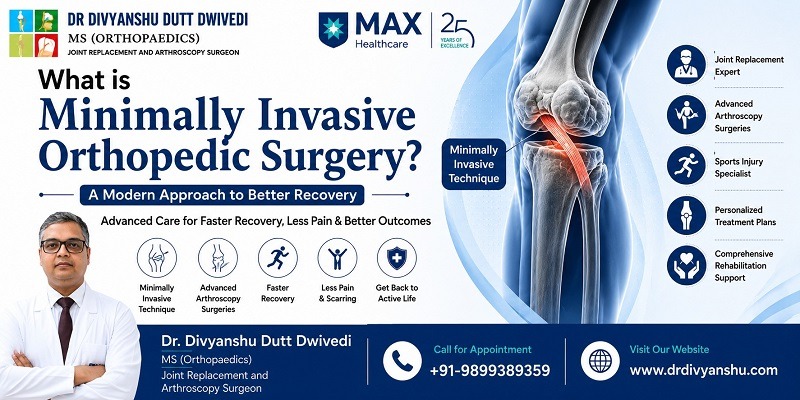
Minimally invasive orthopedic surgery is an advanced surgical technique that allows orthopedic surgeons to diagnose and treat bone, joint, muscle, tendon, and ligament conditions through small incisions instead of large surgical cuts. Unlike traditional open surgery, this modern approach uses specialized instruments, high-definition cameras, arthroscopes, and advanced imaging systems to perform precise procedures while causing minimal damage to healthy tissues. As a result, patients often experience less pain, reduced blood loss, smaller scars, shorter hospital stays, and a quicker recovery. Today, minimally invasive orthopedic surgery is widely used for treating sports injuries, arthritis, cartilage damage, ligament tears, and various joint disorders. It has become a preferred treatment option because it combines surgical precision with improved patient comfort and faster rehabilitation.
Understanding Minimally Invasive Orthopedic Surgery
Minimally invasive orthopedic surgery focuses on preserving healthy muscles, ligaments, and surrounding tissues while treating the affected area. Instead of exposing the entire joint or bone, the surgeon makes one or more small incisions through which specialized surgical instruments and a tiny camera are inserted. The live images displayed on a monitor help the surgeon perform the procedure with exceptional accuracy. This approach reduces unnecessary tissue disruption and lowers the chances of complications compared to conventional surgery. Whether treating knee injuries, shoulder disorders, hip problems, or fractures, minimally invasive orthopedic surgery has transformed orthopedic care by improving surgical outcomes and helping patients return to their daily activities more quickly.
How Does Minimally Invasive Orthopedic Surgery Work?
The procedure begins with a detailed clinical evaluation, physical examination, and advanced diagnostic imaging such as X-rays, MRI scans, or CT scans to identify the exact cause of the problem. During surgery, the orthopedic surgeon creates small incisions that allow an arthroscope or specialized surgical instruments to reach the affected joint or bone. The camera provides a magnified view of the internal structures, enabling precise treatment while protecting nearby healthy tissues. Depending on the condition, the surgeon may repair torn ligaments, remove damaged cartilage, stabilize fractures, or reconstruct injured joints. This precise approach makes minimally invasive orthopedic surgery a highly effective solution for many orthopedic conditions with improved recovery and long-term functional outcomes.
Why is Minimally Invasive Orthopedic Surgery Becoming More Popular?
The growing popularity of minimally invasive orthopedic surgery is driven by its ability to deliver excellent clinical outcomes with fewer complications than traditional techniques. Smaller incisions reduce tissue trauma, leading to less postoperative pain, minimal scarring, and a lower risk of infection. Patients can often begin gentle movement soon after surgery, which supports faster rehabilitation and improved joint function. Advances in arthroscopic technology, robotic-assisted systems, and surgical imaging have further enhanced the accuracy and safety of these procedures. As more patients seek treatments that minimize recovery time without compromising effectiveness, minimally Invasive orthopedic surgery continues to become the preferred choice for both orthopedic surgeons and individuals requiring advanced musculoskeletal care.
Conditions That Can Be Treated with Minimally Invasive Orthopedic Surgery
Many orthopedic conditions can now be managed successfully through minimally invasive orthopedic surgery. The suitability of the procedure depends on the patient’s diagnosis, overall health, and severity of the condition. Common conditions include:
- ACL Tears and Ligament Injuries
- Meniscus Tears
- Rotator Cuff Tears
- Shoulder Instability
- Hip Labral Tears
- Sports Injuries
- Cartilage Damage
- Early Osteoarthritis
- Joint Impingement
- Loose Bone or Cartilage Fragments
- Certain Fractures
- Selected Knee and Hip Replacement Procedures
Early consultation with an experienced orthopedic surgeon helps determine whether minimally invasive orthopedic surgery is the most appropriate treatment option for your condition.
Is Minimally Invasive Orthopedic Surgery the Same as Arthroscopy?
Many people assume that minimally invasive orthopedic surgery and arthroscopy are identical, but they are not exactly the same. Arthroscopy is one of the most commonly used minimally invasive techniques in orthopedics. It involves inserting a small camera, called an arthroscope, into the joint to diagnose and treat problems through tiny incisions. However, minimally invasive orthopedic surgery is a broader category that also includes minimally invasive joint replacement, fracture fixation, tendon repair, and other advanced procedures performed with specialized instruments. In simple terms, arthroscopy is a type of minimally invasive orthopedic surgery, but not every minimally invasive orthopedic procedure is arthroscopic.
Key Benefits of Minimally Invasive Orthopedic Surgery
Compared with conventional open surgery, minimally invasive orthopedic surgery offers several important advantages that improve both the surgical experience and recovery process.
| Benefit | How It Helps Patients |
| Smaller Incisions | Reduced scarring and improved cosmetic appearance |
| Less Tissue Damage | Preserves healthy muscles and ligaments |
| Reduced Blood Loss | Lowers the need for blood transfusions |
| Less Postoperative Pain | Improves patient comfort after surgery |
| Lower Infection Risk | Smaller wounds heal more efficiently |
| Faster Recovery | Enables earlier return to work and daily activities |
| Shorter Hospital Stay | Many procedures are performed as day-care or short-stay surgeries |
| Better Joint Function | Supports improved mobility and long-term outcomes |
These benefits make minimally invasive orthopedic surgery an increasingly preferred option for eligible patients seeking effective treatment with a smoother recovery.
Traditional Open Surgery vs. Minimally Invasive Orthopedic Surgery
Choosing between traditional open surgery and minimally invasive orthopedic surgery depends on the patient’s condition, the complexity of the injury, and the surgeon’s clinical assessment. Traditional surgery usually requires a larger incision to expose the affected joint or bone, whereas minimally invasive orthopedic surgery uses small incisions with advanced cameras and specialized instruments to complete the procedure accurately. This modern approach causes less damage to surrounding muscles and soft tissues, resulting in reduced pain and quicker recovery. Although open surgery is still necessary for some complex orthopedic conditions, many patients with ligament injuries, cartilage damage, sports injuries, and early joint disorders can benefit from minimally invasive techniques that promote faster healing and improved mobility.
Difference Between Traditional Surgery and Minimally Invasive Orthopedic Surgery
The following comparison highlights why many orthopedic specialists recommend minimally invasive orthopedic surgery whenever it is clinically appropriate.
| Feature | Traditional Open Surgery | Minimally Invasive Orthopedic Surgery |
| Incision Size | Large | Small |
| Tissue Damage | Higher | Minimal |
| Blood Loss | More | Less |
| Pain After Surgery | More | Less |
| Risk of Infection | Higher | Lower |
| Hospital Stay | Longer | Shorter |
| Recovery Time | Slower | Faster |
| Cosmetic Appearance | Larger Scar | Smaller Scar |
| Return to Daily Activities | Delayed | Earlier |
While this comparison explains the general differences, the final treatment decision should always be based on a thorough evaluation by an experienced orthopedic surgeon.
Types of Minimally Invasive Orthopedic Surgery
Modern orthopedic care includes several procedures performed through minimally invasive techniques. Each procedure is designed to treat a specific condition while preserving healthy tissues and reducing recovery time. Advances in arthroscopic technology, image-guided surgery, and precision instruments have expanded the range of conditions that can be treated with minimally invasive orthopedic surgery. The most appropriate procedure depends on the affected joint, the severity of the injury, and the patient’s activity level. An orthopedic specialist will recommend the best option after reviewing medical history, imaging reports, and clinical findings.
Common minimally invasive orthopedic procedures include:
- Knee Arthroscopy
- Shoulder Arthroscopy
- Hip Arthroscopy
- ACL Reconstruction
- Meniscus Repair
- Cartilage Restoration Surgery
- Rotator Cuff Repair
- Labral Repair
- Minimally Invasive Joint Replacement
- Minimally Invasive Fracture Fixation
- Tendon Repair Surgery
- Sports Injury Surgery
Each of these procedures aims to restore movement, relieve pain, and help patients return to their normal activities safely.
What Conditions Are Best Treated with Minimally Invasive Orthopedic Surgery?
Not every orthopedic condition requires open surgery. Many common bone and joint disorders can now be treated successfully using minimally invasive orthopedic surgery, particularly when diagnosed early. These techniques are especially effective for treating sports injuries, ligament tears, tendon damage, and joint problems without extensive surgical exposure. Early treatment not only improves outcomes but also reduces the risk of long-term joint damage. Consulting an orthopedic specialist at the first sign of persistent pain or limited movement allows patients to explore minimally invasive options before the condition becomes more advanced.
Common conditions include:
- ACL Tears
- PCL Injuries
- Meniscus Tears
- Shoulder Dislocation
- Rotator Cuff Tears
- Hip Labral Tears
- Cartilage Injuries
- Joint Impingement
- Loose Cartilage Fragments
- Sports Injuries
- Early Knee Osteoarthritis
- Early Hip Arthritis
- Selected Fractures
- Joint Instability
Candidate for Minimally Invasive Orthopedic Surgery
Although minimally invasive orthopedic surgery offers several advantages, it is not suitable for everyone. The ideal candidate is someone whose condition can be effectively treated through smaller incisions without compromising surgical safety or outcomes. Factors such as age, overall health, severity of joint damage, previous surgeries, and lifestyle all influence treatment planning. A detailed examination combined with imaging tests helps the orthopedic surgeon determine whether a minimally invasive approach is appropriate. Choosing the right candidate is essential for achieving the best possible recovery, restoring joint function, and minimizing the risk of complications after surgery.
You may be an ideal candidate if you:
- Have persistent joint pain despite conservative treatment.
- Have a sports injury affecting the knee, shoulder, or hip.
- Have a torn ligament or meniscus.
- Need cartilage repair or joint preservation surgery.
- Have early-stage arthritis requiring surgical treatment.
- Want a quicker recovery and earlier return to daily activities.
- Are medically fit for surgery.
- Have realistic expectations regarding rehabilitation and outcomes.
Who May Not Be Suitable for Minimally Invasive Orthopedic Surgery?
While many patients benefit from minimally invasive orthopedic surgery, certain conditions may require traditional open procedures to ensure complete treatment. Extensive joint destruction, severe deformities, complicated fractures, or multiple previous surgeries may limit the effectiveness of minimally invasive techniques. Some patients may also have underlying medical conditions that increase surgical risks. During the consultation, the orthopedic surgeon carefully evaluates all clinical factors before recommending the safest and most effective treatment plan. The goal is always to select the approach that provides the best long-term outcome rather than simply choosing the least invasive option.
Patients who may not be suitable include those with:
- Severe joint deformities.
- Advanced arthritis requiring complex reconstruction.
- Extensive bone loss.
- Highly complicated fractures.
- Active joint infections.
- Certain uncontrolled medical conditions.
- Revision surgeries with significant scar tissue.
- Conditions where open surgery offers better visibility and surgical control.
How to Prepare for Minimally Invasive Orthopedic Surgery
Proper preparation plays an important role in ensuring a safe procedure and smooth recovery after minimally invasive orthopedic surgery. Before surgery, your orthopedic surgeon will review your medical history, medications, allergies, and previous treatments. Blood investigations, ECG, X-rays, MRI scans, or other imaging studies may be recommended to assist with surgical planning. Patients are usually advised to stop certain medications, follow fasting instructions, and arrange transportation after discharge. Maintaining good nutrition, controlling diabetes or blood pressure, and performing recommended prehabilitation exercises can also improve recovery. Following your surgeon’s instructions carefully helps reduce complications and prepares your body for successful healing.
What Happens During Minimally Invasive Orthopedic Surgery?
The exact surgical steps depend on the condition being treated, but most minimally invasive orthopedic surgery procedures follow a similar process. After anesthesia is administered, the surgeon makes one or more small incisions near the affected joint. A miniature camera and specialized instruments are introduced through these openings to visualize and treat the damaged structures with precision. The surgeon repairs ligaments, removes damaged tissue, restores cartilage, or stabilizes bones while preserving healthy surrounding tissues. Once the procedure is complete, the incisions are closed with fine sutures or adhesive strips, and the patient is transferred to recovery. Many minimally invasive procedures allow patients to return home on the same day or after a short hospital stay.
Recovery Timeline After Minimally Invasive Orthopedic Surgery
Recovery after minimally invasive orthopedic surgery is generally faster than traditional surgery because smaller incisions cause less tissue damage. Healing varies depending on the procedure, age, overall health, and rehabilitation. Following your surgeon’s advice and physiotherapy plan helps restore mobility, reduce pain, and improve long-term outcomes. Most patients gradually resume normal activities within a few weeks, while complete recovery may take several months for complex procedures.
- First 24–48 Hours: Pain and swelling are managed, and gentle movement begins under medical supervision to promote circulation and prevent stiffness.
- Week 1–2: Walking with support improves, daily activities gradually resume, and wound healing continues while following prescribed medications and physiotherapy.
- Week 3–6: Joint flexibility, muscle strength, and mobility improve significantly through structured rehabilitation and regular follow-up visits.
- Month 2–3: Most patients return to work, driving, and moderate daily activities with improved confidence and joint function.
Rehabilitation After Minimally Invasive Orthopedic Surgery
Rehabilitation is a vital part of minimally invasive orthopedic surgery because it helps restore joint strength, flexibility, and normal movement. A personalized physiotherapy program reduces stiffness, improves balance, and lowers the risk of future injuries. Consistent rehabilitation allows patients to recover safely, regain independence, and achieve the best long-term surgical outcomes.
- Pain Management: Medications, ice therapy, and guided exercises help reduce pain, swelling, and post-operative discomfort during the early recovery phase.
- Range of Motion Exercises: Gentle stretching exercises gradually restore joint flexibility and improve comfortable movement without placing excessive stress on healing tissues.
- Strengthening Exercises: Targeted muscle strengthening improves joint stability, supports healing, and helps patients return safely to normal physical activities.
- Regular Follow-up: Scheduled orthopedic consultations monitor healing progress, assess recovery milestones, and modify rehabilitation plans whenever necessary.
Are There Any Risks Associated with Minimally Invasive Orthopedic Surgery?
Although minimally invasive orthopedic surgery is considered safe, every surgical procedure carries some potential risks. Most complications are uncommon and can be minimized through proper surgical planning, experienced orthopedic care, and following post-operative instructions. Understanding these risks helps patients make informed treatment decisions and prepares them for a smooth recovery.
- Infection: Although uncommon, infections may occur and are usually prevented with sterile surgical techniques and prescribed antibiotics.
- Bleeding or Swelling: Mild bleeding and temporary swelling are expected after surgery and usually improve with medication and proper post-operative care.
- Joint Stiffness: Limited movement may occur temporarily but generally improves with early physiotherapy and regular rehabilitation exercises.
- Nerve or Blood Vessel Injury: Rare complications involving nearby nerves or blood vessels are minimized through precise surgical techniques and experienced orthopedic expertise.
What Is the Success Rate of Minimally Invasive Orthopedic Surgery?
The success rate of minimally invasive orthopedic surgery is generally high when the procedure is performed for the right indication by an experienced orthopedic specialist. Outcomes depend on several factors, including the patient’s age, the severity of the condition, overall health, surgical technique, and adherence to rehabilitation. Many patients experience significant pain relief, improved joint stability, better mobility, and a faster return to daily activities. Early diagnosis and timely intervention also contribute to successful long-term results. Following the recommended rehabilitation program remains one of the most important factors in achieving the best possible outcome after surgery.
Common Myths About Minimally Invasive Orthopedic Surgery
Many misconceptions prevent patients from considering minimally invasive orthopedic surgery, even though it has become a well-established treatment option for various orthopedic conditions. Understanding the facts can help patients make confident healthcare decisions based on medical evidence rather than misinformation. While minimally invasive procedures offer many benefits, they are not a shortcut or a replacement for proper rehabilitation. Every treatment plan should be personalized according to the patient’s diagnosis and overall health.
Myth vs. Fact
- Myth: Small incisions mean the surgery is less effective.
Fact: The effectiveness depends on the surgical technique and the condition being treated, not the size of the incision. - Myth: Recovery is immediate after surgery.
Fact: Although recovery is usually faster, proper rehabilitation is still necessary. - Myth: Every orthopedic problem can be treated with minimally invasive surgery.
Fact: Some complex conditions still require traditional open surgery. - Myth: The procedure is only suitable for athletes.
Fact: It can benefit people of different ages and activity levels when clinically appropriate.
When Should You Consult an Orthopedic Surgeon?
Persistent joint pain should never be ignored, especially when it begins to affect your daily routine, work, or physical activities. Early consultation allows orthopedic conditions to be diagnosed before they become more severe, increasing the possibility of treatment through minimally invasive orthopedic surgery. Delaying medical care may lead to further joint damage and longer recovery times. If non-surgical treatments such as medication, physiotherapy, or lifestyle modifications have not provided adequate relief, a specialist can determine whether advanced minimally invasive treatment is the right option for you.
You should consult an orthopedic surgeon if you experience:
- Persistent joint pain lasting several weeks
- Recurrent knee, shoulder, or hip injuries
- Joint instability or repeated dislocations
- Difficulty walking or climbing stairs
- Swelling that does not improve
- Limited joint movement
- Sports injuries
- Pain that interferes with sleep or daily activities
Meet Dr. Divyanshu Dutt Dwivedi—Minimally Invasive Orthopedic Surgery in Lucknow
If you are looking for expert care for joint pain, sports injuries, or advanced orthopedic treatment, Dr. Divyanshu Dutt Dwivedi offers comprehensive evaluation and personalized treatment using modern orthopedic techniques, including minimally invasive orthopedic surgery. He focuses on accurate diagnosis, evidence-based treatment planning, and patient-centered care to help individuals regain mobility with minimal disruption to healthy tissues. Whether you require arthroscopic surgery, ligament reconstruction, cartilage repair, or minimally invasive joint procedures, every treatment plan is tailored to your specific condition and lifestyle. For expert consultation and personalized orthopedic care, schedule an appointment with Dr. Divyanshu Dutt Dwivedi or call +91-9899389359 to discuss the most suitable treatment options for your orthopedic condition.
Conclusion
Minimally invasive orthopedic surgery has transformed the way many orthopedic conditions are treated by combining advanced surgical technology with precise techniques that protect healthy tissues. Compared with conventional surgery, it often offers smaller incisions, less pain, reduced blood loss, quicker recovery, and earlier return to daily life. However, the success of any orthopedic procedure depends on accurate diagnosis, selecting the right surgical approach, and following a structured rehabilitation program. If you are experiencing persistent joint pain, sports injuries, or reduced mobility, consulting an experienced orthopedic specialist can help you understand whether minimally invasive orthopedic surgery is the right treatment option. Early intervention often leads to better outcomes, improved joint function, and a higher quality of life.
FAQs About Minimally Invasive Orthopedic Surgery in Lucknow
- What is Minimally Invasive Orthopedic Surgery?
Minimally invasive orthopedic surgery uses small incisions, specialized instruments, and advanced imaging to treat bone and joint problems with less pain, faster recovery, and minimal tissue damage.
- Is minimally invasive orthopedic surgery better than traditional surgery?
For many orthopedic conditions, minimally invasive orthopedic surgery offers smaller scars, reduced pain, shorter hospital stays, and quicker recovery. However, complex cases may still require traditional open surgery.
- What conditions can be treated with minimally invasive orthopedic surgery?
It can treat ACL tears, meniscus injuries, rotator cuff tears, cartilage damage, shoulder instability, hip disorders, sports injuries, selected fractures, and certain joint replacement procedures.
- How long does recovery take after minimally invasive orthopedic surgery?
Most patients recover faster than with open surgery. Recovery may take a few weeks for minor procedures and several months for ligament reconstruction or joint replacement surgeries.
- Is arthroscopy the same as minimally invasive orthopedic surgery?
Arthroscopy is one type of minimally invasive orthopedic surgery that uses a tiny camera to diagnose and treat joint problems through small incisions with high surgical precision.
- Who is the ideal candidate for minimally invasive orthopedic surgery?
Patients with sports injuries, ligament tears, cartilage damage, early arthritis, or persistent joint pain may benefit after a complete orthopedic evaluation and imaging assessment.
- What are the benefits of minimally invasive orthopedic surgery?
Key benefits include less pain, smaller incisions, reduced blood loss, lower infection risk, minimal scarring, shorter hospital stay, and quicker return to normal daily activities.
- Is minimally invasive orthopedic surgery safe?
Yes. When performed by an experienced orthopedic surgeon, minimally invasive orthopedic surgery is considered safe and delivers excellent outcomes with fewer complications and faster rehabilitation.
- Does minimally invasive orthopedic surgery leave permanent scars?
Small incisions usually result in minimal, less noticeable scars. Proper wound care, healthy healing, and following your surgeon’s advice help achieve better cosmetic outcomes.
- Can knee replacement be performed using minimally invasive surgery?
Yes. Selected patients may undergo minimally invasive knee replacement using smaller incisions, reducing muscle damage and supporting quicker recovery compared with conventional surgical techniques.
- When should I consult an orthopedic surgeon for minimally invasive orthopedic surgery?
Consult an orthopedic surgeon if you have persistent joint pain, sports injuries, swelling, limited movement, or symptoms that do not improve with medication or physiotherapy.
- Where can I get expert minimally invasive orthopedic surgery in Lucknow?
If you are looking for minimally invasive orthopedic surgery in Lucknow, consult Dr. Divyanshu Dutt Dwivedi for a comprehensive evaluation, personalized treatment, and advanced orthopedic care. Call +91-9899389359 to book an appointment.
