Shoulder Dislocation Treatment in Lucknow – Dr. Divyanshu Dutt Dwivedi
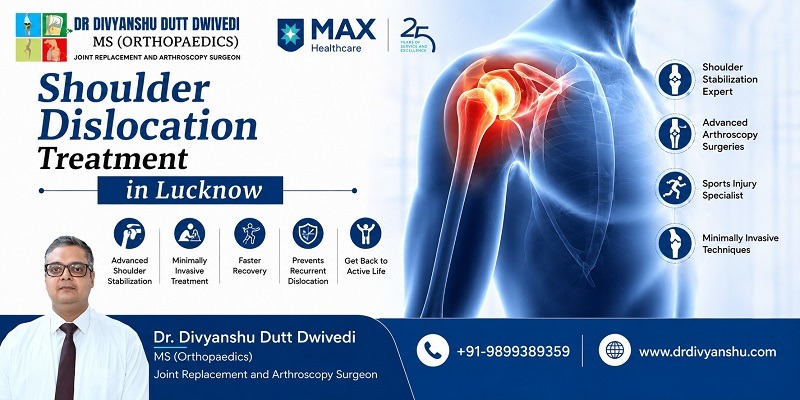
A shoulder dislocation is a painful injury that occurs when the upper arm bone slips out of the shoulder socket, affecting movement, stability, and daily activities. Seeking timely shoulder dislocation treatment in Lucknow is essential to prevent repeated dislocations, ligament damage, cartilage injuries, and long-term shoulder instability. Dr. Divyanshu Dutt Dwivedi, an experienced orthopedic and arthroscopy specialist, provides comprehensive diagnosis and personalized treatment using advanced techniques for patients of all ages.
Whether your injury is caused by a sports accident, fall, road traffic accident, or workplace trauma, early evaluation helps restore normal shoulder function and reduces complications. If you are looking for the best shoulder surgeon in Lucknow or an experienced shoulder dislocation specialist in Lucknow, expert care can significantly improve your recovery and quality of life.
Meet Dr. Divyanshu Dutt Dwivedi—Trusted Shoulder Dislocation Doctor in Lucknow
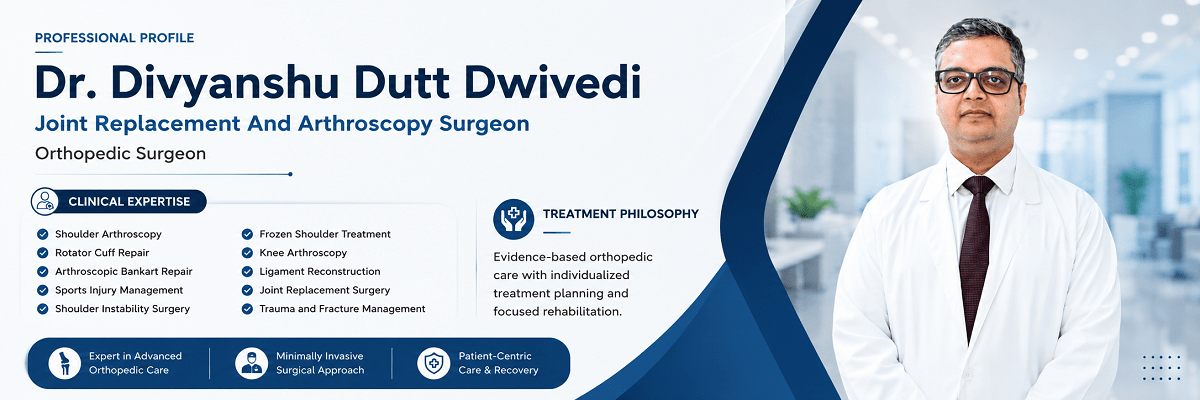
Choosing the right orthopedic specialist plays a crucial role in achieving the best outcome after a shoulder injury. Dr. Divyanshu Dutt Dwivedi is a highly experienced orthopedic surgeon specializing in arthroscopy, sports injuries, joint preservation, and joint replacement surgery. He is widely recognized for providing evidence-based, patient-centric care using advanced diagnostic techniques and minimally invasive procedures.
Every patient receives a personalized treatment plan based on their age, activity level, severity of injury, and recovery goals. Whether you require conservative management for a first-time dislocation or advanced arthroscopic shoulder stabilization for recurrent instability, Dr. Divyanshu Dutt Dwivedi focuses on restoring shoulder strength, stability, and function while helping patients return safely to their daily routine, work, and sports activities.
Clinical Expertise
- Advanced Shoulder Dislocation Treatment
- Shoulder Arthroscopy and Minimally Invasive Surgery
- Bankart Repair for Recurrent Shoulder Instability
- Management of Hill-Sachs Lesions
- Sports Injury and Athletic Shoulder Care
- Rotator Cuff Tear Treatment
- Shoulder Ligament and Labral Injury Management
- Fracture and Trauma Care
- Revision of Shoulder Stabilization Procedures
- Personalized Rehabilitation and Recovery Planning
Patients seeking the best shoulder surgeon in Lucknow benefit from his commitment to clinical excellence, modern surgical techniques, transparent communication, and comprehensive post-treatment rehabilitation, ensuring the highest standards of orthopedic care.
What is a Shoulder Dislocation?
A shoulder dislocation occurs when the head of the humerus (upper arm bone) completely moves out of the glenoid socket, making it one of the most common orthopedic emergencies. The shoulder is the body’s most mobile joint, which also makes it more vulnerable to instability and injuries. Most dislocations occur after a sudden fall, sports injury, road accident, or direct impact on the shoulder. Depending on the severity, the injury may also damage the labrum, rotator cuff, ligaments, cartilage, or surrounding muscles.
Receiving immediate shoulder dislocation treatment in Lucknow helps reduce pain, restore joint alignment, and minimize the risk of recurrent shoulder instability. Early diagnosis also allows the orthopedic surgeon to determine whether conservative care or shoulder dislocation surgery is the most appropriate treatment.
Understanding the Anatomy of the Shoulder
The shoulder is a complex ball-and-socket joint that allows a wide range of motion for lifting, rotating, and reaching. It consists of the humerus, glenoid, scapula, clavicle, labrum, rotator cuff muscles, tendons, ligaments, and the joint capsule, all working together to maintain stability and flexibility. Because the socket is relatively shallow, the shoulder can move freely but is also more likely to dislocate than other joints. Injuries to structures such as the Bankart lesion, Hill-Sachs lesion, or torn ligaments can make the shoulder unstable and increase the chances of repeated dislocations. An experienced shoulder dislocation doctor in Lucknow carefully evaluates these structures using clinical examination and advanced imaging before planning the most suitable treatment.
Types of Shoulder Dislocation
Understanding the type of dislocation helps determine the most effective shoulder dislocation treatment in Lucknow. Based on the direction in which the humeral head moves out of the socket, shoulder dislocations are classified into different types. Anterior shoulder dislocation is the most common, accounting for nearly 95% of cases, and usually occurs after a fall on an outstretched hand or during contact sports.
Posterior shoulder dislocation is less common and may result from seizures, electric shock, or severe trauma. Inferior shoulder dislocation is a rare but serious injury often associated with fractures and nerve damage. An experienced shoulder dislocation specialist in Lucknow uses X-rays, MRI, and physical examination to identify the exact type and recommend the most appropriate treatment plan.
| Type | Common Cause | Frequency |
| Anterior Dislocation | Sports injury, fall, accident | Most Common |
| Posterior Dislocation | Seizures, electric shock, trauma | Less Common |
| Inferior Dislocation | High-impact trauma | Rare |
Causes of Shoulder Dislocation
A shoulder dislocation usually occurs when excessive force pushes the shoulder joint beyond its normal range of movement. High-impact injuries such as road traffic accidents, falls from height, and sports collisions are among the leading causes. Contact sports, including cricket, wrestling, football, kabaddi, volleyball, and gym-related injuries, significantly increase the risk of shoulder instability. Older adults may experience dislocations after simple falls due to weaker muscles and reduced bone strength, while younger athletes often suffer ligament and labral tears following repetitive overhead activities.
Individuals with previous shoulder injuries or naturally loose ligaments are also more prone to recurrent dislocations. Early consultation with a shoulder injury treatment specialist in Lucknow helps identify the underlying cause and prevents repeated shoulder instability through timely medical intervention.
Symptoms You Should Never Ignore
The symptoms of a shoulder dislocation usually appear immediately after the injury and should never be ignored. Patients often experience sudden, intense shoulder pain followed by an inability to move the affected arm. A visibly deformed shoulder, swelling, bruising, muscle spasms, and tenderness are common signs. Some individuals may notice numbness, tingling, or weakness in the arm if nearby nerves are affected. In recurrent cases, the shoulder may feel unstable or slip out of place during routine activities. Ignoring these symptoms can lead to further damage to the rotator cuff, labrum, cartilage, or surrounding ligaments. Seeking prompt shoulder dislocation treatment in Lucknow ensures accurate diagnosis, pain relief, and early restoration of shoulder stability before complications develop.
Common Symptoms Include the Following:
- Severe shoulder pain after injury
- Visible deformity of the shoulder
- Swelling and bruising
- Difficulty or inability to move the arm
- Shoulder feeling loose or unstable
- Numbness or tingling in the arm or fingers
- Muscle spasms around the shoulder
- Weakness while lifting or rotating the arm
When Should You Visit an Orthopedic Surgeon?
A shoulder dislocation should always be considered a medical emergency because delaying treatment can increase the risk of permanent joint damage. You should consult an orthopedic surgeon in Lucknow immediately if your shoulder appears out of position, you are unable to lift your arm, or the pain becomes severe after an injury. Even if the shoulder slips back into place on its own, hidden injuries such as Bankart lesions, Hill-Sachs lesions, ligament tears, or cartilage damage may still be present.
Individuals who experience repeated shoulder dislocations, persistent instability, or difficulty returning to sports should seek evaluation from a shoulder arthroscopy surgeon in Lucknow. Early diagnosis and expert management improve recovery, reduce recurrence, and help patients regain full shoulder function with confidence.
Diagnosis of Shoulder Dislocation
Accurate diagnosis is the foundation of successful shoulder dislocation treatment in Lucknow. An orthopedic specialist begins with a detailed medical history to understand how the injury occurred, followed by a comprehensive physical examination to assess pain, swelling, deformity, shoulder stability, and range of motion. Since a dislocation may also cause injuries to the labrum, rotator cuff, ligaments, cartilage, or nearby nerves, imaging tests play an essential role in confirming the diagnosis. X-rays help identify the direction of dislocation and any associated fractures, while an MRI provides detailed images of soft tissue injuries such as a Bankart lesion, Hill-Sachs lesion, or tendon tears. In complex trauma cases, a CT scan may be recommended for better evaluation and surgical planning.
Diagnostic Tests May Include:
| Diagnostic Test | Purpose |
| Physical Examination | Assess deformity, instability, pain, and movement |
| X-ray | Confirm dislocation and detect fractures |
| MRI Scan | Evaluate labrum, ligaments, rotator cuff, and cartilage |
| CT Scan | Assess complex fractures and bone defects |
| Neurovascular Assessment | Check nerve and blood vessel function |
Early diagnosis allows Dr. Divyanshu Dutt Dwivedi to recommend the most suitable treatment while minimizing the risk of recurrent instability and long-term shoulder damage.
Non-Surgical Shoulder Dislocation Treatment
Not every shoulder dislocation requires surgery. Patients experiencing a first-time dislocation without significant ligament, bone, or cartilage injury often recover well with conservative management. The primary objective is to safely reposition the shoulder joint, relieve pain, and restore normal function while preventing future instability. The initial treatment usually involves a closed reduction, a procedure in which the orthopedic surgeon gently guides the humeral head back into its correct position without making an incision. Once the shoulder is reduced, the arm is supported with a sling to allow healing. Pain-relieving medications, ice therapy, and a structured physiotherapy program help restore shoulder strength, flexibility, and stability. Early rehabilitation is essential for achieving the best possible outcome after shoulder injury treatment in Lucknow.
Non-Surgical Treatment Options
- Closed Reduction (Manual Realignment)
- Shoulder Immobilization with Sling
- Pain and Anti-inflammatory Medications
- Ice Therapy for Swelling
- Activity Modification
- Physiotherapy and Rehabilitation
- Progressive Shoulder Strengthening Exercises
- Regular Orthopedic Follow-up
Conservative treatment is often effective for older adults and individuals with stable first-time shoulder dislocations. However, athletes and patients with recurrent instability may require advanced surgical intervention.
When is shoulder dislocation surgery required?
Surgery is recommended when the shoulder remains unstable despite conservative treatment or when significant damage to the supporting structures is present. Recurrent shoulder dislocations, Bankart lesions, Hill-Sachs lesions, large ligament tears, glenoid bone loss, or associated fractures are common indications for surgical stabilization. Young athletes, individuals involved in contact sports, and patients with physically demanding occupations are at a higher risk of repeat dislocations and often benefit from early surgical management. Modern shoulder dislocation surgery in Lucknow focuses on restoring the normal anatomy of the joint while preserving movement and preventing future instability. After a detailed clinical assessment and imaging evaluation, Dr. Divyanshu Dutt Dwivedi recommends the most appropriate procedure based on the patient’s age, activity level, severity of injury, and long-term functional goals.
Surgery May Be Recommended If:
- Shoulder dislocates repeatedly
- Bankart lesion is present
- • A Hill-Sachs lesion causes instability.
- Significant ligament or labral tear
- Glenoid bone loss
- Shoulder remains unstable after physiotherapy
- Fracture associated with dislocation
- High-performance athletes requiring stable shoulder function
Early surgical treatment significantly reduces recurrence rates and allows patients to return safely to their daily activities and sports.
Shoulder Arthroscopy & Bankart Repair: Advanced Treatment Options
Shoulder arthroscopy has become the preferred minimally invasive procedure for treating recurrent shoulder instability. During this advanced technique, a small camera called an arthroscope is inserted through tiny incisions, allowing the surgeon to examine and repair damaged structures with exceptional precision. One of the most commonly performed procedures is Bankart repair, which restores the torn labrum and reattaches it securely to the glenoid using specialized anchors. In cases involving substantial bone loss or multiple recurrent dislocations, procedures such as the Latarjet procedure or other reconstructive surgeries may be recommended. Compared to traditional open surgery, arthroscopic treatment generally results in smaller incisions, less postoperative pain, faster recovery, reduced risk of infection, and improved cosmetic outcomes, making it an excellent option for eligible patients seeking shoulder dislocation treatment in Lucknow.
Benefits of Arthroscopic Shoulder Surgery
- Minimally invasive procedure
- Smaller incisions and minimal scarring
- Less postoperative pain
- Faster recovery and rehabilitation
- Reduced risk of infection
- Better visualization of joint injuries
- Earlier return to work and sports
- Improved long-term shoulder stability
- Lower recurrence of shoulder dislocation
When performed by an experienced shoulder arthroscopy surgeon in Lucknow like Dr. Divyanshu Dutt Dwivedi, arthroscopic stabilization offers excellent functional outcomes and helps patients regain confidence in their shoulder movement.
Recovery After Shoulder Dislocation Surgery
Recovery after shoulder dislocation surgery is a gradual process that focuses on protecting the repaired tissues while restoring shoulder strength, flexibility, and stability. The recovery timeline varies depending on the severity of the injury, the type of surgical procedure performed, and the patient’s commitment to rehabilitation. Most patients wear a shoulder sling for the first few weeks to support healing and prevent unnecessary movement. As healing progresses, supervised physiotherapy begins with gentle range-of-motion exercises, followed by strengthening and functional training. Many individuals can resume desk work within a few weeks, while physically demanding activities and sports require additional recovery time. Following the rehabilitation plan advised by Dr. Divyanshu Dutt Dwivedi plays a crucial role in achieving a successful outcome and reducing the risk of another dislocation.
Typical Recovery Timeline
| Recovery Stage | Expected Progress |
| Week 1–3 | Sling support, pain management, swelling reduction |
| Week 3–6 | Gentle shoulder mobility exercises |
| Week 6–12 | Progressive strengthening and improved range of motion |
| Month 3–4 | Return to routine daily activities |
| Month 4–6 | Gradual return to sports and physically demanding work |
Recovery may vary from person to person, but adhering to medical advice and physiotherapy significantly improves long-term shoulder stability.
Physiotherapy and Rehabilitation After Shoulder Dislocation
Physiotherapy is one of the most important components of successful shoulder dislocation treatment in Lucknow. Whether the injury is treated conservatively or surgically, a structured rehabilitation program helps restore joint mobility, improve muscle strength, and reduce the chances of recurrent instability. Rehabilitation usually progresses in carefully planned phases, beginning with pain control and gentle mobility exercises before advancing to strengthening and functional training. Special attention is given to the rotator cuff muscles, scapular stabilizers, and shoulder capsule because these structures play a vital role in maintaining joint stability. Patients involved in sports may also undergo sport-specific rehabilitation before returning to competition. Regular physiotherapy sessions, combined with home exercises, contribute significantly to long-term recovery and improved shoulder function.
Goals of Rehabilitation
- Reduce pain and inflammation
- Restore normal shoulder movement
- Strengthen the rotator cuff muscles
- Improve shoulder stability
- Increase flexibility and endurance
- Enhance coordination and balance
- Prevent recurrent shoulder dislocation
- Enable a safe return to sports and work
A customized rehabilitation plan ensures that each patient regains shoulder function safely while minimizing the risk of future injuries.
Risks of Delaying Shoulder Dislocation Treatment
Ignoring a shoulder dislocation or delaying medical treatment can lead to serious complications that may affect shoulder function for years. Although the pain may decrease after the initial injury, underlying damage to the labrum, ligaments, cartilage, or rotator cuff can continue to worsen. Repeated dislocations often stretch the supporting tissues, making the shoulder increasingly unstable and more difficult to treat without surgery. Delayed treatment also increases the likelihood of developing Bankart lesions, Hill-Sachs lesions, chronic pain, muscle weakness, and early shoulder arthritis. Seeking timely shoulder dislocation treatment in Lucknow allows the orthopedic specialist to restore joint stability before irreversible damage occurs. Early intervention not only improves treatment outcomes but also shortens recovery time and helps patients return to their normal lifestyle with confidence.
Complications of Untreated Shoulder Dislocation
When a shoulder dislocation is left untreated, the injury may progress beyond the joint itself and affect surrounding bones, muscles, nerves, and soft tissues. Persistent instability can cause the shoulder to dislocate during simple daily activities such as lifting an object or reaching overhead. Repeated episodes may result in permanent damage to the glenoid, labrum, rotator cuff, and cartilage, making future treatment more complex. In some patients, nerve compression or blood vessel injury may lead to weakness, numbness, or reduced arm function. Over time, chronic instability can also contribute to degenerative changes and early osteoarthritis of the shoulder joint. Receiving prompt evaluation from a shoulder dislocation specialist in Lucknow significantly reduces these risks and improves long-term joint health.
Possible complications include the following:
- Recurrent shoulder dislocation
- Chronic shoulder instability
- Bankart lesion
- Hill-Sachs lesion
- Rotator cuff tear
- Cartilage damage
- Shoulder stiffness
- Nerve injury
- Blood vessel injury
- Reduced shoulder strength
- Limited range of motion
- Early shoulder osteoarthritis
Prevention Tips to Reduce the Risk of Shoulder Dislocation
While not every shoulder injury can be prevented, adopting healthy habits and strengthening the shoulder muscles can significantly reduce the risk of dislocation. Individuals involved in sports, gym workouts, or physically demanding occupations should focus on proper conditioning and safe movement techniques. Regular strengthening exercises for the rotator cuff and scapular muscles improve shoulder stability and help protect the joint during daily activities. Warming up before exercise, using appropriate protective equipment during contact sports, and avoiding sudden overhead movements can further minimize injury risk. Patients who have experienced a previous shoulder dislocation should complete their rehabilitation program before returning to sports or heavy work. Regular follow-up with Dr. Divyanshu Dutt Dwivedi also helps monitor shoulder stability and prevent recurrent injuries.
Tips for a Healthy and Stable Shoulder
- Perform regular shoulder-strengthening exercises.
- Warm up before sports and workouts.
- Use proper lifting techniques.
- Wear protective gear during contact sports.
- Avoid sudden overhead movements without preparation.
- Complete the full physiotherapy program after an injury.
- Do not ignore shoulder pain or instability.
- Seek early orthopedic evaluation after any shoulder trauma.
Following these preventive measures can help maintain shoulder stability, improve performance in daily activities, and reduce the likelihood of future dislocations.
Why Choose Dr. Divyanshu Dutt Dwivedi for Shoulder Dislocation Treatment in Lucknow?
Choosing the right orthopedic specialist is essential for a successful recovery from a shoulder injury. Dr. Divyanshu Dutt Dwivedi is a trusted shoulder dislocation doctor in Lucknow, known for providing personalized, evidence-based care for both first-time and recurrent shoulder dislocations. With expertise in shoulder arthroscopy, Bankart repair, sports injury management, and minimally invasive orthopedic procedures, he focuses on restoring shoulder stability, relieving pain, and helping patients return to their normal activities safely. Every treatment plan is tailored after a thorough clinical examination and advanced imaging to ensure the best possible outcome. His patient-centric approach, modern surgical techniques, comprehensive rehabilitation guidance, and commitment to long-term shoulder health have made him a preferred choice for patients seeking reliable shoulder dislocation treatment in Lucknow. From diagnosis to recovery, he ensures high-quality orthopedic care with a strong focus on patient satisfaction and functional recovery.
Why Patients Trust Dr. Divyanshu Dutt Dwivedi
- Expertise in shoulder arthroscopy and sports injuries
- Personalized treatment plans for every patient
- Advanced minimally invasive surgical techniques
- Comprehensive diagnosis and rehabilitation support
- Evidence-based orthopedic care
- Focus on faster recovery and long-term shoulder stability
- Patient-centric approach with transparent communication
- Experienced in managing complex and recurrent shoulder dislocations
Your Trusted Shoulder Dislocation Specialist in Lucknow
If you are searching for the best shoulder dislocation doctor in Lucknow, shoulder arthroscopy surgeon in Lucknow, or an experienced shoulder injury specialist in Lucknow, Dr. Divyanshu Dutt Dwivedi offers advanced orthopedic care focused on restoring shoulder function and improving quality of life. From accurate diagnosis to minimally invasive treatment and personalized rehabilitation, every step of your care is designed to help you recover safely and return to your normal activities with confidence. For appointments or expert consultation, call +91-9899389359.
FAQs About Shoulder Dislocation Specialist in Lucknow
- What is the best treatment for shoulder dislocation in Lucknow?
The best treatment depends on injury severity. First-time dislocations may need reduction, sling, and physiotherapy, while recurrent instability may require arthroscopic stabilization by a shoulder specialist in Lucknow.
- Do all shoulder dislocations require surgery?
No. Many first-time shoulder dislocations heal without surgery, but recurrent dislocations, ligament tears, Bankart lesions, or bone loss may require surgical stabilization.
- How long does shoulder dislocation recovery take?
Recovery usually takes 6–12 weeks after conservative treatment. After shoulder arthroscopy or Bankart repair, complete recovery may take 4–6 months.
- Can a shoulder dislocation heal without surgery?
Yes. A first-time dislocation without major ligament or bone injury can often heal with proper reduction, immobilization, physiotherapy, and orthopedic follow-up.
- What are the symptoms of a shoulder dislocation?
Common symptoms include severe shoulder pain, visible deformity, swelling, bruising, inability to move the arm, weakness, and numbness after injury.
- When should I see a shoulder specialist in Lucknow?
See a specialist immediately if your shoulder looks out of place, pain is severe, arm movement is difficult, or dislocations happen repeatedly.
- Is shoulder arthroscopy safe for recurrent dislocation?
Yes. Shoulder arthroscopy is a safe, minimally invasive procedure commonly used to repair instability and reduce the risk of repeated shoulder dislocations.
- What is Bankart repair surgery?
Bankart repair is an arthroscopic procedure that reattaches the torn labrum to the shoulder socket, restoring stability after recurrent dislocation.
- Can shoulder dislocation happen again?
Yes. Recurrent dislocation is common, especially in young athletes, if ligament damage is untreated or rehabilitation is incomplete.
- Which tests diagnose shoulder dislocation?
X-rays confirm the dislocation and fractures. MRI evaluates ligament, labrum, rotator cuff, and cartilage injuries.
- When can I return to sports after a shoulder dislocation?
Most patients return after rehabilitation and medical clearance. After surgery, return to sports usually takes several months.
- Who is the trusted doctor for shoulder dislocation treatment in Lucknow?
Dr. Divyanshu Dutt Dwivedi is trusted for shoulder dislocation treatment in Lucknow, offering advanced diagnosis, arthroscopic treatment, and personalized rehabilitation for shoulder instability.
